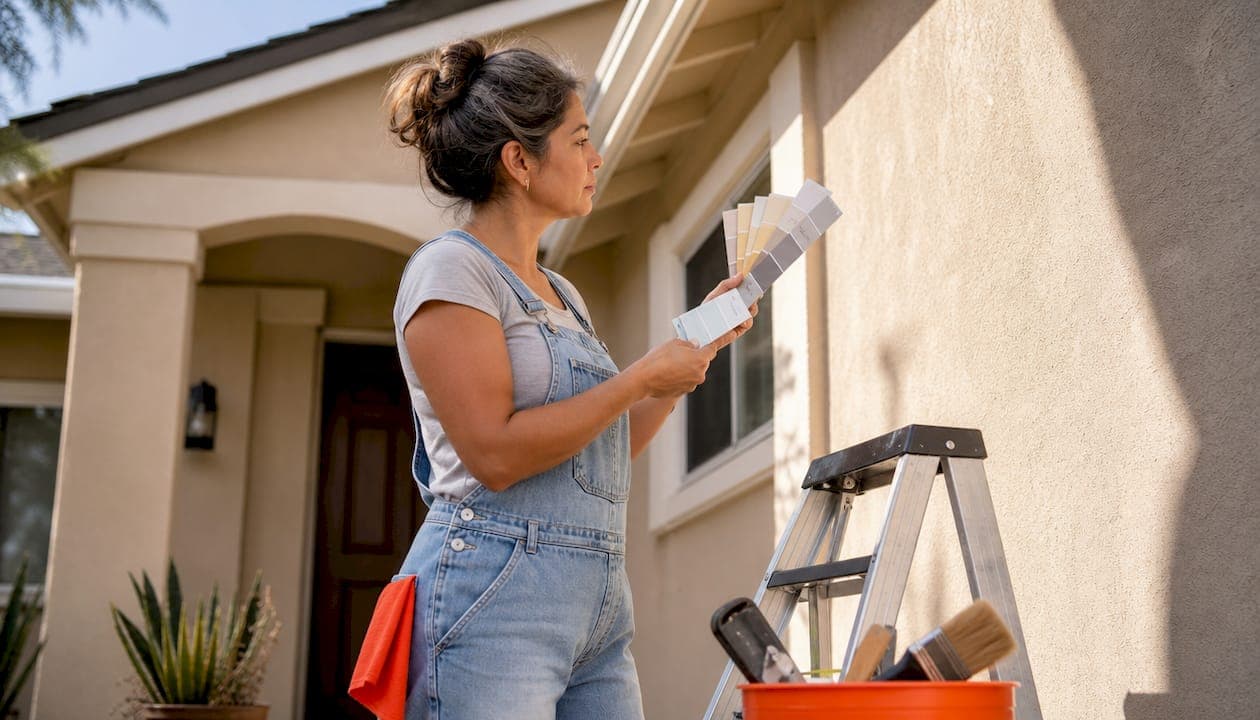
Low maintenance exterior paint is defined as a durable coating that resists fading, cracking, and peeling for years with minimal upkeep. The right choice comes down to three factors: paint chemistry, finish type, and surface preparation. A properly applied 100% acrylic exterior paint lasts 10–15 years on wood siding and 15–20 years on masonry. That kind of lifespan is the goal when you choose low maintenance exterior paint, and it's achievable when you match the product to your home's substrate and climate.
Which paint types provide the longest-lasting, low-maintenance protection?
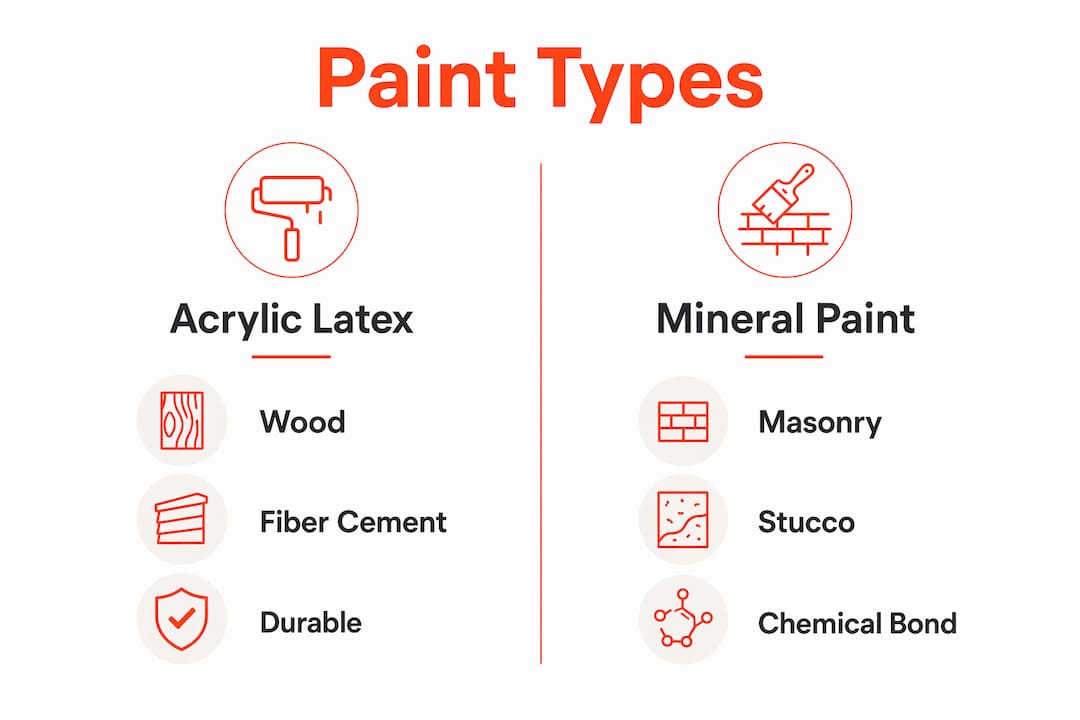
100% acrylic latex is the industry standard for durable outdoor paint. It flexes with temperature changes, resists moisture, and holds color well over time. Premium acrylic formulas like Sherwin-Williams Emerald deliver 10–12 years of lifespan, while budget paints typically last only 4–6 years. That gap is significant when you factor in labor costs for repainting.
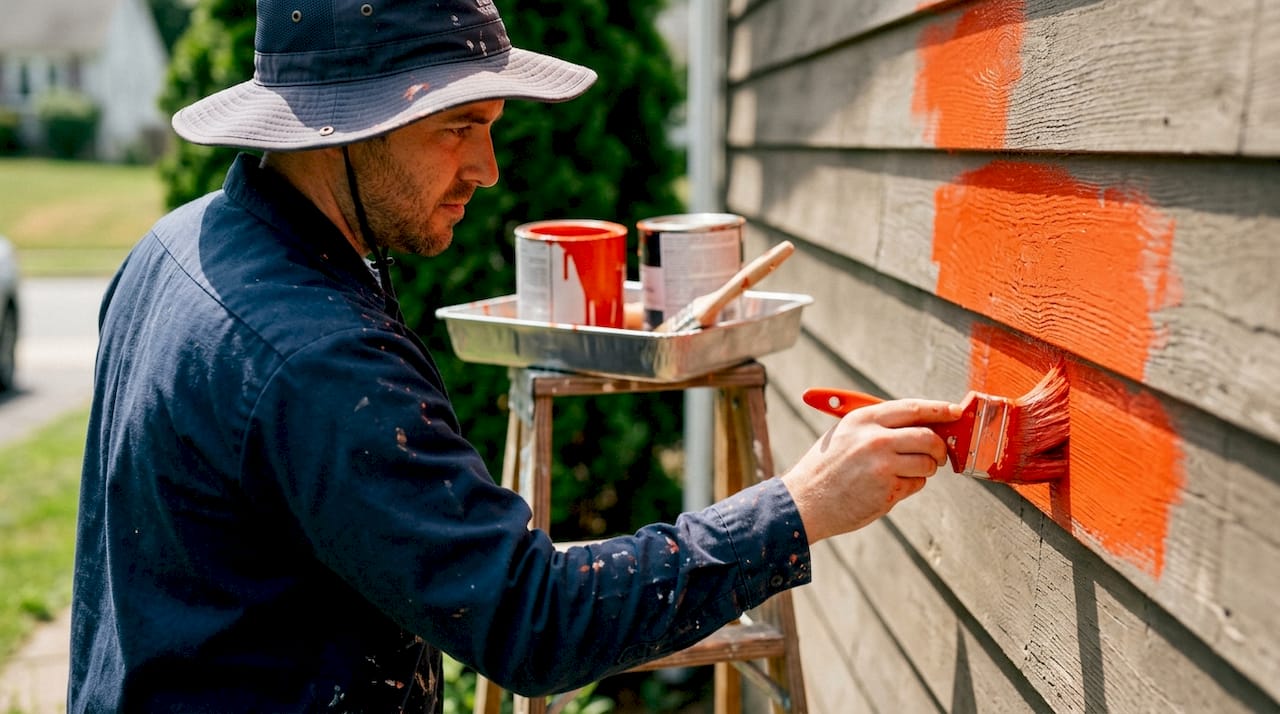
Mineral (silicate-based) paints are a strong alternative for masonry and stucco surfaces. They work differently from acrylics because they chemically bond with the substrate rather than forming a surface film. Mineral paints resist peeling and UV damage better than acrylics and can last decades without the flaking and scraping cycles that come with film-forming coatings. The trade-off is that they only work on mineral substrates like brick, concrete, and stucco.
Elastomeric coatings fill a specific role for homes with stucco or masonry prone to hairline cracks. Elastomeric coatings bridge hairline cracks and provide excellent weather resistance, extending the time between maintenance cycles. They apply thicker than standard paints and create a flexible membrane that moves with the wall.
| Paint type | Best substrate | Typical lifespan |
|---|---|---|
| 100% acrylic latex | Wood, fiber cement, most surfaces | 10–15 years |
| Mineral (silicate) | Masonry, brick, stucco | Decades (no film failure) |
| Elastomeric coating | Stucco, cracked masonry | 10–20 years |
| Budget latex | Any | 4–6 years |
Pro Tip: Match paint chemistry to your substrate before comparing brands or prices. The best exterior paint for a wood-sided home is not the best choice for a stucco exterior.
What exterior paint finishes are best for durability and appearance?
The finish you choose affects how long your paint looks good and how easy it is to clean. Satin is the most practical finish for exterior walls. It balances durability and appearance better than any other option, resisting moisture and scrubbing well without looking too shiny.
Here is how each finish performs on exterior surfaces:
- Satin: The go-to for siding and large wall areas. It reflects moderate light, hides minor surface imperfections, and cleans easily with a garden hose or soft brush. Satin is recognized as the preferred finish for exterior walls because it balances scrubbability and moisture resistance.
- Semi-gloss: Best reserved for trim, doors, and shutters. It's more durable and easier to wipe clean than satin, but it amplifies surface flaws on large flat areas.
- Flat/matte: Absorbs light and hides texture imperfections well. The downside is that flat finishes are harder to clean and less durable than satin. They work on low-traffic areas but are not the right low upkeep paint choice for most siding.
- Gloss: Rarely used on large exterior surfaces. Gloss amplifies surface flaws and requires a near-perfect substrate to look good. It is best limited to accent details.
Pro Tip: Use satin on your siding and semi-gloss on all trim. That combination gives you the best long-term appearance with the least maintenance effort.
How does proper surface preparation affect paint lifespan?
Surface preparation is the single biggest factor in how long your paint lasts. Preparation accounts for 70% of long-term paint success. That means even a premium product will fail early if applied over a dirty, peeling, or unprepared surface.
The preparation process varies by substrate, but the core steps apply to every exterior project:
- Pressure wash the surface. Remove dirt, mildew, chalk, and loose paint. Allow the surface to dry completely before proceeding, typically 24–48 hours.
- Scrape and sand. Remove all loose or peeling paint. Sand rough edges smooth so the new coat bonds evenly.
- Repair and caulk. Fill cracks, gaps around windows, and damaged areas with exterior-grade caulk or filler. This step prevents moisture intrusion, which is the leading cause of premature paint failure.
- Prime bare surfaces. Apply a quality primer to any bare wood, masonry, or repaired areas. Primer improves adhesion and helps the topcoat achieve its full rated lifespan.
- Apply multiple coats. Two coats of a quality topcoat outperform a single thick coat every time. Each coat should dry fully before the next is applied.
Skipping any of these steps creates weak points where moisture, UV light, and temperature changes attack the coating. Homes in Central Florida face intense sun, humidity, and seasonal storms, which makes thorough prep even more critical. Low maintenance requires professional-grade products paired with rigorous preparation. No product can compensate for poor prep work.
| Prep step | Why it matters |
|---|---|
| Pressure washing | Removes contaminants that prevent adhesion |
| Scraping and sanding | Creates a smooth, bondable surface |
| Caulking gaps | Blocks moisture, the primary cause of failure |
| Priming bare areas | Improves adhesion and topcoat durability |
| Two-coat application | Maximizes film thickness and lifespan |
What are the best weather-resistant color choices for busy homeowners?
Color selection affects more than aesthetics. The right color choice reduces how often you repaint and how much dirt your home shows between cleanings. For busy homeowners who want paint for busy homeowners that stays looking fresh longer, these principles apply directly.
- Choose lighter or muted tones. Very dark colors absorb more heat, which accelerates paint breakdown in sunny climates. Lighter colors reflect UV radiation and show less fading over time.
- Avoid bright whites on high-exposure surfaces. Bright white shows dirt, mildew, and chalking faster than off-white or light gray tones. A warm white or light greige hides surface aging gracefully.
- Prioritize UV and mildew resistance additives. In humid climates like Central Florida, mildew-resistant formulas are not optional. Look for paints with built-in mildewcide and UV-blocking pigments.
- Match color to climate. Paints matched to your climate perform better over time. For example, formulas designed for coastal or high-humidity environments include additives that standard products lack.
- Consider heat-reflective pigments. Some premium exterior paints use infrared-reflective pigments that reduce surface temperature. Lower surface temperature means less thermal stress on the paint film and longer color retention.
Spending $30 more per gallon on a premium formula can extend your repaint cycle by up to five years. Over the life of a home, that math strongly favors the upgrade.
Key Takeaways
The most effective way to choose low maintenance exterior paint is to match paint chemistry and finish to your substrate and climate, then invest in thorough surface preparation before applying any product.
| Point | Details |
|---|---|
| Match chemistry to substrate | Use 100% acrylic for wood, mineral paint for masonry, and elastomeric for cracked stucco. |
| Prep drives longevity | Surface preparation accounts for 70% of paint success; skipping steps shortens lifespan significantly. |
| Satin is the best finish | Satin outperforms flat and gloss for exterior walls in durability, moisture resistance, and cleanability. |
| Premium paint pays off | Spending $30 more per gallon can extend your repaint cycle by up to five years. |
| Color affects maintenance | Lighter, muted tones with UV and mildew resistance additives reduce fading and dirt buildup. |
What I've learned after years of exterior painting in Florida
The biggest mistake homeowners make is treating low maintenance paint as a product decision rather than a system decision. They pick a premium brand, skip the prep, and wonder why the paint fails in three years. The product did not fail. The process did.
I've seen this play out on homes across Central Florida. A homeowner spends good money on a quality acrylic, but the crew pressure washes and paints the same day. Moisture trapped under the film causes bubbling within months. Meanwhile, a home painted with a mid-range acrylic over properly dried, primed, and caulked surfaces looks sharp five years later.
The other misconception worth addressing is that "low maintenance" means "no maintenance." Low maintenance means less frequent, easier upkeep, not zero work. You still need to rinse the siding once a year and check caulk lines every few seasons. The difference is that you are doing a quick rinse instead of a full repaint every four years.
My honest recommendation is to spend your budget on preparation first, then on paint quality. If you have to choose between a premium prep job with a mid-grade paint or a rushed prep with a premium paint, choose the prep every time. The best paint is the one suited to your climate and substrate, not the most expensive one on the shelf.
— kyle
Trupaintingllcfl brings durable exterior results to Central Florida homeowners
Trupaintingllcfl specializes in residential exterior painting for homeowners across Lake County and Central Florida who want a finish that lasts. We use 100% acrylic and specialty coatings matched to your home's substrate and local climate, and every project starts with thorough surface preparation, including pressure washing, scraping, priming, and caulking.
We also offer personalized color and finish consultations so you get the right combination for your home's style and your maintenance goals. Our flexible painting packages let you choose the level of protection that fits your budget without cutting corners on quality. Contact Trupaintingllcfl today to schedule your exterior painting consultation.
FAQ
How long does low maintenance exterior paint last?
A properly applied 100% acrylic exterior paint lasts 10–15 years on wood siding and 15–20 years on masonry. Premium formulas extend those ranges further when paired with thorough surface preparation.
What is the best finish for exterior house paint?
Satin is the best finish for most exterior walls because it resists moisture, cleans easily, and hides minor surface imperfections. Semi-gloss is the preferred choice for trim and doors.
Does surface preparation really matter that much?
Surface preparation accounts for 70% of long-term paint success. Even the best paint will fail prematurely if applied over dirty, peeling, or improperly primed surfaces.
Is mineral paint better than acrylic for low maintenance?
Mineral paint is better than acrylic for masonry surfaces because it bonds chemically with the substrate and does not form a peeling film. For wood and fiber cement, 100% acrylic latex remains the stronger choice.
How do I choose a color that stays looking good longer?
Choose lighter or muted tones with built-in UV and mildew resistance. These colors absorb less heat, fade more slowly, and show less dirt buildup between cleanings than dark or bright white options.