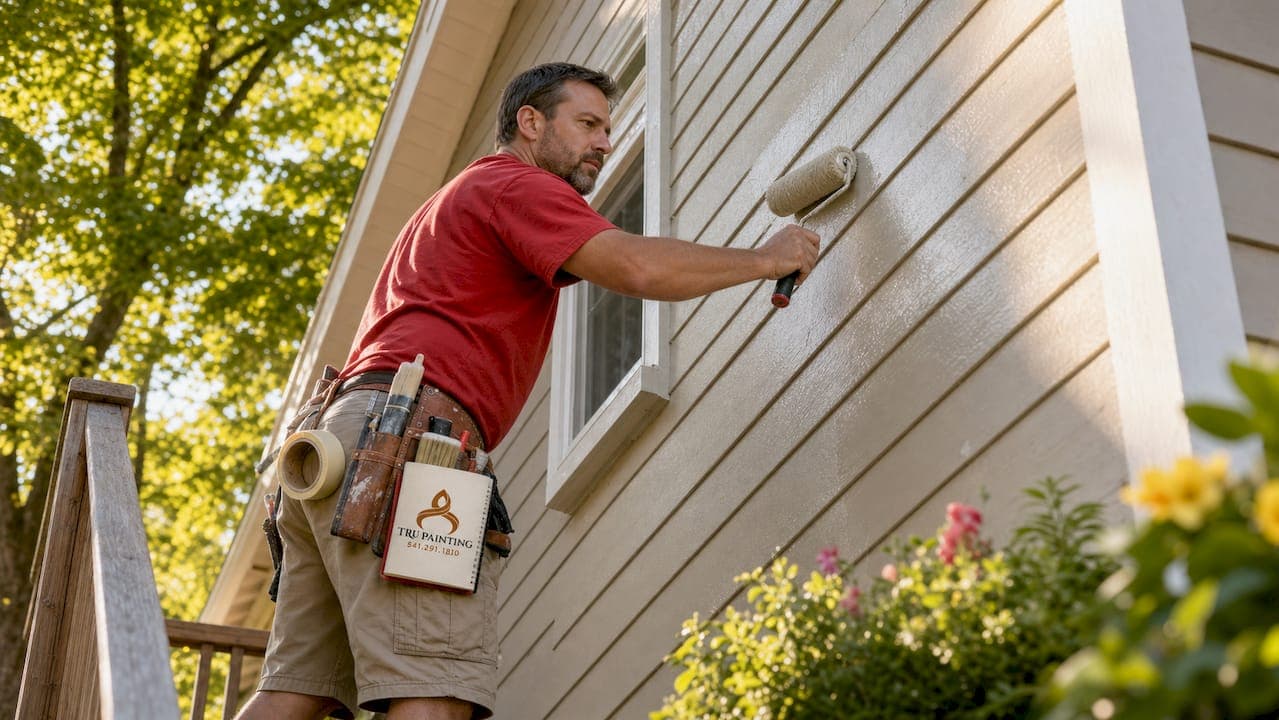
Paint sheen is defined as the degree of light reflectivity in a dried paint film, and the role of paint sheen outdoors determines how well your exterior coating sheds water, resists UV damage, and holds its color over time. Sheen is not a cosmetic detail. It is a functional property that controls moisture resistance, maintenance frequency, and visual appeal across every exterior surface. Industry standards in 2026 assign specific functional roles to flat, satin, semi-gloss, and gloss finishes based on their resin-to-pigment ratios. Trupainting LLC evaluates these factors on every exterior project we take on in Lake County and Central Florida.
What are the common types of paint sheen used outdoors?
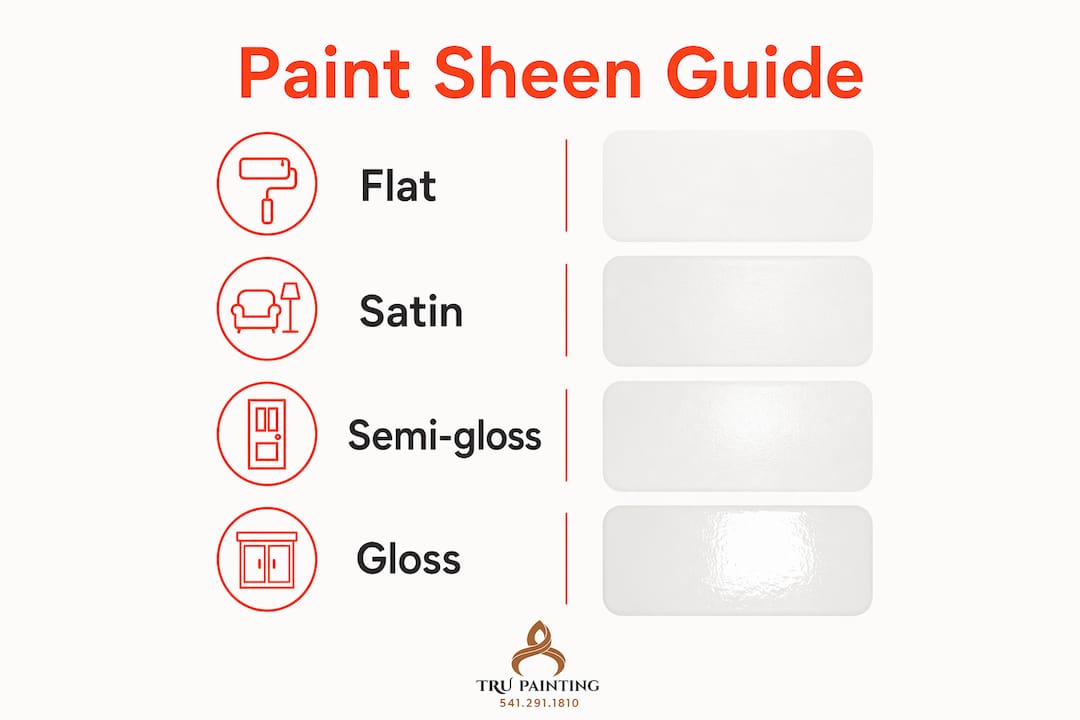
Exterior paint sheen types fall into four main categories, each defined by its resin-to-pigment ratio and the way that ratio affects performance. Understanding each one helps you match the right finish to the right surface.
Flat (matte) contains the lowest resin concentration of any exterior finish. It scatters light rather than reflecting it, which makes surface irregularities nearly invisible. Flat is the right choice for stucco, rough cedar, and textured masonry where a smooth surface is not achievable. The trade-off is real: flat finishes absorb moisture and accumulate dirt faster than any other sheen level, which raises maintenance frequency.
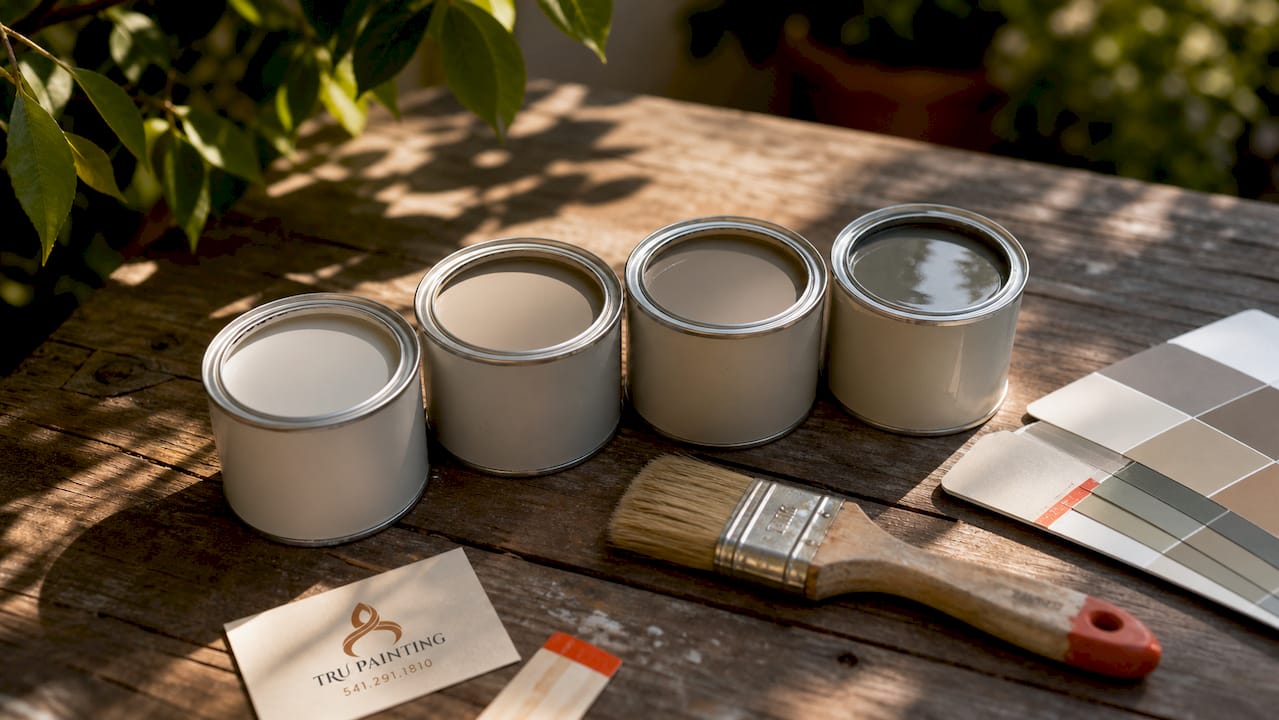
Satin (low-lustre) is the industry default for exterior siding. It carries enough resin to repel light rain and resist mild mildew, while its soft glow does not amplify surface flaws the way higher sheens do. Most professional painters recommend satin for horizontal lap siding, fiber cement, and smooth wood because it balances durability with a clean, understated appearance.
Semi-gloss is reserved for trim, doors, window frames, and any surface that faces heavy moisture contact. Its higher resin content forms a tighter film that sheds water and resists dirt buildup far better than satin. Semi-gloss is also the standard choice for metal railings and porch floors where standing water is a concern.
Gloss carries the highest resin concentration and the most reflective surface of any exterior finish. It is best limited to accent features, decorative trim, and front doors where a polished look is the goal. Gloss on large siding areas will amplify every nail pop, patch, and surface flaw, making prep work the deciding factor in whether it looks good or terrible.
| Sheen level | Resin content | Best surface | Key strength | Key weakness |
|---|---|---|---|---|
| Flat | Lowest | Stucco, rough wood | Hides imperfections | Absorbs moisture, hard to clean |
| Satin | Moderate | Lap siding, fiber cement | Balanced durability and look | Limited on horizontal surfaces |
| Semi-gloss | High | Trim, doors, metal | Moisture and dirt resistance | Shows surface flaws |
| Gloss | Highest | Accents, front doors | Maximum protection | Magnifies every imperfection |
How does paint sheen affect outdoor durability and weather resistance?
The chemistry behind sheen explains why finish choice matters as much as paint brand. Higher resin concentrations in semi-gloss and gloss paints create a tightly bound, less porous molecular seal on the paint film surface. That seal is what sheds water instead of absorbing it.
Flat paint behaves differently at the molecular level. Its low resin density leaves the film porous, so moisture penetrates the surface rather than running off. That absorbed moisture feeds mold and mildew growth, especially in humid climates like Central Florida where rain is frequent and temperatures stay warm year-round.
UV protection follows the same logic. Reflective sheens slow pigment breakdown that can otherwise occur within four years under a flat finish. A satin or semi-gloss film bounces a portion of UV radiation away from the pigment layer, extending color vibrancy and reducing chalking.
The durability benefits of higher sheen come with one clear trade-off. Higher sheen paints make surface imperfections more visible, including nail pops, uneven patches, and brush marks. That means thorough surface preparation is not optional when you move up the sheen scale.
Key durability factors by sheen level:
- Moisture resistance: Semi-gloss and gloss reduce time of wetness on the paint film surface. Flat finishes hold moisture against the substrate.
- Mold and mildew risk: Flat finishes increase mold risk due to their porous structure. Semi-gloss resists mold spores and dirt buildup more effectively.
- UV fading: Higher sheen levels extend the lifespan of deep-color exterior paints by reflecting UV energy away from the pigment layer.
- Film integrity: The resin-to-pigment ratio directly influences how well the paint film holds up under thermal expansion, contraction, and abrasion.
Pro Tip: If you live in a high-humidity region or near a body of water, move up one sheen level from what you would normally choose. The extra moisture resistance pays for itself in fewer repaints.
What aesthetic considerations matter when choosing outdoor paint sheen?
Sheen shapes how your home looks as much as how long the paint lasts. Lower sheen finishes like flat and satin absorb light rather than bouncing it back, which softens the appearance of weathered wood grain, textured stucco, and older siding that has seen better days. That light-absorbing quality is why flat finishes are popular on modern farmhouse and mid-century exteriors where a muted, organic look is the goal.
Higher sheen finishes do the opposite. They amplify color vibrancy and give surfaces a crisp, polished appearance. That quality works beautifully on a freshly painted front door or detailed millwork trim. On a large siding field, though, reflectivity highlights flaws like nail pops, bumps, and patchwork that a satin finish would have quietly absorbed.
Architectural style is a real factor in sheen selection. Here is how to think through it:
- Modern farmhouse or craftsman: Flat or satin on the body keeps the look grounded and textural. Semi-gloss on trim creates contrast without going shiny on large surfaces.
- Traditional colonial or Victorian: Satin on siding with semi-gloss or gloss on decorative trim and doors honors the style's detail-forward character.
- Contemporary or minimalist: Flat or low-sheen satin on smooth surfaces creates the clean, shadow-free look these styles require. Gloss accents on metal or glass elements add intentional contrast.
- Commercial or multi-family: Satin is the workhorse finish for large exterior walls. Semi-gloss on doors, frames, and high-traffic surfaces reduces maintenance costs over time.
Pro Tip: Before committing to a sheen level on a large surface, apply a test patch in both direct sunlight and shade. Sheen reads very differently depending on light angle and time of day.
The environment around your property also shapes the right choice. A home surrounded by mature trees stays shadier and cooler, which reduces UV stress but increases moisture exposure from leaf debris and humidity. A property on an open lot in full sun faces the opposite conditions. Neither situation calls for the same sheen on every surface.
How to choose the best sheen for exterior paint by surface and climate
Choosing the right outdoor paint finish requires matching three variables: surface condition, surface orientation, and climate exposure. Get all three right and your paint job lasts. Miss one and you are repainting sooner than you planned.
Surface condition is the starting point. Rough or heavily textured surfaces like stucco and rough-sawn cedar hide imperfections naturally, so flat or satin finishes work well without exposing prep flaws. Smooth surfaces like fiber cement or primed wood show everything, which means sheen choice must account for how well the surface was prepared before paint goes on.
Surface orientation changes the moisture equation significantly. Horizontal surfaces require semi-gloss or gloss to manage standing water and resist wear. Vertical siding sheds water by gravity, so satin or flat delivers a balanced performance without the reflectivity penalty. Porch floors, deck rails, window sills, and horizontal trim all qualify as horizontal surfaces for this purpose.
Climate factors to match with sheen:
- High humidity or frequent rain (Florida, Gulf Coast): Prioritize semi-gloss on all trim and doors. Use satin with a mildew-resistant additive on siding.
- Intense UV exposure (Southwest, high altitude): Choose satin or semi-gloss over flat to slow pigment fading. Flat finishes chalk and fade faster under sustained UV.
- Freeze-thaw cycles (Northern climates): Higher sheen finishes resist moisture intrusion that causes paint to crack and peel during freeze-thaw expansion.
- Coastal salt air: Semi-gloss or gloss on all metal and wood surfaces exposed to salt spray. Salt accelerates corrosion and paint film breakdown on porous finishes.
Choosing sheen solely for aesthetics causes faster coating failure. The finish must match the environmental stress the surface actually faces, not just the look you want to achieve.
Maintenance implications are real and worth planning for. Flat finishes on siding require more frequent cleaning and touch-ups. Satin and semi-gloss surfaces clean with a garden hose and mild detergent, which reduces annual upkeep time and cost. Semi-gloss on horizontal surfaces resists mold spores and dirt buildup better than satin, making it the lower-maintenance choice where water pools or splashes regularly.
Key Takeaways
Paint sheen outdoors is a durability decision first and an aesthetic decision second. Matching sheen to surface type, orientation, and climate is the single most effective way to extend the life of any exterior coating.
| Point | Details |
|---|---|
| Sheen controls moisture resistance | Higher resin content in semi-gloss and gloss creates a water-repellent film that flat finishes cannot match. |
| Flat sheen suits rough textures | Use flat on stucco and rough wood where hiding imperfections matters more than moisture resistance. |
| Satin is the siding standard | Satin balances durability and appearance for vertical siding across most climates and architectural styles. |
| Horizontal surfaces need semi-gloss | Porch floors, window sills, and horizontal trim require semi-gloss or gloss to manage standing water and resist wear. |
| Sheen choice affects maintenance frequency | Higher sheen finishes clean more easily and resist mold, reducing long-term upkeep time and cost. |
Why sheen is the most underrated decision in exterior painting
Homeowners spend hours picking the perfect color and then choose a sheen in about 30 seconds. I have seen that pattern play out more times than I can count, and it almost always leads to a paint job that looks great on day one and starts failing within two or three years.
The mistake is treating sheen as a finishing touch rather than a structural decision. The resin-to-pigment ratio in your paint film is what stands between your siding and the weather. Color does not protect your home. Sheen does.
The other misconception I run into constantly is the idea that one sheen works everywhere. Homeowners will choose satin for the whole house because it sounds like a safe middle ground. Satin is a great choice for vertical siding. It is the wrong choice for a porch floor or a window sill that collects rainwater. Those surfaces need a harder film, and satin simply does not deliver it.
Surface prep is the factor that makes or breaks a sheen upgrade. Moving from satin to semi-gloss on your trim is a smart call for durability. But if the wood underneath has not been properly sanded, primed, and cleaned, the semi-gloss finish will highlight every flaw you skipped over. The sheen does not create the problem. It just makes it impossible to ignore.
My honest advice: work with a professional who evaluates your specific surfaces and climate before recommending a finish. A good painter does not hand you a sheen chart and ask you to pick. They look at your substrate condition, your exposure, and your maintenance tolerance, then give you a recommendation grounded in all three. That is exactly how Trupainting LLC approaches every residential exterior project we take on.
— Kyle
Trupainting LLC brings the right sheen to every exterior surface
Picking the right outdoor paint finish is straightforward when you have the right team evaluating your surfaces before a single brush touches the wall. Trupainting LLC starts every exterior project with a thorough assessment of substrate condition, surface orientation, and local climate exposure. That evaluation drives the sheen recommendation, not guesswork.

Our crews are trained in surface preparation techniques that make higher sheen finishes perform the way they should, without magnifying flaws or failing prematurely. Whether you need residential exterior painting for your home or commercial exterior services for a property you manage, we match the right sheen to every surface and back it with skilled application. Reach out to Trupainting LLC to get a quote and a clear recommendation for your specific project.
FAQ
What is the best sheen for exterior siding?
Satin is the industry standard for exterior siding because it balances moisture resistance, durability, and a clean appearance without amplifying surface flaws. It performs well on fiber cement, lap siding, and smooth wood in most climates.
Can I use flat paint on exterior walls?
Flat paint works on rough or heavily textured surfaces like stucco and rough-sawn cedar, where hiding imperfections is the priority. It requires more frequent cleaning and is prone to mold in humid climates, so it is not the right choice for smooth or moisture-exposed surfaces.
Why is semi-gloss recommended for trim and doors?
Semi-gloss contains a higher resin concentration that forms a tighter, less porous film. That film resists moisture, dirt, and mold far better than satin, making it the right choice for high-contact and moisture-prone surfaces like doors, window frames, and trim.
Does paint sheen affect how long exterior paint lasts?
Yes. Higher sheen levels extend paint lifespan by reducing UV-induced fading and repelling moisture more effectively than flat finishes. Flat paint can show significant pigment breakdown within four years under sustained UV exposure.
Should I use the same sheen on horizontal and vertical surfaces?
No. Horizontal surfaces need semi-gloss or gloss to manage standing water and resist wear. Vertical surfaces shed water by gravity, so satin or flat delivers adequate performance without the reflectivity that highlights imperfections.