
Exterior paint finishes are defined by their sheen level, which determines how much light a surface reflects and how well the paint holds up to weather, cleaning, and daily wear. Satin finish leads the market, used on approximately 90% of residential homes because it balances durability and aesthetics better than any other option. Choosing the right finish is not just about looks. The wrong sheen on the wrong surface can lead to peeling, chalking, and premature failure. This guide covers every major exterior paint finish type, the paint formulas that drive performance, and how to match both to your home's specific surfaces and climate.
1. What are the types of exterior paint finishes?
The paint industry organizes exterior finishes into three primary sheen categories: flat (matte), satin, and gloss. Each sits at a different point on the reflectivity scale, and that position directly affects durability, washability, and where the finish performs best.
| Finish | Reflection level | Durability | Washability | Best for |
|---|---|---|---|---|
| Flat/Matte | Minimal | Moderate | Low | Stucco, rough masonry, textured wood |
| Satin | Slight pearl | High | Good | Siding, smooth wood, most exterior walls |
| Gloss | Maximum | Very high | Excellent | Trim, doors, shutters, metal |
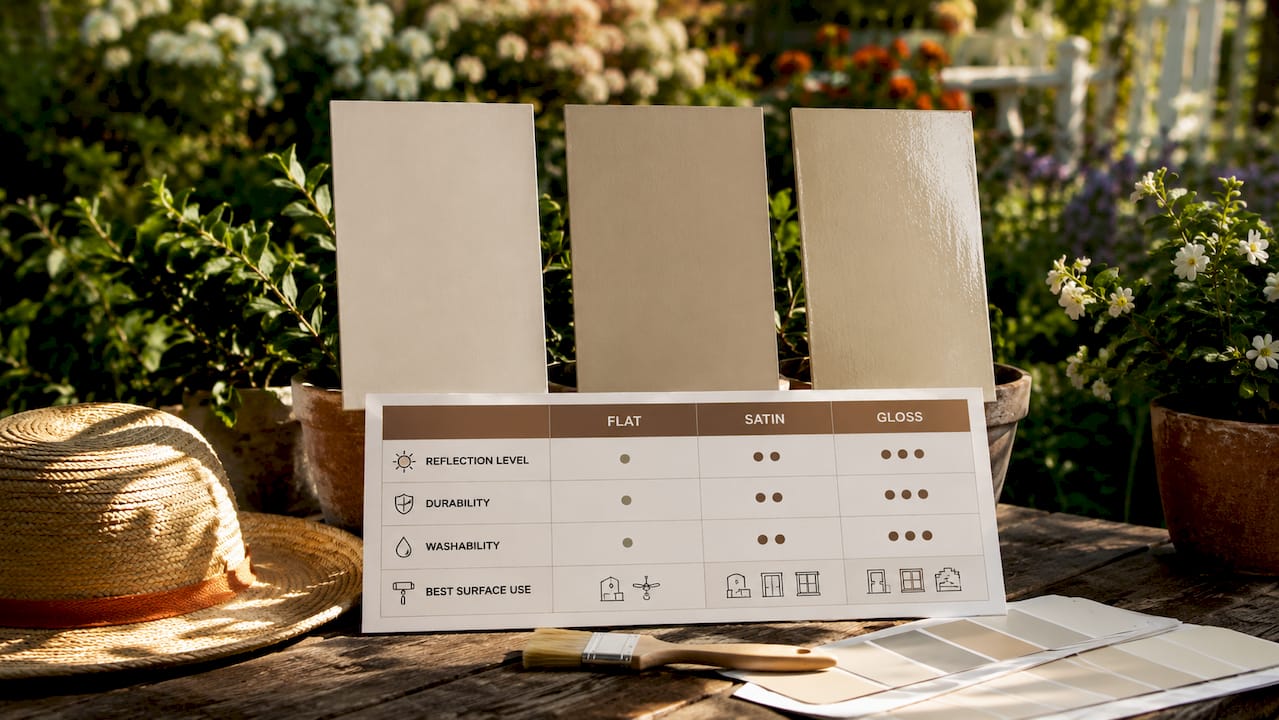
Flat paint hides surface imperfections better than any other finish because its low reflectivity prevents light from revealing bumps and texture variations. That hiding power comes at a cost: flat finishes wash poorly and wear faster in high-traffic or high-moisture areas.
Satin sits in the middle and wins for most homeowners. Its slight pearl sheen resists dirt, handles cleaning well, and holds up through Florida's heat and rain cycles without looking worn after a single season.
Gloss delivers maximum reflection and the highest durability of any exterior finish. It is the right call for trim, front doors, and shutters where impact resistance and frequent cleaning matter most. The trade-off is that gloss amplifies every surface flaw, so prep work must be thorough before application.
Pro Tip: Premium exterior paint lines often skip semi-gloss entirely, jumping straight from satin to gloss. If your paint supplier offers a semi-gloss exterior option, that product line may not be a top-tier formulation.
2. Why paint composition matters as much as finish sheen
Sheen level tells you how a paint looks and cleans. Paint composition tells you how long it lasts. These two factors work together, and ignoring one while focusing on the other is a common homeowner mistake.
100% acrylic latex is the industry standard for exterior surfaces. It flexes with temperature changes, breathes through moisture, and resists fading and mildew across a wide range of climates. Vinyl-acrylic blends cost less but sacrifice flexibility and mildew resistance, which shortens their lifespan on exterior surfaces exposed to direct sun and rain.
Oil-based and alkyd enamel paints produce an exceptionally hard, glossy finish. They work well on metal railings, doors, and high-wear trim where maximum hardness is the priority. Their downside is brittleness over time. As wood expands and contracts with temperature changes, oil-based coatings crack rather than flex.
Specialty formulas like elastomeric coatings fill a specific role. They are designed for stucco and masonry surfaces that experience significant movement. Elastomeric paint stretches and seals hairline cracks that would allow moisture intrusion under a standard acrylic coat.
Pro Tip: Check the binder content on the paint's technical data sheet before buying. A binder content of 35% or higher signals a durable, high-quality formula that resists chalking and peeling over time. Lower binder content means the paint film breaks down faster.
3. Matching finish to surface: what goes where
The right finish for your home depends on the specific surface you are painting, not just personal preference. Applying a gloss finish to rough stucco, for example, highlights every texture variation and looks uneven within weeks.
Flat and matte finishes work best on:
- Stucco and textured masonry where hiding surface variation is the priority
- Rough-sawn wood siding where a low-sheen look suits the material's character
- Older wood with minor repairs that would show under a shinier finish
Satin finishes work best on:
- Smooth and lap siding, which is the most common application across residential homes
- Smooth wood fascia and soffit boards that need cleanability without high shine
- Fiber cement siding, which holds satin finishes exceptionally well
Gloss finishes work best on:
- Front doors, which take daily contact and need frequent cleaning
- Shutters and decorative trim where contrast and durability are both required
- Metal railings and gates where moisture resistance is critical
For specialty coatings on masonry, elastomeric formulas outperform standard acrylics by bridging small cracks and creating a waterproof membrane. In Central Florida's climate, where stucco homes face intense UV exposure and seasonal humidity, that added protection is worth the investment.
4. How climate affects your finish choice
The best paint choice varies with climate, and homeowners in humid or high-UV regions face different demands than those in dry or cold climates. Ignoring climate when selecting a finish leads to premature failure regardless of how good the product is.
In hot, humid climates like Central Florida, mildew resistance is non-negotiable. A 100% acrylic latex formula with a satin or gloss finish resists mildew growth and cleans easily after summer storms. Flat finishes in these conditions trap moisture and develop mildew staining faster because their porous surface holds dirt and water.
In regions with extreme temperature swings, surfaces expand and contract significantly through the seasons. Surfaces with temperature-driven expansion require paints with high binder content waterborne acrylics to avoid early cracking and peeling. Elastomeric coatings are the top choice for stucco in these environments.
High-UV environments accelerate color fading in lower-quality paints. Premium formulas like Benjamin Moore Aura, priced at $95 or more per gallon, offer superior UV color retention and can be applied at temperatures as low as 40°F. That low-temperature application floor extends the usable painting season in cooler climates.
5. Surface preparation and its impact on finish performance
Proper surface preparation is the single biggest factor in paint failure, outweighing brand choice and finish type. A premium satin finish applied over a dirty, chalky, or unprepared surface will peel within a season. The same product applied over a properly prepped surface can last a decade or more.
The preparation sequence for most exterior surfaces follows this order:
- Pressure wash the entire surface to remove dirt, mildew, and loose paint.
- Scrape and sand any areas with peeling or flaking paint down to a firm edge.
- Repair cracks and holes with exterior-grade caulk or patching compound before priming.
- Apply primer to bare wood, repaired areas, and any chalky or porous surfaces. Self-priming paints work on sound, previously painted surfaces but do not replace a dedicated primer on bare or heavily weathered substrates.
- Allow full cure time before applying the finish coat.
Glossier finishes demand more thorough prep because gloss amplifies every surface defect rather than hiding it. A satin or flat finish is more forgiving of minor surface variation, but no finish compensates for skipped prep steps.
Pro Tip: On chalky or weathered surfaces, use a dedicated bonding primer before your finish coat. Self-priming paints are convenient but do not bond as reliably to heavily weathered substrates as a separate primer does.
6. Reading finish labels and evaluating paint quality
Paint labels contain more useful information than most homeowners realize. Knowing what to look for saves money and prevents poor purchase decisions driven by marketing language rather than actual product performance.
The binder is the ingredient that holds the paint film together and determines how well it adheres, flexes, and resists weathering. Evaluating binder content rather than brand names is the most reliable way to compare exterior paints. Look for 100% acrylic binder and a binder content at or above 35% on the technical data sheet.
Pigment volume concentration (PVC) tells you how much of the paint is pigment versus binder. Lower PVC generally means a more durable film with better adhesion. High-PVC paints look good initially but break down faster under UV exposure and moisture cycling.
Finish descriptions like "satin" and "gloss" are not standardized across all manufacturers. One brand's satin may reflect more light than another brand's semi-gloss. Always request a drawdown card or sample panel before committing to a finish on a large surface area. The painting packages offered by Trupainting LLC include product guidance that takes this variability into account.
Key Takeaways
Satin finish is the most durable and practical choice for the majority of residential exterior surfaces, but matching finish to surface condition, climate, and paint composition is what determines long-term performance.
| Point | Details |
|---|---|
| Satin dominates residential use | Approximately 90% of homes use satin finish for its balance of durability and cleanability. |
| Composition drives longevity | Choose 100% acrylic latex with 35%+ binder content for the best weather resistance. |
| Surface dictates finish choice | Use flat on rough or textured surfaces, satin on siding, and gloss on trim and doors. |
| Prep outweighs product | Surface preparation is the single biggest factor in whether a finish lasts or fails early. |
| Climate shapes the formula | Humid and high-UV climates require mildew-resistant, UV-stable formulas to prevent premature failure. |
What I've learned after years of exterior painting
Homeowners almost always focus on color first and finish second. That order should be reversed. Color is personal preference. Finish is performance, and getting it wrong costs real money in early repaints and repairs.
The most common mistake I see is applying a high-gloss finish to a surface that was not prepped thoroughly. The gloss looks beautiful for about three months, and then every flaw the prep missed becomes visible. Gloss is unforgiving. If you want it, you have to earn it with prep work.
Flat finishes get a bad reputation, but they are genuinely the right call for rough stucco and older masonry. The problem is that homeowners use them on smooth siding where they look chalky and wash poorly. Every finish has a correct application. The issue is mismatched use, not the finish itself.
Climate is the factor most people underestimate. Central Florida's combination of UV intensity, humidity, and afternoon rain cycles is hard on paint. A product that performs well in a dry climate can fail in two seasons here. I always recommend 100% acrylic latex with proven mildew resistance for this region, regardless of the finish sheen chosen.
Preparation is where most DIY projects fall short. Pressure washing alone is not enough. Scraping, sanding, priming bare spots, and caulking gaps before painting are the steps that determine whether a finish lasts five years or fifteen. No finish, regardless of price, compensates for skipped prep.
— Kyle
Trupainting LLC can help you get the finish right
Choosing the right exterior paint finish is straightforward once you understand the variables. Applying it correctly is where professional experience makes a measurable difference.
Trupainting LLC serves homeowners across Lake County and Central Florida with residential exterior painting built on thorough preparation, premium 100% acrylic products, and finish recommendations matched to your home's specific surfaces and local climate. We do not guess at finish selection. We assess your siding material, surface condition, and exposure before recommending a product. Our three-tier service packages give you flexibility on investment level without cutting corners on craftsmanship. If you want a finish that looks great and holds up through Florida's demanding seasons, we are ready to help you get there.
FAQ
What finish is best for exterior house siding?
Satin finish is the best choice for most exterior siding. It handles cleaning well, resists mildew, and holds up to weather better than flat finishes while avoiding the flaw-amplifying effect of gloss.
Is flat or matte paint good for exterior use?
Flat paint works well on rough or textured surfaces like stucco and masonry where hiding imperfections is the priority. It washes poorly and wears faster on smooth siding, so it is not the right choice for every surface.
How do I choose between satin and gloss for exterior trim?
Use gloss on trim, doors, and shutters where impact resistance and frequent cleaning are needed. Use satin on siding and larger wall areas where a lower sheen looks more natural and still cleans easily.
Does paint composition affect exterior finish durability?
Yes. A 100% acrylic latex formula with a binder content of 35% or higher outperforms vinyl-acrylic blends in flexibility, mildew resistance, and long-term adhesion, regardless of the finish sheen selected.
How often should exterior paint be reapplied?
Reapplication intervals depend on climate, surface prep quality, and paint formula. In high-UV, humid climates like Central Florida, a properly applied premium acrylic finish on well-prepped siding typically lasts 7–10 years before repainting is needed.