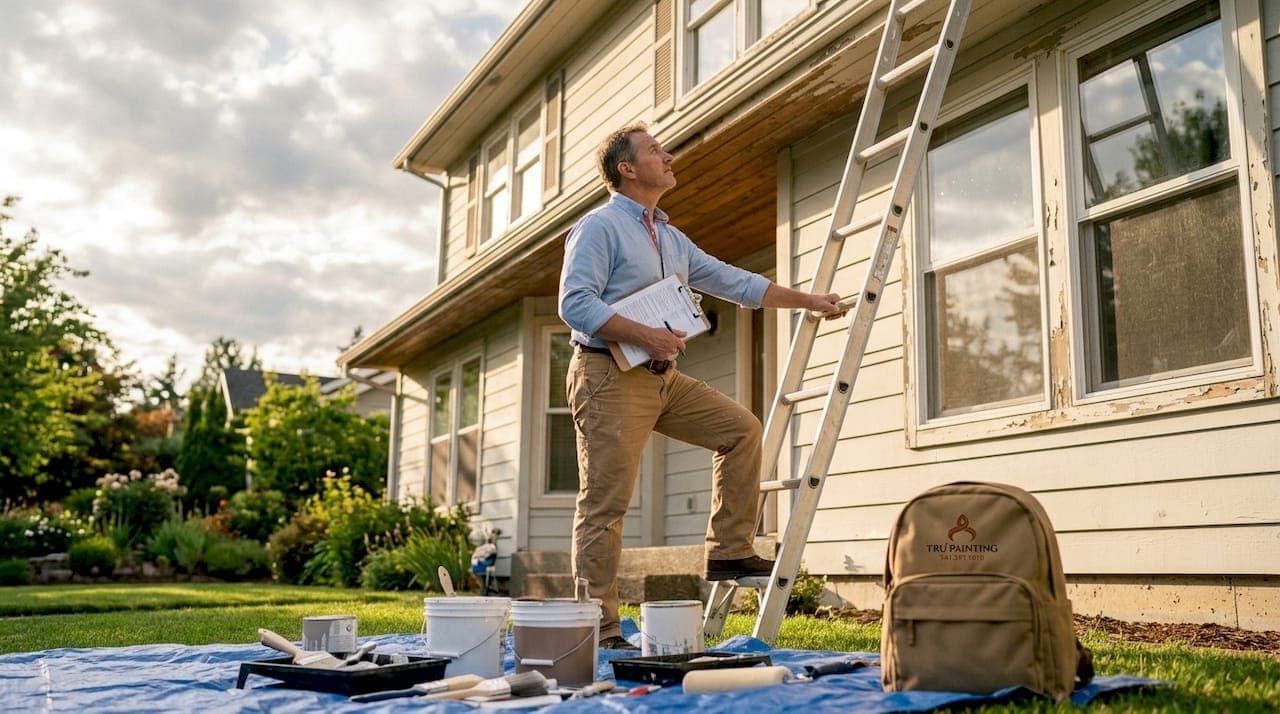
A full exterior repaint is defined as a complete, multi-step process covering every painted surface on a home's exterior, including siding, trim, fascia, soffits, doors, and shutters. What does full exterior repaint include goes well beyond rolling paint on walls. The industry term is "full exterior repaint scope," and it covers surface preparation, priming, and a minimum of two finish coats applied to all exterior surfaces. Trupainting LLC follows this complete process on every residential project in Lake County and Central Florida, because skipping any step shortens the life of the finish and risks structural damage.
What does a full exterior repaint include from start to finish?
A full exterior repaint covers six distinct phases: assessment, surface preparation, repairs, priming, paint application, and final touch-ups. A typical professional project runs 5–10 working days for an average-sized home. Each phase directly affects how long the finish lasts and how well it protects the structure underneath.
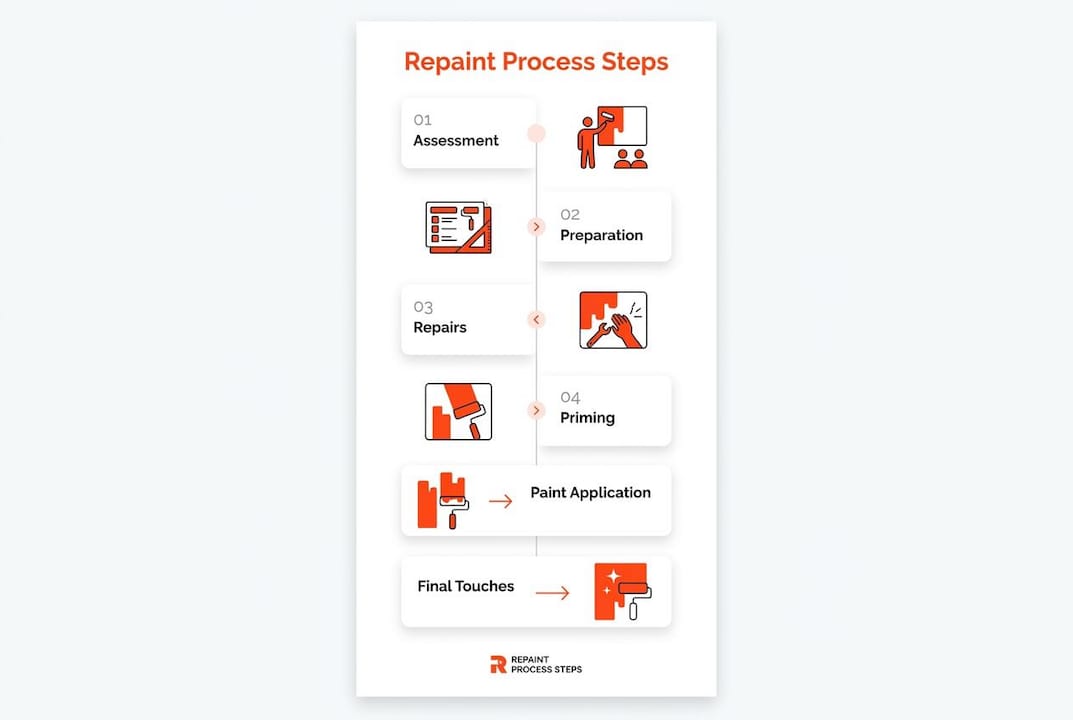
Exterior paint is the primary defense against moisture, UV damage, and wood rot. Neglecting any phase of the process allows costly structural damage to develop well beyond the surface.
What surface preparation steps are included?
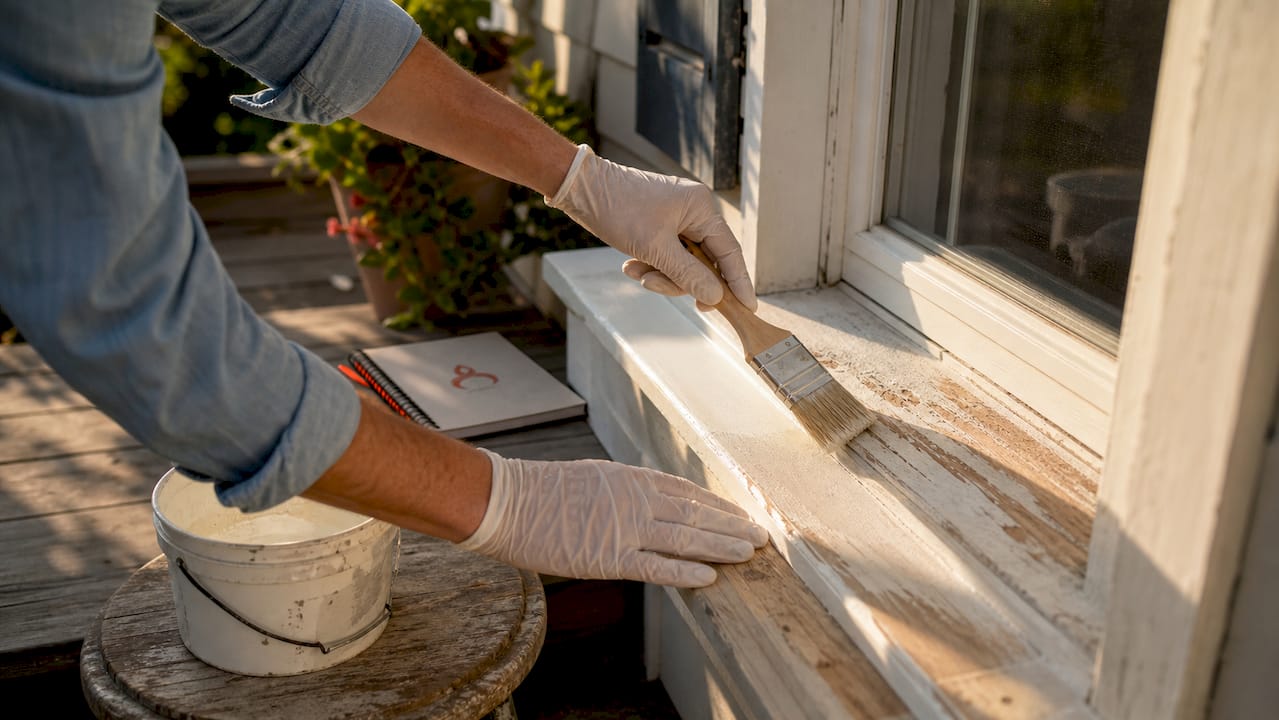
Surface preparation is the foundation of every durable exterior paint job. Professionals begin with a thorough assessment of the home's exterior, noting peeling paint, cracks, wood rot, and failed caulk before a single tool is picked up.
Pressure washing comes first. Pro-grade washing uses 1,500–2,000 PSI with a fan tip to remove dirt, mildew, and chalky old paint without damaging siding. After washing, the surface must dry completely before any coating is applied.
- Drying period: 24–48 hours after pressure washing is the industry standard. Painting over damp surfaces causes peeling and adhesion failure.
- Scraping and sanding: All loose or peeling paint is removed by hand scraper or orbital sander. Smooth transitions between old paint edges and bare wood prevent visible ridges under the new coat.
- Wood rot and crack repairs: Damaged siding sections, rotted fascia boards, and cracked stucco are repaired before any primer is applied. Painting over rot only hides the problem temporarily.
- Caulking: Every joint, gap, and seam around windows, doors, and trim is sealed. Caulking accounts for about 30% of a paint job's longevity. Professionals use 50-year urethane sealants like Sika 1A or OSI Quad Max rather than standard 25-year acrylic caulks to prevent moisture intrusion.
- Masking and protection: Windows, light fixtures, landscaping, and hardscaping are masked and covered. On a 2,200 square foot home, complete masking can take most of a full workday.
Pro Tip: Ask your contractor which caulk product they use. A 50-year urethane sealant costs more upfront but prevents the moisture intrusion that causes paint failure and wood rot years earlier than it should.
Why is priming bare and repaired areas critical?
Primer is not optional on a professional exterior repaint. It acts as a bonding agent between the bare substrate and the finish coat, and it seals porous surfaces so paint applies evenly without soaking in unevenly.
The surfaces that always require priming include:
- Bare wood: Any area where scraping or sanding exposed raw wood must be primed before finish coats are applied.
- Patched and repaired areas: Filled cracks, replaced boards, and repaired stucco have different porosity than the surrounding surface. Primer equalizes absorption so the finish coat looks uniform.
- Color changes: Switching from a dark color to a light one, or vice versa, requires a tinted primer to reduce the number of finish coats needed for full coverage.
Professional exterior repainting uses oil-based or shellac-based primers on bare wood and stain-blocking primers on water-stained or tannin-rich wood species like cedar and redwood. Latex primers work well on previously painted surfaces in good condition. Skipping primer on bare or repaired areas leads to uneven sheen, color bleed-through, and early peeling. Industry standards treat spot priming as a non-negotiable step, not an upgrade.
How many coats of paint does a full repaint cover?
The industry standard for a full exterior repaint is two finish coats on all surfaces. A single coat is considered a touch-up only and does not provide the film thickness needed for durability or weather resistance. This applies to siding, trim, fascia, soffits, doors, and shutters.
Here is how a professional application sequence typically runs:
- First finish coat on siding: Applied by airless sprayer for speed and even coverage, then immediately back-rolled. Back-rolling after spraying forces paint into porous siding textures, improving adhesion and durability compared to spraying alone.
- Drying between coats: Premium latex paints require 4–6 hours of drying time between coats. Rushing this step causes lifting and poor adhesion.
- Second finish coat on siding: Applied the same way, building the total dry film thickness the manufacturer specifies for warranty coverage.
- Trim, fascia, and soffits: These surfaces receive two separate coats in their own color, applied after siding coats are dry. Trim color is typically applied by brush for clean lines.
- Doors and shutters: Entry doors and shutters often receive an extra coat because of the high wear and UV exposure they face. Garage doors follow the same two-coat minimum.
- Final touch-ups: After all coats dry, a walkthrough identifies any missed spots, thin areas, or drips that need correction.
Pro Tip: When reviewing a contract, look for the exact phrase "two-coat application." Many proposals omit this detail, which gives contractors room to apply a single coat and call the job complete. Insist on it in writing.
What does a full exterior repaint cost?
The cost of a complete exterior repaint depends on home size, story count, surface complexity, and material quality. Preparation and repairs are the largest variables because no two homes arrive in the same condition.
| Home type | Typical price range | Key cost drivers |
|---|---|---|
| Single-story home | $8,000–$14,000 | Square footage, siding type, prep condition |
| Two-story home | $12,000–$20,000 | 15–25% premium for height and access |
| Multi-story or complex | $20,000–$35,000+ | 25–40% premium, scaffolding, intricate trim |
| Preparation only | $1.50–$4.00 per sq ft | Condition of existing surface |
| Priming bare surfaces | $0.75–$1.25 per sq ft | Amount of bare wood or repairs |
These price ranges reflect full-scope projects that include washing, repairs, priming, and two finish coats. A lower bid that omits preparation or specifies one coat is not a comparable quote. Your contract should name the paint brand, product line, and number of coats. "Two coats of premium paint" without a brand name can mask low-quality materials that fail in two to three years instead of seven to ten.
What timing and environmental factors affect the process?
Weather directly determines whether a paint job lasts or fails. Paint must be applied and allowed to cure within specific temperature and humidity windows.
- Temperature: Temperatures must stay above 35°F to 40°F for at least 24 hours during curing. Applying paint in cold conditions prevents proper film formation.
- Humidity: High humidity slows drying and can cause blushing or adhesion failure. Most manufacturers specify painting below 85% relative humidity.
- Direct sun and heat: Painting in direct afternoon sun on hot siding causes the paint to dry too fast, leaving lap marks and poor adhesion.
- Lead-safe protocols: Homes built before 1978 may contain lead-based paint. Federal RRP (Renovation, Repair, and Painting) rules require certified contractors to follow lead-safe work practices and document compliance. This is mandatory, not optional.
- Weather contingency clauses: A professional contract includes a clause that allows work to pause when conditions fall outside safe painting parameters. Including weather contingency clauses prevents rushed work in poor conditions, which is one of the most common causes of early paint failure.
Scheduling a full exterior repaint in Central Florida works best in the spring or fall, when temperatures are moderate and afternoon thunderstorms are less frequent than in peak summer.
Key Takeaways
A full exterior repaint requires thorough preparation, priming, and two finish coats on every surface to deliver a finish that protects the structure and lasts for years.
| Point | Details |
|---|---|
| Preparation is the foundation | Pressure washing, scraping, repairs, and caulking determine how long the finish lasts. |
| Caulking drives longevity | Urethane sealants account for about 30% of a paint job's durability; never accept standard acrylic caulk. |
| Two coats is the standard | One coat is a touch-up; insist on two finish coats in writing before signing any contract. |
| Back-rolling improves adhesion | Spraying alone leaves paint sitting on the surface; back-rolling forces it into porous siding for a stronger bond. |
| Cost reflects scope | Single-story projects run $8,000–$14,000; multi-story homes can reach $35,000+ based on prep needs and complexity. |
What most homeowners get wrong about exterior repainting
Here is something I see constantly: homeowners treat exterior painting as a cosmetic upgrade rather than structural maintenance. That mindset leads to the worst decisions, like accepting the lowest bid without asking what it actually includes.
The most expensive mistake I have witnessed is a homeowner who hired a crew that skipped the drying period after pressure washing. The paint peeled in sheets within eight months. The repair cost more than the original job would have if done correctly. Preparation time is not padding on an invoice. It is the reason a paint job lasts seven years instead of two.
The second mistake is accepting vague contract language. "Two coats of paint" means nothing if the product is not named. I always tell homeowners to ask for the specific paint brand and product line in writing. A contractor who refuses that request is telling you something important about how they work.
Exterior paint is not decoration. It is the barrier between your home's wood framing and the elements. When that barrier fails, moisture gets in, wood rots, and repair bills grow fast. A proper full exterior repaint, done to industry standards with premium materials, is one of the highest-return investments a homeowner can make in their property.
— Kyle
Trupainting LLC covers every step of your exterior repaint
Trupainting LLC handles the full exterior paint process from pressure washing through final touch-ups, following every industry standard covered in this article. Every project includes thorough surface preparation, urethane caulking, spot priming, and two finish coats on all siding, trim, fascia, soffits, doors, and shutters.
We use premium paint products and document every step so you know exactly what your home received. Our residential exterior painting services are built around lasting results, not the lowest price. You can also review our service packages to find the level of protection that fits your home and budget. Trupainting LLC serves Lake County and Central Florida. Reach out to schedule a walkthrough and get a detailed, transparent quote.
FAQ
What surfaces does a full exterior repaint cover?
A full exterior repaint covers siding, trim, fascia, soffits, entry doors, shutters, and garage doors. All surfaces receive a minimum of two finish coats.
How long does a full exterior repaint take?
A professional exterior repaint typically takes 5–10 working days, depending on home size, prep condition, and weather. Preparation and drying time between coats account for most of that schedule.
Why does surface preparation take so long?
Pressure washing, a 24–48 hour drying period, scraping, repairs, caulking, and masking are each separate steps that cannot be rushed. Skipping or shortening any of them causes paint failure within months.
How do I know if a contractor is doing a full repaint or a partial one?
Ask for a written contract that specifies two-coat application, names the paint brand and product line, and lists every surface to be painted. Vague language like "paint exterior" without those details signals a partial or low-quality scope.
Does a full exterior repaint require lead testing on older homes?
Homes built before 1978 require contractors to follow federal RRP lead-safe protocols. Certified contractors must document their compliance, and this requirement is mandatory regardless of whether visible lead paint is present.