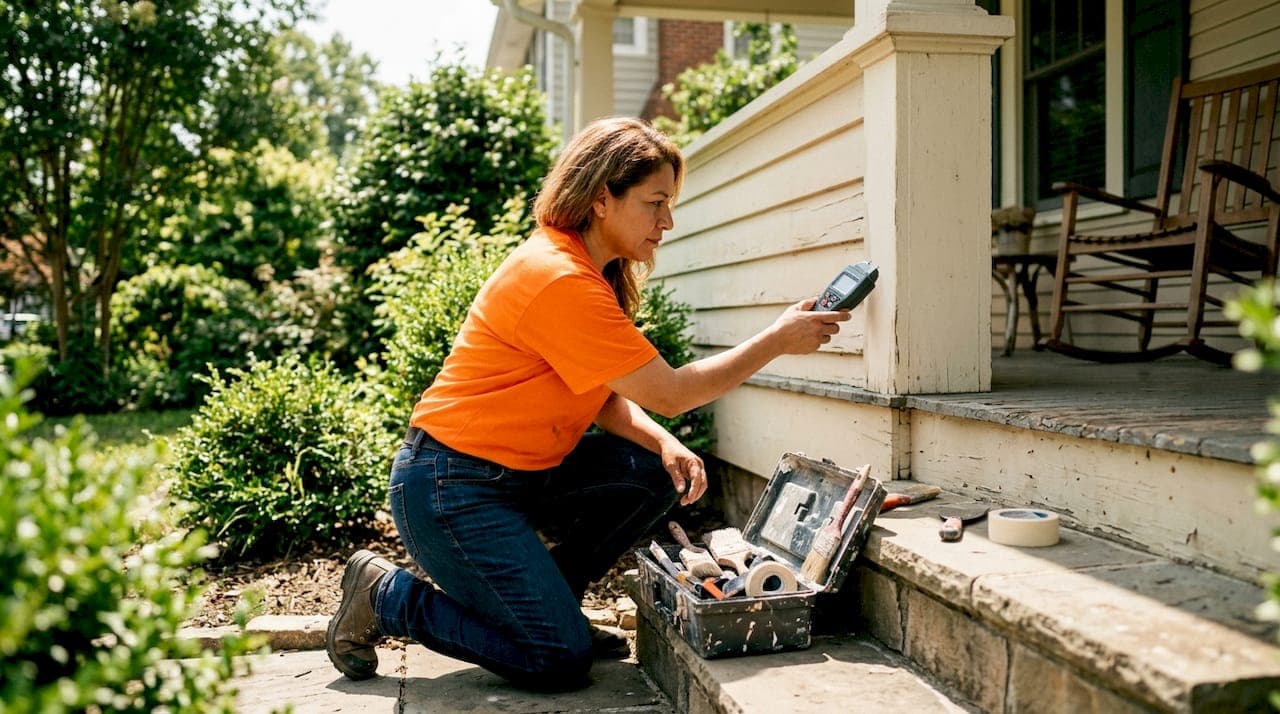
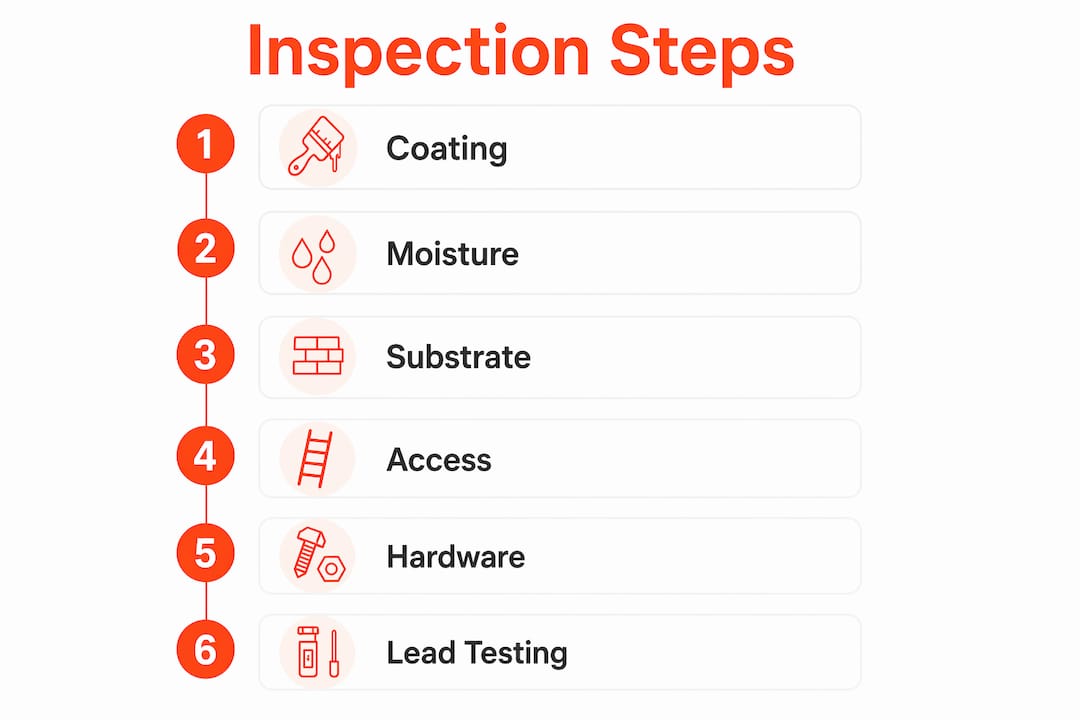
A professional painter's pre-paint inspection is a structured evaluation of six core areas: existing coating health, moisture intrusion, substrate integrity, site access, hardware status, and surface contaminants. This process, known in the industry as a pre-painting surface assessment, determines whether a surface is ready for paint or needs repair first. Skipping it is the leading cause of premature paint failure. For homeowners in Lake County, understanding what painters look for gives you the power to ask the right questions, spot a qualified contractor, and protect your investment from the start.
What does a professional painter inspect on your home?
A thorough pre-paint inspection covers six distinct areas, and each one directly affects how long your paint job lasts. Missing even one can mean peeling, blistering, or moisture damage within months of the project's completion. Here is what a qualified painter evaluates before a single drop of paint goes on your walls.
- Existing coating health. The painter looks for peeling, blistering, and chalking. Chalking happens when old paint breaks down into a powdery residue on the surface. That residue prevents new paint from bonding properly.
- Moisture intrusion. Painters use moisture meters to detect hidden dampness behind siding, around windows, and near the roofline. Moisture trapped under fresh paint causes bubbling and mold growth within weeks.
- Substrate integrity. Wood rot, cracks, and signs of structural movement all show up here. Rotted wood cannot hold paint, and cracks that come from structural shifting will reappear through any new coat.
- Site access and safety. The painter checks whether ladders, scaffolding, or lifts are needed. Tight access points or overhead hazards affect both safety, and the project timeline.
- Hardware status. Windows, door frames, light fixtures, and shutters are all noted. Loose or damaged hardware needs attention before painting begins, so the finished edges stay clean and tight.
- Surface contaminants. Mold, mildew, dirt, grease, and paint residues all prevent adhesion. A painter who skips this step is not setting the job up to fail.
Pro Tip: Ask your painter to walk you through each of these six areas before they give you a quote. A confident, knowledgeable contractor will explain every finding without hesitation.
For homes built before 1978, lead-based paint testing is legally and ethically required during the inspection. A painter who does not mention lead testing on an older home is a red flag worth taking seriously.

How do painters assess surface problems beyond what you can see?
Paint alone does not fix surface imperfections. Fresh paint actually highlights movement or instability if underlying issues are not addressed first. This is the part of the inspection process most homeowners never see, and it is where the real expertise shows.
Professional painters use a combination of specialized tools and hands-on tactile checks to find problems that are invisible to the naked eye. Here is how that process works in practice:
- Tactile surface check. Painters run their hands across surfaces to detect texture issues the eye misses entirely. A surface that feels chalky or slick will need deglossing or deep sanding before primer can bond.
- Moisture meter readings. The painter presses a moisture meter against the substrate in multiple locations. Readings above acceptable thresholds mean the surface needs to dry out or the source of moisture needs to be fixed before painting starts.
- Root cause identification. Moisture issues and drainage problems behind siding are among the most common causes of premature paint failure. Simply repainting without fixing the source leads to failure within months.
- High-intensity torch inspection. On exterior surfaces, painters sometimes use a high-intensity torch to reveal micro-blistering or delamination not visible in normal light.
- Gutter and drainage check. Gutters, downpipes, and drainage areas prone to water pooling are examined. Blocked gutters send water directly behind siding, which destroys paint adhesion from the inside out.
Pro Tip: If a painter quotes your job without touching the walls or checking moisture levels, ask why. A surface evaluation that relies only on visual inspection misses the problems that cause the most expensive failures.
The findings from this stage directly affect your project scope and budget. Identifying hidden issues like substrate rot or water stains during inspection saves homeowners costly repairs later. A painter who surfaces these problems early is doing you a favor, not padding the bill.
What should you expect during the site walkthrough?
The site walkthrough is your best opportunity to evaluate the painter as much as they evaluate your home. Professional painters answer a vetting checklist of key questions covering pre-meeting, on-site, and post-estimate stages, and they do it confidently and within a reasonable time. A qualified contractor will not dodge questions about prep, materials, or warranties.
Here is what a professional walkthrough looks like and what you should expect:
- Clear prep explanations. The painter describes exactly what prep work is needed and why. Vague answers like "we'll clean it up" are not enough. You should hear specifics: pressure washing, sanding, caulking, priming.
- Material transparency. A professional names the products they plan to use, including primer and topcoat brands, and explains why those products suit your specific surface and climate.
- Written scope of work. Professional painters explain all findings and required prep steps in a written scope of work. If a contractor gives you only a verbal estimate, that is a quality concern.
- Warranty details. A reputable painter covers both the labor warranty and the manufacturer's product warranty. You should know exactly what is covered and for how long.
- Willingness to answer questions. Painters who avoid or discourage questions during the inspection signal a potential quality problem. A confident professional welcomes them.
The walkthrough typically takes 20–45 minutes for a standard residential exterior in Lake County. Larger homes or those with significant surface issues will take longer. If a painter spends less than 15 minutes on a full exterior assessment, they have not looked closely enough.
How to inspect a paint job once the work is done
The final quality check is the homeowner's turn. A finished paint job should meet six quality markers: uniform color coverage, crisp cut-in lines, no drips or sagging, smooth brush and roller marks, consistent sheen, and a clean worksite. Checking these in good natural light, ideally in the morning or late afternoon, gives you the clearest view.
| Quality marker | What to look for |
|---|---|
| Uniform color coverage | No patchiness, thin spots, or visible primer showing through |
| Cut-in lines | Straight, clean edges at trim, ceilings, and corners |
| Surface smoothness | No visible brush strokes, roller texture, or lap marks |
| Sheen consistency | Light reflects evenly across the entire surface |
| Drips and sags | No runs, drips, or paint buildup near edges or corners |
| Clean worksite | No paint splatters on hardware, glass, floors, or landscaping |
Walk the perimeter of your home or each room in a systematic pattern. Check corners and trim lines closely, since those areas reveal the most about a painter's attention to detail. Consistent light reflection across a wall surface is one of the clearest signs of a quality application. Uneven sheen almost always means inconsistent film thickness, which shortens the life of the coating.
Key Takeaways
A professional painter's inspection is the single most important factor in whether a paint job lasts or fails within the first year.
| Point | Details |
|---|---|
| Six core inspection areas | Coating health, moisture, substrate, access, hardware, and contaminants must all be evaluated. |
| Tactile and tool-based checks | Moisture meters and hands-on surface tests find problems invisible to the eye. |
| Root cause matters | Fixing drainage or moisture sources before painting prevents early failure. |
| Homeowner vetting role | Expect written scope, material details, and confident answers during the walkthrough. |
| Final quality markers | Check for uniform color, crisp lines, smooth surfaces, and consistent sheen after the job. |
Why the inspection matters more than the paint itself
Here is something most homeowners do not realize until after a bad experience: the paint brand matters far less than what happens before the first coat goes on. I have seen premium paint fail in under two years on a surface that was not properly prepped. I have also seen budget-grade paint hold up beautifully for a decade on a surface that was cleaned, repaired, and primed correctly.
The inspection is where that outcome gets decided. Homeowners often believe that fresh paint will cover and fix surface problems. It does not. It makes them more visible. A new coat over a chalky, damp, or cracked surface will peel faster than the old paint did.
What I have found is that how a painter communicates during the inspection tells you more about their quality than any review or portfolio. A painter who walks your property, points out specific problems, and explains the fix is a painter who takes ownership of the result. One who rushes through and hands you a number without explanation is one who will rush through the prep, too.
My advice: ask questions during the walkthrough and pay attention to how the painter responds. If they welcome your curiosity and back their answers with specifics, you have found someone worth hiring. You can also review completed project examples to see what thorough prep and quality application actually look like in finished form.
— kyle
Trupaintingllcfl brings thorough inspections to every Lake County home
Trupaintingllcfl serves homeowners across Lake County with a pre-paint inspection process built on the six-area framework described throughout this article. Every project starts with a detailed site walkthrough, moisture checks, substrate evaluation, and a written scope of work before any prep begins.

Whether your home needs a full residential exterior repaint or an interior refresh, Trupaintingllcfl's team arrives prepared to find problems before they become failures. We also offer flexible painting packages that match your home's needs and your budget without cutting corners on prep. Contact Trupaintingllcfl today to schedule your on-site estimate and get a clear, honest picture of what your home actually needs.
FAQ
What does a professional painter inspect before starting a job?
A professional painter inspects existing coating condition, moisture levels, substrate integrity, site access, hardware status, and surface contaminants. These six areas determine whether the surface is ready for paint or requires repair first.
How long does a pre-paint inspection take?
A standard residential exterior inspection in Lake County takes 20–45 minutes. Homes with significant surface damage or moisture issues may require a longer assessment.
Why do painters use moisture meters during inspection?
Moisture meters detect hidden dampness behind siding and around windows that is invisible to the eye. Painting over a damp substrate causes bubbling, peeling, and mold growth within weeks.
What are the signs of a quality finished paint job?
A quality paint job shows uniform color coverage, crisp cut-in lines at trim and corners, no drips or sags, smooth surfaces without brush marks, and consistent sheen across every wall.
What should I ask a painter during the site walkthrough?
Ask about the specific prep steps planned, the products they will use, the written scope of work, and both the labor and material warranties. A qualified painter answers all of these confidently and in detail.