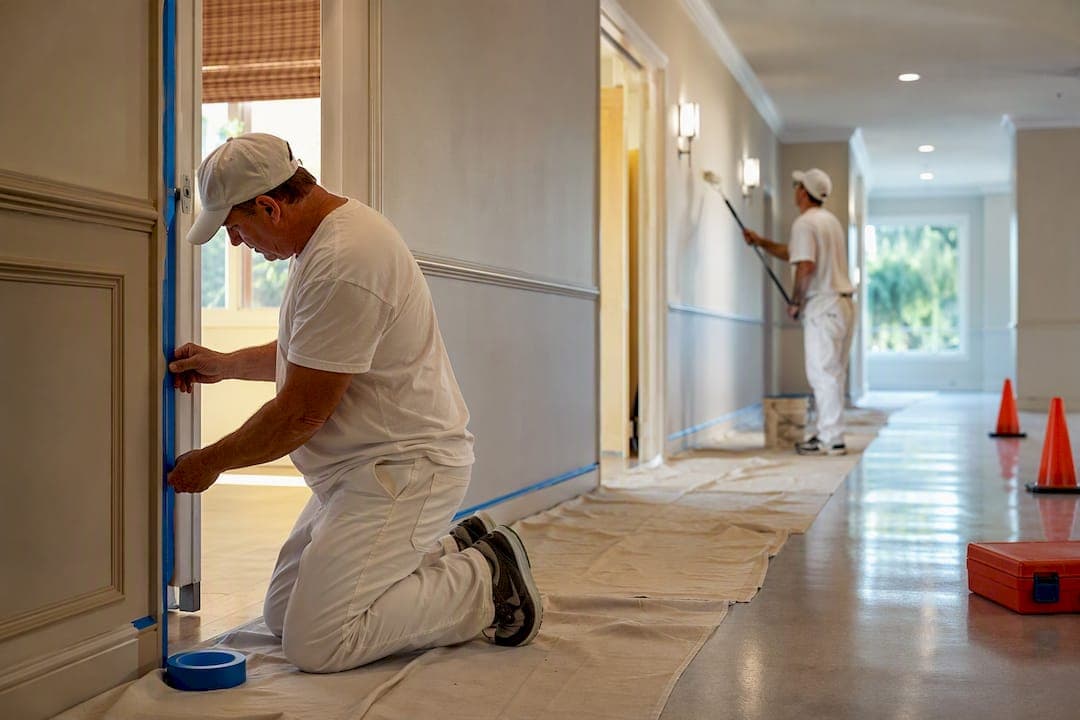
For 55+ communities, require an apples-to-apples, itemized scope and a resident-sensitive phased schedule, then compare bids and pick a licensed, insured contractor that documents inspection checkpoints. Insist on low or zero-VOC products for occupied buildings. A professional painting contractor may offer three-tier packages and can walk a community property before you commit to a scope.
TL;DR:
- Bids must include detailed scope items such as prep steps, coating types, sheen levels, and film thickness verification to ensure an apples-to-apples comparison.
- Projects often require 6 to 18 months of planning with clear phasing, including condition surveys, color locking, and resident-friendly scheduling, to prevent delays.
- Use a contractor checklist that verifies licensing, references, crew practices, warranty terms, and inspection checkpoints to select a reliable and experienced firm.
- Occupied buildings demand special tactics like containment barriers, quieter equipment, phased work, and low-VOC paints to minimize resident disruption.
- Budgeting should rely on itemized square footage estimates and contingency allowances, with funding paths from reserves, assessments, or phased payments, to avoid scope-driven cost overruns.
Table of Contents
- What Painting In 55+ Communities Actually Covers
- How Do You Plan And Phase A Community Repaint?
- What Belongs In An Apples-To-Apples Bid Request?
- What Should A Contractor Selection Checklist Include?
- How Do Crews Work Around Residents Without Disrupting Daily Life?
- How Should A Board Budget And Fund A Repaint?
- What Inspection And Warranty Terms Protect The Community?
- What Boards Get Wrong Before They Even See A Bid
- Request A Community Walkthrough From A Professional Painting Contractor
- Sources
- FAQ
What Painting In 55+ Communities Actually Covers
Painting in 55+ communities spans more than exterior siding. A full scope typically includes exterior envelopes and trim, corridors and stairwells, resident suites, dining and activity rooms, amenity spaces like clubhouses and fitness rooms, and specialty coatings for stucco or metal railings.
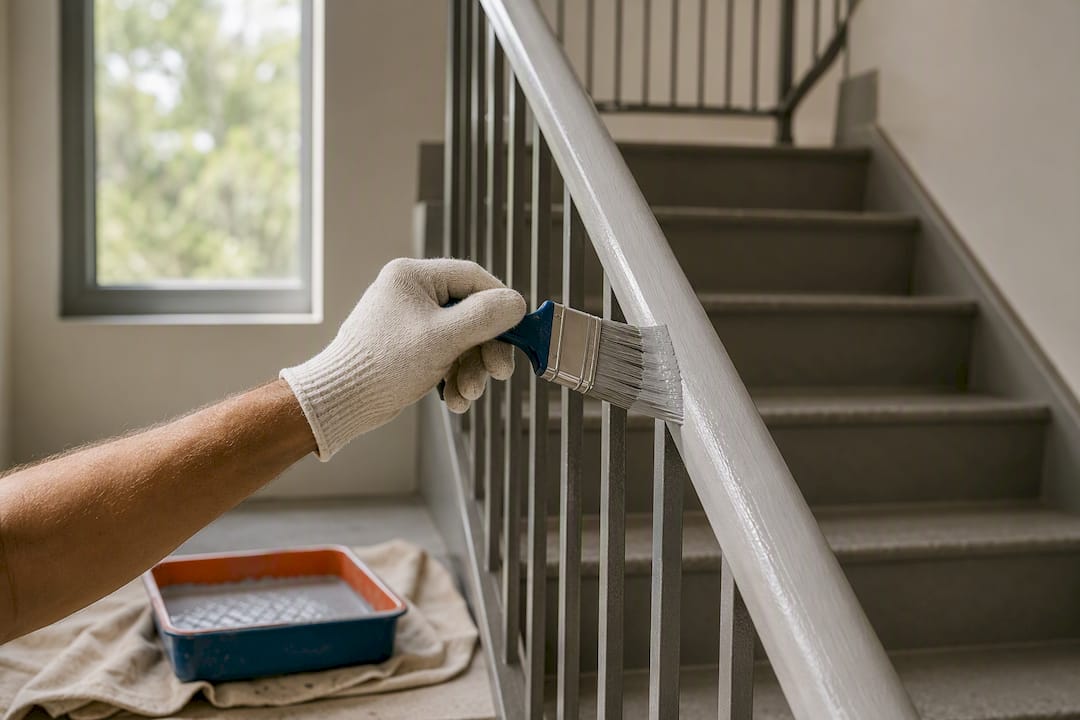
Timing depends on the surface. High-traffic corridors and dining areas often need touch-ups or full repaints every 2 to 4 years, while resident suites are commonly refreshed at turnover or sooner if there's damage or an infection-control concern. Product choice matters as much as scheduling: zero or low-VOC paints, scrubbable eggshell or satin finishes for interiors, and mildew-resistant coatings for Central Florida's humidity all belong on your spec sheet before a single bid comes in.
How Do You Plan And Phase A Community Repaint?
Most community-wide repaint projects need 6 to 18 months of planning, depending on the number of buildings, reserve fund status, and how many color and material approvals your board requires. A single-unit interior turnover, by contrast, can often be scoped and completed in a matter of weeks.
Phasing is what keeps a large project from disrupting daily life. Work moves cleanest when it follows this order:
- Complete a condition survey documenting substrate issues, prior coating failures, and repair needs building by building.
- Lock the color palette and finish specs before soliciting bids. Changing colors mid-project is a leading cause of delays and cost overruns.
- Confirm reserve funding or assessment approval so the schedule isn't paused for budget gaps.
- Break the property into wings, floors, or building clusters so residents in unaffected zones aren't inconvenienced.
- Schedule dining and activity room work during off-hours, and plan for same-day turnarounds on vacant units.
- Set a resident notification cadence, ideally weekly, so nobody is surprised by parking changes or blocked entrances.
What Belongs In An Apples-To-Apples Bid Request?
Vague bids are how boards end up comparing three completely different jobs. An effective bid package defines surface preparation standards, the specific coating system, number of coats, and contingency terms so every contractor prices identical work. Estimates vary widely for a reason, and most of that variance traces back to unclear specs rather than unclear pricing, as Spagnotti Contracting explains in its breakdown of estimate variance.
Your request for proposal should require:
- Prep steps listed line by line: pressure washing, scraping, patching, priming, and any substrate repair allowances.
- The exact coating system by manufacturer and product line, not just "premium paint."
- Number of coats, sheen level, and confirmed color codes for every surface type.
- Dry and wet film thickness targets, with mil-check verification built into the contract.
- Adhesion test points and product data sheets attached as bid exhibits.
- Access and equipment needs, daily cleanup expectations, and a written change-order process.
Pro Tip: Ask every bidder to quote a contingency allowance as a percentage of the total, not a vague "if needed" clause. That single line item exposes which contractors have actually estimated the job and which ones are guessing.
What Should A Contractor Selection Checklist Include?
Multi-building, occupied communities need more from a contractor than a good paint job. Score every bidder against the same list, and don't skip a line just because a bid looks attractive on price.
- Confirm active licensing, bonding, and general liability and workers' compensation insurance, verified directly with the carrier, not just a certificate copy.
- Request references from at least two similar 55+ or multi-family properties, including a sample project management plan from one of those jobs.
- Ask how the crew handles daily cleanup, resident communication, and whether staff background checks are standard practice.
- Require a single point of contact for the duration of the project, not a rotating list of foremen.
- Get warranty terms and inspection checkpoints written into the contract, tied directly to payment milestones.
Contractors who regularly work with HOAs bring planning and communication skills that go well beyond paint application, and that experience shows up in fewer surprises once work starts. A general contractor selection checklist built for homeowners can be adapted for board use, but multi-building projects need the HOA-specific references added on top.
How Do Crews Work Around Residents Without Disrupting Daily Life?
Occupied buildings demand different tactics than an empty house. Crews isolate work by zone, wing, or floor, use quieter equipment during common hours, and set up containment barriers so dust and fumes stay out of hallways residents use every day. Clear signage and alternate routing keep people from wandering into wet paint, and same-day turnaround workflows let a vacant unit get painted and released without holding up a move-in date.
Product selection carries just as much weight as scheduling. For occupied senior living, zero-VOC interior paints and low-odor, scrubbable coatings are the standard recommendation, paired with phased schedules that limit disruption to any single group of residents at once.
- Zero or low-VOC paints, targeting under 5 grams per liter where the product line allows it.
- Scrubbable eggshell or satin finishes for corridors and common areas that see heavy contact.
- Mildew-resistant exterior coatings suited to Central Florida humidity and rain patterns.
- High-contrast paint choices on handrails, doors, and transitions to support wayfinding, particularly useful near memory-care-adjacent units.
Pro Tip: If your community has any memory-care-adjacent units, ask your contractor to propose contrast options for door frames and handrails during the color selection phase, not after the walls are already painted.
Tru Painting structures its three-tier service packages around exactly this kind of phased, resident-aware approach, giving boards a documented plan rather than a verbal promise.
How Should A Board Budget And Fund A Repaint?
Competitive bids only mean something when every contractor is pricing the same scope. Estimate by square footage and itemized repair counts, then compare the totals side by side once specs are locked.
Funding usually comes from one of three paths:
- Reserve funds: the cleanest option if your reserve study anticipated the project, since no special vote is needed.
- Special assessments: necessary when reserves fall short, but they require board approval and resident notice.
- Phased funding: spreading the work across two or three budget cycles, which stretches the timeline but eases the cash impact.
Watch for cost drivers that inflate a bid after the fact: substrate repairs discovered during prep, specialty coatings on stucco or metal, lift or scaffolding access on taller buildings, weather delays common in Florida's wet season, and any mid-project color or scope change your board approves after work has started.
What Inspection And Warranty Terms Protect The Community?
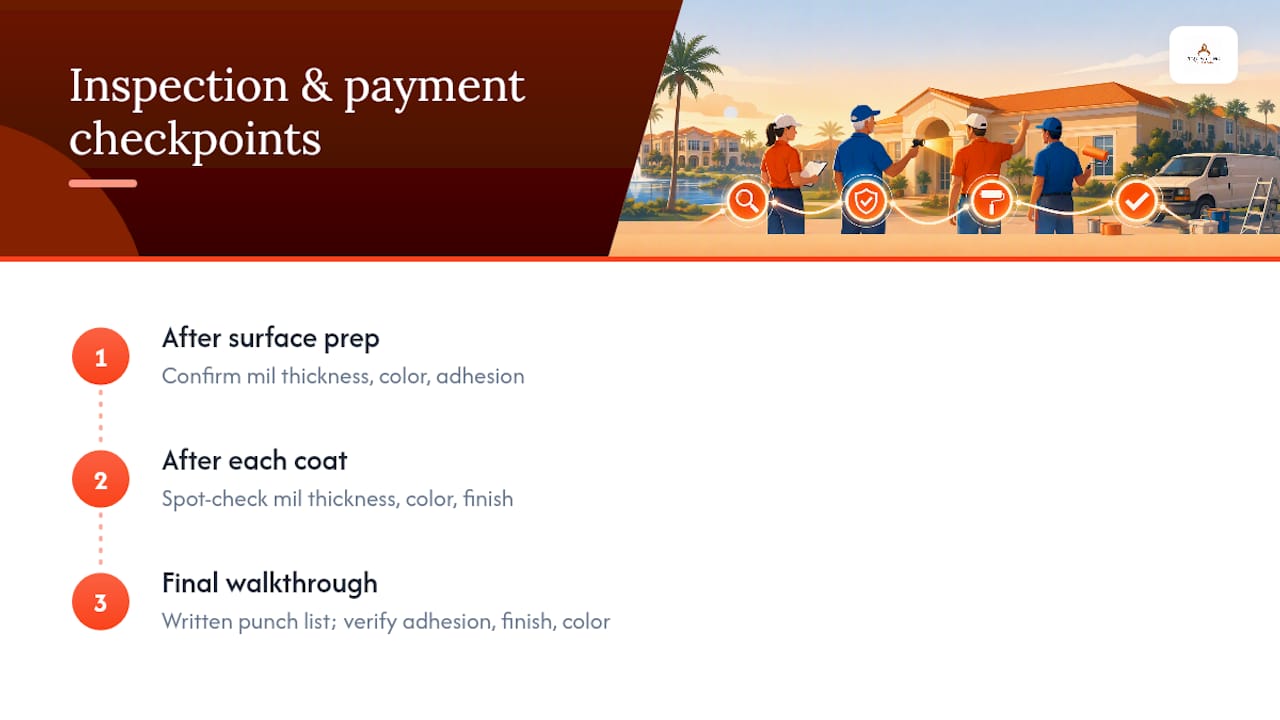
Payment should never be fully released before three checkpoints are documented: an inspection after surface prep, one after each coat, and a final walkthrough with a written punch list. Each checkpoint should confirm mil thickness through spot checks, correct color codes, and proper adhesion and finish quality, not just a visual glance from the parking lot.
Warranty language deserves the same scrutiny. Get the coverage scope, duration, specific exclusions, and the claims process in writing before you sign, and make sure OSHA-compliant jobsite safety practices are part of the contractor's standard operating procedure on an occupied property.
What Boards Get Wrong Before They Even See A Bid
Most bid disasters trace back to one mistake: comparing price before comparing scope. Boards that accept the lowest number without confirming identical prep, coats, and product lines end up paying for change orders that a detailed spec would have priced upfront. Mid-project color changes are the second-biggest budget killer, and they're entirely avoidable.
Before awarding any contract, insist on three things: a written, itemized scope; documented inspection checkpoints tied to payment; and a locked color palette. Anything less is a guess dressed up as a quote.
— Kyle
Request A Community Walkthrough From A Professional Painting Contractor
A professional painting contractor works from thorough preparation and premium products rather than the lowest bid, which is the standard a 55+ community may need when residents live on-site through every phase of the project. A walkthrough often starts with a condition survey of buildings, followed by an itemized, apples-to-apples scope, a phased schedule built around residents' routines, and sample product data sheets for every proposed coating.
At first contact, ask for exactly those four items: the survey, the written scope, the phased plan, and the specs. Compare what you receive against any other bid using the checklists in this guide, and you'll see quickly which contractor actually priced your building instead of a generic job. Tru Painting's residential and commercial exterior services cover everything from resident suites to clubhouse exteriors, and our three-tier packages let your board choose the protection level that fits the reserve budget. Reach out through Trupaintingllcfl to schedule your no-obligation community walkthrough.
Sources
- Occupational Safety and Health Administration (OSHA)
- Senior living and assisted living facility painting: resident-sensitive execution | Moorhouse Blog
FAQ
How Long Does A 55+ Community Repaint Take To Plan?
Large, multi-building projects typically need 6 to 18 months of planning once you factor in reserve approval, color selection, and phasing. A single interior unit turnover usually takes only a few weeks from bid to completion.
How Often Should Corridors And Resident Suites Be Repainted?
High-traffic corridors and dining areas often need attention every 2 to 4 years, while individual resident suites are usually refreshed at turnover or sooner if damage occurs. Track both on separate maintenance schedules since wear patterns differ significantly.
What Makes A Painting Bid Comparable Across Contractors?
A comparable bid locks the same prep standards, coating system, and number of coats across every proposal you receive. Without that shared spec, a lower number often means less prep work, not better value.
Does Tru Painting Offer Different Protection Levels For Communities?
Yes. Tru Painting's service packages range from a cosmetic refresh to maximum prep and protection, letting boards choose the investment level that matches their reserve budget and building condition. Current pricing details are available directly through the site.
What Should A Board Ask For Before Signing A Painting Contract?
Request a written itemized scope, documented inspection checkpoints after prep and after each coat, and clear warranty terms covering duration and exclusions. Confirm licensing, bonding, and insurance directly with the contractor's carrier before any contract is signed.