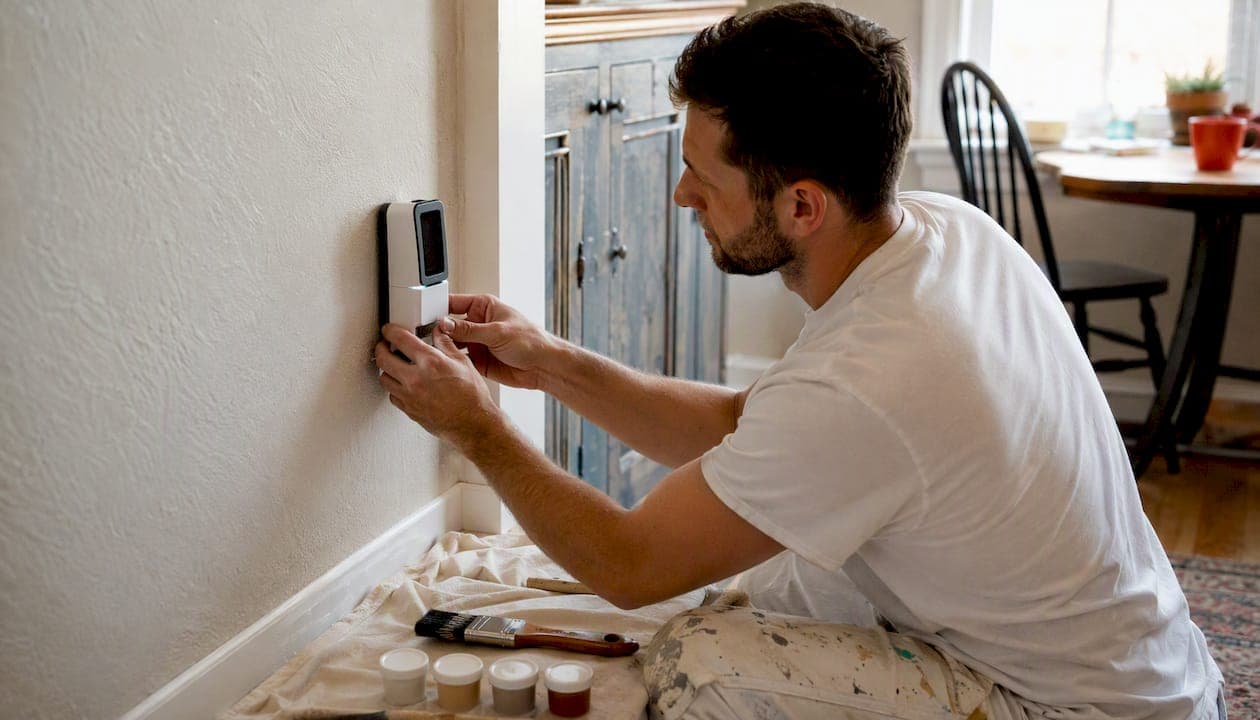
Hire a professional for touch up paint matching when the spot is larger than a nail hole, on a wall older than three years, or somewhere you'll notice a mismatch every day. DIY works fine for small, low-sheen patches under good conditions.
- Pro route: A contractor like Trupainting LLC scans your wall, dilutes and applies for an invisible blend, and stands behind the result.
- DIY route: Grab the original can (or get a fresh scan with Sherwin-Williams ColorSnap), dilute latex paint 5 to 10 percent, and feather it in with a foam brush.
Key Takeaways
Reliable touch-up paint matching depends on scanning the current wall color, matching sheen as closely as pigment, and diluting latex paint 5 to 10 percent to slow wicking during application.
| Point | Details |
|---|---|
| Scan, don't guess | A spectrophotometer or ColorSnap scan of the current wall beats an old can every time. |
| Dilute latex paint | Thinning 5 to 10 percent slows wicking and gives you more time to feather the edge. |
| Test under raking light | Sheen and texture mismatches often only appear at a low angle, not head-on. |
| Know your size threshold | Damage that is larger than a moderate area or walls older than a few years rarely blend with a simple touch-up. |
| Hire for guaranteed results | Trupainting LLC scans, dilutes, and trial-patches every touch-up before committing to the full job. |
Table of Contents
- What Does a Pro Do to Make Touch-Ups Blend?
- Why Do Touch-Ups Usually Look Different From the Original Paint?
- How Do Paint Stores Match Color Without the Original Can?
- Step-by-Step: A DIY Touch-Up That Actually Blends
- When Should You Accept a Touch-Up vs Repaint the Whole Wall?
- What Should You Ask Before Hiring a Touch-Up Contractor?
- A Painter's Perspective on Touch-Ups That Actually Work
- What Happens When You Call a Pro for a Guaranteed Match
- Sources
What Does a Pro Do to Make Touch-Ups Blend?
A painter who does this well runs through the same short list every time, whether it's a single scuff on a hallway wall or a whole run of trim.
- Inspect the surface for moisture, chalking, and prior repairs before touching a brush to it.
- Confirm sheen with a gloss meter, not a guess, since sheen mismatch shows up faster than color mismatch.
- Pull a paint chip or run an in-store spectrophotometer scan instead of trusting an old formula card.
- Clean, sand, and prime only where the surface actually needs it.
- Dilute the topcoat 5 to 10 percent for latex to slow wicking, then feather the edges with a mini roller or foam brush.
Pro Tip: Check your touch-up under natural daylight and again under a lamp at night before calling it done. Paint that looks perfect at noon can show a halo under a 60-watt bulb, and full cure can take up to 48 hours to reveal the true color.
Trupainting LLC treats this checklist as standard procedure on every job, using in-store color technology like ColorSnap rather than eyeballing a fan deck.
Why Do Touch-Ups Usually Look Different From the Original Paint?
The paint in your can and the paint on your wall are not the same thing anymore, and that's the root of almost every bad touch-up.
Wet paint has water and solvent mixed evenly through the pigment. As it dries, water either evaporates off the surface or wicks sideways into the surrounding old paint film, and those two exit paths dry at different rates. A fresh patch dries faster on top than the surrounding older film absorbs moisture underneath, and that mismatch in timing is what creates the visible "picture frame" edge around a touch-up.
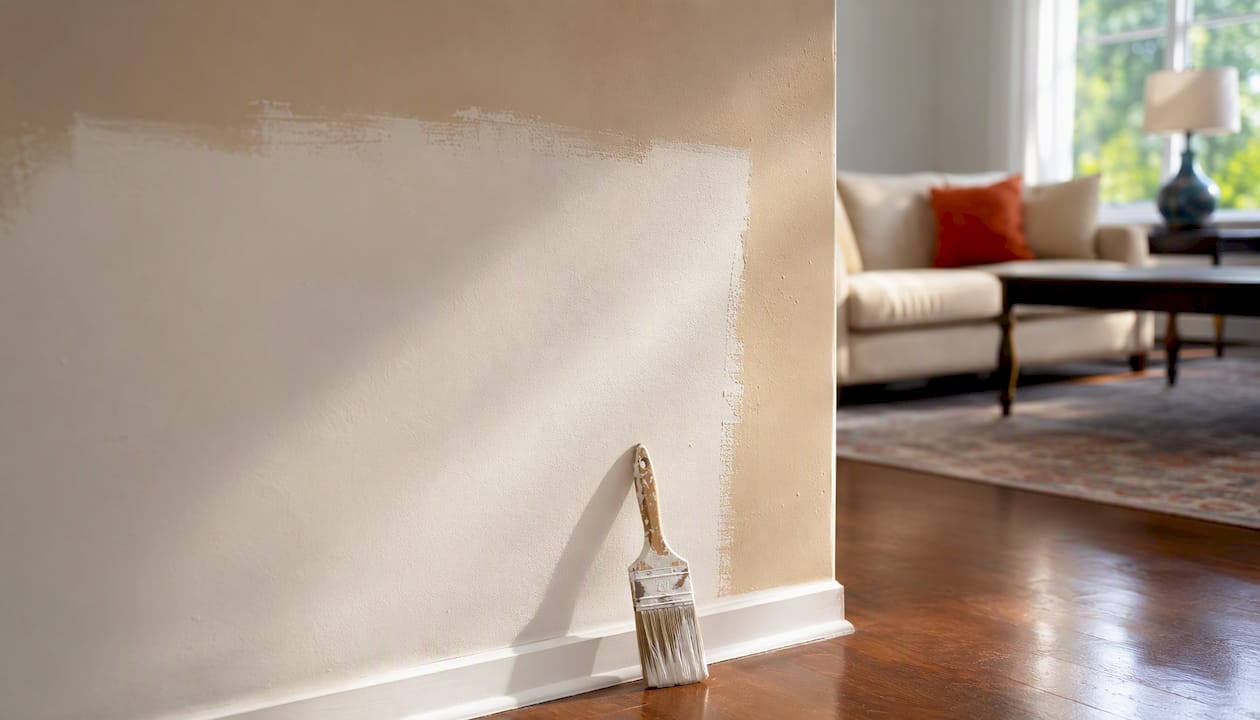
Sheen compounds the problem. A wall painted four years ago has lost some of its original reflectivity to UV exposure, dust, and repeated cleaning, so a can of the exact original formula can still look wrong once it's dry, because the old surface reflects light differently than it did on day one.
Diluting latex paint 5 to 10 percent slows that wicking process and buys the applicator more working time to feather the edge before it sets. Storage matters too: paint that has sat in a garage through a Florida summer often shifts in viscosity and tint, so scanning the current wall color usually beats trusting a five-year-old can.
How Do Paint Stores Match Color Without the Original Can?
Lost your paint can or moved into a house someone else painted? Pros and paint stores have three real options, and they are not equally reliable.
- Physical chip sampling. Removing a quarter-sized paint chip and bringing it in for a scan gives the most accurate in-store match, since the machine reads the actual pigment rather than a description of it.
- Spectrophotometer or ColorSnap scan. ColorSnap Precision and ColorSnap Match Pro use controlled LED lighting and a calibrated algorithm, which removes the guesswork that ambient room light introduces into a visual match.
- Photo matching. Useful for a rough starting point, but phone cameras adjust color temperature automatically, so a photo taken under a yellow bulb can throw the formula off by a full shade.
Confirm sheen before anyone pulls a formula. A dead ringer for the pigment in a satin finish will still look wrong on an eggshell wall.
Step-by-Step: A DIY Touch-Up That Actually Blends
Follow this sequence in order. Skipping the prep step is where most DIY touch-ups go wrong before the brush ever touches the wall.
- Prep the spot. Wipe away dust, chalking, or grease, and lightly sand any raised edges from the old damage.
- Match the color. Pull a chip and get it scanned, or match sheen and formula from your original can if you still have it.
- Mix and dilute. For latex, thin the paint 5 to 10 percent with water to slow wicking and extend your blending window; oil-based touch-ups use mineral spirits instead.
- Apply with the right tool. Use a foam brush for small, smooth spots and a mini roller for anything larger than a few inches, feathering outward from the center of the patch.
- Let it cure, then check. Give it a full 48 hours before final judgment, and inspect under raking light, since sheen mismatches often only show up at an angle, not straight on.
Pro Tip: Test your touch-up in a hidden spot first, like behind a door or inside a closet, and write down the formula and batch number on painter's tape stuck to the inside of the breaker panel; this aligns with advice on the best color to paint interior doors to ensure lasting, exact matches. Future you will thank present you.
When Should You Accept a Touch-Up vs Repaint the Whole Wall?
A nail hole or a scuff the size of a fist is almost always a safe touch-up. Once damage stretches past 12 to 18 inches, or the wall is more than three or four years old, the odds of an invisible patch drop fast.
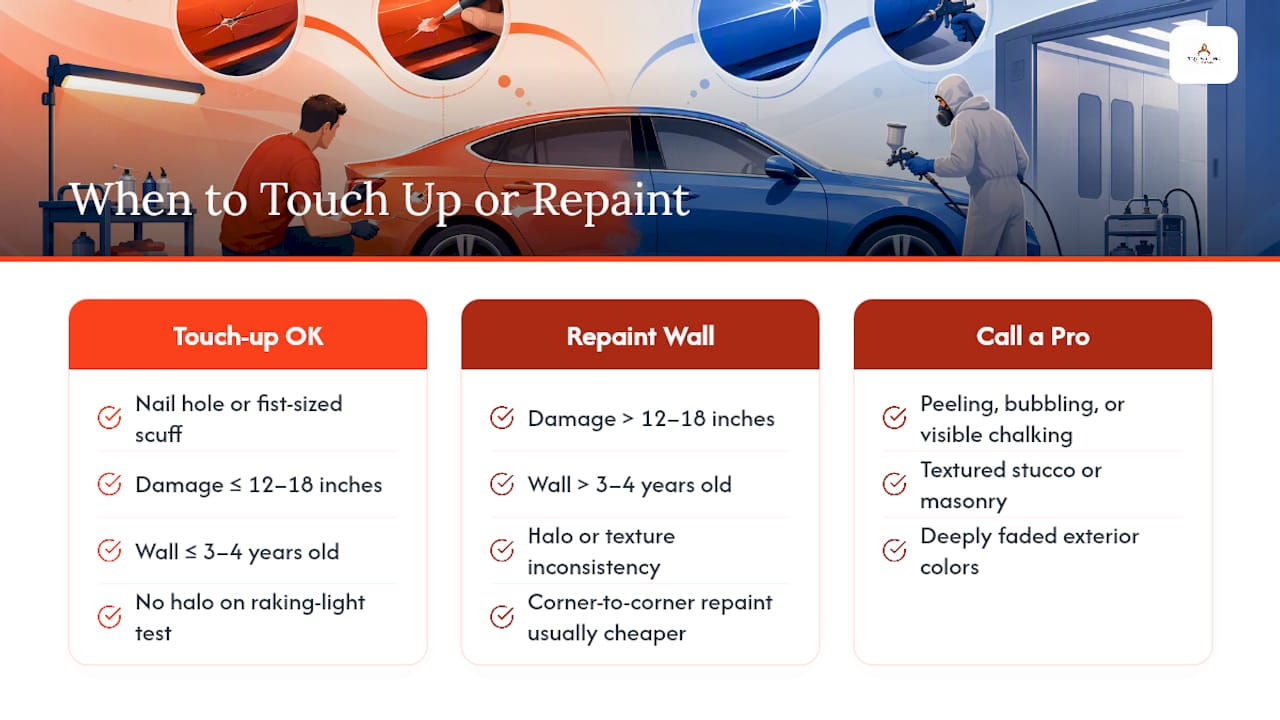
Run the raking-light test: stand a flashlight at a low angle against the wall. If it reveals a halo around a previous touch-up or a texture inconsistency, a spot repair likely will not hold up either. At that point, corner-to-corner repainting one wall is usually cheaper than paying for a second or third failed touch-up attempt.
Call a professional immediately if you see peeling, bubbling, or visible chalking on your hand after wiping the wall. Textured stucco, masonry, and deeply faded exterior colors are also situations where DIY matching rarely holds up the way it does on smooth interior drywall.
What Should You Ask Before Hiring a Touch-Up Contractor?
A quote that skips straight to a price without inspecting the wall is a red flag. Ask these questions before you sign anything.
- Do you scan the color with a spectrophotometer, or match it visually from a fan deck?
- Will you confirm sheen with a gloss meter before pulling the formula?
- Do you document the tint formula and batch number for future repairs?
- Will you apply a small trial patch before committing to the full area?
- What's your guarantee if the touch-up is still visible after it cures?
A solid quote includes inspection, a formula pull, surface prep, a trial patch, and a written follow-up policy if the color drifts after curing. Trupainting LLC follows this process on residential interior work and applies the same standard to exterior siding and trim repairs.
A Painter's Perspective on Touch-Ups That Actually Work
In the field, the biggest gap I see is homeowners trusting a five-year-old can over a fresh scan of the actual wall. At Trupainting LLC, our three-tier packages, from light spot repair to a full wall refresh, exist because the right fix depends on the wall's condition, not just the size of the scuff.
What Happens When You Call a Pro for a Guaranteed Match
Once you contact Trupainting LLC, the process is straightforward. We inspect the damaged area, run a color scan against the existing surface, and apply a small trial patch so you can see the result before committing to the full scope.

Most touch-ups need 48 to 72 hours to fully cure before a final color check, and we build that into the schedule so you're not judging wet paint against a dry wall. An in-person visit gives us the most reliable read on sheen, substrate, and age, which is why we recommend it over a phone estimate. If your project involves interior walls, trim, or cabinets, start with our residential interior painting services page to see what a scoped visit includes and request a visit for your home.
Sources
- How to match paint already on a wall — Family Handyman
- Color matching services and ColorSnap® — Sherwin‑Williams
- Color matching existing paint: what's realistic and what isn't — Supervisr