Use a ballpark estimate for early budgeting or screening contractors, and insist on a detailed, itemized estimate before you sign anything. The line separating the two matters most when prep work, multiple rooms, color changes, or a pre-1978 home are involved. Since labor typically runs 70 to 85 percent of total project cost, the estimate that spells out prep and labor is the one that actually protects your budget.
TL;DR:
- A detailed estimate, based on on-site measurements, offers much better accuracy and includes specific costs for prep, labor, materials, and coats.
- Most of the project cost comes from labor, especially on prep work, so understanding how contractors budget hours for surface preparation is essential.
- When damage or high-detail work is involved, a detailed quote is necessary, especially if home was built before 1978 or if color changes are planned.
- Verifying scope by comparing itemized estimates with consistent paint brands, coats, and prep tasks helps avoid misleading or incomplete bids.
- Relying on a ballpark is practical only for early budgeting or screening; a formal, itemized estimate is required before signing any contract.
Table of Contents
- Detailed Painting Estimate vs. Ballpark: How Each One Gets Built
- What a Good Detailed Painting Estimate Must Include
- When a Ballpark Works and When You Need a Detailed Quote
- How to Compare Painting Quotes Without Getting Burned
- What Actually Drives Painting Costs (and Realistic Ranges)
- How a Contractor Actually Scopes a Job
- What I'd Tell a Neighbor Before They Sign Anything
- Ready for a Detailed, Itemized Estimate?
- Sources
- FAQ
Detailed Painting Estimate vs. Ballpark: How Each One Gets Built
A ballpark number comes together fast, often from a phone call, a photo, or a quick walk-through. Contractors lean on rules of thumb, like a per-square-foot range, to give you a workable figure without measuring every wall or counting coats. That speed is the whole point. A ballpark helps you decide whether painting your home is even in the cards this year, or whether it's time to start collecting real bids.
A detailed estimate works differently. It starts with an on-site measurement, then breaks the job into labor hours, materials, coat counts, and specific prep allowances. Because a detailed estimate is built to become the contract, it needs to hold up once work begins, not just sound reasonable over the phone.
The accuracy gap between the two is real. A ballpark range might swing by hundreds or thousands of dollars because it hasn't accounted for peeling paint, water stains, or trim detail. A detailed estimate, built after a walk-through, usually lands much closer to the final invoice, unless the crew opens a wall and finds rot or moisture damage nobody could see beforehand.
Ballpark estimates:
- Fast to get, often same-day
- Useful for screening multiple contractors quickly
- Wide accuracy range, sometimes off by 20 percent or more
Detailed estimates:
- Require an on-site visit and real measurements
- Itemize labor, materials, prep, and coats
- Far more reliable, since concealed damage is the main variable left
What a Good Detailed Painting Estimate Must Include
A quote that just says "paint the living room, $850" tells you almost nothing. A real, itemized painting cost breakdown gives you enough detail to compare it against another bid line by line. If a contractor can't produce this, that alone is worth noting.
Here's what should show up on paper before you hire anyone:
- Exact measurements and coat counts for every surface, including linear footage of trim, baseboards, and crown molding.
- Prep work specifics — scraping, sanding, patching, priming, pressure washing — with a clear allowance for drywall or plaster repair if needed.
- Paint specifications, including brand, product line, sheen, color code, primer type, and number of coats.
- Labor breakdown, showing estimated hours or crew days, since labor represents the majority of your total cost.
- Supplies, project timeline, and payment schedule, along with warranty terms, license and insurance information, and EPA RRP certification when the home was built before 1978.
Missing prep detail is the most common gap, and it's the one that costs homeowners the most later. Two contractors can quote the same total price while meaning completely different things by "prep included." One may skip sanding entirely while the other budgets real hours for it, and you won't know which until the paint starts peeling in a year.
Pro Tip: Ask every contractor to write "prep included" as its own line, with a one or two sentence description. If they can't describe what it means, they probably haven't priced it.
When a Ballpark Works and When You Need a Detailed Quote
A ballpark estimate earns its keep in a few specific situations. It's fine when you're building an early budget, prepping numbers for a lender or appraisal, or trying to figure out if a simple, no-prep repaint fits your finances this quarter. It's also a smart way to screen five contractors down to two before anyone drives out to your house.
A detailed estimate stops being optional the moment you're ready to hire. You should require one when:
- You're actually making a hiring decision, not just researching
- There's visible or suspected damage (peeling, water stains, cracked stucco)
- You're changing colors, which often means extra coats
- The job involves high-detail trim, cabinetry, or a multi-story exterior
- Your home was built before 1978, triggering federal lead-safe work practice requirements
A practical workflow: use a ballpark to figure out if painting fits your year, then get at least two on-site detailed estimates before you sign anything. If you're selling a property, leasing a unit, or working with a fixed budget, skip the ballpark stage entirely and go straight to itemized bids. Cost certainty matters more than speed in those cases.
How to Compare Painting Quotes Without Getting Burned
Comparing two bids only works if they're actually describing the same job. A $3,200 quote and a $4,100 quote aren't comparable if one assumes two coats of a mid-grade acrylic and the other assumes a premium line with a primer coat included. Before you compare price at all, normalize the scope: same paint brand and product line, same coat count, same prep tasks, same warranty length.
Once the scope matches, ask each contractor these five questions:
- How many years have you been painting, and is it your primary trade?
- What specific paint product and sheen are you quoting?
- What prep work is included, in writing, not just "as needed"?
- What warranty do you offer, and does it cover peeling or fading?
- What's your deposit and payment schedule?
Watch for a handful of red flags. Vague phrases like "premium paint" with no brand name attached. A quote with no prep line at all. A suspiciously round total with zero breakdown. A deposit above half the project cost before any work starts. No mention of license, insurance, or warranty in writing. Getting at least three itemized bids is the simplest way to catch these issues before you sign.
Pro Tip: If a quote feels vague, just ask directly: "Can you send this itemized, with brand, coats, and prep listed separately?" A contractor confident in their pricing will send it back within a day.

What Actually Drives Painting Costs (and Realistic Ranges)
Labor is the reason two quotes for the "same" job can land thousands apart. Since labor accounts for 70 to 85 percent of a typical painting project, prep time and crew size explain most of the price gap you'll see between bids, not the paint itself.
Labor makes up the bulk of your painting bill. That single fact should shift how you read every quote: focus less on the paint brand's sticker price and more on how many hours of prep and application the contractor has actually budgeted.
Several factors reliably push costs higher: extensive prep on old or damaged walls, lead-safe work required for pre-1978 homes, high ceilings or stairwells that need scaffolding, moisture damage that requires drying time, skim-coating uneven walls, and specialty coatings like elastomeric or textured finishes.
For sanity-checking bids, here's what typical ranges look like:
- Single room, walls only: a few hundred to around $1,000, depending on size and prep
- Whole-house partial repaint: low thousands, scaling with square footage
- Full interior repaint: often lands in the low thousands nationally, with kitchens and bathrooms pushing costs higher due to trim and cabinet detail
- Full exterior repaint: varies widely based on siding material, stories, and prep required before painting
Treat these ranges as a cross-check, not a quote. If a bid falls far outside them in either direction, ask why before you sign.
How a Contractor Actually Scopes a Job
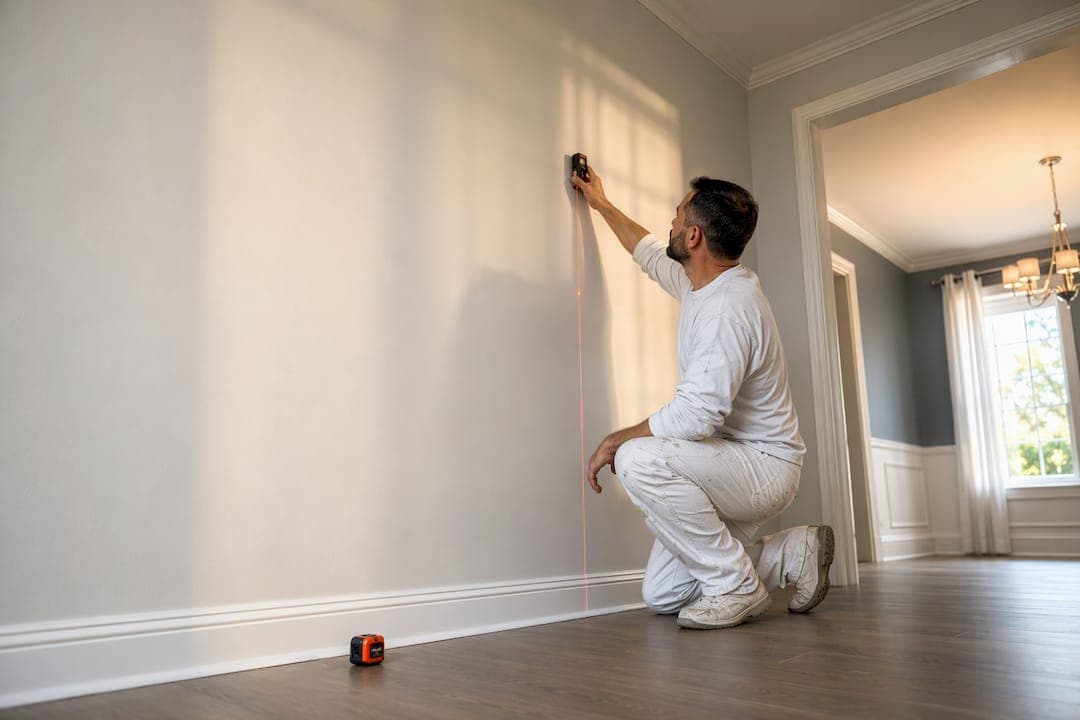
When a professional painting contractor walks a property, the measuring tape comes out before anything else. Surface area, trim linear footage, damage assessment, and access difficulty (ladders, scaffolding, tight stairwells) all get logged before a single number goes on paper.
Offering tiered service packages exists because homeowners have real budget differences and real durability needs. Matching the right level of service to the home is half the estimating job.
For pre-1978 homes, we recommend homeowners specifically ask about EPA RRP firm certification and lead-safe work practices before any painting begins.
[Author credentials, testimonials, and certifications to be added.]
What I'd Tell a Neighbor Before They Sign Anything
If you asked me directly, I'd say pay a little more for the contractor who hands you a real itemized breakdown over the one who quotes a suspiciously friendly round number. Prep is boring to talk about and expensive to skip. Homeowners who insist on documentation upfront almost always end up happier five years later than the ones who chased the lowest bid.
— Kyle
Ready for a Detailed, Itemized Estimate?
Tru Painting is the local alternative to guessing your way through a painting project in Lake County and Central Florida. Rather than handing you a vague number and hoping it holds up, we build every estimate the way this article describes: measured on-site, itemized by labor and prep, and matched to one of our three service tiers, Cosmetic Refresh, Enhanced Prep & Durability, or Maximum Prep & Protection, so you know exactly what level of protection you're paying for.
Whether you need residential interior work, a full exterior repaint, or cabinet refinishing done right, we'll walk your property and answer the same five questions this article recommends asking any contractor, including EPA RRP certification for older homes. Ready to swap your ballpark number for a real one? Request an itemized estimate or explore our three-tier service packages to see which fits your home and budget.
Sources
- Occupational Outlook Handbook: Painters, construction and maintenance (BLS)
- EPA Renovation, Repair and Painting Program (RRP)
- Interior Painting Cost Breakdown (The Fat Book)
- How to Compare Painting Quotes the Right Way (PaintPricing)
FAQ
How much should it cost to paint 1,000 square feet?
Costs vary based on ceiling height, trim detail, and how much prep the walls need, so there's no single fixed number. Interior cost guides generally place a full repaint of that size in the low thousands, and getting an on-site detailed estimate is the only way to know your specific number.
What does a ballpark estimate mean?
A ballpark estimate is a rough, quick price range given without a full on-site measurement, usually based on square footage or general job type. It's useful for early budgeting or screening contractors, but it isn't detailed enough to use as the basis for hiring or signing a contract.
How do handymen estimate painting jobs?
Handymen and general contractors often use rough per-square-foot rules or quick visual walk-throughs rather than itemizing labor, prep, and materials separately. That approach can work for small, simple jobs, but it tends to miss prep-heavy work like patching, sanding, or lead-safe requirements on older homes.
What questions should I ask before accepting a painting quote?
Ask about the contractor's experience, the exact paint product and sheen being quoted, what prep work is included in writing, the warranty terms, and the deposit schedule. If a quote can't answer these five questions clearly, treat it as incomplete rather than final.