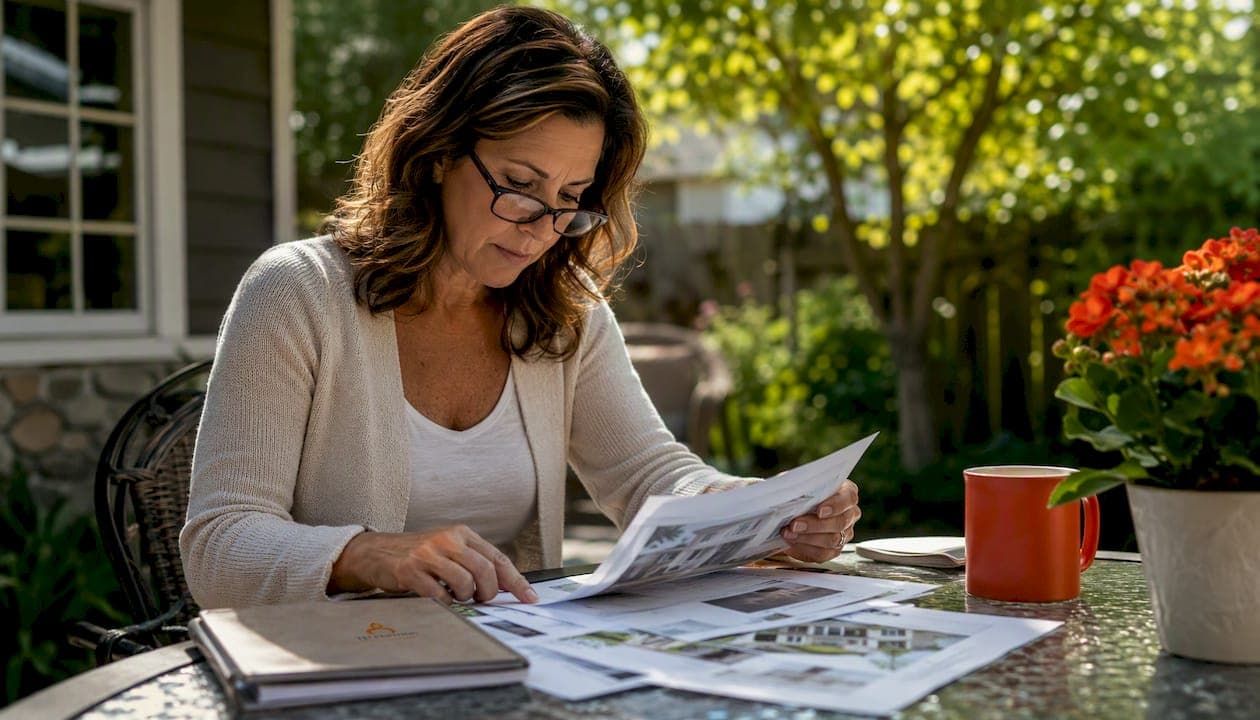
Most homeowners planning an exterior repaint will spend somewhere between $2.50 and $5.00 per square foot of paintable wall area in 2026, which translates to about $3,500–$9,000 for a typical 2,000 sq ft two-story home with standard siding. Premium paint, complex prep, or porous surfaces like stucco can push totals beyond $12,000.
Where your home lands in that range comes down to five things: size, siding type, surface condition, number of stories, and your region. A well-maintained vinyl ranch in the Midwest sits near the low end. A two-story stucco home in coastal Florida or the Northeast sits near the high end.
Your two most important next steps:
- Estimate your paintable wall area (not floor area). Multiply perimeter by wall height, then subtract windows and doors. Most homes have 60–75% of their gross wall area as paintable surface.
- Request three itemized bids that break out prep labor, paint, and repairs separately. A bid that lumps everything into one number is impossible to compare fairly.
Table of Contents
- How much does exterior house painting cost by home size?
- What are you actually paying for in an exterior painting bid?
- What factors push your quote up or down?
- How do contractors price jobs, and what should a good estimate include?
- DIY vs. hiring a professional: what does it actually cost you?
- How long does an exterior repaint take, and how long will it last?
- Practical ways to reduce cost without shortening the job's life
- Sample quotes: what real bids look like
- Key Takeaways
- What most homeowners miss about exterior painting costs
- Get an itemized exterior estimate from Trupainting LLC
- Sources and further reading
How much does exterior house painting cost by home size?
Concrete numbers help more than ranges, so here is a size-based reference table built from 2026 national pricing data. These figures assume standard siding, average surface condition, and mid-tier paint.
| Home Size (sq ft) | Stories | Estimated Cost Range | Cost per Sq Ft |
|---|---|---|---|
| 1,500 | 1 | $3,500–$7,000 | $2.50–$5.00 |
| 2,000 | 2 | $3,500–$9,000 | $2.50–$5.00 |
| 3,000 | 2 | $6,000–$12,000 | $2.50–$5.00 |
| 3,200 | 2 | $10,500–$14,500 (stucco, complex scope) | $3.28–$4.53 |
A note on floor area vs. paintable area. Your home's square footage is floor area. Paintable wall area is typically 1.3–1.5 times the floor area for a two-story home, depending on ceiling height and trim density. Calculators that model different prep tiers commonly produce totals from $3,500 to $12,000 for mid-size homes (aligns with national per-square-foot pricing: $2.50–$5.00).
Regional adjustments matter. Northeast and West Coast markets typically run 20–35% above national averages due to higher labor costs and stricter licensing requirements. Midwest and South markets tend to run 5–15% below. A $7,000 estimate in Ohio might be $9,000–$9,500 for the same scope in Boston or San Diego. State-by-state breakdowns show just how wide that variance gets, so always adjust national figures to your metro before comparing bids.
What are you actually paying for in an exterior painting bid?
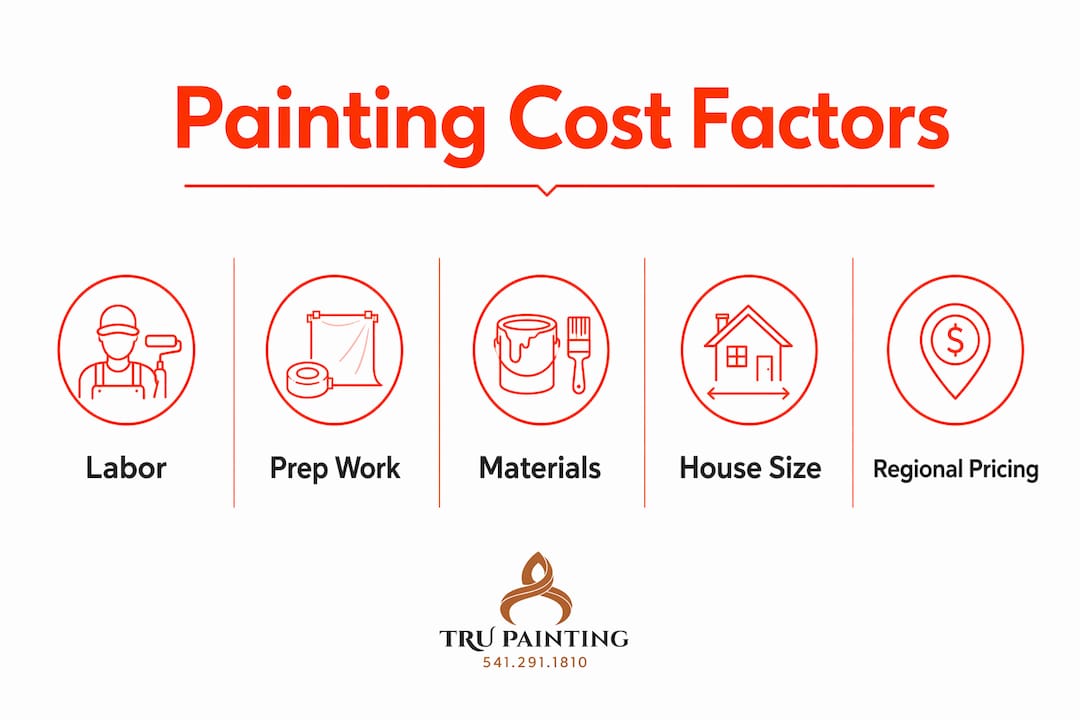
Most homeowners assume they are paying for paint. They are mostly paying for labor, and within labor, they are mostly paying for prep.
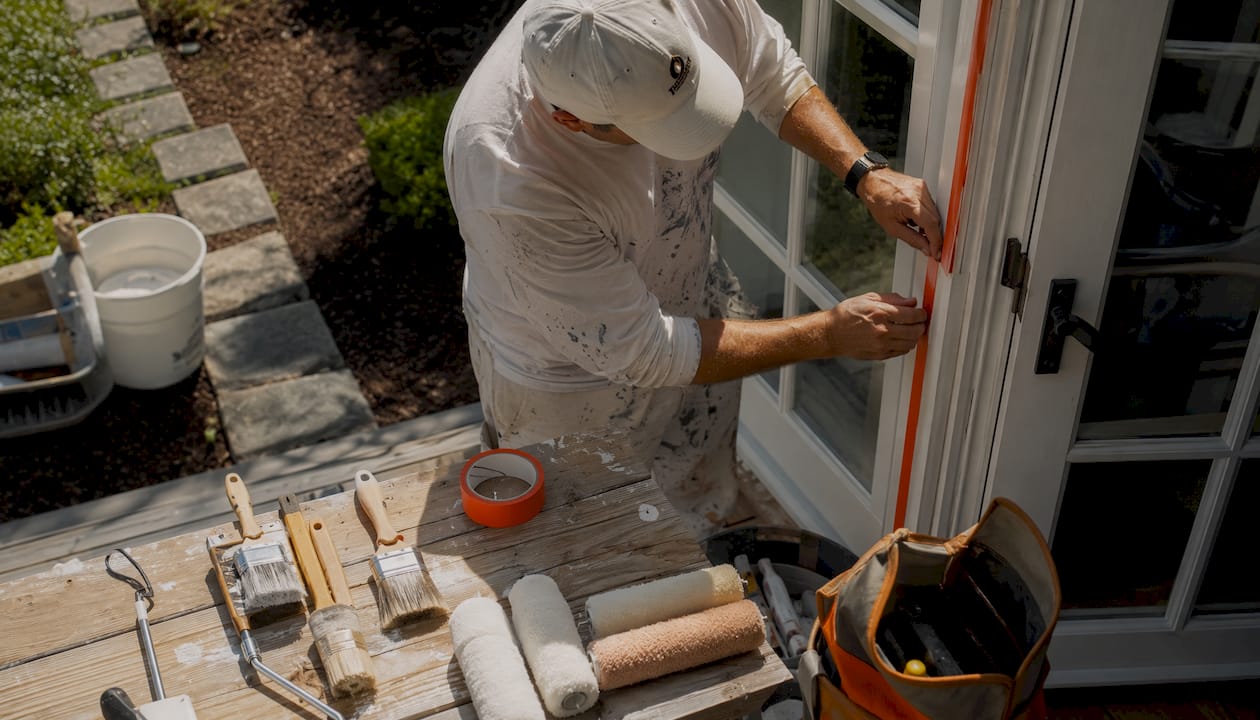
Labor accounts for a significant portion of project cost on a typical exterior job, with paint and materials covering a smaller share. The total cost of a professional exterior paint job can vary widely, mostly explained by how much prep the crew does.
Here is what a complete, itemized bid should break out:
- Pressure washing ($150–$400 depending on home size)
- Scraping and sanding loose or peeling paint (priced per hour or per linear foot)
- Caulking around windows, doors, trim joints, and penetrations
- Spot priming bare wood or repaired areas
- Masking windows, doors, fixtures, and landscaping
- Minor wood repairs or rot replacement (often quoted separately)
- Paint application: number of coats, product name and sheen
- Trim and accent work (often priced per linear foot)
- Final cleanup and walk-through
When stucco, brick, or masonry is involved, look for a line item covering masonry primer or elastomeric coating. Porous surfaces consume significantly more product and require specialized prep that smooth vinyl siding does not.
What factors push your quote up or down?
Knowing the variables lets you evaluate a bid against your actual property, not just a national average.
- Siding material. Stucco and brick add 25–40% over vinyl because of extra prep and specialty coatings. Wood siding falls in between, depending on condition.
- Surface condition. A home with peeling paint, rot, or failing caulk requires far more prep hours. That is not a contractor upsell; it is what separates a five-year finish from a two-year one.
- Number of stories and accessibility. Multi-story homes increase setup time for ladders and scaffolding, safety management, and mobilization. Tight lots, mature landscaping, and steep rooflines add to that.
- Trim and detail density. A home with deep window surrounds, decorative brackets, shutters, and multiple accent colors takes significantly longer than a clean, single-color box.
- Paint quality. Economy exterior paints cost $30–$50 per gallon; premium lines like Sherwin-Williams Duration or Benjamin Moore Aura run $70–$100+. The difference in longevity is real, typically 3–5 extra years on a premium product with proper prep.
- Regional labor rates. Covered above, but worth repeating: your metro's labor market is often the single biggest variable in a bid.
- Lead-era remediation. Homes built before 1978 may require EPA RRP (Renovation, Repair, and Painting) compliance, which adds containment, testing, and disposal costs.
- Climate and weather exposure. High-humidity coastal areas and regions with freeze-thaw cycles demand more durable coatings and more frequent repaints. In high-movement stucco regions, elastomeric coatings are often the right call, not an upgrade.
Pro Tip: When comparing bids, focus first on what the prep section says, not the paint brand. Two bids using the same Sherwin-Williams product will produce very different results if one crew pressure washes and caulks thoroughly and the other does not. The prep plan is where the value lives. Learn more about exterior prep best practices before your first contractor conversation.
How do contractors price jobs, and what should a good estimate include?
Contractors use a few different pricing models, and knowing which one you are looking at helps you compare apples to apples.
Common pricing approaches:
- Per square foot of paintable wall area — the most transparent model; easy to compare across bids when the prep assumptions are spelled out.
- Per linear foot of trim — used as a separate line item alongside the wall rate; fair when trim scope varies significantly.
- Crew hours plus materials — common on complex or repair-heavy jobs; requires you to ask for estimated hours and hourly rate.
- Flat project price — fine when the scope is fully defined in writing, but risky when prep details are vague.
What a professional, itemized bid should include:
- Full scope of prep work (pressure washing, scraping, caulking, priming)
- Number of coats and specific paint product names and sheens
- Repair items and how they are priced (included vs. time-and-materials)
- Scaffolding or lift rental if needed
- Timeline: start date, estimated duration, crew size
- Warranty or guarantee terms in writing
- Proof of license and general liability insurance
- Payment schedule (never pay more than 10–30% upfront)
Red flags to watch for:
- A very low price with no prep line items
- Verbal-only warranty with nothing in writing
- Pressure to sign before you have reviewed the full scope
- No license or insurance documentation provided
- A bid that arrives in one line: "Paint house exterior — $4,200"
Requesting multiple, detailed bids that enumerate hours, coats, and prep steps is the single most effective way to compare real value between contractors. A bid that cannot survive line-item scrutiny usually cannot survive a Florida summer either.
DIY vs. hiring a professional: what does it actually cost you?
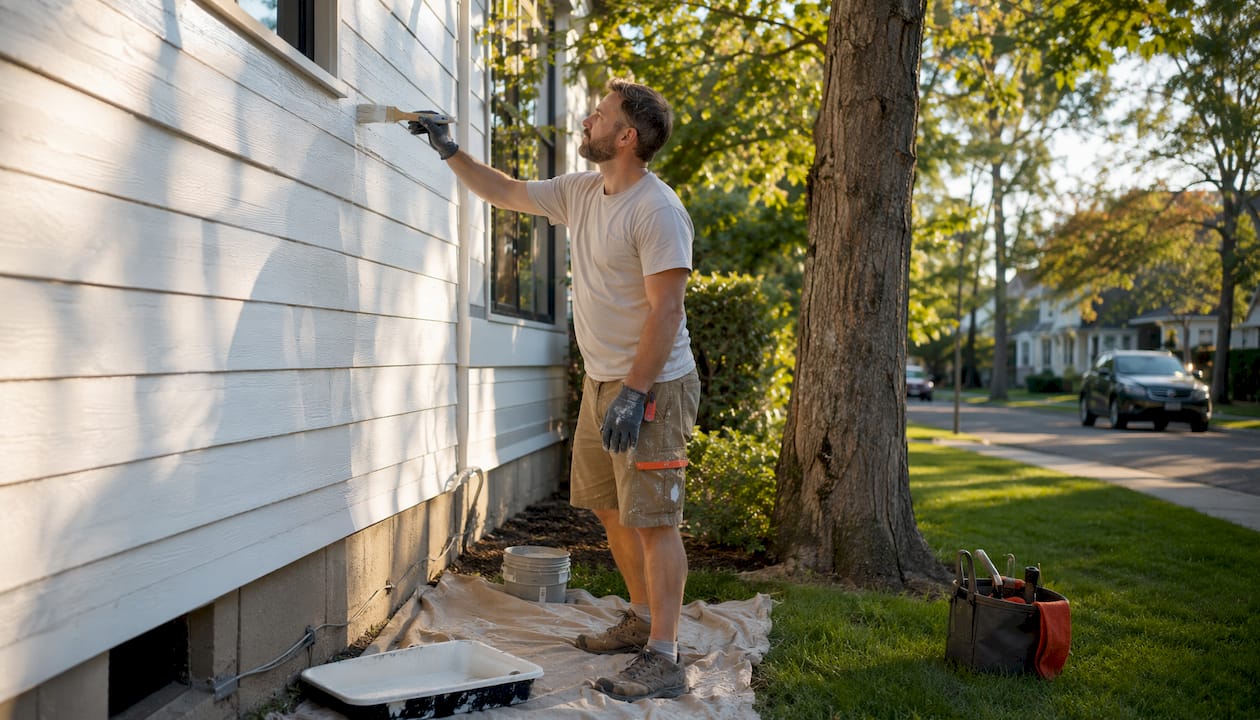
DIY exterior painting looks cheaper on paper. The full picture is more complicated.
| Dimension | DIY | Professional |
|---|---|---|
| Total cost range | $500–$1,500 (materials + rentals) | $3,500–$9,000 (typical 2,000 sq ft two-story with standard siding; mid-size homes may range higher depending on prep and region) |
| Labor time | 4–10+ days (solo) | 4–6 days (2–3 painters) |
| Skill and risk | High; prep errors are common | Managed by trained crew |
| Longevity | 3–6 years (variable) | 7–12+ years with premium prep |
| Insurance and liability | Homeowner bears all risk | Contractor's liability insurance covers damage |
| Lead-safe compliance | Homeowner responsible for RRP rules | Licensed contractors handle containment |
DIY can make sense on a single-story home with good surface condition, no lead paint concerns, and a homeowner who is genuinely comfortable on a ladder for multiple days. Where it gets risky: two-story or taller work, homes with peeling or lead-era paint, and any situation involving rot repair or masonry. Falls from ladders are among the most common serious home-improvement injuries, and a botched prep job on a $500,000 home is an expensive lesson.
For pre-1978 homes, the EPA's RRP rule requires certified contractors for disturbing more than a defined threshold of lead paint. Homeowners doing their own work are not exempt from lead-safe practices, but the legal compliance burden shifts when you hire a licensed pro. Review the prep steps involved before deciding which tasks you want to take on yourself.
How long does an exterior repaint take, and how long will it last?
Project duration depends on crew size, home complexity, and weather windows.
- Small single-story home (under 1,500 sq ft): 2 painters, 2–3 days
- Mid-size two-story (2,000 sq ft): 2–3 painters, 4–6 working days
- Large two-story or complex (3,000+ sq ft): 3–4 painters, 6–10 days
- Stucco or masonry with heavy prep: Add 1–3 days for drying and additional coat cycles
Expected lifespan by paint tier:
- Economy exterior paint: 3–5 years
- Mid-tier (Sherwin-Williams SuperPaint, Benjamin Moore Regal): 6–9 years
- Premium (Duration, Aura, elastomeric): 10–15 years with proper prep and climate-appropriate product
Climate plays a real role here. In Central Florida, UV intensity and humidity accelerate fading and mildew growth, which is why product selection and primer choice matter more than they might in a dry, mild climate. Weather's effect on exterior painting is worth understanding before you commit to a product tier.
Best seasons to schedule. Spring (March–May) and fall (September–November) offer the most reliable temperature and humidity windows for exterior painting across most of the U.S. Summer in Florida means afternoon thunderstorms that interrupt drying; winter in the Northeast means temperatures that can compromise adhesion. Shoulder-season scheduling also tends to come with better contractor availability and, in some cases, slightly better pricing.
Practical ways to reduce cost without shortening the job's life
Cutting cost and cutting corners are not the same thing. Here is where you can legitimately save money:
- Do your own pressure washing. A rented pressure washer costs $60–$100 per day. Doing this yourself removes a $150–$400 line item from the bid without affecting paint adhesion, as long as you allow adequate drying time (typically 24–48 hours).
- Limit accent and trim scope. Every additional color and decorative detail adds crew time. Simplifying to two colors instead of three can reduce labor meaningfully.
- Choose a durable mid-tier paint. Premium paint adds $300–$600 to material costs on a typical home. A quality mid-tier product with thorough prep often outperforms a premium product applied over inadequate prep. Choosing low-maintenance exterior paint wisely is one of the best long-term cost decisions you can make.
- Schedule in shoulder seasons. Spring and fall bookings sometimes come with better availability and pricing than peak summer demand.
- Bundle with pressure washing. If a contractor already has a crew on-site, adding pressure washing to the scope is usually cheaper than a standalone visit.
Pro Tip: When you negotiate scope, protect the prep line items first. If a contractor offers to lower the price by reducing coats from two to one, that is a reasonable trade-off on a well-prepped surface. If they offer to skip the caulking or primer, walk away. Contract language should specify the prep steps by name, not just "standard prep." That specificity is what gives you recourse if the finish fails early.
When a higher upfront cost is worth it: homes with existing peeling, rot, or moisture intrusion need thorough prep and a quality primer before topcoats. Skipping those steps to save $500 today typically means repainting in three years instead of eight. The math on lifetime cost per year almost always favors doing it right the first time.
Sample quotes: what real bids look like
These are anonymized examples based on typical market conditions, not specific contractor quotes.
Example 1: Small single-story vinyl refresh
- Home: 1,400 sq ft, one story, vinyl siding, good condition
- Scope: Pressure wash, caulk windows, two coats mid-tier paint, no repairs
- Total: $2,800–$3,400
- Key line items: Pressure wash ($150), caulking ($200), paint and labor ($2,450–$3,050)
Example 2: 2,000 sq ft two-story mid-range repaint
- Home: 2,000 sq ft, two stories, wood siding, some peeling and minor rot
- Scope: Pressure wash, scrape and sand, spot prime, two coats premium paint, minor wood repairs
- Total: $6,500–$8,500
- Key line items: Prep labor ($2,200), repairs ($600), paint and materials ($1,400), application labor ($2,300–$4,300)
Example 3: 3,200 sq ft stucco home, premium scope
- Home: 3,200 sq ft, two stories, stucco, coastal exposure, elastomeric coating specified
- Scope: Full pressure wash, crack repair, elastomeric primer, two coats elastomeric topcoat
- Total: $10,500–$14,500
- Key line items: Crack repair and prep ($3,000), elastomeric materials ($2,800), application labor ($4,700–$8,700)
What a low bid usually means in practice: A bid that comes in 30–40% below the others on a comparable scope almost always reflects one of two things: the contractor plans to skip prep steps, or they are underestimating the job and will cut corners once on-site. A finish applied over inadequate prep on a stucco home typically begins peeling within 18–24 months. The "savings" evaporate fast.
Siding type explains most of the difference between Example 1 and Example 3. As noted earlier, stucco and brick add 25–40% over vinyl because of prep complexity and specialty coatings. Local variation matters too: the same stucco job in Central Florida may price differently than in Phoenix or New Jersey because of labor markets and product requirements.
Key Takeaways
Exterior house painting costs $2.50–$5.00 per square foot nationally in 2026, and the single biggest determinant of long-term value is the quality of prep and the crew, not the paint brand.
| Point | Details |
|---|---|
| National cost range | Most homes fall between $3,500 and $9,000 for a typical 2,000 sq ft two-story with standard siding. Stucco or complex scopes can exceed $12,000, and some premium projects may push past $15,000. |
| Labor drives the price | Labor accounts for roughly 45.4% of project cost; prep tasks consume the majority of crew hours. |
| Get three itemized bids | Bids that enumerate prep steps, coat counts, and product names are the only ones you can compare fairly. |
| Regional adjustment required | Northeast and West Coast markets run 20–35% above national averages; Midwest and South run 5–15% below. |
| Trupainting LLC for local estimates | Trupainting LLC offers three-tier service packages with itemized bids for homes in Lake County and Central Florida. |
What most homeowners miss about exterior painting costs
The pricing conversation almost always focuses on the wrong thing. Homeowners compare total bid numbers, contractors compete on price, and the prep plan gets buried in the fine print. That is where most exterior paint jobs fail.
A finish that lasts ten years on a well-prepped surface costs roughly the same per year as a finish that lasts four years on a poorly prepped one, except the second scenario also means living through another full repaint project in year five. The real cost of a cheap bid is not the money you save upfront. It is the disruption, the disappointment, and the full price you pay again sooner than you should.
What I see consistently in the field: homeowners who got three bids, asked about prep, and chose the contractor who could explain their process clearly always end up happier than those who chose the lowest number. The questions you ask before signing tell you more about a contractor's quality than any review site.
Trupainting LLC's approach starts with a thorough inspection of the surface before we quote anything. We do not guess at prep hours; we scope them. Our three-tier packages give homeowners a clear choice between levels of protection and investment, and every bid we write breaks out prep, materials, and application separately. If you are in Lake County or Central Florida, you can see examples of our work and read about our process before you ever pick up the phone.
Get an itemized exterior estimate from Trupainting LLC
Homeowners in Lake County and Central Florida have a local option that brings contractor-grade transparency to every bid. Trupainting LLC's residential exterior painting services are built around three service tiers: a solid foundation package for well-maintained homes, a mid-tier package that adds enhanced prep and premium coatings, and a premium package for homes that need thorough restoration and maximum longevity. Every tier comes with a written, itemized estimate that breaks out prep, materials, and application so you know exactly what you are getting.
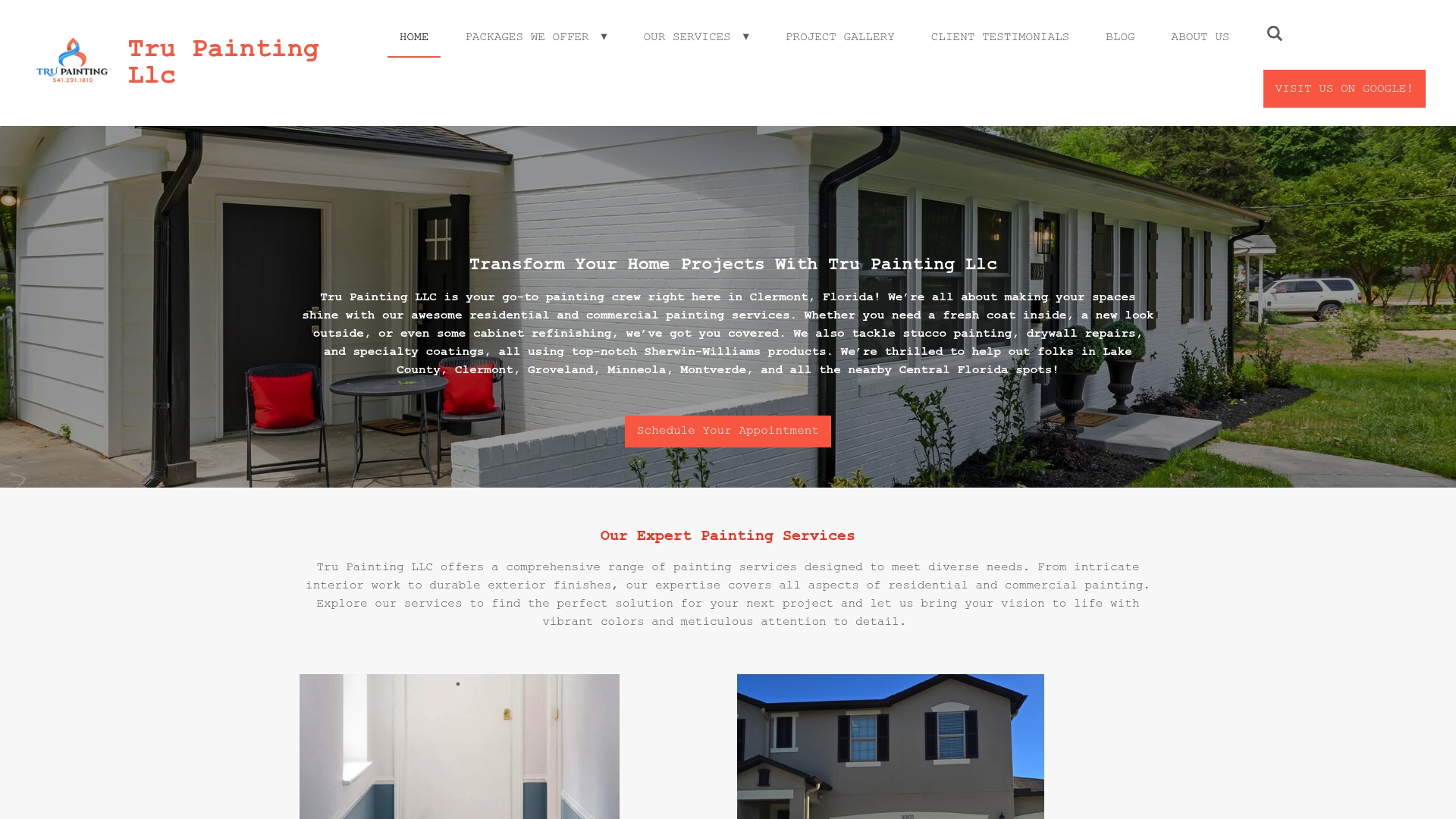
We are licensed, insured, and have served Central Florida homeowners with the kind of meticulous prep and durable finishes that hold up against Florida's UV intensity and humidity. Requesting a free estimate is straightforward: call us, fill out the contact form on our site, or visit our exterior services page to get started. We will walk your property, scope the prep honestly, and give you a bid you can actually compare.
Sources and further reading
Use these resources to cross-check estimates, run your own calculations, and dig deeper into specific topics:
- HomeCostCalc Exterior Painting Cost Calculator — model different prep tiers and home sizes; check coat count and primer assumptions before trusting a single output number.
- CostWhale Exterior Painting Cost Guide — includes state-by-state breakdowns useful for adjusting national figures to your metro.
- costtorenovate.com 2026 Exterior Painting Cost Guide — detailed per-square-foot and siding-type breakdowns.
- NerdWallet: How to Save on House Painting Costs — practical cost-reduction strategies with accessibility and multi-story context.
- Trupainting LLC: What Does a Full Exterior Repaint Include? — line-item breakdown of a complete repaint scope from a contractor's perspective.
- Trupainting LLC: Exterior Paint Preparation Best Practices — step-by-step prep guidance to help you evaluate what a contractor's bid should include.
- One Day Doors & Closets: How to Make Your Home Look More Expensive — complementary curb appeal upgrades worth considering alongside an exterior repaint.