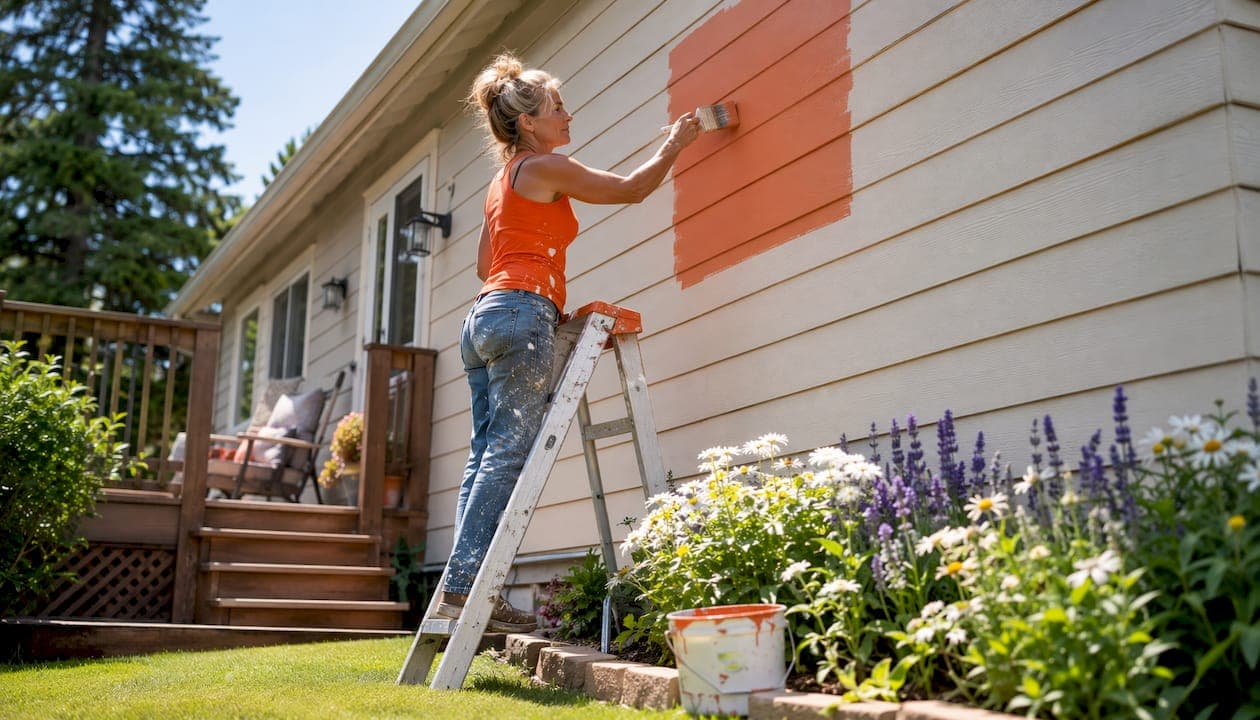
Choosing the right exterior paint color is one of the most impactful decisions you can make for your home. Get it right, and your house looks polished, cohesive, and welcoming for years. Get it wrong, and you're looking at a costly repaint. Here are the core exterior paint color selection tips that set every successful project up for a great outcome:
- Start with your fixed elements: roof, brick, stone, and window frames come first.
- Identify warm or cool undertones in existing materials before picking any paint.
- Test large swatches (at least 2x2 feet) on multiple sides of your house.
- Observe those samples at different times of day, not just at noon.
- Match your color palette to your home's architectural style.
- Consider your neighborhood context and any HOA color guidelines.
- Use the 60/30/10 rule: 60% siding, 30% trim, 10% accents.
- Choose muted, low-chroma colors over bright, saturated ones for exteriors.
- Factor in your local climate and sun exposure when selecting paint formulas.
These principles work together. Skipping even one of them is how homeowners end up with a color they love on the chip but regret on the wall.
Table of Contents
- 1. How to read color undertones in your existing exterior materials
- 2. How to test exterior paint colors before you commit
- 3. Why your neighborhood, landscape, and sun orientation matter
- 4. Expert insights on architectural style and color composition
- 5. How long exterior paint lasts and why your color choice affects it
- Key Takeaways
- Trupainting LLC brings expert color guidance to your front door
1. How to read color undertones in your existing exterior materials
Your home's fixed materials, the roof, brick, stone, driveway, and window frames, are the real starting point for any exterior color scheme. They're not going anywhere, so your paint has to work with them.
The key move here is to look past the dominant color and focus on the undertones. Brick and stone undertones are often the best guide for accent paint colors, and the least dominant hue in masonry tends to make the most harmonious accent choice. A warm red brick, for example, usually carries tan or brown undertones, which means a creamy beige or warm gray siding will feel cohesive, while a cool blue-gray will clash.
- Hold a neutral gray paint chip next to your stone or brick in natural light to see whether it reads warmer or cooler.
- Roof color is equally critical: a gray roof pairs naturally with blues and greens, while a brown roof calls for warmer tones.
- White vinyl window frames push you toward a crisp white trim; dark bronze frames give you more flexibility for contrast.
- Balancing warm and cool tones throughout the palette prevents the exterior from feeling either too heavy or too clinical.
Muted, low-chroma colors almost always outperform bright, saturated ones on exteriors, especially when coordinating with brick or stone. Bright colors work beautifully inside; outdoors, they tend to compete with natural surroundings rather than complement them.
2. How to test exterior paint colors before you commit
Small paint chips are one of the most common mistakes homeowners make. A color that looks perfect on a 2-inch swatch can look shockingly bright or completely washed out across an entire facade. Colors shift dramatically on large surfaces and under changing light, which is why professionals always recommend painting large test swatches directly on the house.
- Paint swatches at least 2x2 feet (ideally larger) on multiple sides of your home, including both sun-exposed and shaded walls.
- Observe them across several days, in morning light, afternoon sun, and evening shade.
- Digital renderings use a different color space than real paint, so treat them as inspiration tools, not final decisions.
- Watch how the color behaves when clouds pass over versus in direct sun.
Pro Tip: Exterior paint appears lighter and more intense in natural daylight. Choose a shade or two darker than your initial preference to compensate for the brightness that sunlight adds to large painted surfaces.
Painting large sample areas and observing them over multiple days in changing light is the single most reliable way to understand how a color will actually behave on your home.
3. Why your neighborhood, landscape, and sun orientation matter
Your home doesn't exist in a vacuum. The surrounding environment, neighboring houses, mature trees, garden beds, and the direction your walls face all influence how your paint color reads from the street.
North-facing walls stay in shade most of the day, which makes colors appear cooler, darker, and grayer than they look on a chip. South- and west-facing walls receive direct sunlight for hours, making colors appear brighter and more saturated. A color that looks balanced on the shaded front of your house may feel completely different on the sun-drenched side.
- Check whether your neighborhood has an HOA with exterior color guidelines before you fall in love with a shade.
- Look at neighboring homes and note whether your palette will complement or clash with the street's overall character.
- Consider your landscaping: deep green lawns and flowering plants shift how a paint color reads, especially in Florida's lush environment.
- Climate and substrate affect durability too. UV resistance, moisture management, and proper surface prep all determine how long your chosen color stays vibrant.
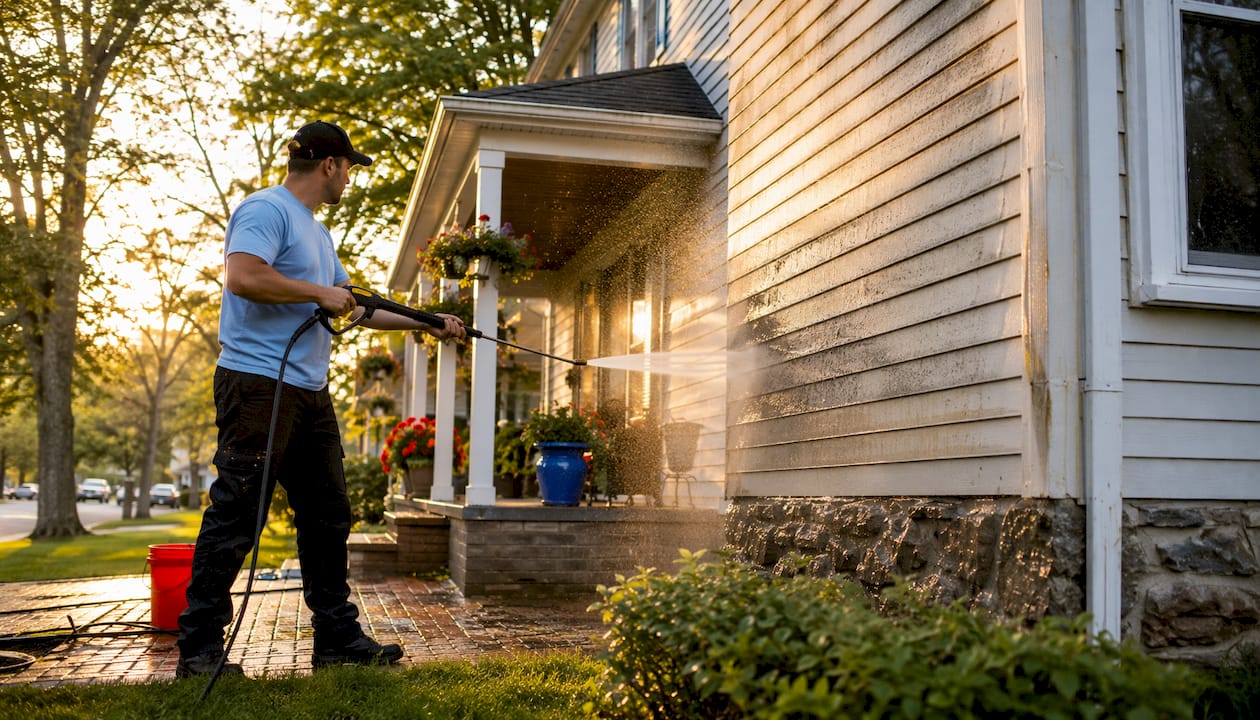
A clean surface is the foundation of any lasting paint job. Pressure washing before painting removes mildew, dirt, and chalking that would otherwise cause premature peeling, no matter how good the paint is.
4. Expert insights on architectural style and color composition
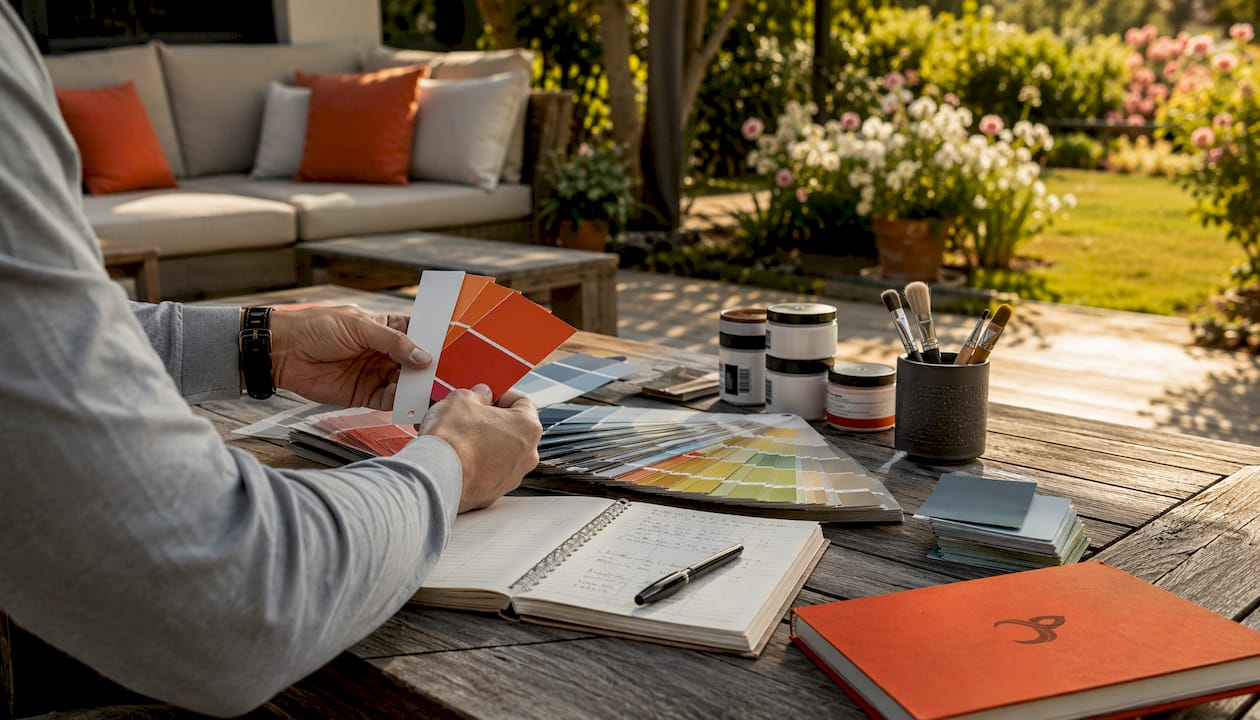
Professional color consultants approach exterior painting the way an artist approaches a canvas. Color consultant Debra Kling describes the process as viewing your home as a painting, using color placement to achieve harmony and balance rather than simply picking a shade you like in isolation.
Architectural style is your built-in roadmap. A Modern Farmhouse looks best in crisp whites or deep primary shades. A Tudor benefits from earthy, muted tones that echo its timber and stone. A Craftsman shines with warm, nature-inspired palettes. Ignoring architectural style when selecting paint colors often leads to mismatched looks and expensive repainting.
- The 60/30/10 rule creates professional-looking results: 60% main siding color, 30% trim, 10% accent on doors and shutters.
- A bold front door with neutral shutters delivers personality without overpowering the facade.
- Limit your palette to 3–4 complementary colors for a cohesive, polished look.
- Roof color undertones should align with your siding choice; a warm brown roof and a cool gray siding will always feel disconnected.
The most common mistake we see is homeowners choosing colors in isolation, picking a siding color they love without checking how it reads against the roof, trim, and stone together. Seeing the full picture before committing is what separates a great exterior from a frustrating one.
5. How long exterior paint lasts and why your color choice affects it
Exterior paint is a long-term investment. High-quality acrylic latex paints typically last 5–10 years, and premium 100% acrylic formulas can protect your home for up to 15 years with proper maintenance and preparation. Your color choice directly affects how long that finish holds up.
Darker colors absorb more heat, which accelerates fading and can cause warping on vinyl siding. Lighter colors reflect sunlight, staying cooler and retaining their appearance longer, especially in Florida's intense UV environment. Selecting paint based on climate and substrate means accounting for UV resistance, moisture management, and the specific material you're painting over.
Neutral colors like whites, grays, and blacks dominate popular exterior paint choices for good reason: they're timeless, they hold their appeal across decades, and they tend to offer the broadest resale value potential. Trend-driven colors can feel dated within a few years, adding unnecessary repainting costs. A thoughtful, timeless palette protects both your home and your budget. For guidance on low-maintenance exterior paint choices that hold up to Florida's climate, the right formula matters as much as the color itself.
A well-chosen exterior color, applied over properly prepared surfaces with the right paint formula, is one of the most durable and value-adding improvements you can make. Exterior painting improves property value and curb appeal in ways that few other home improvements can match at the same cost.
Key Takeaways
Choosing the right exterior paint color requires matching undertones to fixed materials, testing large swatches in real light, and aligning your palette with your home's architectural style and local climate.
| Point | Details |
|---|---|
| Start with fixed materials | Identify warm or cool undertones in your roof, brick, and stone before selecting any paint color. |
| Test at scale | Paint swatches at least 2x2 feet on multiple sides and observe them across several days in changing light. |
| Go darker than you think | Exterior paint appears lighter outdoors; choose a shade or two darker than your initial preference. |
| Use the 60/30/10 rule | Distribute color as 60% siding, 30% trim, and 10% accents for a cohesive, professional result. |
| Trupainting LLC | Trupainting LLC provides expert color guidance and premium exterior painting for Central Florida homeowners. |
Trupainting LLC brings expert color guidance to your front door
Getting the color right is one thing. Getting it applied flawlessly, over properly prepared surfaces, with premium products that hold up to Florida's heat and humidity, is another. That's exactly where Trupainting LLC delivers.
Trupainting LLC is a locally owned painting contractor serving Lake County and Central Florida, and we bring the same meticulous preparation and color expertise to every residential exterior project we take on. We don't just roll paint on walls. We assess your home's fixed elements, discuss undertones and architectural style with you, and help you land on a palette you'll be proud of for years. Our flexible three-tier service packages mean you choose the level of protection and investment that fits your home and budget, without sacrificing quality. Ready to see what the right color and the right crew can do for your home? Contact Trupainting LLC today to schedule your consultation.