
Yes. Most professional painting crews will shift light-to-medium furniture away from the walls, center it in the room, and cover it before they start painting. Heavy or specialty pieces, like pianos, safes, or built-ins, usually need a separate arrangement or an extra fee, since moving them falls outside a typical painter's scope. That split exists for a simple reason: time and liability. A crew paid to paint isn't insured or staffed the same way a moving company is, so shifting a sofa is fine, but hauling an armoire down a staircase is not.
Here's what to do right now, before the crew ever shows up:
- Ask your estimator directly whether furniture moving is included or billed separately.
- If you own heavy, fragile, or irreplaceable items, book a moving service in advance rather than assuming the painters will handle it.
- Get the agreed scope written into your estimate so there's no confusion on day one.
Key Takeaways
Most painters move light-to-medium furniture and protect the rest, while heavy or specialty items typically require professional movers or a pre-arranged fee.
| Point | Details |
|---|---|
| Confirm scope early | Ask your estimator exactly what furniture moving includes before signing anything. |
| Budget for specialty items | Pianos, safes, and antiques usually need a separate mover, not the paint crew. |
| Prep the small stuff yourself | Empty shelves, drawers, and remove breakables before the crew arrives. |
| Wait out the cure time | Hold off on heavy furniture return for several days, not just overnight. |
| Ask Trupainting LLC directly | Our residential estimates spell out furniture handling by service tier so nothing is left to guesswork. |
Table of Contents
- Who Should Move What: Painters vs. Professional Movers
- How Painters Charge When Furniture Moving Is Requested
- What Painters Typically Move, Protect, and Expect From You
- Homeowner Checklist: What to Do Before Painters Arrive
- Options for Large, Heavy, or Specialty Items
- When Can You Move Furniture Back? Paint Dry Times Explained
- Questions to Ask Your Painter (and Red Flags to Watch For)
- What a Full-Service Painting Contractor Typically Offers
- When I'd Hire Movers vs. Let the Painters Handle It
- How Trupainting LLC Handles Furniture During Your Project
- Sources
- FAQ
Who Should Move What: Painters vs. Professional Movers
Painters generally handle the furniture that's easy to shift safely: sofas, chairs, coffee tables, end tables. They'll pull these pieces away from the walls, group them toward the center of the room, and cover them before cutting in any paint. What they typically won't touch are pianos, gun safes, oversized armoires, heavy built-ins, or anything that requires emptying a room entirely or moving items between floors. That's mover territory.

The liability angle matters more than most homeowners realize. A painting company's insurance is built around paint work, not furniture handling, so many crews intentionally limit what they'll lift to avoid damage claims they can't cover.
Pro Tip: During your estimate walkthrough, point at every large or delicate item in the room and ask directly, "Will your crew move this, or should I arrange something else?" Getting a yes or no per item beats a vague blanket answer.
How Painters Charge When Furniture Moving Is Requested
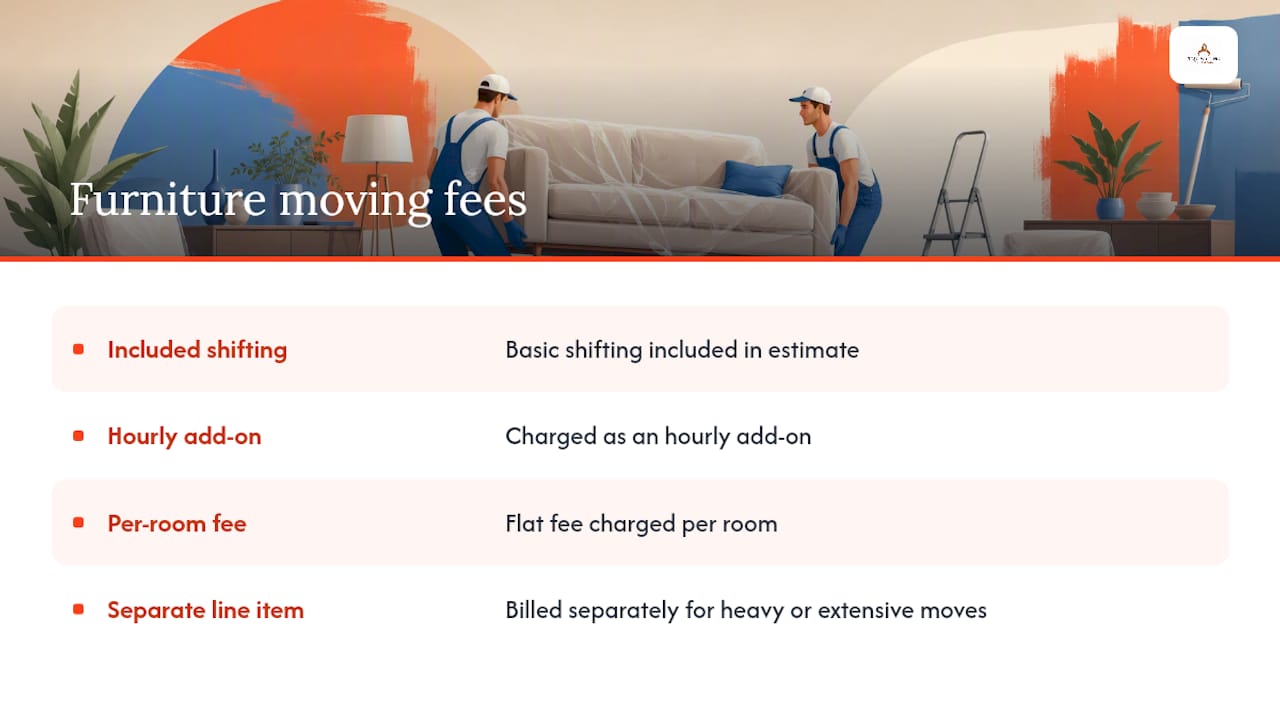
Pricing for furniture moving varies by company. Some include basic shifting in the interior painting estimate at no extra charge, treating it as part of standard prep. Others charge an hourly add-on, a per-room fee, or a flat line item once the scope goes beyond a few light pieces. A few companies don't include furniture moving at all as standard service and bill it separately every time.
What usually triggers an extra charge? Heavy furniture, a high volume of items, disassembly work, or moving between multiple rooms. A single bedroom with a bed frame and two nightstands is a different job than a fully furnished living room with a sectional and a media console.
Statistic Callout: Time spent moving furniture is time not spent painting. On a job billed by the day, every hour a crew spends shifting couches is an hour of lost painting productivity, which is exactly why many contractors price moving as its own line item instead of absorbing it silently.
Get the moving scope and its price in writing before the crew arrives. A verbal "yeah, we'll handle that" is not the same as a line item on your invoice.
What Painters Typically Move, Protect, and Expect From You
A professional crew generally arrives ready to handle a defined set of prep tasks, and expects you to have handled a few others first.
What painters typically do:
- Shift light-to-medium furniture to the center of the room
- Cover furniture with plastic sheeting or drop cloths
- Protect floors with canvas drop cloths or rosin paper
- Remove outlet covers and switch plates
What homeowners are typically expected to do:
- Empty shelves and remove wall art
- Remove or bag breakables
- Disconnect and relocate floor lamps
- Empty dresser drawers when the dresser needs to move
Items painters usually won't move unless it's arranged ahead of time include mounted TVs, pianos, heavy antiques, and built-in furniture. Floor protection with canvas or rosin paper is standard practice across most reputable crews, but the exact furniture-handling line varies by company, so confirm it before day one.
Homeowner Checklist: What to Do Before Painters Arrive
Handle these steps in the 24 to 72 hours before your crew shows up:
- Remove small decor, breakables, and anything on shelves or window sills.
- Empty dresser and nightstand drawers if those pieces need to shift.
- Unplug electronics and disconnect floor lamps.
- Move houseplants out of the work area entirely.
- Bag and label small hardware, curtain hooks, and lamp parts so nothing gets lost.
Clearing rooms before painting starts reduces both cost and risk, since a lighter room lets the crew work faster and lowers the odds of an accidental scuff or scratch.
Pro Tip: For anything sentimental or irreplaceable, stage it in a room the crew isn't working in that day, not just off to one side. "Out of the room" beats "out of the way."
Options for Large, Heavy, or Specialty Items
Pianos, safes, marble tabletops, and large antiques call for a professional mover, not a painting crew. These pieces need padding, dollies, and often multiple sets of hands trained specifically for the job, which is exactly the kind of work moving companies are built around.
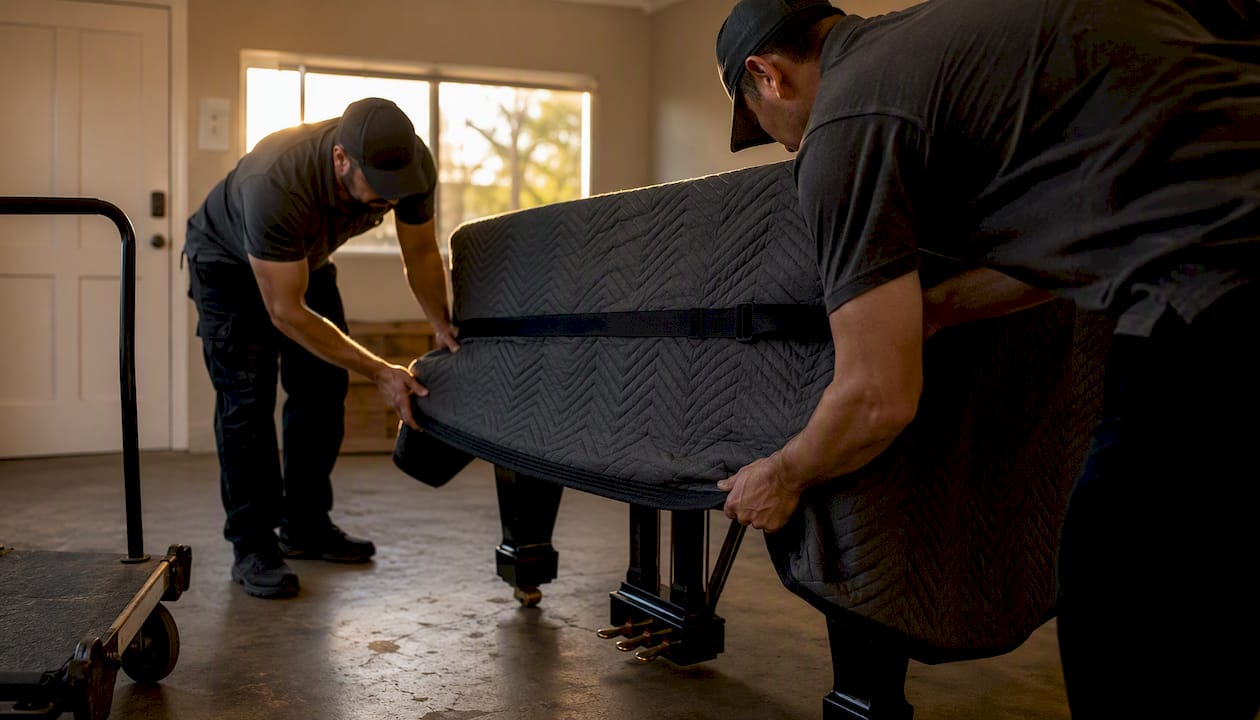
If you need something moved on short notice during your project, same-day, on-demand moving services can bridge that gap without a full moving company booking. For genuine specialty pieces, full-service movers offering white-glove handling and protective packing are worth the extra cost.
Coordinate timing with your painter directly: let them know which room the movers will clear first so the crew can start painting without waiting around.
When Can You Move Furniture Back? Paint Dry Times Explained
Most latex wall paints feel dry to the touch within an hour or two, but that's surface dry, not fully cured. True cure, the point where paint resists scuffing and pressure, typically takes several days longer, and cure time varies by sheen. Eggshell tends to cure faster than semi-gloss, which stays softer longer under pressure.
Statistic Callout: As a best practice, hold off on returning heavy furniture until the paint has had a few full days to cure, not just overnight. Use felt glides under furniture feet and make sure legs are clean before setting anything back down against fresh trim or baseboards.
Questions to Ask Your Painter (and Red Flags to Watch For)
Ask these directly during your estimate walkthrough:
- "Does your quote include furniture moving, or is it billed separately?"
- "What items are excluded from moving service?"
- "Will your crew replace furniture after painting, or is that on me?"
- "Who's liable if something gets damaged during a move?"
Red flags worth taking seriously: vague answers about what's included, refusal to put the moving scope in writing, no clear explanation of insurance coverage, or a crew that says "just leave it to us" without specifics on day one. Get everything written into the contract or estimate itself. A verbal promise won't help you if something gets scratched.
What a Full-Service Painting Contractor Typically Offers
A well-run contractor structures furniture handling into clear service tiers rather than leaving it to guesswork. A base tier usually covers standard shifting and basic drop-cloth protection. A premium tier adds more thorough furniture wrapping and floor protection across the whole work area. A white-glove tier can include coordination with movers for heavy or specialty pieces on larger jobs.
What a homeowner should expect from a tiered service:
- The estimator identifies which items the crew will move and which require special handling
- You handle small breakables, shelf items, and drawer emptying beforehand
- The crew restores furniture to its original spot and does a final cleanup pass before walking you through the finished rooms
Trupainting LLC structures its residential projects this way, so protection and furniture handling scale with the size and complexity of the job rather than being a one-size-fits-all afterthought.
When I'd Hire Movers vs. Let the Painters Handle It
Spend on professional movers for anything irreplaceable, anything that has to navigate stairs or tight corners, or anything you genuinely couldn't afford to replace. That's not a place to save a couple hundred dollars.
For everything else, standard sofas, side tables, dressers, a competent painting crew's shifting and covering is plenty. Save the mover budget for the piano, not the coffee table.
How Trupainting LLC Handles Furniture During Your Project
Trupainting LLC is the local option that treats furniture protection as part of the job, not an afterthought you have to negotiate for. Our crews shift light-to-medium furniture, cover what stays in the room, and protect floors with drop cloths as standard practice across our residential interior projects, while heavy or specialty pieces get discussed and quoted upfront so there's never a surprise on painting day.

When you book your estimate, ask specifically what our tiered service includes for your rooms and whether furniture moving is built into your quote or listed as an add-on. If you're refinishing cabinets alongside your interior painting, mention that too. Delicate surfaces need their own protection plan, and our cabinet refinishing work follows the same standard. Ready to see what your project would actually cost? Request an estimate through our residential interior painting page and ask us directly about furniture handling for your space.
Sources
- Do Painters Move Furniture? A Chicago Contractor Explains | Z&Z Painting
- Do Painters Move Furniture and Protect Floors? Here's What to Expect
- Do Painters Move Furniture? - Blue Diamond Painters
- Do Painters Move Furniture? What to Expect | 3 Ropes Painting
- Move furniture and protect it before painting | Angie’s List (Angi)
FAQ
Do painters move furniture out of the room entirely? Usually not. Most crews shift furniture to the center of the room and cover it rather than removing it completely, unless you've arranged for a fuller service in advance.
Will professional painters move a couch? Yes, a standard sofa is exactly the kind of light-to-medium item most crews will shift and protect as part of routine prep.
Do painters charge extra to move furniture? It depends on the company. Some include basic shifting in the estimate, while others bill it hourly, per room, or as a flat add-on fee, so confirm this during your walkthrough.
Should I move furniture myself before painters arrive? Removing small items, breakables, and drawer contents yourself speeds up the job and reduces risk, even when the crew handles the larger pieces.
How long after painting can I put furniture back? Wait multiple days for the paint to cure past the surface-dry stage, not just overnight, especially with semi-gloss or higher-sheen finishes.