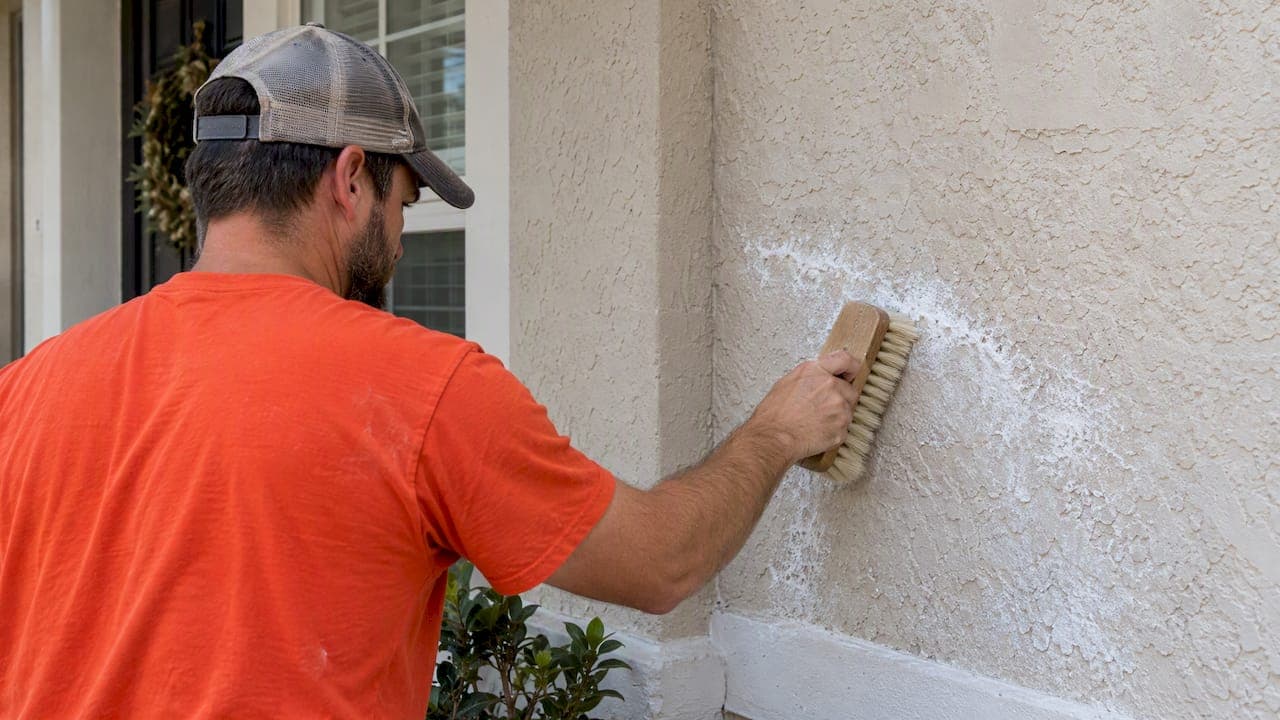
That white, powdery bloom on stucco is efflorescence, usually cosmetic and removable, but persistent or recurring patches may need a moisture inspection. It forms when water carries salts to the surface and leaves them behind as it evaporates. Start with dry brushing and a clean water rinse, test any stronger cleaner on a small area first, and call in a professional if the staining keeps coming back or shows up alongside other damage.
TL;DR:
- A wet test helps distinguish salt from mold: efflorescence dissolves or lightens, while fuzzy growth, musty odors, or dark staining suggest another problem.
- Start with a stiff, nonwire brush and a low pressure rinse; test stronger cleaners discreetly, and reserve diluted muriatic acid for heavy deposits.
- Recurring patches, deposits near flashing or ground level, soft stucco, or interior stains warrant a moisture inspection before repainting or further cleaning.
- Improve drainage, redirect sprinklers, clear gutters, and inspect flashing; after cleaning, let the surface weather for about a month before repainting.
Table of Contents
- What Causes Efflorescence to Form on Stucco
- How to Tell Efflorescence Apart From Mold, Dirt, or Chalking
- A Stepwise Plan for Removing Efflorescence Safely
- When Efflorescence Signals a Bigger Moisture Problem
- Preventing Efflorescence for the Long Term
- Pro Tips Before Cleaning or Painting Stucco
- Why We Take the Slow Approach Seriously
- Let Tru Painting Handle Your Stucco Inspection and Repair
- FAQ
- Sources
What Causes Efflorescence to Form on Stucco
Efflorescence happens when water moves through stucco, dissolves natural salts inside the material, and carries them to the surface. Once that water evaporates, the salts stay behind as a chalky, white crust, usually calcium carbonate, according to the Stucco Manufacturers Association's technical bulletin. Builders separate it into two types:
- Primary efflorescence typically shows up during the early curing period of new stucco as it releases excess moisture.
- Secondary efflorescence returns later, driven by an outside moisture source like sprinklers, poor drainage, or a roof leak.
Weather plays a role too. Cool, damp stretches followed by sunny, drying days tend to push more salt to the surface, which is why efflorescence often looks worse during colder and wetter seasons like late winter or early spring. Dark-colored paint makes the white deposits stand out more sharply than they would on a lighter finish, even when the amount of salt is the same.
How to Tell Efflorescence Apart From Mold, Dirt, or Chalking
Before treating anything, confirm what you're actually looking at. A quick wet test settles most doubts in minutes.
- Look closely at the texture. Efflorescence sits on the surface as a loose, chalky, white or grayish powder, while mold tends to look fuzzy, speckled, or greenish-black.
- Wet a small patch. Efflorescence usually dissolves or lightens when you spray it with water, since it's water-soluble salt.
- Scrub gently with a dry brush. True efflorescence brushes off fairly easily once dry; stubborn residue that smears instead of lifting is more likely dirt or chalking paint.
- Check for a musty smell or dark staining underneath. Those point toward mold or trapped moisture rather than simple efflorescence.
If scrubbing reveals soft, crumbly stucco underneath, or the white patches keep reappearing in the same spot, treat that as a warning sign rather than a routine cleaning job.
A Stepwise Plan for Removing Efflorescence Safely
Cleaning stucco works best when you start gentle and only escalate if needed. Jumping straight to harsh chemicals risks damaging the finish for a problem that often responds to a simple rinse.
- Dry-brush the area first with a stiff (not wire) brush to remove loose salt deposits before adding any water.
- Rinse thoroughly with clean water at low pressure, since this alone resolves a large share of efflorescence cases, according to NCMA's guidance on efflorescence control.
- Try a mild household cleaner next, such as a diluted vinegar-and-water solution, applied to a small test patch and checked after it dries.
- Move to an acrylic-safe commercial efflorescence cleaner if the mild approach doesn't fully clear the deposit, following the product label exactly and testing a hidden area first.
- Reserve diluted muriatic acid for stubborn, heavy buildup only. Dryvit's stucco repair guidance recommends pre-wetting the surface, using correct dilution, wearing proper gloves and eye protection, and rinsing immediately to avoid etching the texture or leaving residue that interferes with future paint adhesion.
Work in small, manageable sections so you can rinse and check results before moving on, and cover nearby plants and metal fixtures to protect them from runoff.
Pro Tip: Photograph each test patch before and after cleaning so you can compare results and avoid over-treating the same spot twice.
When Efflorescence Signals a Bigger Moisture Problem
Aggressive cleaning carries real risk. High-pressure washing can drive water deeper into stucco, and acid used without proper dilution or rinsing can etch the surface texture permanently, as cautioned in technical guidance on acid cleaning risks.
Certain patterns point to something beyond a cosmetic fix:
- Efflorescence that returns again and again in the same location despite thorough cleaning.
- White deposits concentrated near the ground line, below window flashing, or around weep screed openings.
- Soft, crumbly, or delaminated stucco where you'd expect a firm surface.
- Interior staining, bubbling paint, or a musty smell on the matching inside wall.
When you notice any of these, stop escalating the cleaning approach. Document what you see with photos and dates, then bring in a qualified contractor to diagnose where the moisture is coming from before any repainting happens.
Preventing Efflorescence for the Long Term
Lasting prevention comes down to keeping water away from stucco in the first place, not just cleaning up after it appears.
- Keep gutters and downspouts clear and direct water well away from the foundation so it doesn't wick back into the wall.
- Check grading and slope around the home, and keep planters, mulch beds, and soil from piling up against the weep screed.
- Redirect sprinkler heads so they never spray directly onto stucco walls, since repeated wetting is a common cause of secondary efflorescence.
- Inspect flashing, sealants, and weep screed regularly, since gaps there let water behind the stucco where it has nowhere to drain.
- Allow cleaned surfaces to weather for about a month before repainting or applying a water repellent, which lets trapped salts finish working their way out, per NCMA's recommendations.
- For homes with reservoir-style claddings, a working drainage plane and adequate ventilation behind the finish reduce how much moisture builds up in the wall assembly over time, based on federal building science guidance on reservoir claddings.
Improving drainage around walkways and patios near the home can help too; a homeowner's guide to outdoor paving drainage covers options for keeping splash-back away from exterior walls.
Pro Tips Before Cleaning or Painting Stucco
It's best to start with a small test patch before treating a full wall, pre-wetting the surface and moving from the mildest cleaner upward only as needed. We protect landscaping and metal fixtures first, pre-soaking nearby plants to dilute any runoff, and we follow manufacturer instructions on every cleaner and coating we use. If we find soft substrate, persistent staining, or hairline cracks during that first look, we recommend addressing those issues, including simple hairline crack repair, before any coating goes on.

Pro Tip: A five-minute test patch saves hours of rework, so never skip it, even when a deposit looks easy to clean.
Why We Take the Slow Approach Seriously
We have seen what rushing straight to acid or a pressure washer does to a stucco finish, and it rarely saves time once you factor in the repair. Careful testing, gentle cleaning, and solid prep protect the surface and the paint job that follows. If your stucco feels soft underneath or the staining keeps returning, that's the moment to bring in a professional rather than keep treating the symptom.
— Kyle
Let Tru Painting Handle Your Stucco Inspection and Repair
If the stucco on your home keeps showing efflorescence, or you'd rather skip the testing and guesswork altogether, a qualified contractor can inspect for moisture sources, check flashing and weep screed condition, and provide a clear repair quote before any work begins.

We handle the full range that stucco problems call for: safe pressure washing, hairline crack repair, specialty coatings, and complete stucco painting once the surface is clean and sound. Our three-tier packages, from Cosmetic Refresh up through Maximum Prep & Protection, let you choose the level of preparation and durability that fits your home and your budget. Reach out through our residential exterior services page to request a quote and get a straight answer on what your stucco actually needs.
FAQ
Will efflorescence eventually go away?
Early-age efflorescence from new construction often fades on its own as the stucco finishes curing, with intensity generally peaking in cooler, wetter months and showing significant reduction within a couple of years, according to Sika's technical bulletin. Recurring efflorescence tied to an ongoing moisture source usually won't resolve until that source is fixed.
Can you just paint over efflorescence?
Painting over active efflorescence traps the salts under the coating and almost always leads to peeling or bubbling later. Clean the surface thoroughly and let it weather first, then paint once the deposits stop returning.
Should I be worried about efflorescence?
Most efflorescence is purely cosmetic and not a structural concern, per NCMA's guidance. Worry sets in only if it keeps recurring, appears alongside soft stucco, or shows up with interior staining, since those point to a moisture problem behind the wall.
Does efflorescence always mean a leak?
No, efflorescence doesn't always mean a leak. It commonly appears during normal curing in new stucco, but persistent, localized patches, especially near flashing or ground level, can indicate a water-management issue that needs a professional look, as noted in SMA's technical paper.
Sources
- Stucco Manufacturers Association: Efflorescence technical bulletin (2024)
- Sika: Procedure for cleaning finish & removing efflorescence (technical bulletin)
- NCMA: Control and removal of efflorescence
- Dryvit: Stucco repair and cleaning guidance
- Technical note on acid cleaning risks and protective steps