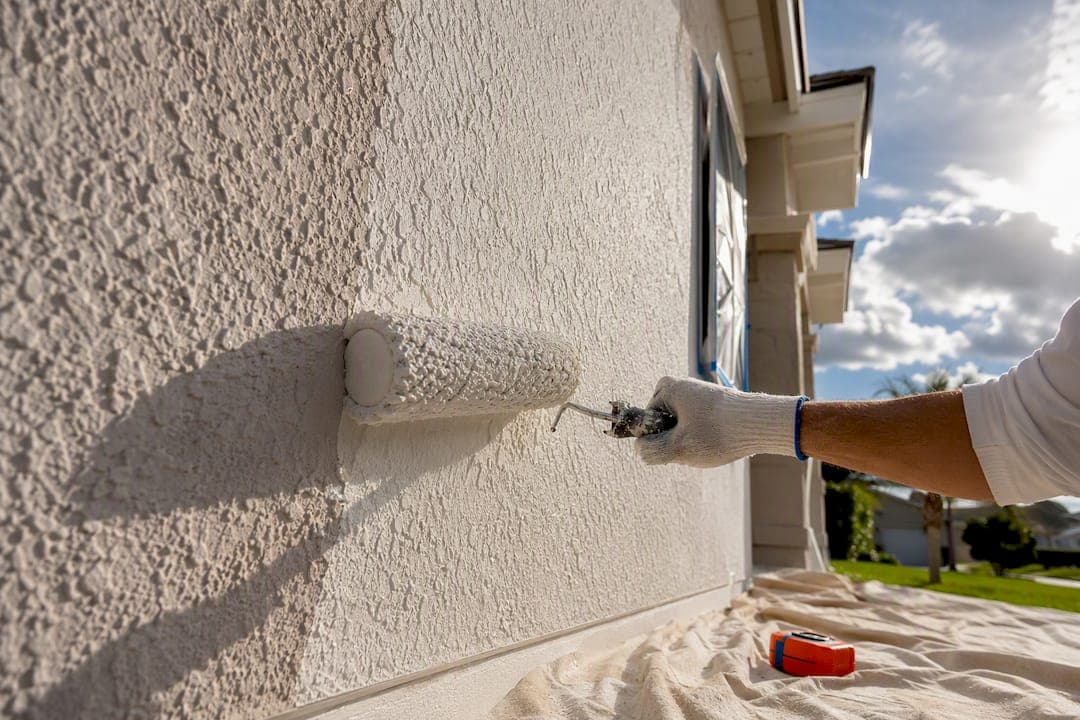
Use elastomeric paint when your stucco has moving hairline or spider cracks, or when the walls take a beating from wind driven rain. If your stucco is sound, dry, and crack free, a high quality breathable acrylic masonry paint is the safer, longer lasting choice. Before you buy anything, inspect your walls for crack size and any signs of trapped moisture. That single walk around your house will tell you more than any product label.
TL;DR:
- Elastomeric paint is suitable only for cracks wider than 1/16 inch or ongoing movement, not for sound, crack-free stucco.
- Proper application requires controlling film thickness and thorough back-rolling, with attention to complete drying and crack repair.
- Elastomeric coatings can trap moisture if applied over wet or leaking stucco, leading to blistering or peeling over time.
- It is most effective in climates with high wind-driven rain, coastal humidity, or large temperature swings that stress the wall.
- A professional inspection, including moisture and crack assessments, is essential to determine if elastomeric paint benefits the specific stucco surface.
Table of Contents
- Is Elastomeric Paint For Stucco The Right Call? A Quick Decision Guide
- What Makes Elastomeric Paint Different From Regular Masonry Paint?
- The Real Pros and Cons of Elastomeric Coatings on Stucco
- When Should You Choose Elastomeric Over Breathable Acrylic?
- How Do You Prep and Apply Elastomeric Paint on Stucco Correctly?
- What's the Real Lifespan and Cost of an Elastomeric Stucco Job?
- Should You Hire a Pro or DIY Your Elastomeric Stucco Project?
- Does Elastomeric Paint Work on Every Stucco Texture?
- Can Elastomeric Paint Trap Moisture in Stucco Over Time?
- Tru Painting's Perspective: How We Scope an Elastomeric Stucco Job
- Ready for a Professional Stucco Assessment? Here's What to Expect
- Sources
Is Elastomeric Paint For Stucco The Right Call? A Quick Decision Guide
You don't need a contractor's eye to get a rough read on your own walls. A few minutes with a flashlight and a fingernail will tell you which category your stucco falls into.
- Sound stucco: no cracking, no staining, water beads on the surface when it rains. A breathable acrylic masonry paint is the better fit.
- Cracked stucco: hairline or spider cracking that seems to widen and close with temperature swings. This is where elastomeric paint for stucco earns its reputation.
- Wet or stained stucco: dark streaks, chalky white deposits, or a musty smell near the base of the wall. Stop here. Coating over an active moisture problem, elastomeric or not, just seals in the damage.
Climate matters as much as crack size. Homes that face driving rain, coastal humidity, or wide daily temperature swings put more stress on a wall's skin, and that stress is exactly what elastomeric coatings are built to absorb. Budget is the tradeoff: elastomeric systems cost more upfront and are harder to reverse once applied, so it pays to be sure the wall actually needs that level of protection before you commit.
What Makes Elastomeric Paint Different From Regular Masonry Paint?
Elastomeric paint is a high build, 100% acrylic latex coating formulated to stretch and rebound rather than crack under stress. Standard acrylic masonry paint forms a thinner, more rigid film, at a relatively low thickness. Elastomeric coatings go on much thicker, often exceeding 10 mils in a fully built system, which is what gives them the flexibility to bridge small cracks instead of just covering them.
That thickness cuts both ways. A thinner acrylic film stays more vapor permeable, letting moisture that works its way into stucco escape as vapor. A heavier elastomeric film reduces that permeability. It doesn't seal the wall completely, but it does slow the rate at which trapped moisture can exit, which is why trade guidance treats breathability as the single most important property for any stucco coating, elastomeric or otherwise.
Crack bridging has real limits. Manufacturer guidance generally treats hairline cracks under about 1/16 inch as bridgeable, while anything wider or actively shifting needs mechanical repair first, not just a thicker coat of paint. BEHR's elastomeric line advertises resistance to 98 mph wind driven rain and claims significant elongation, and Valspar's version uses its own flexible film technology rated to bridge cracks up to that same 1/16 inch threshold. Those numbers come from lab conditions, not your specific wall, but they're a useful benchmark for what a properly applied coat should be able to handle.
The Real Pros and Cons of Elastomeric Coatings on Stucco
Homeowners tend to hear the marketing pitch and skip the fine print. Here's the balanced version.
What elastomeric does well:
- Bridges hairline and spider cracks that would otherwise reopen through a standard paint film
- Adds a genuine layer of waterproofing on walls exposed to wind driven rain or coastal moisture
- Resists mildew and alkali burn, both common stucco headaches in humid climates
- Extends service life significantly on walls that already have a cracking history
Where it can bite you:
- Reduced breathability means moisture already inside the wall has fewer ways out
- Application demands more skill. Film build has to be controlled precisely, and that's not a job for a first time roller
- Material cost runs higher, and coverage per gallon drops because the coating goes on so much thicker
Most real world failures trace back to the same handful of mistakes: thinning the product to make it spread easier, rolling on a coat that never hits the required mil thickness, or coating over stucco that's still wet from an active leak. None of those are flaws in the paint itself. Correct film build is what makes or breaks elastomeric performance — a product applied too thin loses its crack bridging ability entirely, no matter what the can promises.
Pro Tip: Ask any contractor bidding an elastomeric job to estimate their material use per area to verify proper film thickness. If the number sounds suspiciously close to what a standard acrylic job would use, the coating is likely going on too thin to deliver on its crack bridging claims.
When Should You Choose Elastomeric Over Breathable Acrylic?
Walk through this sequence before you buy a single gallon of anything.
- Check for movement. If your stucco is sound, dry, and free of cracking, stop right there. A high quality breathable acrylic is the better, cheaper, longer lasting choice, and it's what trade guides recommend as the default for healthy walls.
- Measure the cracks. Hairline or spider cracking under roughly 1/16 inch, especially cracks that seem to widen and close seasonally, is the textbook case for elastomeric.
- Rule out active moisture. Staining, efflorescence, or a wall that stays damp days after rain points to a leak or drainage problem. Fix that first. No coating solves a plumbing or flashing issue.
- Weigh your exposure. Coastal homes, hurricane prone regions, and anywhere that gets sustained wind driven rain benefit the most from elastomeric's waterproofing margin.
- Ask if you're overcorrecting. Applying elastomeric to stucco that's sound but simply old is common and usually unnecessary. It adds cost and cuts breathability for a wall that didn't need the extra protection in the first place.
The pattern holds across most trade sources: coatings built for movement or heavy moisture perform best where those conditions actually exist, and add little benefit on stable walls that were never going to crack in the first place.
How Do You Prep and Apply Elastomeric Paint on Stucco Correctly?
Elastomeric paint forgives almost nothing in the prep stage. Skipped steps here show up as bubbling, peeling, or cracks that reopen within a year.
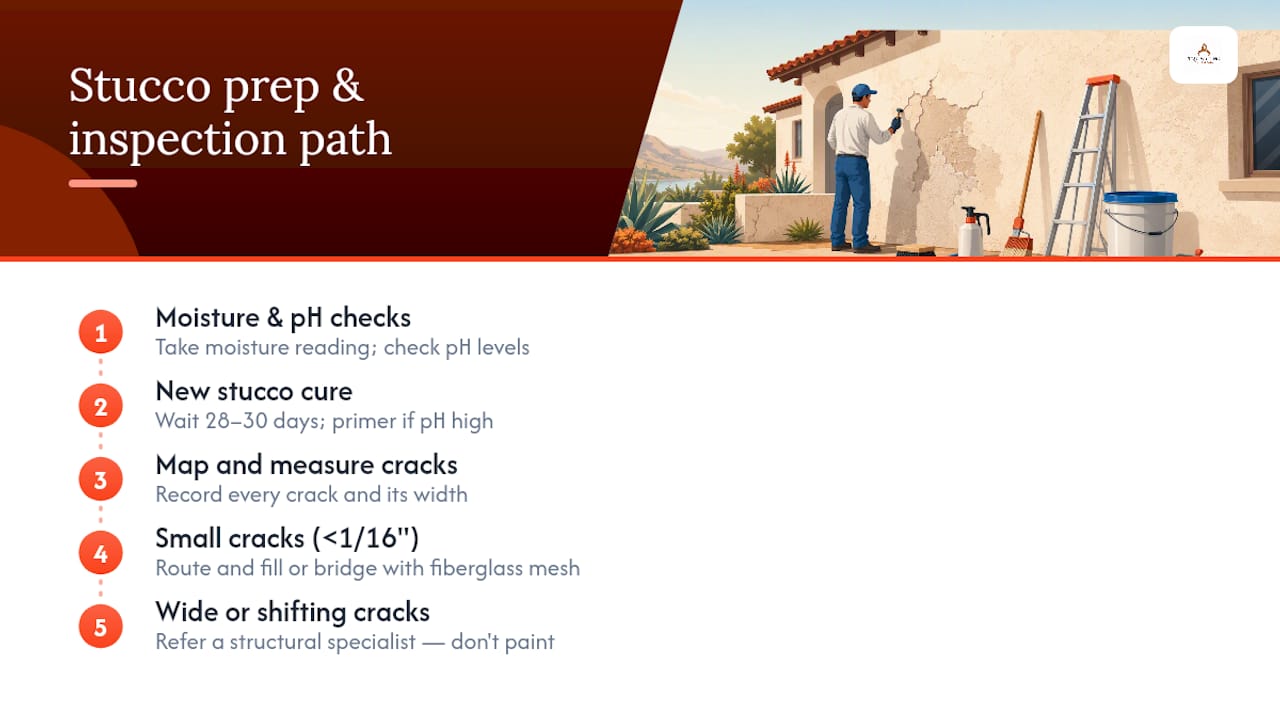
Start with a moisture meter reading and a pH check. New stucco is highly alkaline and can burn standard paint, so most manufacturers recommend a minimum cure time of 28 to 30 days before coating, along with an alkali tolerant primer if the pH still runs high. Map every crack and measure it. Anything under 1/16 inch typically gets routed and filled or bridged with fiberglass mesh; wider or actively shifting cracks usually mean a structural issue that needs a specialist, not a paint job. Our guide to stucco hairline crack repair walks through the routing and filling process step by step.
Application specs matter more here than on any other exterior coating. Manufacturer guidance points to an airless sprayer setup with a .021 inch tip and about 2300 PSI to achieve proper wet film thickness, followed immediately by back-rolling to force the coating into every void in the texture. Our post on why back-rolling matters covers exactly why skipping that step is one of the most common causes of premature failure.
The mistakes that ruin an elastomeric job: thinning the product for easier spraying, stopping short of the required mil build, skipping the back-roll pass, and coating over stucco that hasn't fully dried from a leak or capillary moisture.
What's the Real Lifespan and Cost of an Elastomeric Stucco Job?
A properly applied elastomeric system on stucco needing crack bridging can last longer than standard acrylic coatings, largely because it isn't fighting the same reopening cracks year after year. Breathable acrylic, applied to sound stucco, holds its own for a long stretch too. It's a case of matching the coating to the wall, not one product simply outlasting the other everywhere.
Coverage is where the cost difference shows up fastest. Because elastomeric goes on so much thicker, it covers noticeably fewer square feet per gallon than a standard masonry paint, and that lower coverage rate is the biggest line item difference homeowners feel when comparing quotes.
Maintenance afterward is straightforward: keep gutters and downspouts clear so water isn't dumping onto the same section of wall repeatedly, rinse off dirt and mildew buildup annually, and touch up any new cracking before it spreads. Our post on choosing low maintenance exterior paint covers the broader maintenance calculus if you're weighing elastomeric against other options for a full exterior repaint.
Should You Hire a Pro or DIY Your Elastomeric Stucco Project?
Elastomeric rewards experience in a way standard paint doesn't. Controlling film build across an entire facade with a sprayer, catching a crack that needs mesh instead of just filler, and knowing when a wall's moisture reading disqualifies it from coating that week. Those are skills built on repetition, not a weekend project.
If you're getting quotes, ask each contractor:
- Can you show me the product's PDS and SDS before we start?
- What mil thickness are you targeting, and how will you verify it?
- What prep and repair steps are included, and what costs extra?
- Will you apply a sample panel so I can see the finish before full coverage?
- What's covered under warranty, and for how long?
- How will you handle cleanup and disposal of old coating debris?
A vague answer on prep, no product data sheet on hand, or a bid noticeably lower than the going rate for materials and labor are all signs to keep shopping. Southern Sandblasting and Painting's guide on pre painting preparation steps is a solid outside resource if you want a second opinion on what proper prep should look like before you sign anything.
Does Elastomeric Paint Work on Every Stucco Texture?
Most elastomeric coatings adapt well to common stucco finishes, but the texture changes how much material you actually need. Smooth or sand finish stucco takes elastomeric evenly with a standard spray and back-roll pass, since there's less surface area hiding in the texture.
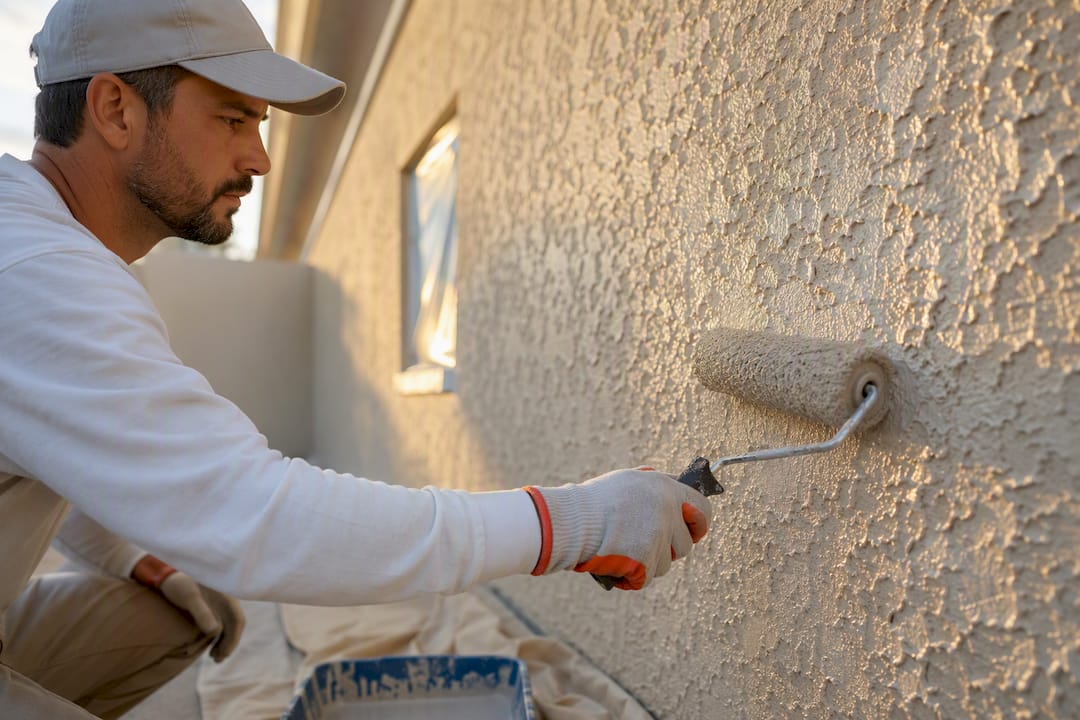
Heavier textures, like dash, lace, or Santa Barbara finish, are a different story. Those deep grooves and pockets soak up more coating to achieve full film build, which is why back-rolling isn't optional on textured walls. Rolling pushes the coating into every recess instead of letting it bridge over the peaks and leave the valleys thin, a gap in coverage that shows up as early cracking exactly where the texture is deepest.
Older EIFS (synthetic stucco) systems and traditional three coat stucco both generally accept elastomeric coatings, but EIFS in particular needs a careful moisture check first, since these systems are more prone to trapping water behind the foam backing. Cementitious stucco that's been previously coated with a different product also needs testing. If the existing paint is an oil based or non-breathable coating, adding elastomeric on top compounds the moisture problem rather than solving it.
The safest approach on any unfamiliar texture or finish is a sample panel, applied in an inconspicuous spot, checked after full cure for adhesion and appearance before committing to the whole house.
Can Elastomeric Paint Trap Moisture in Stucco Over Time?
This is the question that deserves the most honest answer, because it's where elastomeric coatings earn their bad reputation when misapplied. A thick, low permeability film reduces how quickly moisture that gets into a wall can escape as vapor. On a wall that stays genuinely dry, that reduced breathability rarely causes a problem. On a wall with an underlying moisture source, it can turn a minor issue into a slow, hidden one.
Picture a stucco wall with a small roof flashing leak that's been letting water seep in gradually for years, unnoticed because the stucco was porous enough to let most of it evaporate back out. Coat that same wall in elastomeric without fixing the flashing first, and the moisture that used to escape now has a harder path out. Over a few seasons, that trapped water can show up as blistering, dark staining bleeding through the coating, or the coating peeling away in sheets, sometimes taking a layer of stucco with it.
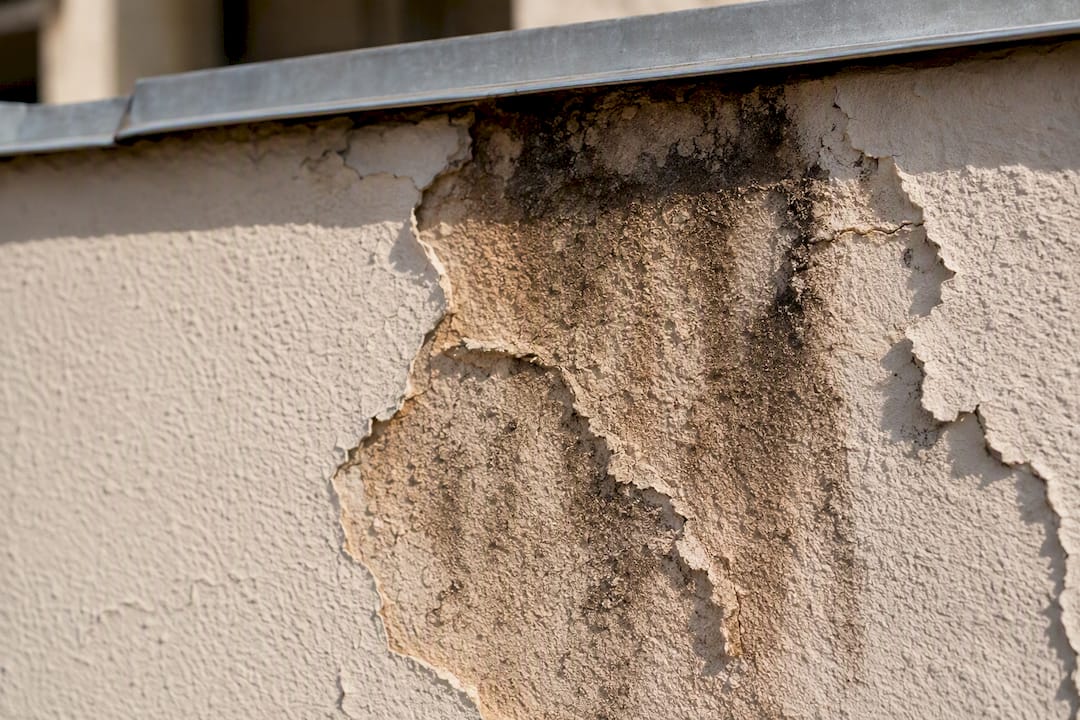
This is exactly why trade sources treat vapor permeability as the deciding factor, not an afterthought, and why any inspection before an elastomeric job has to include a real moisture check, not just a visual scan for cracks. The coating isn't the problem. Coating over an unresolved moisture source is.
Tru Painting's Perspective: How We Scope an Elastomeric Stucco Job
We start every stucco estimate with a moisture meter and a pH check, then map every crack by hand rather than guessing from the ground. That combination tells us whether a wall is a candidate for elastomeric, a breathable acrylic system, or repair work before either.
Three service tiers are offered based on the inspection: a base tier with cleaning, spot repair, and acrylic coating for sound walls; a mid tier including crack routing, mesh reinforcement, and alkali resistant primer for walls with early movement; and a top tier with full crack mapping, mesh application, pH-matched primer, and a properly back-rolled coating system verified for film thickness, completed with a final walk-through.
Ready for a Professional Stucco Assessment? Here's What to Expect
If your inspection turned up moving cracks, staining, or a wall exposed to serious wind driven rain, that's the point where a professional eye is worth more than another hour of research. Every stucco job begins with a moisture check, pH test, and full crack mapping before any product recommendation.

Before you request an estimate, take a few photos of any cracking or staining, note roughly when it appeared, and dig up any paperwork on what was used the last time your stucco was painted. That history changes what primer and system make sense. When we walk your property, you'll get a written scope, a specific product recommendation for your wall's condition, and a sample panel if you want to see the finish before we commit to the full house. Our residential exterior painting services page has more on how we structure that estimate visit and what's included at each service tier. If your property is a commercial building rather than a home, our commercial exterior painting team follows the same inspection process. Reach out and we'll get a visit on the calendar.
Sources
For readers who want to dig into the technical side, the manufacturer pages for BEHR's elastomeric line, Valspar's masonry elastomeric coating, and Dunn-Edwards' ENDURALASTIC 10 all publish full product data sheets. For prep guidance beyond this article, see our post on repairing stucco cracks and damage before painting and exterior paint preparation best practices.
- Masonry, Stucco & Brick Elastomeric Paint - Valspar® Exterior Paint
- Guide to painting stucco — This Old House