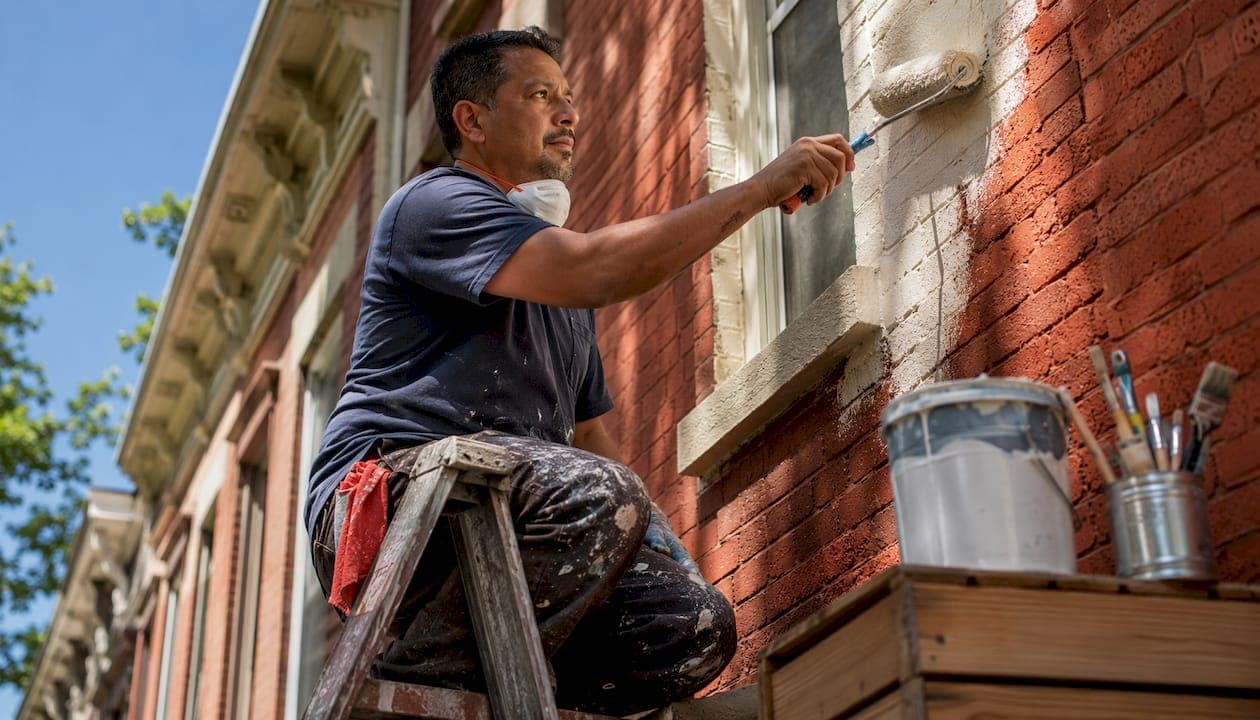
Back-rolling after spraying forces paint into porous substrates and is the single most effective way to improve adhesion, coverage, and long-term durability on rough exterior surfaces. If your contractor is spraying only, you may be leaving years of finish life on the table.
- Porous and rough surfaces require it. On bare wood, rough-cut cedar, stucco, and masonry, a spray-only coat sits on top of the surface rather than bonding to it. Back-rolling after spraying works paint into the substrate far more efficiently, improving adhesion on primers and first coats.
- Fewer recoats, less blistering. By expelling trapped air from pores, back-rolling reduces the thermal blistering that causes early paint failure, which means fewer touch-ups and a longer time between full repaints.
- Who should insist on it. Homeowners with wood siding, stucco, or masonry exteriors, and property managers overseeing multi-unit buildings, should specify back-rolling in writing. Trupainting LLC, serving Lake County and Central Florida, includes it as standard practice on the exterior surfaces where it makes a measurable difference.
Table of Contents
- How back-rolling actually works: adhesion, coverage, and texture
- Which exterior surfaces and situations call for back-rolling
- When you should skip back-rolling, and mistakes that cost you
- How to back-roll correctly: timing, sequence, and technique
- Rollers, covers, and single-operator tools worth knowing
- Labor, cost, and long-term durability: the real trade-off
- How Trupainting LLC applies back-rolling on Central Florida exteriors
- Key Takeaways
- A contractor's honest take on when back-rolling actually matters
- Trupainting LLC handles back-rolling so you don't have to guess
- Authoritative sources and further reading
How back-rolling actually works: adhesion, coverage, and texture
Spraying deposits paint on top of a surface. Back-rolling packs it in. That distinction drives every performance difference you'll see over the life of a finish.
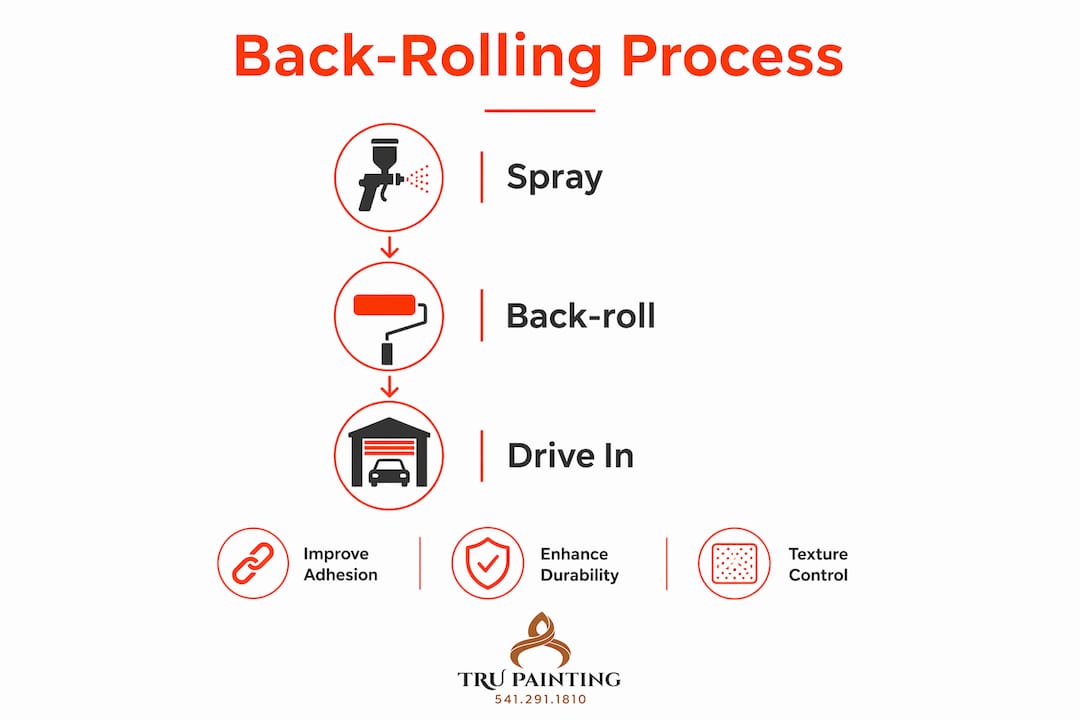
When a roller passes immediately over a freshly sprayed wet film, it does three things at once: it drives coating into pores and voids, it expels microscopic air pockets trapped between the paint and the substrate, and it levels the film to a uniform thickness. The result is mechanical adhesion rather than surface adhesion. Paint that has been physically worked into the grain of wood or the texture of stucco cannot peel away as easily as paint that simply dried on top.
The air-expulsion function is especially important outdoors. Trapped air expands and contracts with temperature swings, and that movement is what causes thermal blistering. Forcing paint into the pores before it skins over eliminates most of those air pockets.
There is also an aesthetic benefit worth knowing. A spray-only finish is mirror-smooth and reflects light in a way that highlights every substrate flaw. Back-rolling breaks that smooth film into a soft, uniform texture that scatters light more evenly, hiding minor surface imperfections and raised fibers that prep work alone cannot fully eliminate.
- Roller pressure packs coating into pores and voids
- Air expulsion reduces thermal blistering risk
- Uniform film thickness improves coverage consistency
- Soft texture hides substrate flaws and raised fibers
Which exterior surfaces and situations call for back-rolling
Not every surface needs it equally, but porous and rough substrates almost always benefit. Here is where back-rolling makes a measurable difference:
- Rough-cut cedar and wood siding. High-nap rollers on porous wood force paint into the grain and expel air pockets, directly reducing thermal blistering and extending exterior durability compared with spray-only application.
- Bare or unprimed wood trim. First coats on bare wood are the highest-priority situation; see when painting is a better-value option than replacement for doors in Painting Vs. Replacing Old Doors. The wood is thirsty, the surface is uneven, and adhesion failures start here.
- Stucco and masonry. The irregular texture of stucco creates countless small voids a sprayer cannot fill. Back-rolling fills them and prevents bridging, where paint spans a gap without bonding to the surface beneath.
- New construction primers. Back-rolling primers on new construction increases bond strength because the roller actively presses the primer into the substrate rather than letting it settle.
- Heavily weathered surfaces. Chalking, erosion, and surface oxidation create a loose layer that a sprayer cannot penetrate. A roller pass works fresh coating past that layer.
- High thermal-cycling climates. Homes in Central Florida face intense heat and UV exposure year-round, making air-pocket elimination especially critical.
Pro Tip: If you are a property manager, add "back-rolling required on all porous substrates and first coats" to your scope of work language before soliciting bids. That one line protects your warranty and gives you a clear standard to inspect against.
When you should skip back-rolling, and mistakes that cost you
Back-rolling is not the right move on every surface or at every stage. Knowing when to skip it prevents visible blemishes and wasted labor.
Avoid back-rolling in these situations:
- Smooth or previously painted surfaces receiving a second coat. On a slick, non-porous surface, the roller adds texture where none is wanted and can leave stippling.
- High-gloss finishes. Gloss coatings are formulated for a smooth, reflective surface. A roller pass disrupts that finish and the result is uneven sheen.
- When the sprayed film has begun to set. This is the most common field mistake.
Timing is everything. Back-rolling must happen wet-on-wet. If you wait until the sprayed coat begins to skin over, the roller tears the film instead of working it in, leaving blotchy texture and compromised adhesion. In hot, sunny conditions, that window can close in minutes. Rolling too late causes more damage than skipping the step entirely.
When uncertain about a surface, roll a small test patch first. Watch for tearing, ridging, or stippling. If any of those appear, the film is too far along or the surface is not a good candidate. Also consider how paint sheen interacts with texture before committing to a technique on finish coats.
How to back-roll correctly: timing, sequence, and technique
The wet-on-wet window is the non-negotiable rule. Everything else follows from it.
- Check weather conditions before you start. Heat, low humidity, and direct sun all shorten the open time of the sprayed coat. On a hot Florida afternoon, you may have two minutes or less. Plan your sections accordingly, and review how weather affects your timing before scheduling the job.
- Mask and protect adjacent surfaces. Overspray from the airless sprayer will travel. Mask windows, trim, and landscaping before the spray pass.
- Spray a manageable section. Work in sections small enough that you can complete the back-roll pass before the film begins to set. On hot days, that may mean spraying a short, manageable section at a time.
- Back-roll immediately. Load the roller lightly and apply it to the wet film with moderate, even pressure. Use vertical strokes on vertical siding, horizontal on horizontal boards.
- Overlap each pass substantially to prevent lap marks and keep film thickness consistent across the section. This prevents lap marks and keeps film thickness consistent across the section.
- Finish with a light, unloaded skim pass. A final pass with minimal pressure smooths any stippling and blends the texture uniformly.
Roller nap guide by surface
| Surface type | Nap thickness | Notes |
|---|---|---|
| Smooth (previously painted) | 3/8 in. | Minimal texture; use only when back-rolling is appropriate |
| Moderately textured (lap siding) | 1/2 in. | Standard choice for most exterior wood siding |
| Highly porous (stucco, masonry, rough cedar) | 3/4 in.–1 in. | Deeper nap reaches into voids and grain |
Rollers, covers, and single-operator tools worth knowing
Roller cover material matters as much as nap height. Microfiber covers release paint more aggressively on contact and drive coating into porous substrates more effectively than standard polyester covers. For most exterior back-rolling work on wood, stucco, or masonry, microfiber is the professional's first choice.
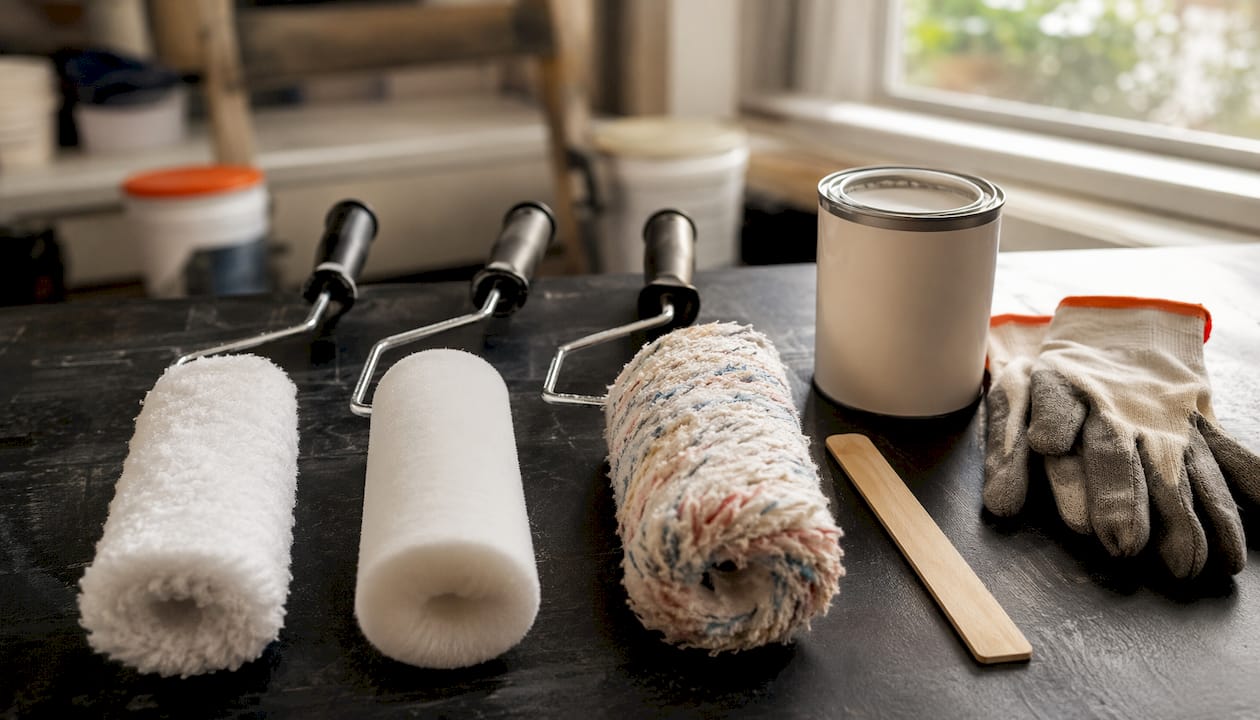
Single-operator tools change the labor equation. The Titan SprayRoller and similar inner-feed roller systems let one technician spray and back-roll in a single motion, eliminating the traditional two-person setup. That reduces labor cost and keeps the wet-on-wet timing consistent because there is no delay between the spray pass and the roller pass.
| Roller cover type | Best surface category | Key advantage |
|---|---|---|
| Microfiber, 3/4 in.–1 in. nap | Highly porous (stucco, masonry, rough cedar) | Aggressive paint release; drives coating into voids |
| Microfiber, 1/2 in. nap | Moderately textured (lap siding, primed wood) | Good coverage with controlled texture |
| Polyester, 3/8 in. nap | Smooth (previously painted, primed drywall) | Minimal stippling on non-porous surfaces |
A quick safety note: during spray-and-roll operations, wear an N95 respirator, safety glasses, and disposable coveralls. Airless sprayers generate fine mist that travels well beyond the spray zone.
Labor, cost, and long-term durability: the real trade-off
Back-rolling adds labor time and, therefore, initial cost. On a typical exterior repaint, adding a back-roll pass to the spray application increases the application phase by a meaningful margin, especially on textured or large surfaces. That is a real line item.
The case for absorbing that cost:
- Extended finish life. On porous substrates, spray-then-back-roll consistently outperforms spray-only for coverage and durability. Fewer early failures mean fewer callbacks and less frequent full repaints.
- Reduced bridging risk. Paint that bridges gaps rather than filling them fails faster. Back-rolling eliminates most bridging on stucco and rough wood, protecting the substrate underneath.
- Lower total cost over time. A finish that lasts several additional years before needing a full repaint offsets the up-front labor premium, often within the first repaint cycle. Pairing good application technique with low-maintenance exterior paint compounds those savings further.
- Cost-justified situations. High-exposure homes, porous substrates, and properties in climates with strong UV and thermal cycling are the clearest cases where back-rolling pays for itself.
For smooth, previously painted surfaces in good condition, the calculus is different. The adhesion benefit is smaller, and the labor cost may not be justified for a straightforward second coat.
How Trupainting LLC applies back-rolling on Central Florida exteriors
Trupainting LLC back-rolls as standard practice on all first coats over porous substrates, including wood siding, stucco, and masonry, on every residential exterior project in Lake County and Central Florida. For smooth second coats on previously painted surfaces in good condition, the team evaluates on a case-by-case basis and discusses the recommendation with the homeowner before proceeding.
Every estimate documents which surfaces will be back-rolled and why, so there is no ambiguity in the scope. That documentation also supports warranty claims if adhesion issues arise later. Trupainting LLC's three-tier service packages let you choose the level of surface preparation and application detail that fits your home and budget, without sacrificing the core technique standards that protect your investment.
Central Florida's heat and UV intensity make proper application technique more consequential than in milder climates. A finish that lasts significantly longer in milder climates can fail much sooner here if the application skips steps like back-rolling on porous surfaces. Trupainting LLC's crews account for that by adjusting section size and timing to the local conditions on every job. Thorough exterior surface preparation before the spray pass is the other half of that equation.
Key Takeaways
Back-rolling after spraying is the most reliable way to improve adhesion and extend finish life on porous exterior surfaces, and skipping it on rough substrates is the leading cause of early paint failure.
| Point | Details |
|---|---|
| Wet-on-wet timing is non-negotiable | Roll immediately after spraying; a film that has begun to set will tear, not bond. |
| Porous substrates always benefit | Wood siding, stucco, and masonry require back-rolling on first coats to prevent bridging and blistering. |
| Microfiber covers outperform polyester | Match nap height to surface texture; microfiber drives coating into voids more aggressively. |
| Labor cost is offset by longer finish life | The up-front time investment reduces early failures and extends the repaint cycle on high-exposure homes. |
| Trupainting LLC | Back-rolls all first coats on porous exterior surfaces in Lake County and Central Florida as standard practice. |
A contractor's honest take on when back-rolling actually matters
There is a version of this conversation that treats back-rolling as a universal rule, and a version that dismisses it as unnecessary upselling. Neither is right.
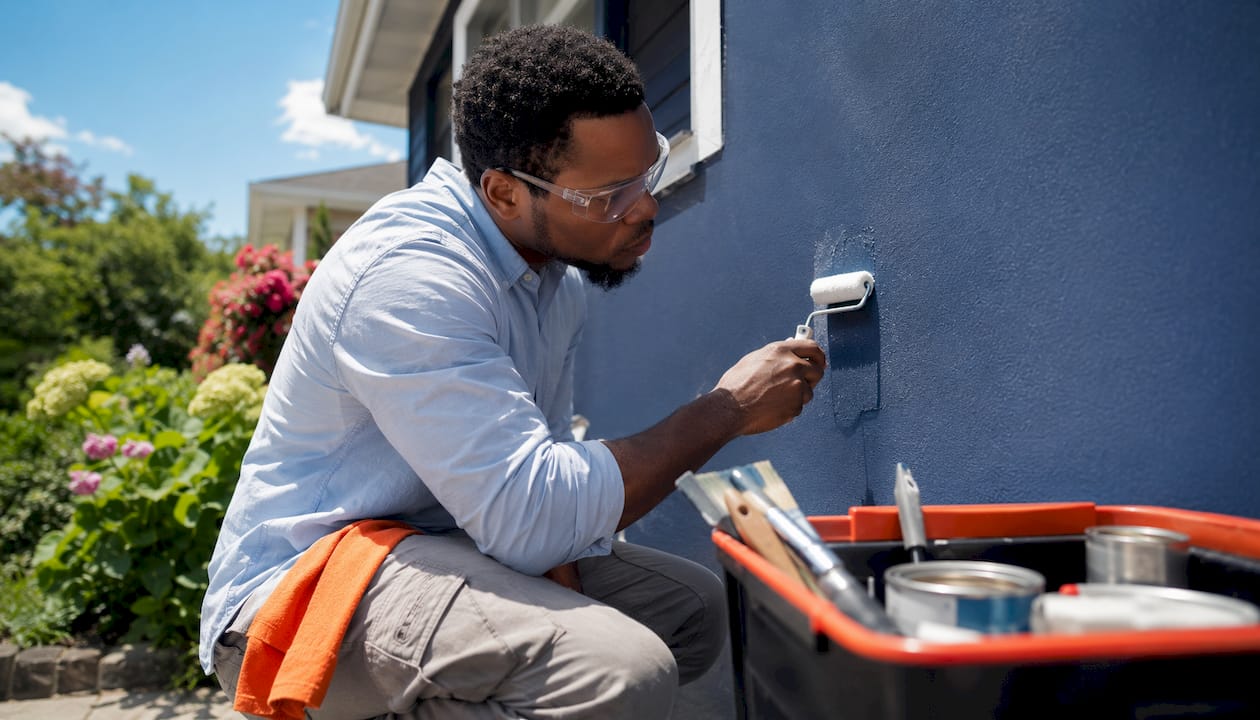
The surfaces where back-rolling genuinely changes the outcome are porous, rough, or bare. On those, skipping it is a shortcut that shows up two or three years later as peeling, blistering, or chalking that should not have happened yet. On a smooth, previously painted surface in good condition getting a second coat of the same sheen, the benefit is marginal and the texture risk is real. Knowing the difference is what separates a contractor who applies technique thoughtfully from one who applies it reflexively.
The practical rules our crews follow: always back-roll first coats on wood, stucco, and masonry; evaluate second coats based on surface condition and sheen; never back-roll when the wet-edge window has closed; and always run a test patch on unfamiliar surfaces before committing to a full pass. Nap selection is not a detail to leave to whoever grabs a roller first. A 3/8-inch cover on rough cedar is a mistake. A 1-inch cover on smooth primed drywall creates stippling that takes extra work to fix.
The other thing homeowners underestimate: masking time. On smaller residential jobs, the time saved by spraying can be partially consumed by proper masking. A spray-then-back-roll approach on those jobs often delivers the best balance of speed and finish quality, and it is the approach we default to on most Central Florida exterior repaints.
Trupainting LLC handles back-rolling so you don't have to guess
Proper back-rolling technique on your home's exterior is the difference between a finish that holds up through Central Florida summers and one that starts peeling before the warranty period ends. Trupainting LLC's residential exterior painting service includes back-rolling on all appropriate surfaces as part of our standard process, documented in your estimate so you know exactly what you're getting.

Property managers with commercial buildings can also count on the same documented approach through our commercial exterior painting service. We serve Lake County and Central Florida with flexible three-tier packages that let you match the level of protection to your property's needs and budget. Schedule your free estimate today and we'll walk you through exactly which surfaces we'll back-roll and why.
Authoritative sources and further reading
The following resources informed this article's guidance on timing, technique, and tool selection. They are worth bookmarking if you want to go deeper or verify contractor recommendations:
- When and Why to Back-Roll After Paint Spraying — Titan Tool: timing protocol and primer-specific guidance
- Back-Brushing and Back-Rolling After Spraying — PaintToolLab: wet-on-wet technique and adhesion mechanics
- Why Back-Rolling Siding Is Mandatory for Porous Wood — Elegant Painting: porous wood durability and nap guidance
- How to Use a Paint Roller — RollingDog Tools: microfiber cover selection and pressure technique
- Spraying vs. Rolling Paint for Exterior House Painting — Textbook Painting: speed vs. finish quality trade-offs
- Spray Painting and Back-Rolling — Dulux Trade: texture, light scattering, and surface preparation guidance