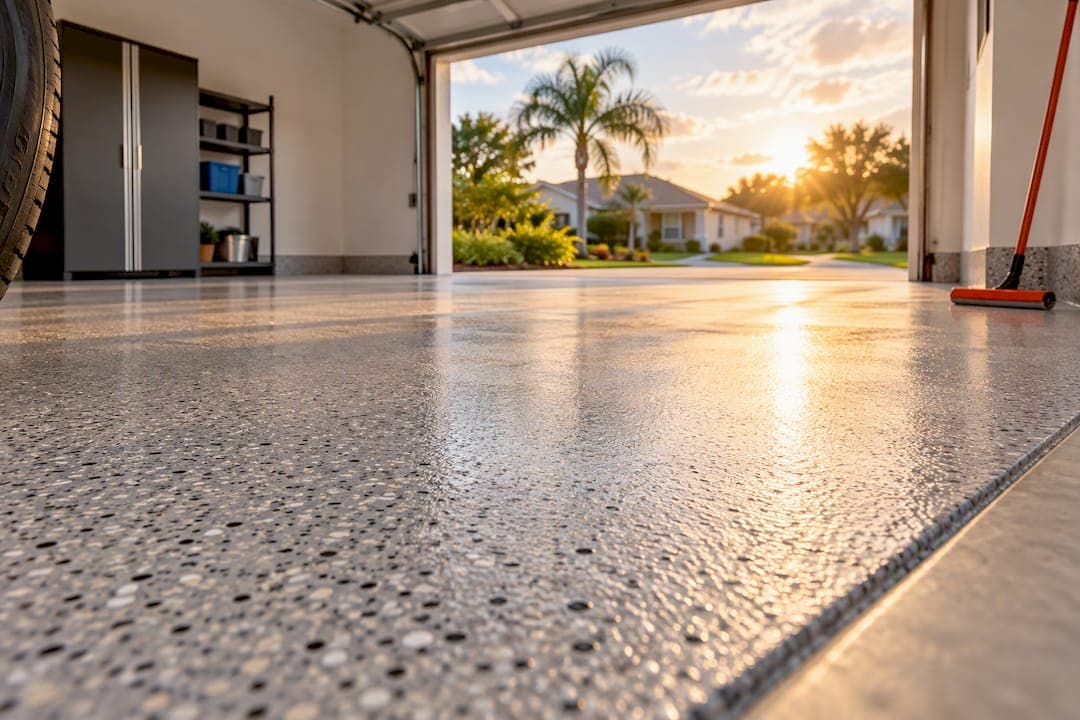
Most homeowners in The Villages pay between $4 and $8 per square foot for a professionally installed garage floor coating, which puts a typical two-car garage in the $1,750 to $3,600 range. The biggest swing factor isn't the paint itself. It's slab prep, moisture testing, and which topcoat system you choose. Read on for the full breakdown, or reach out to Tru Painting for a local estimate scoped to your garage.
TL;DR:
- Proper slab preparation, especially diamond grinding, significantly improves coating durability and should not be skipped, even if it raises upfront costs.
- Moisture testing is critical in Florida's humid climate; high vapor readings increase total costs by requiring vapor-barrier primers that can add $1.50 to $3.00 per square foot.
- Polyaspartic and polyurea topcoats cost more initially but provide longer-lasting UV resistance and less discoloration over time, making them ideal for long-term durability.
- Smaller garages often incur higher effective costs due to fixed mobilization and setup fees, which do not scale down proportionally with size.
- Scheduling work during drier months and accommodating longer cure times in humid weather can prevent delays and unexpected expenses.
Table of Contents
- How Much Does Garage Floor Coating Cost in The Villages?
- What Factors Raise or Lower Your Garage Floor Coating Quote?
- Do You Need ARC Approval for a Garage Floor Coating in The Villages?
- What's the Installation Timeline for a Garage Floor Coating?
- How Do You Choose a Qualified Garage Floor Coating Contractor?
- Why Local Prep Experience Matters in The Villages
- Are There Financing Options for Garage Floor Coating in The Villages?
- What's the Real Total Cost Breakdown for a Garage Floor Project?
- Which Coating Lasts Longest in The Villages Climate?
- How Does Florida Weather Affect Coating Timing and Cost?
- Getting Your Garage Coating Budget Right
- Get a Local Garage Floor Estimate From Tru Painting
- Sources
- FAQ
How Much Does Garage Floor Coating Cost in The Villages?
Garage floor coating prices in The Villages break down by system type, and each one lands in a different price band depending on materials, labor, and how much prep the slab needs. Florida-specific guides commonly cite installed costs in the $4 to $8 per square foot range for many systems, while national references peg typical residential epoxy jobs closer to $1,595 to $3,337 total for standard-size garages.
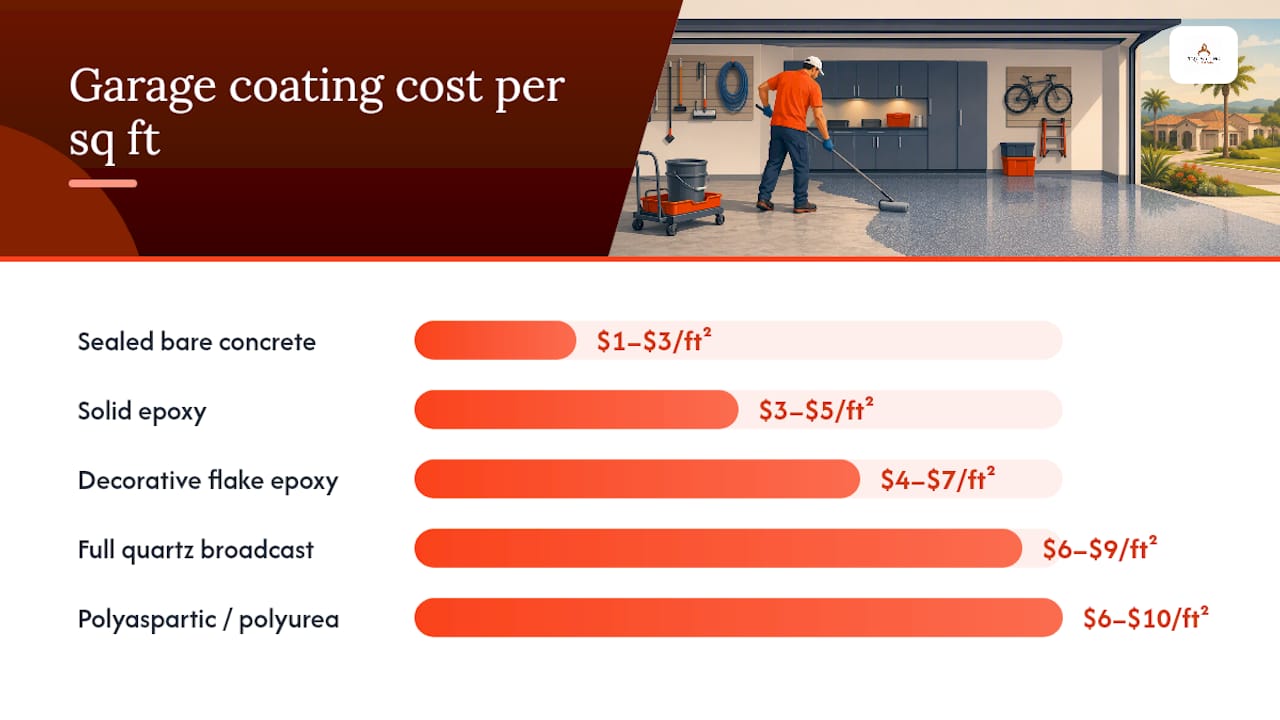
Here's how the main coating options generally stack up per square foot:
- Sealed bare concrete: roughly $1 to $3 per sq ft, offering minimal protection and the shortest lifespan
- Solid epoxy: roughly $3 to $5 per sq ft, a solid entry point for basic durability
- Decorative flake epoxy: roughly $4 to $7 per sq ft, adding texture and hiding minor slab imperfections
- Full quartz broadcast systems: roughly $6 to $9 per sq ft, built for heavier traffic and a showroom look
- Polyaspartic/polyurea topcoats: roughly $6 to $10 per sq ft, trading a higher upfront cost for faster cure times and better UV stability
Translate those ranges into real garage sizes and the numbers get concrete fast. A one-car garage around 240 square feet often totals $1,000 to $2,400 depending on system. A two-car garage near 400 square feet typically runs $1,750 to $3,600. A three-car garage around 700 square feet climbs to roughly $2,800 to $6,300, though premium quartz or polyaspartic systems can push higher.
Small garages rarely get the same per-square-foot rate as larger ones. Most local installers set a minimum project fee, which means a compact one-car garage can carry a noticeably higher effective rate than a three-car bay, simply because mobilization, equipment setup, and crew time cost roughly the same regardless of square footage. If your garage is on the smaller side, expect your quote to reflect that fixed floor rather than a straight scaled-down number.
What Factors Raise or Lower Your Garage Floor Coating Quote?
Two garages of the same size can generate wildly different quotes, and the difference almost always traces back to five things: prep method, moisture conditions, repairs, topcoat chemistry, and warranty terms.
Surface prep is the foundation, literally. Diamond grinding mechanically opens the concrete pores for real coating adhesion and costs more upfront than a quick acid etch, but it holds up far better over time. Skipping prep entirely (a red flag on any quote) sets the coating up to peel within a year or two.
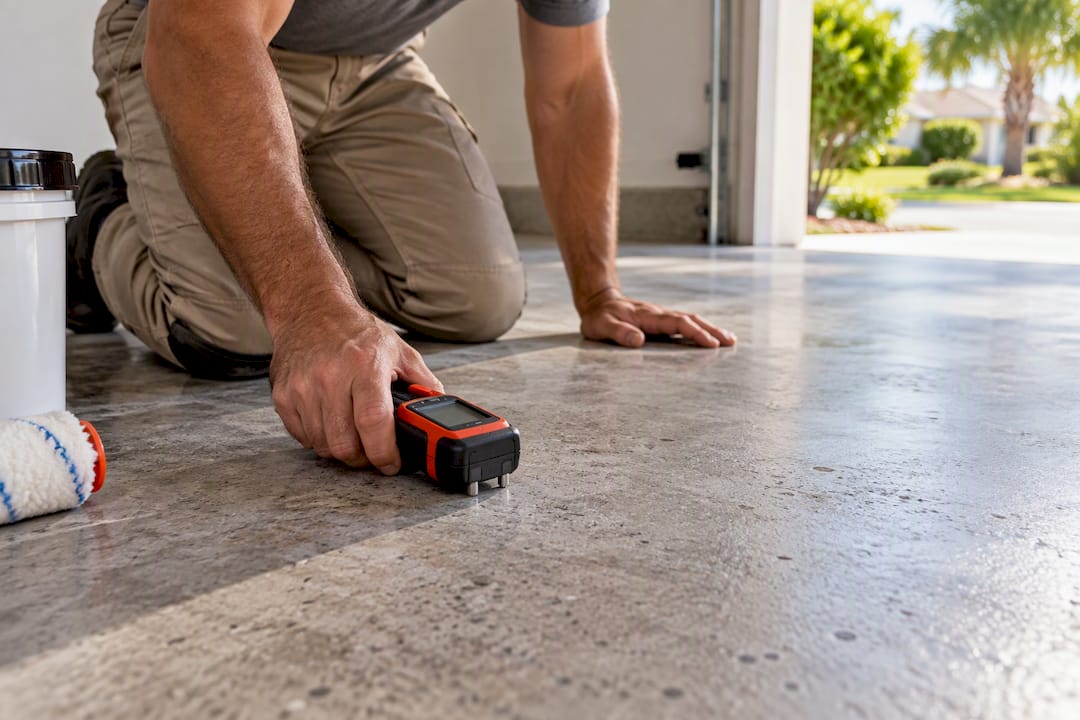
Moisture mitigation matters more here than almost anywhere else in the country. Central Florida's humidity raises the odds that a slab needs vapor testing, and when readings come back high, a vapor-barrier primer typically adds about $1.50 to $3.00 per square foot to the job.
Florida factor: slab moisture is consistently cited as the single biggest reason quotes climb above the baseline range, and it's why quality installers test before they quote rather than pricing blind.
Other cost drivers to watch for on a written estimate:
- Crack or spall repair, priced separately from the coating itself
- Removal of an existing failed coating, before new material goes down
- Limited access or mobility issues that slow crew setup
- Anti-slip additive in the final topcoat, a small add that improves traction when the floor is wet
Warranty length tracks the system: solid epoxy commonly carries 1 to 5 year coverage, while polyaspartic and polyurea systems often run longer thanks to better UV and abrasion resistance.
Do You Need ARC Approval for a Garage Floor Coating in The Villages?
Interior garage floor coatings generally fall outside ARC review because they're non-structural and not visible from the street. Exterior or driveway coatings are a different story. Colored or decorative treatments visible from the road may require a petition or ARC approval depending on your unit type and neighborhood petition rules.
Before you start any exterior work, run through this quick checklist:
- Confirm whether your project is strictly interior (garage floor only) or touches visible exterior surfaces
- Check the current ARC manual and petition requirements for your village
- Get written ARC confirmation on anything visible from the street before work begins
- Keep a copy of that approval with your project records
What's the Installation Timeline for a Garage Floor Coating?
A standard garage coating install runs over several days, not hours, even though marketing sometimes implies otherwise.
- Day one: grinding, moisture testing, and crack repair
- Day two: base coat application and decorative flake or quartz broadcast if selected
- Day three (or later): topcoat application, followed by a cure window before the garage can handle foot traffic
- Full vehicle weight typically waits 24 to 72 hours after the final topcoat, depending on the system
Clear the garage completely before crews arrive, secure pets away from the work area, and plan an alternate spot for vehicles during the cure window.
Pro Tip: Central Florida's humidity can extend cure times, especially in summer. Ask your installer how they schedule around weather so your timeline holds even if a rainy afternoon rolls in.
How Do You Choose a Qualified Garage Floor Coating Contractor?
A trustworthy estimate reads like a breakdown, not a single lump number. Look for these line items before you sign anything:
- Surface prep method, spelled out (grinding vs. etching)
- Moisture testing results and whether a vapor-barrier primer is included
- Crack repair and old coating removal, priced separately
- Materials and labor split clearly
- Mobilization or minimum project fee disclosed upfront
- Warranty length and what voids it
Ask to see examples of past work in The Villages specifically, request references, and confirm the contractor carries active insurance. A line-item estimate that separates each cost category protects both sides when questions come up later.
Pro Tip: If a contractor promises a full multi-coat system finished in a single day with no mention of moisture testing, treat that as a warning sign rather than a bargain.
Watch for vague scope language, no mention of moisture testing at all, or unrealistic one-day timelines for jobs that genuinely need multiple cure cycles.
Why Local Prep Experience Matters in The Villages
Tru Painting works across Lake County and Central Florida, and thorough prep and premium materials drive everything the crew does, garage floors included. That focus matters here specifically because Florida slabs behave differently than concrete up north.
The three-tier packages give homeowners a straightforward way to match budget to prioritize:
- Cosmetic Refresh: suited to homeowners who want a clean, updated look without the deepest prep investment
- Enhanced Prep & Durability: a middle path for owners planning to stay long-term and wanting stronger adhesion and longevity
- Maximum Prep & Protection: built for garages with known moisture issues or owners who want the longest-lasting result possible
Every estimate accounts for Florida-specific risk factors: moisture testing before any coating goes down, vapor-barrier primers when readings call for them, and scheduling that respects how humidity affects cure times.
Are There Financing Options for Garage Floor Coating in The Villages?
Garage floor coating isn't typically covered by traditional home equity financing the way a roof or HVAC replacement might be, but several practical paths exist for spreading out the cost. Many contractors offer in-house payment plans or work with third-party home improvement financing companies that approve projects in this price range quickly, often with promotional low-interest windows for shorter terms.
Credit cards with 0% introductory APR periods are another common route homeowners use for projects in the $1,750 to $6,000 range, provided the balance gets paid off before the promotional period ends. Some homeowners also bundle a garage coating with other planned work, like driveway sealing or exterior painting, to negotiate better overall pricing since mobilization costs get shared across a larger project.
If you're weighing a garage coating against a larger garage remodel, it's worth checking with a partner like One Day Doors & Closets of Central Florida if new garage doors or storage systems are part of the plan too. Combining projects can sometimes unlock better scheduling and pricing than tackling each piece separately.
Ask any contractor you're considering whether they offer payment plans directly, and get the terms in writing before committing. A legitimate financing offer will have clear rates and terms; anything vague deserves a second look.
What's the Real Total Cost Breakdown for a Garage Floor Project?
That split shifts when moisture mitigation or repair work enters the picture, since those are largely labor-intensive line items rather than material costs.
A realistic total for a two-car garage in The Villages might break down like this: base epoxy or polyaspartic material costs, labor for grinding and application, a moisture-barrier primer if testing calls for it, and the contractor's mobilization fee bundled into the final number. Crack repair, if your slab has settling cracks common in older Villages construction, adds a separate line item rather than getting absorbed into the base price.
Hidden fees to watch for locally include disposal costs for removing a failed existing coating, extra charges for garages with limited driveway access for equipment staging, and rush fees if you need the job done around a specific move-in or event date. None of these are unreasonable, but they should show up as their own line, not get folded silently into a padded base price.
The clearest protection against surprise costs is a detailed written estimate that separates prep, repairs, materials, labor, and mobilization before work starts. Ask your contractor to walk through each line before you sign.
Which Coating Lasts Longest in The Villages Climate?
Cost and lifespan don't move together in a straight line, and that's exactly where a lot of homeowners get their budget wrong. Solid epoxy costs less upfront but typically needs resurfacing sooner in a climate with this much UV exposure and heat. Standard epoxy can yellow or degrade under direct sun over several years, particularly near garage doors that see afternoon light.
Polyaspartic and polyurea systems cost more per square foot but hold their finish substantially longer under Florida sun. The added upfront investment often pays back through reduced maintenance and fewer resurfacing cycles, which matters if you're planning to stay in your home for a decade or more rather than selling in a year or two.
Decorative flake and quartz systems sit in between on raw material cost but tend to hide UV fading and minor wear better than solid color coats, simply because the multi-tone finish doesn't show gradual color shift the way a single solid shade does. For a garage that gets real sun exposure through an open door for hours a day, that visual forgiveness has real value even if it's hard to put a number on.
The practical rule: if you're staying put long-term, lean toward polyaspartic or a quartz system. If you're coating before a near-term sale, a solid epoxy refresh covers the visual bases without overspending on durability you won't be around to benefit from.
How Does Florida Weather Affect Coating Timing and Cost?
Florida's weather calendar shapes both scheduling and price more than most homeowners expect going in. Humidity runs high for most of the year, but it peaks during the summer wet season, which is exactly when slab moisture readings are most likely to come back elevated and trigger the need for a vapor-barrier primer.
Contractors in The Villages generally prefer scheduling major coating work during the drier months, roughly fall through early spring, when humidity and rainfall are lower and cure times stay predictable. That doesn't mean summer installs are impossible. It means they require tighter scheduling around rain and often longer cure windows before a garage is ready for vehicle traffic again.
Booking during peak season (spring, when many Villages residents are refreshing homes for the coming year) can also mean longer lead times simply due to contractor demand. If your timeline is flexible, scheduling in the fall or winter often means faster availability and fewer weather-related delays, though the coating price itself doesn't typically change by season. The delay risk and cure-time buffer are what shift, not the base rate per square foot.
Getting Your Garage Coating Budget Right
Spending more on prep and a durable topcoat almost always beats saving upfront. The regret we hear most isn't overspending. It's underbudgeting for moisture mitigation, then watching a bargain coating fail within a season.
— Kyle
Get a Local Garage Floor Estimate From Tru Painting
Tru Painting is the alternative to guessing at garage floor pricing over the phone. As a local painting contractor in Lake County and Central Florida, we build every garage coating estimate around an actual onsite measure, moisture testing when the slab calls for it, and a line-item quote that shows exactly what you're paying for before a single tool touches your floor.
Our three-tier packages make the budget-versus-durability decision straightforward instead of overwhelming: Cosmetic Refresh for a clean update, Enhanced Prep & Durability for owners planning to stay a while, and Maximum Prep & Protection for garages with real moisture concerns or owners who want the longest possible lifespan. Every estimate includes a clear timeline so you know exactly when you'll get your garage back.
Ready to see real numbers for your garage? Request your estimate from Tru Painting and get a written quote scoped to your slab, your square footage, and your priorities.
Sources
- Epoxy Garage Floor Cost in Florida: 2026 Prices for Tampa Bay | Apex Epoxy Coatings
- Epoxy garage floor cost (Bob Vila) — Apr 2024
- Anti-skid additives for floor coatings (Lowe's product category)
FAQ
What's the Average Cost to Coat a Garage Floor in The Villages?
Most homeowners pay $4 to $8 per square foot for a professionally installed coating, which puts a typical two-car garage between $1,750 and $3,600. The final number depends heavily on slab prep, moisture conditions, and topcoat system.
How Much Does It Cost to Epoxy a 1,000 Sq Ft Garage?
A 1,000 square foot garage, larger than most three-car bays, typically falls in a price range reflecting standard Florida per-square-foot rates. Moisture mitigation or extensive crack repair can push that total higher.
How Much Does It Cost to Polyurea or Polyaspartic Coat a Two-Car Garage?
Polyaspartic and polyurea systems generally run $6 to $10 per square foot installed. For example, a typical 400 square foot two-car garage often totals between $1,750 and $3,600 depending on system and prep. The higher cost reflects faster cure times and stronger UV resistance, which tends to pay off over the system's longer lifespan.
What's the Downside of an Epoxy Garage Floor?
Standard epoxy can yellow or degrade faster under direct UV exposure compared to polyaspartic systems, which matters in Florida's sun. It also typically requires a longer cure time before vehicles can return, and poor prep or skipped moisture testing can cause peeling within a year or two.
Do Garage Floor Coatings Need ARC Approval in The Villages?
Interior garage floor coatings generally don't require ARC review since they're not visible from the street. Exterior or driveway coatings visible from public view may need a petition or ARC approval depending on your specific unit and village rules.