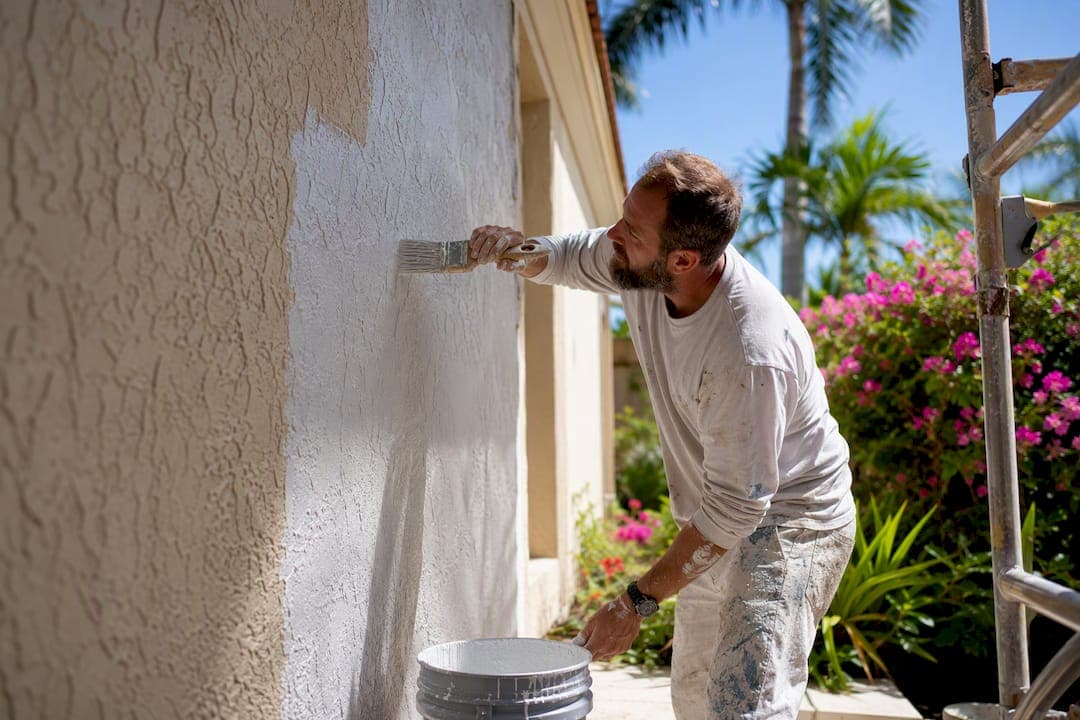
Exterior house painting in Florida typically runs within a few thousand to around ten thousand dollars for an average-size home, with most homeowners landing near $5,750 for a 1,500 square foot house. Per-square-foot pricing usually falls between $2.00 and $4.50, though the number that actually lands on your invoice depends on three things: how much prep your siding needs, how many stories you're painting, and which paint grade you choose.
Here's what moves the needle most:
- Prep condition: peeling paint, mildew, and stucco cracks can add hundreds to your total before a single coat goes on.
- Home structure: two and three-story homes cost significantly more than single-story homes of the same square footage due to extra requirements, thanks to ladder and lift requirements.
- Paint grade: economy versus premium acrylic can swing your material costs by hundreds of dollars alone.
Quick action: measure your home's paintable surface area (not just floor space) or request two to three on-site quotes before budgeting a firm number.
Key Takeaways
Florida exterior painting costs run higher than national averages because humidity, UV exposure, and salt air demand more prep and shorter repaint cycles.
| Point | Details |
|---|---|
| Know your planning range | Budget $4,000 to $10,000 for an average Florida home, with $2.00 to $4.50 per square foot as your baseline. |
| Prep drives cost swings | Pressure washing, mildew treatment, and stucco or wood repair can account for around 30% of total project cost. |
| Multi-story adds real money | Two and three-story homes typically cost 25 to 40% more than single-story homes of equal size. |
| Premium paint pays off long-term | Florida exteriors last 5 to 7 years on average, so premium or elastomeric coatings often cost less over a decade. |
| Compare bids on scope, not just price | Request paint brand, coat count, prep steps, and warranty terms from every bidder before deciding. |
| Tru Painting offers tiered options | Tru Painting's three-tier packages let Lake County and Central Florida homeowners match investment level to prep needs and longevity goals. |
Table of Contents
- What Does House Painting Cost in Florida Per Square Foot?
- What Are the Line-Item Costs for Materials, Prep, and Labor?
- How Does Florida's Climate Change Painting Costs and Timelines?
- What Do Florida House Painting Costs Look Like City by City?
- How Do You Get an Accurate Contractor Quote?
- How Do You Calculate Your Own Painting Estimate?
- How Does Tru Painting Structure Exterior Painting Jobs?
- Is It Worth Paying More Than the Cheapest Bid?
- Ready to Get an Accurate Exterior Painting Estimate?
- Sources
What Does House Painting Cost in Florida Per Square Foot?
Florida painters price jobs three main ways: per square foot, hourly or daily crew rates, and flat-fee bids. Per-square-foot pricing is the most common and the easiest to compare across contractors, since it bakes in labor, materials, and standard prep into one number.
Most Florida contractors quote a typical range of price per paintable square foot, according to BuildPriced's Florida cost data, with $2.00 to $4.50 being the tighter range specific to exterior work. That range normally includes pressure washing, one to two coats of paint, caulking, and basic spot-priming. It usually does not include stucco repair, wood rot replacement, or major mold remediation, which get quoted separately.
Here's how that translates into real numbers for common Florida home sizes:
- 800 square foot home (small ranch or bungalow): roughly $2,500 to $4,200 for single-story with average prep.
- 1,500 square foot home: roughly $4,000 to $7,500 single-story; add 25 to 40% (about $5,000 to $10,500) if it's two stories.
- 2,000 square foot home: roughly $5,500 to $9,500 single-story; two-story versions often land between $7,000 and $13,000.
- 2,500 square foot home: roughly $6,500 to $11,500 single-story; coastal or heavily-trimmed two-story homes can push past $15,000.
These figures assume moderate prep. A stucco home with cracked walls or a wood-sided house with rot damage will sit at the high end or above it.
Hourly and daily rates show up more often with smaller touch-up jobs or when a contractor bills by crew size. A two-person crew might run $50 to $90 per hour combined, and BLS wage data shows painter labor costs vary significantly by region, with urban and coastal markets commanding higher rates due to demand and cost of living. Hourly pricing works fine for small jobs but makes total costs hard to predict on a full exterior repaint, since nobody can promise exactly how many hours a stucco crack repair will take until they're already inside it.
Flat-fee bids are what most homeowners actually want: one number, one scope, no surprises. The tradeoff is that flat bids only protect you if the written scope is detailed. A vague one-line quote ("paint exterior, $6,000") gives the contractor room to cut corners on prep that per-square-foot or hourly pricing would have itemized. Ask every bidder for a breakdown even if the bottom-line number is flat.
What Are the Line-Item Costs for Materials, Prep, and Labor?
Every Florida exterior quote breaks down into three buckets: paint, prep work, and labor. Understanding what each one should cost helps you spot a bid that's missing something, or one that's padded.
Paint materials span a wide range depending on grade:
- Economy acrylic latex: roughly $25 to $35 per gallon, typically lasting 3 to 5 years in Florida's climate.
- Mid-range acrylic: $35 to $55 per gallon, the most common choice for standard siding and stucco.
- Premium exterior paint (Sherwin-Williams Duration, Benjamin Moore Aura, PPG Diamond, and similar lines): $55 to $80 per gallon, and Consumer Reports testing backs these for meaningfully better UV and mildew resistance.
- Elastomeric coatings for stucco: often $70 to $110 per gallon, but they bridge hairline cracks and resist Florida's humidity swings better than standard acrylic.
Prep work is where budgets go sideways if homeowners underestimate it. Pressure washing typically runs $200 to $500 for an average home. Mildew and mold treatment adds another $150 to $400 depending on severity. Stucco crack repair ranges from $300 for minor hairline cracks to $1,500 or more for significant structural cracking. Wood rot repair on trim, fascia, or soffits can run $200 to $2,000 depending on how much needs replacement, not just patched; homeowners often face the choice of painting vs. replacing old doors when budgeting for trim projects. Scraping, sanding, and caulking gaps typically add $300 to $800. Combined, prep tasks often account for around 30% of total project cost on an older Florida home.
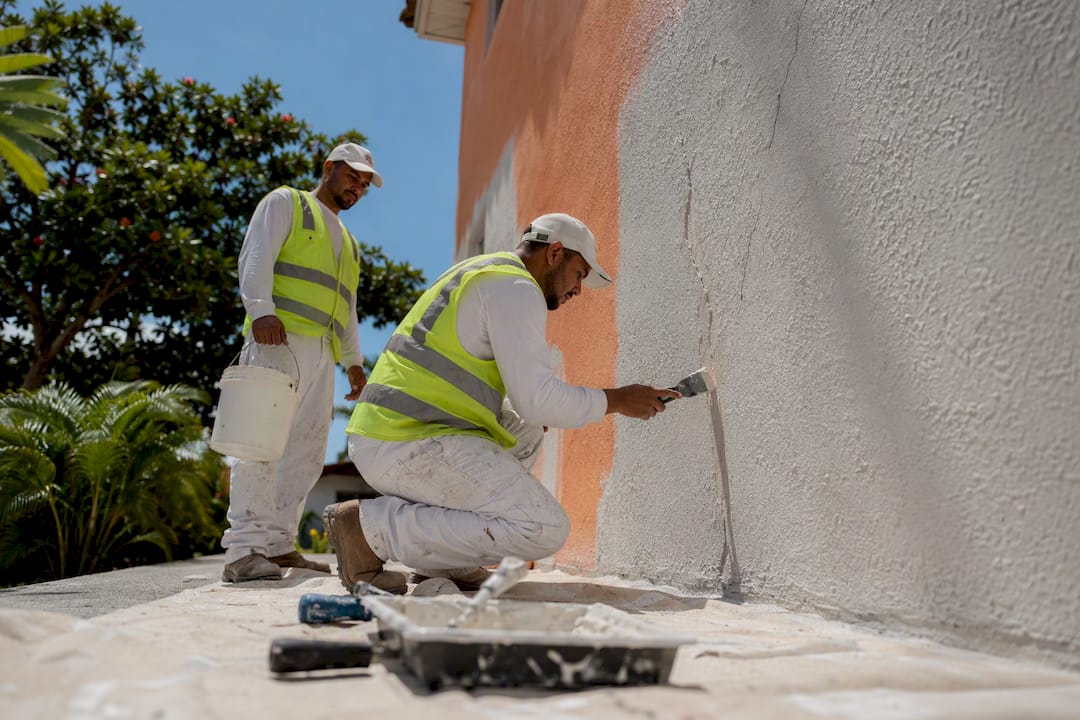
Labor usually makes up the largest single line item, roughly 50 to 70% of the total bid. A typical 1,500 square foot single-story exterior takes a two to three-person crew several days. Add scaffolding or lift rental for two-story homes, which can run $150 to $500 for the project depending on rental duration and equipment needed.
How Does Florida's Climate Change Painting Costs and Timelines?
Florida's sun, humidity, and salt air do real damage to exterior paint, and that damage is the single biggest reason Florida costs run higher than the national average. Intense UV exposure breaks down paint resin faster than in milder climates, causing chalking and fading years before a comparable home up north would show wear. High humidity keeps moisture trapped against siding and stucco longer, feeding mildew growth and softening wood trim. Homes near the coast face salt air that accelerates corrosion on metal fixtures and degrades paint film faster.
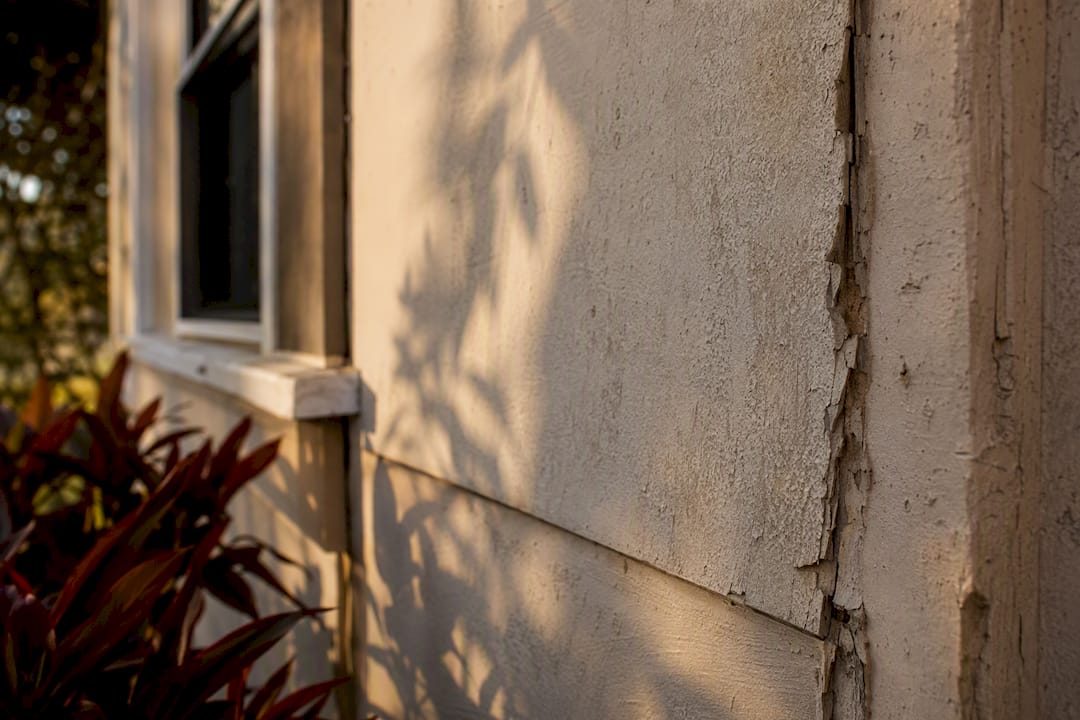
The result: Florida exteriors typically last just 5 to 7 years before needing a repaint, compared to 7 to 10 years in much of the rest of the country. That shorter cycle is exactly why paying more for premium or elastomeric paint upfront often works out cheaper over a decade than repainting every five years with economy product.
Pro Tip: Run the math over ten years, not one job. Two economy repaints at $5,000 each cost $10,000. One premium job at $7,500 that lasts eight to ten years often wins on both cost and hassle.
Premium and elastomeric coatings earn their price tag in specific situations:
- Stucco homes with any history of cracking benefit from elastomeric's flexibility.
- South and west-facing walls that take the harshest sun exposure hold up better with UV-resistant premium formulas.
- Homes within a mile of saltwater need mildew-resistant, higher-grade paint to avoid premature failure.
What Do Florida House Painting Costs Look Like City by City?
Costs shift depending on where in Florida you live, driven by labor rates, humidity levels, and proximity to salt air. Coastal cities generally run higher than inland cities of similar size, and denser metro areas tend to carry higher labor costs than smaller inland towns.
Three scenarios help frame where you'll fall in these ranges:
- Minimal-prep single-story ranch, inland: closer to the low end, especially in Gainesville or Tallahassee.
- Moderate-prep 1,500 square foot two-story home: mid-range in most metro areas, with Orlando and Tampa as typical examples.
- High-prep stucco coastal home, 2,500 square feet: high end or above, particularly in Naples or Miami.
Coastal proximity matters more than most homeowners expect. Homes within a mile of the shore should plan for an extra $300 to $800 for additional washing and salt-resistant primer, a cost inland homes simply don't face.
How Do You Get an Accurate Contractor Quote?
Getting comparable bids starts with knowing what painters actually measure. Professional estimators calculate paintable surface area, meaning wall area plus trim, doors, gables, and any dormers, not your home's floor plan square footage. A two-story home with a steep roofline and lots of trim can have significantly more paintable surface than its floor plan suggests, which is why two "1,500 square foot" quotes can differ by thousands of dollars.
This won't replace a contractor's on-site measurement, but it gives you a sanity check against incoming bids.
When comparing bidders, request the same information from each one:
- Full written scope, including which surfaces are included and excluded.
- Specific paint brand and product line, not just "premium paint."
- Number of coats, since one coat over old paint rarely holds up in Florida's climate.
- Detailed prep steps: washing, scraping, priming, caulking, and repair work.
- Written warranty terms and length.
- Proof of liability insurance and workers' compensation coverage.
- Cleanup and site protection plan for landscaping and windows.
Pro Tip: If a bid comes in dramatically lower than the others, ask what's missing before you celebrate the savings. It's almost always prep work, coat count, or paint grade quietly cut from the scope.
Watch for red flags: no written contract, requests for full payment upfront, no proof of insurance, or a quote that skips prep entirely. A detailed contractor checklist can help you compare apples to apples before signing anything.
How Do You Calculate Your Own Painting Estimate?
Building your own working number takes four steps, and it gives you a realistic range to hold contractors against.
- Determine paintable surface area. Measure perimeter times wall height, then add 10 to 15% for trim and gables.
- Choose your $/sq ft band. Use $2.00 to $3.00 for economy, $3.00 to $4.00 for mid-range, and $4.00 to $5.20 for premium or elastomeric work.
- Add prep allowances. Budget $200 to $500 for washing, plus separate line items for any mildew, stucco, or wood repair you already know about.
- Add a contingency. Tack on 15 to 30% for hidden issues that show up once scraping starts, especially on homes over 15 years old.
Adjust upward for multi-story homes (add 25 to 40%), heavy trim or shutters, and any major repair work discovered during prep. Most accurate estimates still land within a ±15 to 30% variance of the final bid, since hidden rot and stucco damage are only fully visible once work begins.
How Does Tru Painting Structure Exterior Painting Jobs?
Tru Painting is a locally owned painting contractor serving Lake County and Central Florida, specializing in exterior and interior painting, cabinet refinishing, pressure washing, and specialty coatings for homes and businesses across the region. Every exterior job starts with the same philosophy: thorough prep and premium products matter more than a low sticker price.
Tru Painting structures its exterior work around three service tiers, so homeowners can match their investment to their goals:
- Essential tier: solid prep, quality mid-range paint, ideal for homeowners planning to sell or refresh curb appeal on a budget.
- Enhanced tier: added prep depth, premium paint lines, and longer warranty coverage for homeowners staying put for the next decade.
- Premium tier: full stucco and wood repair, top-shelf elastomeric or premium acrylic systems, built for coastal exposure or homes with heavier existing damage.
Tru Painting's approach centers on thorough preparation, premium products, skilled craftsmanship, and clear communication, delivering finishes homeowners can be proud of for years rather than just a quick coat that fades in three summers.
That tiered structure means a homeowner comparing bids isn't stuck choosing between "cheap and risky" or "expensive and unclear." Each tier spells out exactly what prep, paint, and warranty terms are included, so the price makes sense before work ever starts.
Is It Worth Paying More Than the Cheapest Bid?
The cheapest bid on the table is rarely the cheapest choice over ten years, and Florida's climate makes that gap wider than in most states. A $4,000 economy repaint that fails in four years, then needs another $4,500 job, costs more than a single $6,500 premium job that holds for eight to nine years. The math favors quality almost every time once you stop comparing single invoices and start comparing decades.
The most common mistake homeowners make isn't picking bad paint. It's accepting a quote that skips prep to hit a lower number, then wondering why the paint bubbles and peels within two summers. Prep is invisible once the job is done, which makes it the easiest line item for a corner-cutting bidder to quietly drop. Ask what's underneath the price before you ask how low it can go.
Ready to Get an Accurate Exterior Painting Estimate?
Reading cost ranges gets you close, but nothing replaces an on-site look at your home's actual siding condition, trim detail, and repair needs. That's the gap Tru Painting closes for Lake County and Central Florida homeowners: instead of guessing at a number from a table, you get a specific, written quote based on your home's actual paintable surface and prep requirements.

For most homeowners planning a standard repaint, the Enhanced tier hits the sweet spot of premium paint and stronger warranty coverage without the full-repair pricing of the Premium tier. If your home has visible stucco cracking or is within a mile of the coast, the Premium tier's added prep work is worth the conversation before you commit to a package.
An on-site estimate from Tru Painting includes a full measurement of your home's paintable surface area, a walk-around inspection for mildew, rot, and stucco damage, and a written scope that spells out coats, product lines, and prep steps before any work begins. Every exterior job comes backed by a workmanship warranty, so you know exactly what's covered if something doesn't hold up as promised.
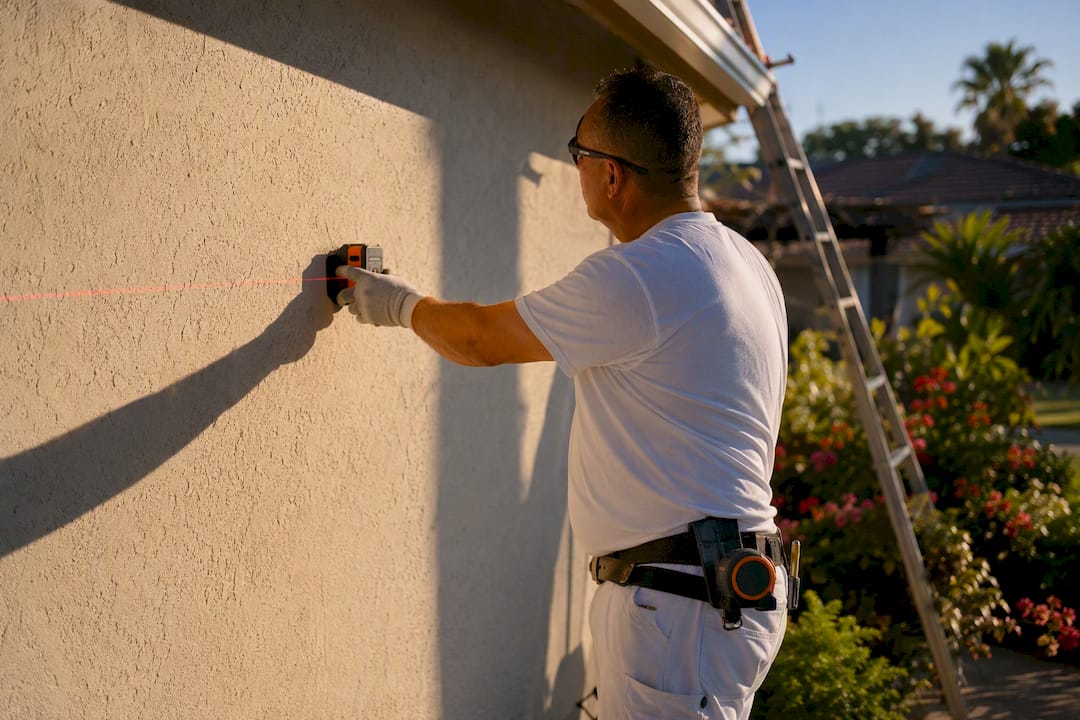
If you're ready to turn your budget range into a real number, request a residential exterior painting estimate and get a written scope built around your home, not a national average.
Sources
- Average Cost to Paint the Exterior of a House in Florida | Fixr
- How Much Does It Cost to Paint the Exterior of a House? | Angi
- Florida Interior Painting Cost (2026) — BuildPriced