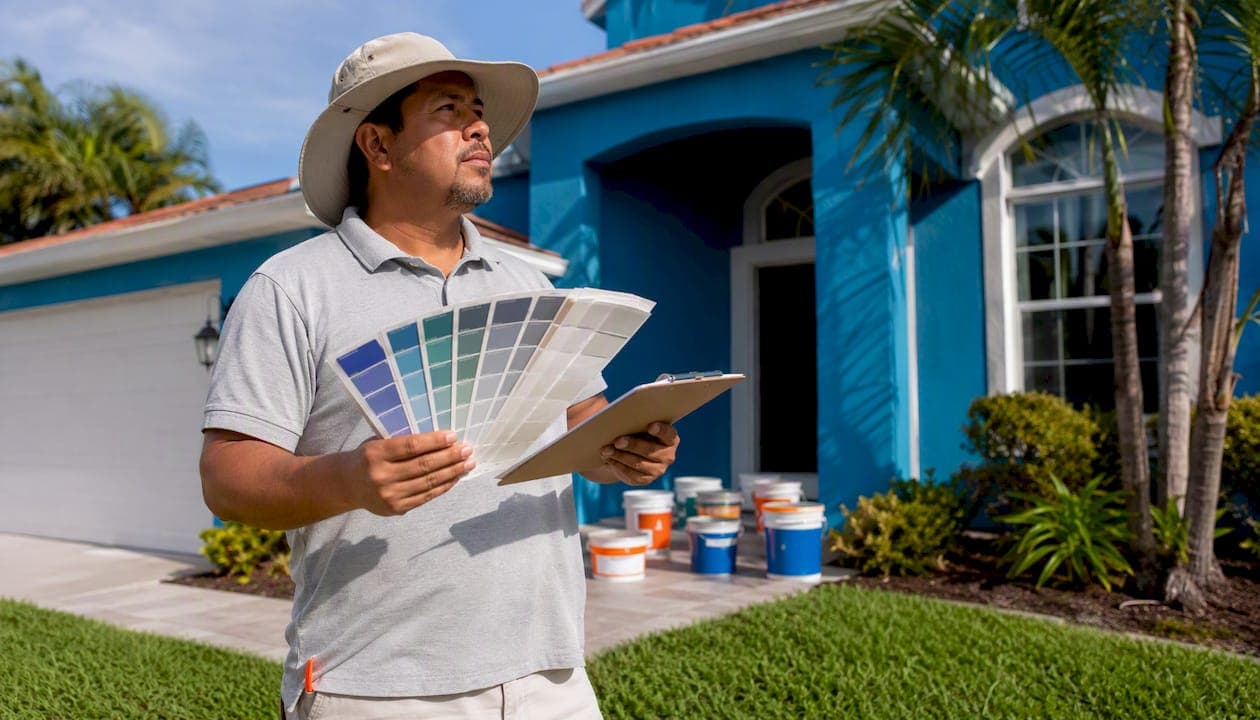
For most Florida homes, licensed contractors choose one of three coating families: 100% acrylic latex for wood, fiber cement, and sound stucco; elastomeric for stucco and masonry with hairline cracking; and ceramic-enhanced systems for high-UV or coastal exposures where owners plan 15 or more years of ownership. Florida's combination of intense UV, humidity that regularly tops 85%, salt-laden air, and wind-driven rain makes product selection genuinely consequential, not just a preference.
Before you approve a single gallon, run this quick screen on any contractor you're considering:
- Verify their Florida DBPR license at MyFlorida.gov
- Confirm active general liability and workers' compensation insurance
- Require a written contract naming the exact product, primer, number of coats, and warranty terms
Pro Tip: A contractor who hesitates to provide their license number or insurance certificate before the estimate is a red flag worth heeding. Quality contractors hand over that documentation without being asked.
Table of Contents
- Which coating is actually best for Florida's climate?
- How does a pro decide which coating your house needs?
- Key Takeaways
- Our honest take on coating selection in Central Florida
- Ready to get a written estimate for your Lake County home?
- Useful sources and resources
Which coating is actually best for Florida's climate?
The three contractor-grade families each solve a different problem, and choosing the wrong one for your substrate is a common source of early failure.
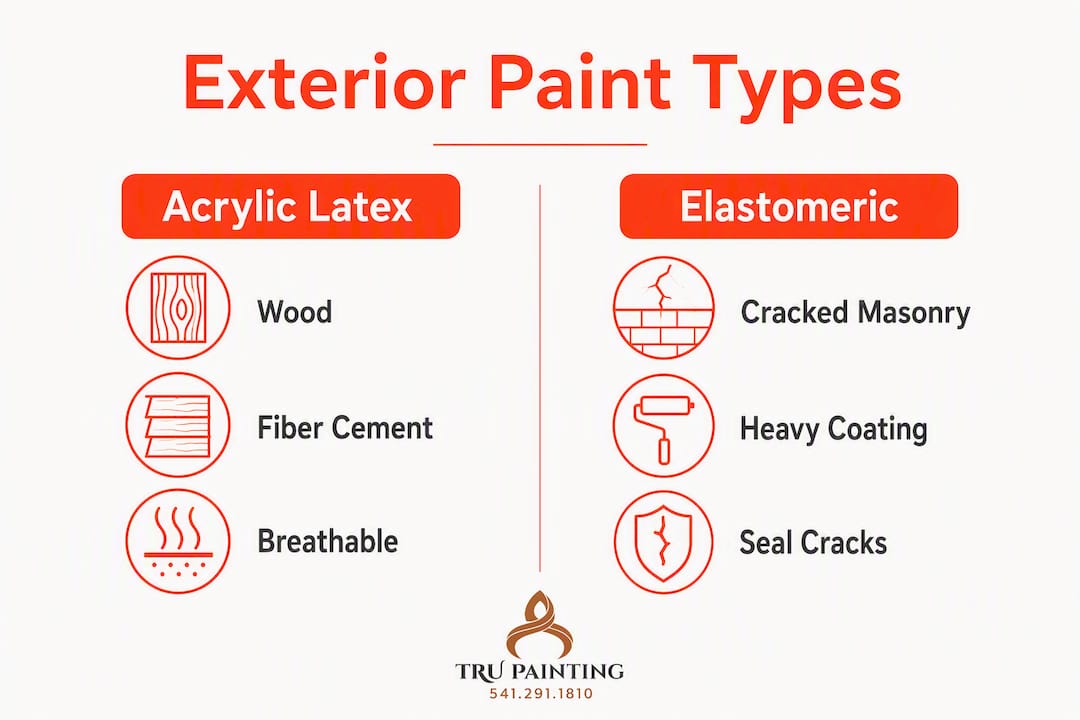
100% acrylic latex
Premium acrylic latex is the go-to for wood siding, fiber cement, and stucco in good structural condition. Its breathability lets moisture vapor escape rather than build pressure behind the film, which matters enormously in Central Florida's humid summers. Contractor-grade acrylic formulas hold color and film integrity far longer than builder-grade alternatives in UV-intense environments. Low-maintenance exterior formulations in this category typically deliver several years of service when professionally applied with proper prep.
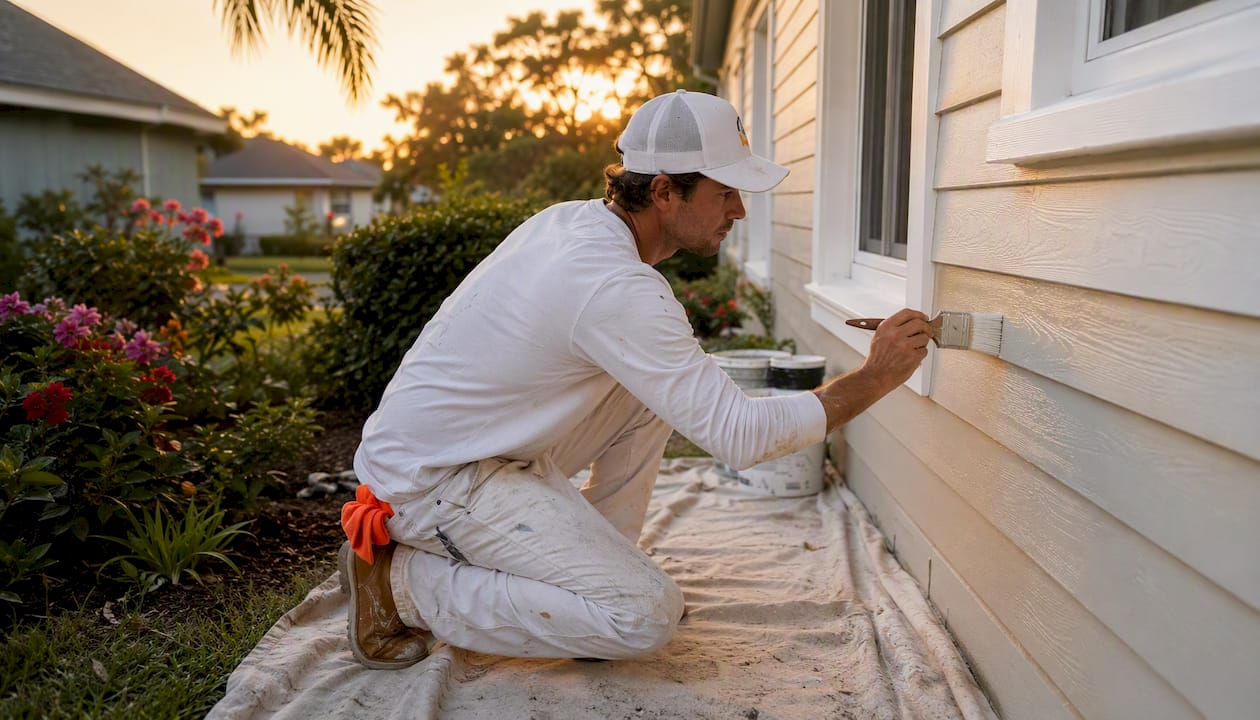
Elastomeric coatings
Elastomeric coatings bridge hairline cracks up to 1/16 inch and apply at roughly 10–12 dry mils, compared to 1–2 mils for standard paint. That thickness is what gives them their crack-bridging and moisture-resistance advantage on stucco and concrete block. A single professional elastomeric application typically lasts a decade or more on appropriate substrates, replacing what would otherwise be multiple repaint cycles. The lifecycle math often favors elastomeric on stucco even though the upfront cost is higher.
Ceramic-enhanced systems
Multi-layer ceramic systems use microspheres to reflect UV energy and extend service life. When professionally applied, these systems are positioned to last significantly longer, making them the right call for coastal exposures or homeowners who want to minimize future disruption. The premium is real, but so is the payoff over a long ownership horizon.
Key comparison at a glance:
| Coating type | Best substrate | Crack bridging | UV resistance | Typical lifespan |
|---|---|---|---|---|
| 100% acrylic latex | Wood, fiber cement, sound stucco | None | High | 3–5 years |
| Elastomeric | Stucco, masonry, concrete block | up to 1/16 inch | Moderate | 10–15 years |
| Ceramic-enhanced | Any exterior, coastal/high-UV | Varies by system | Very high | 15–25 years |
Pro Tip: Never apply elastomeric to wood or unapproved EIFS panels. Its low breathability can trap moisture in those substrates and cause damage that costs far more to fix than a standard repaint.
How does a pro decide which coating your house needs?
A skilled contractor doesn't guess. They follow a substrate-to-product decision flow that any homeowner can learn to recognize during an estimate walkthrough.
- Identify the substrate. Wood, fiber cement, stucco, and concrete block each have different absorption rates, movement characteristics, and primer requirements.
- Test for moisture. Substrate moisture is a leading cause of early coating failure; pros use a moisture meter before recommending any product.
- Inspect cracks. Hairline cracks (under 1/16 inch) call for elastomeric. Structural cracks require repair before any coating goes on.
- Select the coating family based on substrate condition, exposure, and ownership horizon.
- Confirm primer compatibility. Masonry primer for stucco and block; wood primer for siding and trim. The primer must be part of the manufacturer's approved system.
- Plan two finish coats. One coat is never sufficient for Florida exposures.
What prep must every contractor quote?
Proper preparation prevents the majority of coating failures, and a professional estimate should line-item every one of these steps:
- Pressure washing at substrate-appropriate PSI with chemical mildew treatment
- Moisture testing and a drying window of at least 24–48 hours after washing
- Crack repair and flexible caulking at joints, windows, and penetrations
- Correct primer application (masonry or wood, matched to the coating system)
- Two finish coats at manufacturer-specified wet mils
Weather rules pros follow in Florida
Painting when humidity is very high or surface temperatures climb above 90°F leads to adhesion problems and blistering. Pros also avoid scheduling when rain is predicted within 24–48 hours, depending on the product. Weather conditions directly affect how a coating cures, and cutting corners on application windows is one of the most common causes of premature failure in Central Florida.
Pro Tip: Ask your contractor what their rain-delay policy is. A professional crew reschedules rather than paints into a questionable weather window.
Key Takeaways
Florida contractors choose coating type by substrate: acrylic latex for wood and sound stucco, elastomeric for cracked masonry, and ceramic-enhanced systems for coastal or long-term ownership scenarios.
| Point | Details |
|---|---|
| Match coating to substrate | Acrylic latex suits wood and fiber cement; elastomeric suits stucco and masonry with hairline cracks. |
| Verify every contractor | Check DBPR license at MyFlorida.gov and confirm general liability plus workers' comp insurance. |
| Require written specs | Your contract must name the exact product, primer, coat count, and warranty before work begins. |
| Watch for red flags | Unusually low bids, vague contracts, and no before/after photos often signal skipped prep or missing insurance. |
| Trupainting LLC for Lake County | Trupainting LLC provides licensed, insured exterior painting with three-tier service packages and written line-item estimates for Central Florida homeowners. |
Our honest take on coating selection in Central Florida
Most homeowners focus on color. The coating type rarely comes up until something fails. That's the gap we see most often in Lake County: a home gets repainted with builder-grade acrylic over cracked stucco, looks fine for 18 months, then the cracks reappear and moisture finds its way back in. The product wasn't wrong because it was cheap. It was wrong because it was the wrong tool for that substrate.
The HOA exterior painting requirements in Florida are also shifting. More associations now specify elastomeric by name rather than just approving a color palette, because they've seen the maintenance liability that comes from repeated standard repaints on stucco communities. Confirming your HOA's material requirements before signing any contract isn't optional; choosing a non-compliant coating can mean forced rework and fines.
At Trupainting LLC, we walk every exterior before recommending a product. We moisture-test, inspect cracks, and match the coating to what the substrate actually needs. Our three-tier service packages let you choose your level of investment without sacrificing the prep steps that make the finish last. Every estimate we provide names the product line, primer, coat count, and warranty in writing, because that's the only way to compare bids fairly.
Ready to get a written estimate for your Lake County home?
Trupainting LLC delivers licensed and insured residential exterior painting across Lake County and Central Florida, with elastomeric stucco systems, ceramic-enhanced options, and premium acrylic applications matched to your specific substrate and exposure. Every project starts with a free on-site inspection and a written estimate that line-items prep, primer, product, coat count, and warranty terms.
We handle HOA specification compliance, carry full general liability and workers' compensation insurance, and can show you before/after photos of local projects similar to yours. If you're budgeting a painting project alongside other home improvements, it's worth reviewing common mortgage pitfalls Florida homebuyers face so your financing decisions and home maintenance plans align. Contact Trupainting LLC today to schedule your free exterior inspection and receive a clear, detailed estimate.
Useful sources and resources
These references back the technical claims in this article and give you direct access to official verification tools.
- MyFlorida.gov contractor license verification — official state portal to confirm DBPR registration and license status for any Florida painting contractor
- Elastomeric Coating vs Paint: Florida Homeowner Guide — detailed breakdown of dry film thickness, crack-bridging specs, and lifecycle cost comparisons for stucco and masonry
- HOA exterior painting requirements in Florida — explains how Florida HOAs are specifying higher-performance coatings and what compliance requires
- Trupainting LLC residential exterior services — Lake County and Central Florida exterior painting, pressure washing, and specialty coatings
- Painting contractor selection checklist — printable checklist covering DBPR verification, insurance, references, and product spec requirements
Before approving any coating change, confirm your HOA's current material and product specifications in writing. Some Central Florida communities now require elastomeric by name, and a non-compliant application can trigger mandatory rework regardless of how well the job was done.