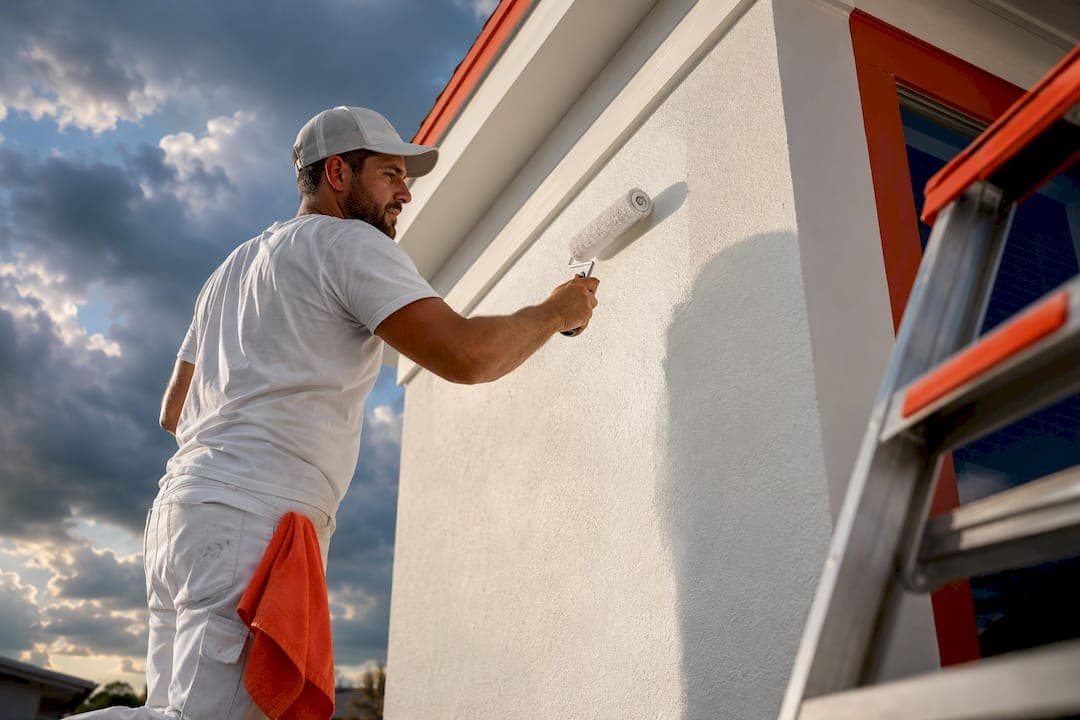
The best windows for exterior painting in hurricane-prone regions are spring (March through May) and late fall (late October through November), when storm odds drop and curing conditions improve. Official hurricane season runs June 1 through November 30, with peak risk from August into early October. Painting during that stretch is still possible, but only if every coat gets a safe cure window and your crew is watching the tropics daily.
TL;DR:
- Painting during spring and late fall reduces storm risk and provides optimal temperature and humidity conditions for proper cure, unlike summer months.
- Ensuring a 24 to 48-hour dry window, monitoring the dew point, and painting the most exposed surfaces first are critical for scheduling around weather threats.
- Protecting existing paint, caulking, and gutters can be more effective than full repainting when weather cannot be controlled, and targeted repairs prevent water intrusion.
- Local climate variations influence optimal timing, with Florida and Gulf Coast favoring early spring or late fall, and other regions requiring adjusted schedules due to frost or heat.
- Following a four-week pre-paint checklist and trusting local contractor expertise ensures proper planning, weather sequencing, and protection during hurricane season.
Table of Contents
- Best Months for a Hurricane Season Painting Schedule
- How Do You Sequence a Paint Job Around Storm Risk?
- What If the Job Can't Wait for a Better Window?
- How Does Your Region Change the Schedule?
- Your 4-Week Pre-Paint Checklist and Timeline
- Why Local Contractor Experience Matters for Storm-Aware Scheduling
- What Homeowners Get Wrong About Painting Around Hurricanes
- Let Trupainting LLC Handle the Timing for You
- Where to Verify Timing and Product Limits
- Sources
Best Months for a Hurricane Season Painting Schedule
Spring and late fall didn't earn their reputation by accident — be smart heading into storm season with Florida trees to reduce risk and protect your exterior projects. They sit outside the worst of the Atlantic hurricane season, and they tend to offer the temperature and humidity balance that paint actually needs to cure properly. Summer in most hurricane-prone states brings a rougher combination: high humidity, afternoon thunderstorms, and the season's peak weeks all stacked on top of each other.
Each window comes with its own tradeoffs, though.
- Spring (March to May): Cooler mornings, but pollen and scattered spring showers can slow drying and leave a film on fresh surfaces.
- Late fall (late October to November): Storm risk has mostly passed by this point, but daylight hours shrink and contractor calendars fill up fast as everyone else has the same idea.
Both windows beat trying to paint in July or August, when even a clear morning can turn into a pop-up storm by 2 p.m. If you're weighing when to book against what a project will cost, our Florida painting cost guide breaks down how timing and season affect your bid.
How Do You Sequence a Paint Job Around Storm Risk?
Scheduling around hurricane season isn't about avoiding June through November entirely. It's about making sure no wet coat is ever left exposed when a storm rolls in. That means every step in the process needs a rule, not a guess.
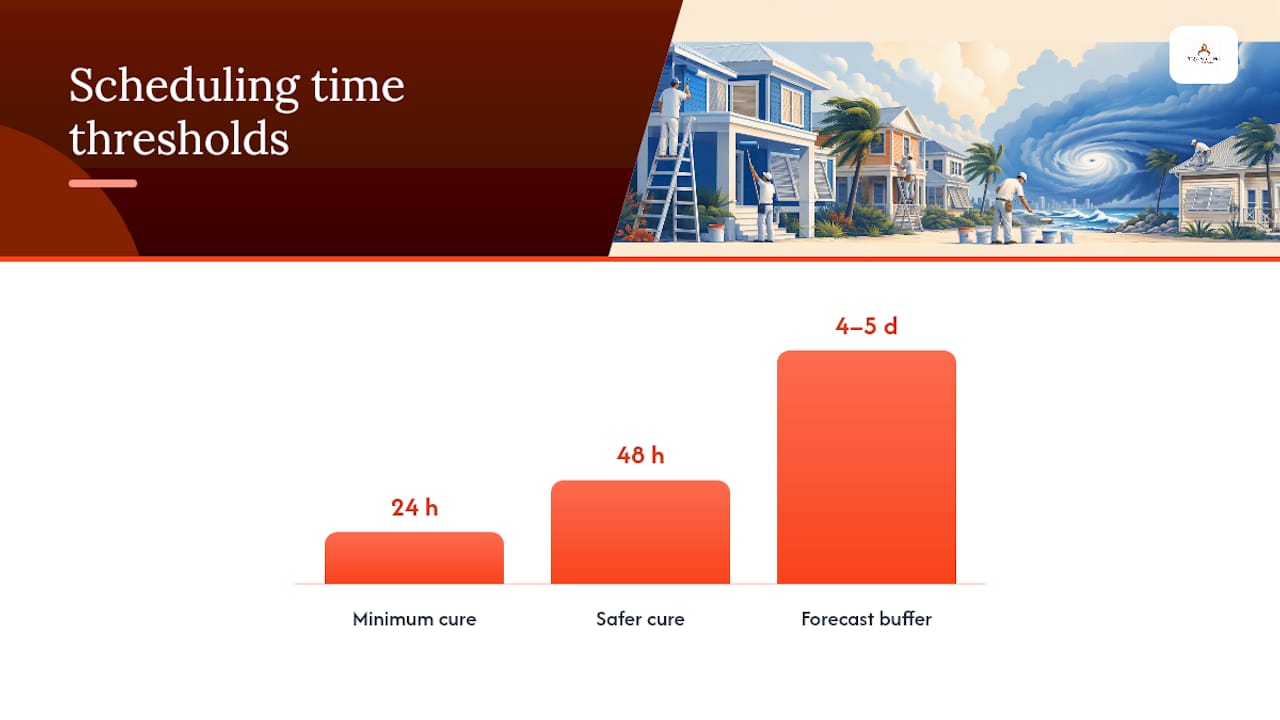
- Check the cure window first. Most exterior latex coatings need at least 24 hours without rain, with 48 hours being the safer target, especially in humid conditions.
- Watch the dew point, not just the thermometer. Surface temperature should sit at least 5°F above the dew point to avoid condensation ruining the film as it dries.
- Paint the most exposed sides first. Tackle the surfaces facing prevailing wind and rain during the clearest multi-day stretch you can find, and save sheltered walls or trim for shakier weather days.
- Build in backup dates. A four or five day forecast window with even one questionable afternoon should push the schedule, not tempt you to rush it.
Our guide to weather's effect on exterior painting covers these thresholds in more detail if you want the full technical picture.
Pro Tip: Keep a printed copy of the paint manufacturer's Technical Data Sheet on the job site. It lists the exact temperature and humidity limits for that specific product, and it settles arguments about whether "it's probably fine" faster than any weather app.
What If the Job Can't Wait for a Better Window?
Sometimes a full repaint just isn't realistic before storm season peaks, and that's fine. A rushed, full exterior repaint squeezed in right before a storm often backfires: paint that doesn't get its cure window can bubble, peel, or wash off entirely, wasting the labor and the product.
What matters more in that situation is protecting what's already there. Walk the exterior and look for:
- Peeling or bubbling paint, especially around windows and doors
- Cracked or missing caulk at seams and trim joints
- Soft or spongy wood, a sign rot has already started
- Clogged gutters that push water back toward the siding
Sealing failed caulk, priming exposed bare wood, and clearing gutters does more to keep water out than a cosmetic repaint ever will. These are also jobs a homeowner can often knock out in a weekend, or hand off for a quick, targeted contractor visit rather than a full project.
How Does Your Region Change the Schedule?
Hurricane-prone doesn't mean the same thing in Tampa as it does in coastal North Carolina. The general spring and late fall windows hold up almost everywhere, but the details shift by climate.
- Florida and the Gulf Coast: Favor March to April and October to November. Summer work is still doable, but crews usually shift to early mornings and lean on live radar to catch safe windows between storms.
- Southeast inland: Similar pattern, with slightly wider windows since hurricane wind exposure tends to ease the farther you get from the coast.
- Northeast and Mid-Atlantic: Watch for late frost on the front end; late spring through early fall works better than a true spring start.
- Pacific Northwest: Hurricanes aren't the concern, but the dry July to September stretch is still the reliable cure window.
- Southwest and desert regions: Peak summer UV and heat can flash-dry paint before it levels properly, so early morning application and UV-resistant products matter more than storm timing.
Your 4-Week Pre-Paint Checklist and Timeline
A little structure turns "we should paint before hurricane season" into an actual plan. Here's a simple four-week framework that works for most spring or fall bookings.
- Week 1: Inspect and plan. Walk the exterior for rot, failed caulk, and clogged gutters. Decide if you need pressure washing first.
- Week 2: Book the contractor. Popular spring and fall dates fill up weeks in advance, so lock in your slot and ask about backup dates now.
- Week 3: Prep work. Pressure washing, scraping, caulking, and priming happen here, timed a few days ahead of paint to let surfaces dry fully.
- Week 4: Paint, with buffer days built in. Schedule painting across the clearest stretch of the forecast, and hold one or two extra days in reserve in case a system moves through.
Choosing paint that holds up over time matters just as much as timing it right. Our guide to low-maintenance exterior paint is worth a look before you lock in colors and products.
Why Local Contractor Experience Matters for Storm-Aware Scheduling
Reading about cure windows is one thing. Applying them correctly on a Central Florida roofline in July is another. Trupainting LLC handles residential and commercial exterior painting, cabinet refinishing, and pressure washing across Lake County and Central Florida, with three service tiers so homeowners can pick the level of protection and prep that fits their home and budget.
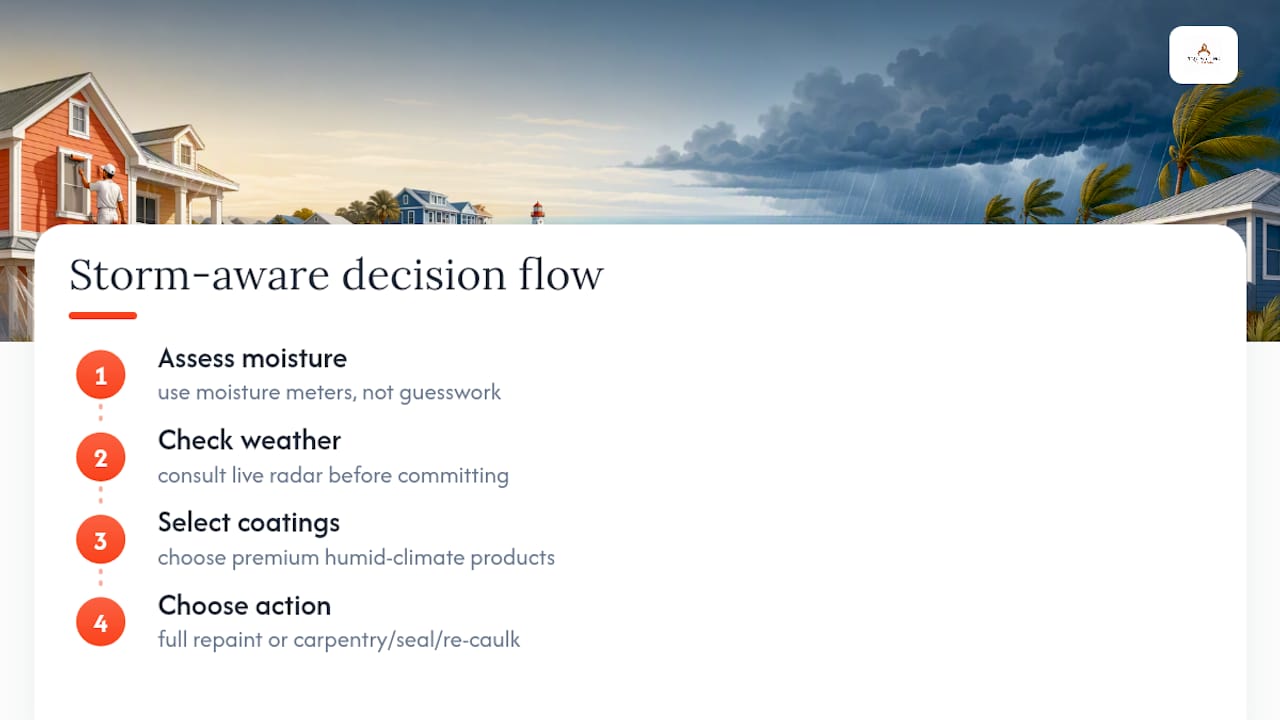
On the ground, that means using moisture meters instead of guesswork, choosing premium coatings built for humid climates, and checking live radar before committing a crew to a wall. It also means knowing when protective carpentry, sealing exposed wood, and re-caulking, makes more sense than forcing a full repaint into a shrinking weather window. If you're not sure where your home stands, a local inspection is the fastest way to find out.
What Homeowners Get Wrong About Painting Around Hurricanes
Most advice on this topic treats hurricane season like a hard stop, a six-month window where exterior painting simply shouldn't happen. That's overcautious. The research backs a different idea: a clear, settled stretch inside hurricane season can be a better painting window than a shaky day outside it. What actually matters is whether the crew is watching the tropics and sequencing the work by exposure, not what the calendar says.
Where conventional advice really falls short is on protective prep. Homeowners fixate on the finished color and finish, and treat caulk, gutters, and bare wood as afterthoughs. Those small failure points are usually what let water in during a storm, not the paint sheen. If a full repaint has to wait, sealing and priming those spots is the higher-value move every time.
Prioritize the cure window and the forecast over the calendar date. A humid August morning with three clear days ahead can beat a rainy November afternoon, and that distinction is what separates a paint job that holds up from one that doesn't.
— Kyle
Let Trupainting LLC Handle the Timing for You
Trupainting LLC is the local alternative to guessing at your own paint schedule: our crews watch the forecast, sequence work by exposure, and hold backup dates so a fresh coat never gets caught by a passing storm. We serve homeowners across Lake County and Central Florida with three-tier exterior packages, letting you choose the level of prep and protection your home needs without paying for more than that.

Before we ever pick up a brush, we handle the failure points that matter most in storm season: re-caulking, priming bare wood, and clearing gutters, so your home is protected even if the paint job itself has to wait a few weeks. If your siding or trim is showing wear and you want a straight answer on timing, request a residential exterior painting estimate and we'll walk the property with you and build a schedule around the forecast, not just the calendar.
Where to Verify Timing and Product Limits
For official season dates, check NOAA's tropical cyclone climatology. For temperature and humidity limits, use your paint manufacturer's technical data sheet. For local cost and scheduling context, browse the Trupainting LLC blog.
Sources
- NOAA tropical cyclone climatology
- Temperature considerations for exterior painting - Benjamin Moore
- Hurricane season prep for your home's paint · Pro 1 Painters