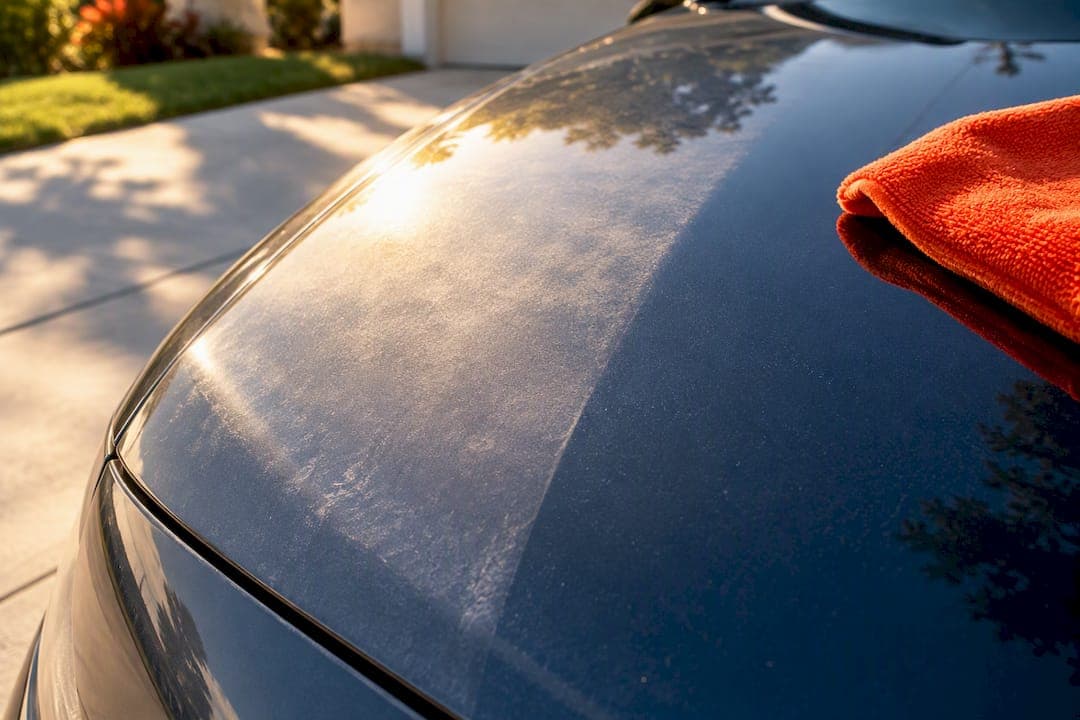
Yes, Florida's year-round high UV, extreme surface heat, and coastal salt accelerate clearcoat photodegradation, and the fastest fix is shade or a cover paired with a quality sealant. Visible dulling can start within months on a poorly protected finish, while a well-maintained one can hold its gloss for years. If you already see cracking or peeling, that's beyond a weekend fix and it's time to talk to a professional.
TL;DR:
- UV absorbers and HALS in clearcoat deplete within two to five years of Florida exposure, leaving the paint vulnerable to accelerated degradation.
- High temperatures above 100°F and salt spray from coastal salt air significantly speed up chalking, cracking, and corrosion issues on vehicle surfaces.
- Well-dispersed titanium dioxide pigments and proper stabilizer packages are crucial for maintaining color and gloss longevity in Florida’s harsh sun.
- Regular maintenance such as weekly washing, prompt removal of contaminants, and timely reapplication of sealants or coatings can extend the life of vehicle and building paint.
- Structural clearcoat failure, indicated by cracking or peeling, requires professional repairs; cosmetic dulling can often be fixed with polishing or minor re-coating.
Table of Contents
- How sunlight chemically damages automotive paint
- Why Florida's coastal air multiplies the damage
- Which colors and coatings actually resist Florida sun best
- Your priority protection playbook for Florida sun damage
- Building a maintenance calendar for Florida conditions
- When fading crosses the line into structural paint failure
- What contractors know about coating longevity that most owners don't
- Why prevention beats reaction under Florida's sun
- How Tru Painting helps when Florida sun wins
- Sources
- FAQ
How sunlight chemically damages automotive paint
Photodegradation is the breakdown of paint molecules from UV exposure, and it happens in two connected ways: photolysis, where UV light directly breaks chemical bonds in the clearcoat, and photooxidation, where that broken material reacts with oxygen and accelerates its own decay. Clearcoats are built with UV absorbers and hindered amine light stabilizers, known as HALS, designed to soak up radiation before it reaches the pigment and binder underneath. Those additives are sacrificial. They deplete with every season of exposure, and once they're used up, the clearcoat has no defense left.
Research using southern Florida test panels found that clearcoat photooxidation at the interface with the basecoat began between two and four years of exposure. Peeling showed up after four to five years once UV protection ran out. That timeline assumes ordinary outdoor exposure, and a car parked in full sun daily will track toward the faster end.
Heat compounds the problem. Dark exterior surfaces in Florida routinely climb well above 100°F, and that heat speeds up every chemical reaction happening in the clearcoat, including the oxidation that follows UV breakdown. Studies on automotive coating weathering show that high UV combined with high heat can cause measurable gloss loss within months in severe exposure, and that the structural integrity of the coating, measured as its critical fracture force, can decline after just one month outdoors in tough conditions.
A few things happen in sequence as this plays out:
- UV light breaks polymer bonds in the clearcoat, starting a chain reaction of oxidation.
- Heat accelerates that chain reaction, shortening the time to visible gloss loss.
- UV absorbers and HALS deplete gradually, and once they're gone, degradation speeds up sharply.
- The clearcoat becomes brittle and can eventually crack or separate from the basecoat.
Why Florida's coastal air multiplies the damage
Salt and humidity don't cause UV damage on their own, but they make everything else worse. Salt spray near the coast can trigger electrochemical corrosion once the clearcoat is compromised, attacking bare metal faster than inland exposure ever would. Florida's humidity also keeps contaminants like pollen, salt residue, and airborne pollutants sitting on the surface longer instead of drying off, which gives them more time to etch into weakened clearcoat.
Water spots are a good example of how this compounds. Mineral deposits from sprinklers or rain sit in the sun, bake onto a UV-softened clearcoat, and etch permanently rather than just wiping away.
- Coastal vehicles face salt-driven corrosion risk in addition to UV breakdown.
- Humidity extends the dwell time of contaminants, giving them more chance to etch the surface.
- A car parked twenty minutes from the coast in Tampa or Jacksonville will typically show slower corrosion onset than one parked steps from the beach, even under similar UV exposure.
Which colors and coatings actually resist Florida sun best
Color matters less than pigment quality. Darker paints absorb more heat and can show fading faster in some cases, but the bigger factor is how well titanium dioxide, or TiO2, is dispersed in the paint. Research on TiO2 dispersion found that dispersion quality accounted for about half of the variation in color fade under accelerated exposure equivalent to Florida conditions, meaning a well-formulated paint often outlasts a poorly dispersed one regardless of shade.
TiO2 itself can be a double-edged sword. Studies on TiO2-containing paint films show that both common crystal forms, anatase and rutile, can generate reactive compounds under UV and visible light that degrade the binder holding pigment in place. That's why the stabilizer package, UV absorbers and HALS working together, matters more for long-term durability than pigment color alone.
Your priority protection playbook for Florida sun damage
Start where the risk is highest and work down. Here's the order that gets you the most protection for the least effort and cost.
- Get out of direct sun immediately. Park under a carport, in a garage, or under a breathable car cover whenever the vehicle sits for more than a few hours.
- Remove bird droppings and bug splatter fast. These are acidic and can etch into softened clearcoat within hours in Florida heat.
- Wash weekly with a pH-neutral car soap using the two-bucket method to avoid grinding contaminants into the paint.
- Clay bar occasionally to lift embedded contaminants that washing alone won't remove, especially after pollen season.
- Apply a quick-detail hydrophobic spray between washes to shed water and reduce contaminant dwell time.
- Choose a polymer sealant over paste wax for daily drivers. Wax typically lasts 6 to 8 weeks in Florida heat, while a quality synthetic sealant can hold up 3 to 4 months.
- Invest in a professional ceramic coating for real UV reduction. These multi-layer systems are formulated with UV absorbers and typically last one to several years depending on the product tier and maintenance.
- Add paint protection film, or PPF, on high-impact areas like the hood and mirrors for physical protection against chips that expose bare clearcoat to the elements.
- Consider stacking PPF with a ceramic topcoat. Detailing specialists note that this combination lets the film absorb physical damage while the coating handles UV resistance and easier cleaning, often the best real-world outcome in high-UV climates.
Pro Tip: Check your hood and roof monthly for a chalky white residue when you rub a dark cloth across the surface. That's oxidized clearcoat breaking down, and catching it early means a polish can often fix it before it needs a repaint.
Each option carries different upkeep. Wax needs monthly reapplication in Florida's heat. Sealants need reapplication every few months. Ceramic coatings need annual inspection and occasional maintenance washes with coating-safe products, but they don't need reapplication the way wax does.

Building a maintenance calendar for Florida conditions
Florida's climate calls for a tighter maintenance rhythm than most parts of the country. Set a schedule and stick to it rather than waiting for visible problems.
- Weekly: Wash with pH-neutral soap and check for new gloss loss, chalky spots, or contaminant buildup.
- Monthly: Inspect high-exposure panels, hood, roof, trunk, for early chalking and reapply a hydrophobic topper if water no longer beads.
- Quarterly: Reapply paste wax if that's your protection method, or check sealant performance with a water-bead test.
- Annually: Have a professional coating inspected for wear, especially before hurricane season when debris and storm runoff increase contact with contaminants.
- After major pollen events or storms: Wash promptly. Pollen is acidic and storm runoff can carry salt and grit that sit longer in Florida's humidity.
When fading crosses the line into structural paint failure
Cosmetic fading and true clearcoat failure are different problems, and the difference determines whether a weekend of detailing helps or whether you need a professional. Chalky dullness that buffs out with polish is cosmetic. Cracking, peeling, or any spot where you can see the basecoat color through a hazy or flaking clearcoat is structural failure, and no amount of waxing reverses it.

Once UV absorbers are depleted, the clearcoat becomes brittle rather than flexible, and that embrittlement is what leads to cracking under thermal stress. At that point, professional intervention is the only real option: compounding for moderate oxidation, clearcoat replacement for isolated panel damage, or a full repaint when degradation is widespread. The scope of damage, not the vehicle's age, is what should drive the decision, and a contractor experienced in coating systems can tell you which category you're in during a quick inspection.
What contractors know about coating longevity that most owners don't
When you're evaluating any protective coating, whether for a car or a home exterior, ask what's actually in it. A quality product names its UV absorber type, confirms HALS content, and specifies the TiO2 grade used in pigmented systems. Vague answers on any of those points are a red flag, and a legitimate warranty should spell out what's covered and for how long.
Tru Painting applies this same standard to exterior coatings on homes across Central Florida, where the same UV load and humidity that fade car paint also degrade siding, stucco, and trim finishes.
Proper surface preparation determines how long any coating, automotive or architectural, actually performs under Florida sun. Skipping prep is the most common reason a good product fails early.
Why prevention beats reaction under Florida's sun
Prevention is cheaper than repair, every time. A homeowner who reapplies sealant on schedule or invests in a real protective coating early avoids the deeper cost of a full repaint later, and the same logic applies to any exterior surface exposed to Florida's UV load. Scheduled maintenance also protects resale value, since buyers notice chalky, faded surfaces immediately.
A flexible three-tier system of protection levels can help match your risk and budget before damage sets in. Even the best prevention only slows the clock. Florida sun eventually wins, and planning for that is smarter than being surprised by it.
— Kyle
How Tru Painting helps when Florida sun wins
The same sun that fades car paint fades your home's exterior, and if you're already noticing chalking, cracking, or peeling on siding, stucco, or trim, that's a job for surface prep and coating expertise, not a weekend project.

Tru Painting's service tiers, from Cosmetic Refresh through Maximum Prep & Protection, map directly to how much UV defense your home's exterior needs right now. Before hiring anyone, ask what primer and topcoat system they're using, whether it includes UV-resistant additives, and what the workmanship warranty actually covers. Those questions separate a lasting job from a repaint you'll be doing again in three years.
If your home's exterior is showing the same wear Florida does to car paint, request an inspection through Tru Painting's services page and get a clear scope before committing to anything.
Sources
Claims above draw on Florida field-weathering research from paint.org, TiO2 dispersion studies, and peer-reviewed coating degradation research cited throughout this article.
- Photodegradation and weathering of automotive coatings — ScienceDirect
- Paint
- Visible and UV light mediated degradation of TiO2-containing paints — Heritage Science (Nature)
FAQ
What color paint fades the least in the sun?
No color is immune, but pigment dispersion quality matters more than hue. Research on TiO2 dispersion found dispersion quality accounted for roughly 52% of fade variation under Florida-equivalent exposure, so a well-formulated paint in any color tends to outlast a poorly dispersed one.
What city in Florida has the highest UV?
Florida cities generally register higher UV index values year-round than most northern US cities, according to NOAA and EPA forecasting resources, though specific city rankings shift by season and day. Any Florida location warrants sun protection measures regardless of exact ranking.
How do I stop paint from fading in the sun?
Park in shade or under a cover whenever possible, wash weekly to remove contaminants, and apply a polymer sealant or professional ceramic coating for real UV resistance. Field exposure research shows that maintaining UV absorbers and HALS in a coating is what delays clearcoat failure, so consistent protection matters more than any single product.
What is the best month to paint a house in Florida?
Many Florida contractors favor drier, cooler months like late fall through early spring, when humidity and rain are lower and paint cures more evenly. Avoiding peak hurricane season and the most intense summer heat generally gives a longer-lasting result.
When does car paint fading require a professional instead of DIY care?
Cracking, peeling, or any visible basecoat showing through the clearcoat means the damage is structural, not cosmetic, and polishing won't fix it. At that point, a professional can determine whether compounding, clearcoat replacement, or a repaint is the right scope.