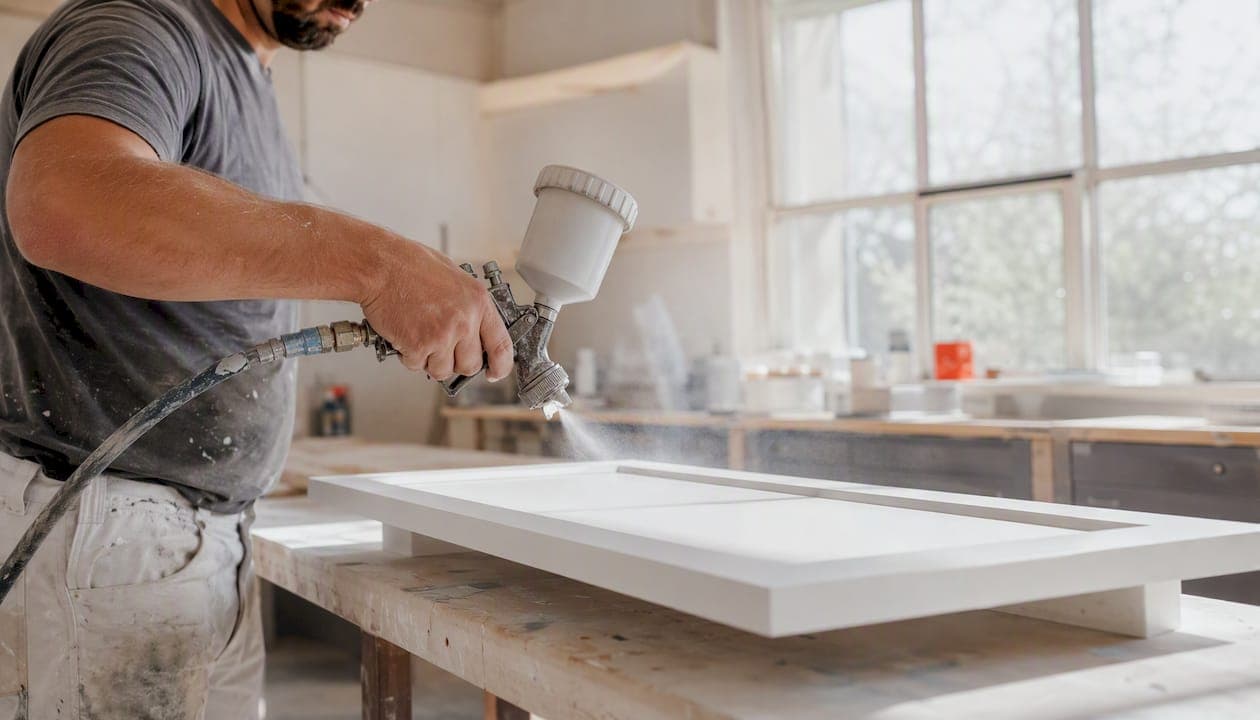
Painted cabinets typically last 8 to 15 years with quality prep and regular care, but the real range spans much wider depending on who applied the finish. DIY and standard retail-enamel jobs often need a repaint in 1 to 6 years, while professionally sprayed, catalyzed 2K polyurethane finishes can hold up for 10 to 20 years.
- Fastest to fail: high-use kitchens, brushed-on latex or chalk paint, no primer, skipped degreasing.
- Longest lasting: spray-applied catalyzed finishes, factory-quality prep, low-moisture kitchens.
- Anchor stat: full cure on most cabinet coatings takes 2 to 4 weeks, and jumping the gun on that window is the fastest way to shave years off the finish.
If your cabinets are chipping at year two or three, that's not bad luck. That's a prep or product problem, and it's worth deciding now whether you're looking at touch-ups, a full repaint, or a professional refinish.
Key Takeaways
Painted cabinet lifespan depends more on preparation and application method than on the paint brand, ranging from 1 year for poorly prepped DIY work to 20 years for sprayed 2K finishes.
| Point | Details |
|---|---|
| Expect 8 to 15 years typical | That's the baseline for properly prepped and maintained painted cabinets. |
| Coating type changes everything | DIY enamel lasts 1 to 6 years; catalyzed 2K polyurethane lasts 10 to 20 years. |
| Cure time protects your investment | Wait 21 to 30 days before hardware reinstall or heavy cleaning. |
| Prep beats product every time | Degreasing and priming determine durability more than paint brand choice. |
| Tru Painting offers tiered options | Basic, upgraded, and premium refinishing packages match budget to durability goals. |
Table of Contents
- How Long Do Painted Cabinets Last By Coating Type?
- What Factors Shorten Or Extend Cabinet Paint Life?
- How Do You Maintain Painted Cabinets To Extend Their Life?
- When Should You Repaint, Refinish, Or Replace Cabinets?
- What Do Professionals Do Differently To Extend Cabinet Life?
- Frequently Asked Questions
- Sources
How Long Do Painted Cabinets Last By Coating Type?
The paint you choose (or your contractor chooses) matters as much as how it's applied. A brush-and-roller latex job and a sprayed 2K polyurethane job are not the same product wearing differently. They're different categories of durability entirely.
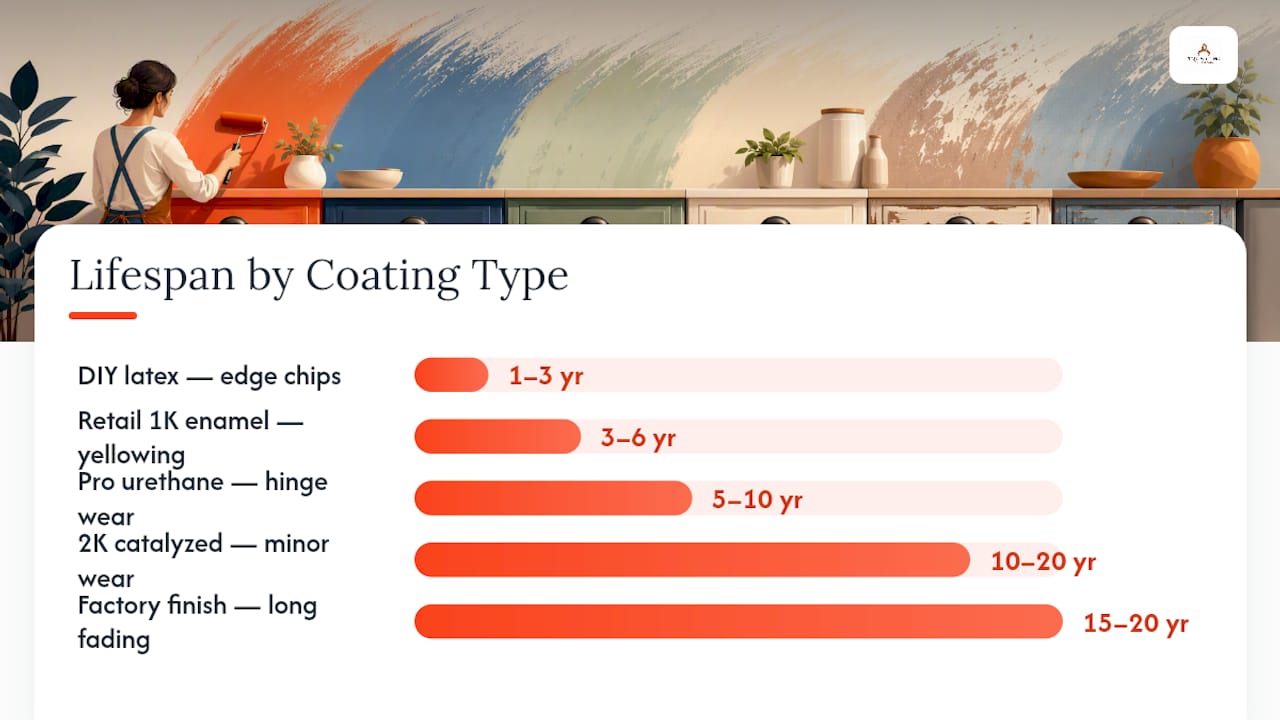
DIY latex or chalk paint, even when applied carefully, tends to top out around 1 to 3 years before edges start showing wear. Retail 1K enamels, the kind sold as "cabinet paint" at most hardware stores, generally last 3 to 6 years. Step up to professional acrylic urethane and you're in the 5 to 10 year range. Catalyzed 2K polyurethane, the finish most professional refinishers spray on, holds up 10 to 20 years. Factory-applied finishes on new cabinetry last longest of all, typically 15 to 20 years under normal use.
Spray application itself is a huge factor separate from the coating chemistry. A sprayed finish lays down thinner, more even coats with no brush marks to trap grease and grime, which is why industrial-grade coatings cure into a harder, more wipeable surface than anything applied with a roller.
| Coating type | Typical lifespan | Common failure mode |
|---|---|---|
| DIY latex/chalk | 1 to 3 years | Chipping, scuffing at edges |
| Retail 1K enamel | 3 to 6 years | Adhesion loss, yellowing |
| Pro acrylic urethane | 5 to 10 years | Edge wear near hinges |
| Catalyzed 2K polyurethane | 10 to 20 years | Rare; minor edge wear only |
| Factory conversion finish | 15 to 20 years | Long-term fading only |
Pro Tip: Don't hang doors or load hardware back on right after painting. Most cabinet coatings need 21 to 30 days to reach full hardness, and cabinets used hard before that window closes almost always show soft-finish dents and drag marks that never fully buff out.
What Factors Shorten Or Extend Cabinet Paint Life?
Surface prep is the single biggest lever you control. The same paint applied over properly cleaned, deglossed, and primed wood can outlast an identical product slapped over grease and old sheen by years, no exaggeration.
A handful of other variables shape how long your finish holds:
- Substrate matters: solid wood takes paint and repaint cycles well; MDF holds paint beautifully but swells if moisture gets into a chipped edge; thermofoil resists paint adhesion altogether without special primers.
- Moisture and grease near the stove and sink degrade film faster than anywhere else in the kitchen, and poor ventilation accelerates that breakdown.
- High-touch zones (island edges, pull handles, the door under the sink) wear out long before flat panel faces do.
- Kids, pets, and heavy scrubbing compress the touch-up timeline on lower cabinets specifically.
- Design details like raised panel edges and open shelving see more chipping than flat-front, framed doors, simply from more edges to catch impact.
Pro Tip: Grease is invisible to the eye but not to primer. A degreasing wipe followed by mechanical deglossing (light sanding) before any paint touches the surface is the step most DIY repaints skip, and it's the reason those repaints fail early.
How Do You Maintain Painted Cabinets To Extend Their Life?
A little routine care stretches years out of any finish, professional or DIY. Think of it as three tiers: weekly, monthly, and annual.
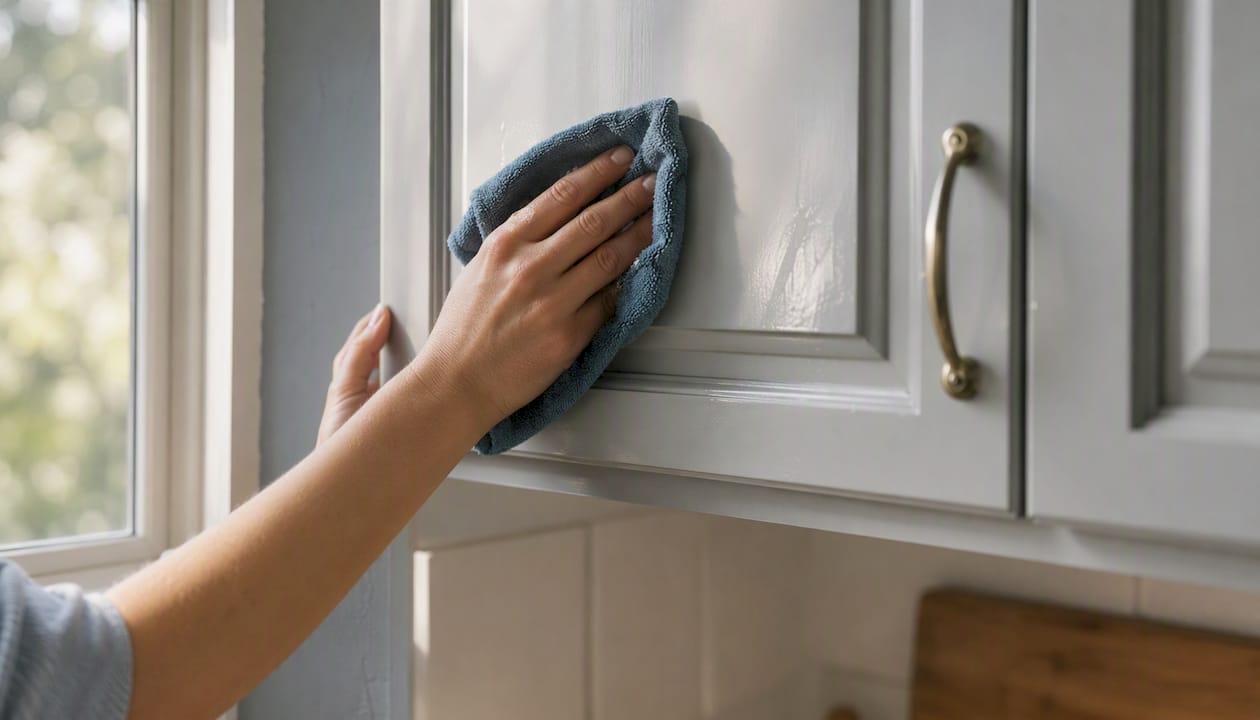
Weekly: wipe down high-touch areas with a soft cloth and mild soap and water. Monthly: a deeper clean around the stove and sink where grease builds fastest. Annually: walk the kitchen and look for early chips or wear before they spread.
Skip abrasive scrub pads and heavy solvent cleaners, especially in that first month after painting. Gentle, consistent cleaning paired with quick spot repairs before chips spread does more for longevity than any single product choice.
When a chip does show up, here's the sequence that keeps a touch-up invisible:
- Clean the damaged area and let it dry fully.
- Lightly sand the chip edges to feather them into the surrounding finish.
- Spot-prime bare wood or MDF if it's exposed.
- Apply thin matching topcoat in light layers, letting each dry before the next.
- Buff lightly once cured to blend sheen with the surrounding panel.
Pro Tip: Hold off on reinstalling hardware or heavy-duty cleaning for 21 to 30 days after any touch-up or repaint. Cabinets that get scrubbed hard during the cure window develop soft spots that never fully harden, undoing months of prep work in one weekend.
When Should You Repaint, Refinish, Or Replace Cabinets?
Small, isolated chips call for a touch-up. Widespread finish failure across multiple doors, but boxes that are still square and solid, points toward a full repaint or professional refinish. Swelling, delamination, or doors that no longer sit flush signal it's time to replace, not repaint.
- Touch-up: one or two small chips, boxes and doors otherwise intact. Lowest cost, DIY-friendly.
- Full repaint or pro refinish: finish failing across most doors, or you're ready to change color. Mid-range cost, best value when factory finish isn't an option.
- Replace: swollen MDF, warped doors, hardware that won't stay screwed in, or cabinet boxes out of square. Highest cost, but repainting a failing box just delays the inevitable.
For planning purposes, expect a repaint cycle roughly every 8 to 12 years for site-painted cabinets, sooner if the original job skipped proper prep. Structural red flags that override any repaint plan: soft or crumbling particleboard, doors that won't close flush, or hinges that have stripped their mounting holes more than once.
What Do Professionals Do Differently To Extend Cabinet Life?
The workflow that separates a finish lasting 3 years from one lasting 15 isn't a secret formula. It's sequence and control. A proper job degreases and cleans every surface, deglosses by sanding, fills and caulks gaps, selects the right primer for the substrate, and then, where it counts most, applies the topcoat by spray rather than brush.
Spray application combined with a catalyzed 2K topcoat produces a harder, more chip-resistant edge than brush-and-roller work ever achieves, because the film cures more evenly and bonds tighter to the substrate.
Tru Painting structures this work into three service tiers so homeowners can match investment to expectations:
- Basic: site-applied paint for budget-conscious refreshes.
- Upgraded: premium 1K or 2K products applied on-site for better durability.
- Premium: spray-applied catalyzed refinishing for factory-level results.
Workmanship guarantees and before-and-after photo documentation back every tier, giving homeowners a record of the prep work actually performed.
| Point | Details |
|---|---|
| Prep drives lifespan | Degreasing and deglossing before primer matters more than the paint brand chosen. |
| Spray beats brush | Catalyzed 2K sprayed finishes commonly last 10 to 20 years versus 1 to 6 for DIY work. |
| Cure time is non-negotiable | Full hardness takes 21 to 30 days; heavy use before then causes soft-finish damage. |
| Match tier to need | Tru Painting's three-tier system lets homeowners choose basic, upgraded, or premium refinishing. |
The one thing homeowners consistently underestimate
Almost every early cabinet-paint failure traces back to the same shortcut: skipping degreasing and priming because the wood "looks clean." It never is, not near a stove. If you take one lesson from years of watching repaints fail early, make it this: spend more time on prep than you think you need, and prime like the paint's survival depends on it, because it does.
Get A Professional Assessment Of Your Cabinets
If your cabinets are showing the early signs we covered, chipped edges, dulling sheen, grease that won't wipe clean, a quick inspection tells you more than another round of guessing ever will. Tru Painting's cabinet refinishing service is built around the exact workflow that extends finish life: full degreasing, mechanical deglossing, proper primer selection, and spray-applied catalyzed topcoats where the tier calls for it. Because the packages are tiered, from site-applied refreshes to full spray refinishing, you choose the durability level that fits your budget instead of guessing at a one-size job. A consult includes a site inspection, a written estimate, and a clear prep checklist so you know exactly what's happening to your cabinets before work starts. If you're weighing a broader repaint alongside the cabinets, Tru Painting's residential interior services cover that too. Book an inspection and get a written estimate before you decide between touch-up, repaint, or refinish.
Frequently Asked Questions
How long do painted kitchen cabinets actually last? Most painted cabinets last 8 to 15 years with proper prep and care. DIY jobs often need repainting in 1 to 6 years, while professional spray-applied catalyzed finishes can last 10 to 20 years.
What's the most durable paint for cabinets? Catalyzed 2K polyurethane, applied by spray, is the most durable option available to homeowners, outlasting retail 1K enamels by years thanks to its harder cured film.
How often should you touch up painted cabinets? Site-painted cabinets typically need small touch-ups within 3 to 5 years and a full repaint by 8 to 12 years, depending on kitchen use and original prep quality.
Does sheen affect cabinet paint durability? Yes. Satin and semi-gloss sheens balance cleanability with a forgiving finish, making them the most common recommendation for busy kitchens.
Is it better to repaint or refinish cabinets? If the boxes are structurally sound but the finish has failed widely, professional refinishing with a spray-applied catalyzed topcoat outlasts a standard repaint and closes the gap toward factory-level durability.
Sources
- How Long Do Painted Cabinets Last? | Kitchen Makeovers
- How Long Does Cabinet Painting Last? | Homestead Cabinet Design
- Kitchen Cabinet Finishes Explained: A 2026 Guide to Paint, Stain & Specialty Coatings | IST Cabinets
- Best Sheen for Cabinet Paint: A 2026 Guide to Durable Factory Finishes