For most Central Florida pool decks, the right choice is a heat-reflective, slip-rated traffic coating system, either a PUMA-based (polyurethane methacrylate) product or a fiber-reinforced waterproof traffic membrane. These systems meet the wet DCOF ≥ 0.42 standard recommended for pool areas, cure fast enough to minimize downtime, and hold up against Florida's UV intensity, humidity, and pool chemicals far better than generic paint or basic sealers. If you want the right system installed correctly the first time, contact Trupainting LLC for an on-site inspection and written quote.
Table of Contents
- Which pool deck coatings work best in Central Florida?
- What safety specs should you require for a pool deck?
- How surface prep and installation timing actually work
- What does a pool-deck coating project cost?
- How long do pool deck coatings last, and what maintenance do they need?
- How to choose and vet a pool-deck coating contractor
- A Lake County pool-deck project: what Trupainting LLC delivers
- Key Takeaways
- What we see on pool-deck jobs in Lake County
- Trupainting LLC brings durable, safe pool-deck coatings to Lake County
- Useful sources and standards to reference
Which pool deck coatings work best in Central Florida?
Not every coating is built for barefoot traffic, chlorine exposure, and a Florida summer. Here is how the main families compare.
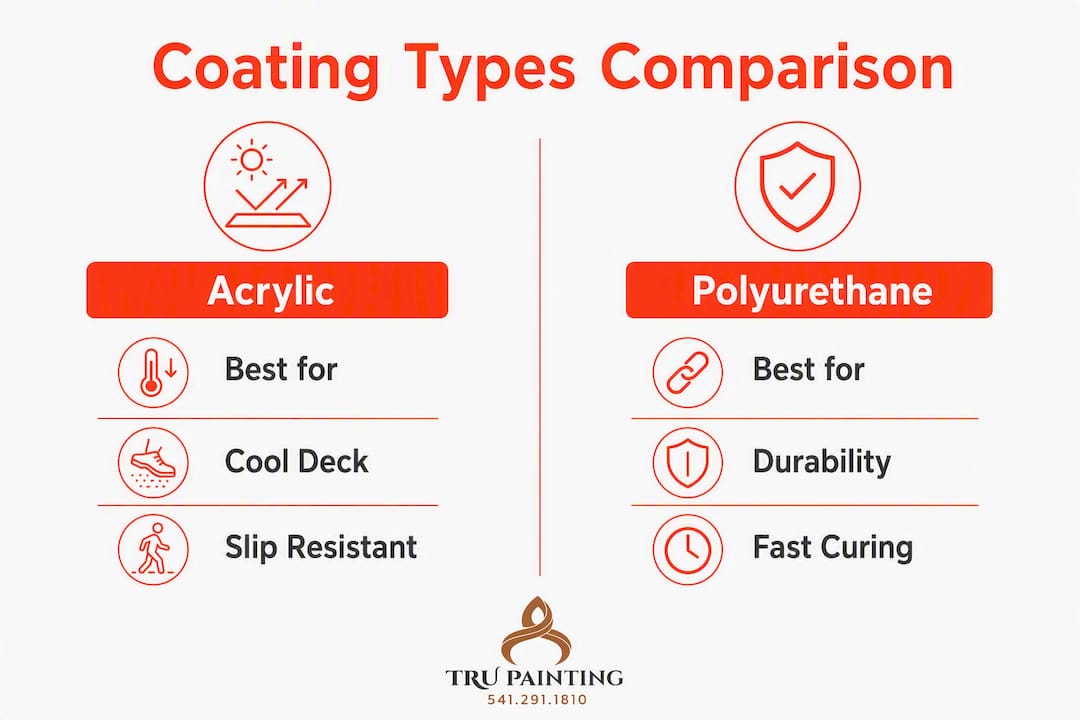
Acrylic and textured acrylic overlays are the most common "cool deck" option. Light pigments and a spray texture reduce the contact area underfoot, which lowers surface temperature noticeably compared to plain concrete. They are a solid, budget-friendly choice for residential resurfacing, but they offer limited structural waterproofing and a shorter service life than performance-grade systems.
Epoxy systems bond aggressively to concrete and resist abrasion well. The catch: standard epoxy is slippery when wet unless broadcast aggregate is added, and UV exposure causes yellowing without a UV-stable topcoat. They work best in shaded or covered areas rather than full-sun Florida decks.
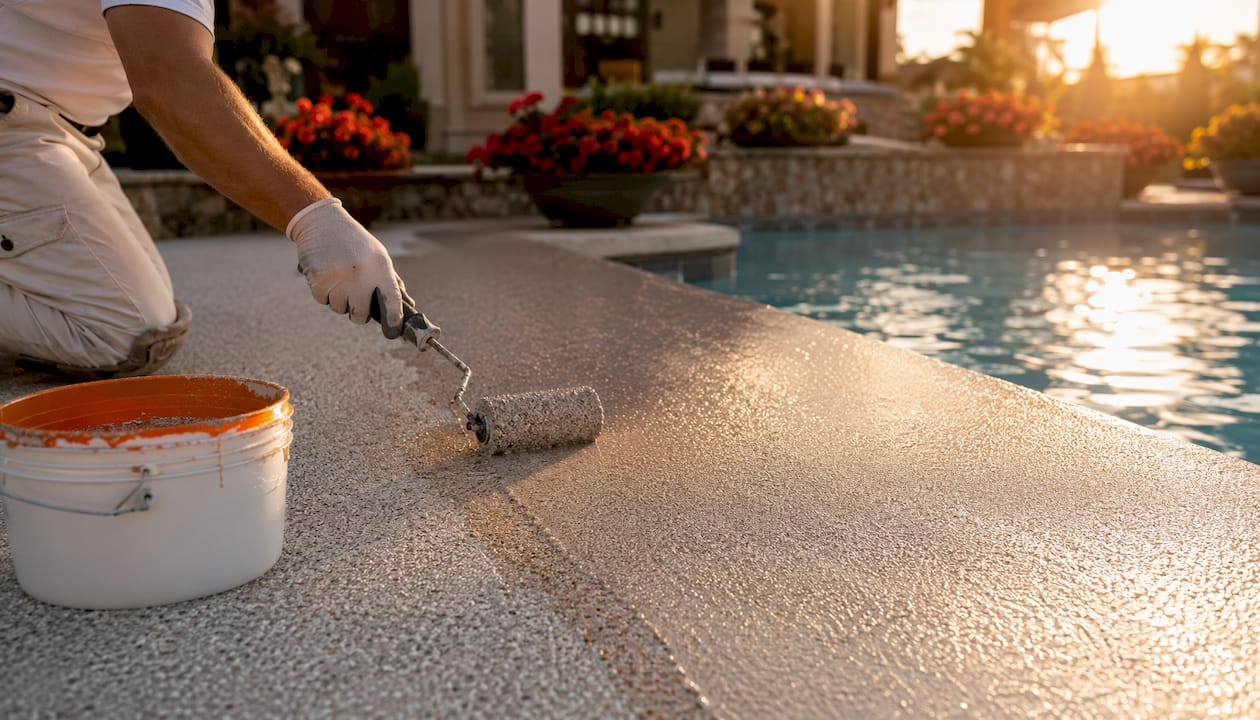
PUMA and hybrid polyurethane traffic systems are the performance tier. They cure in 30–45 minutes per layer and can open to foot traffic within about an hour, which matters when a commercial pool or HOA cannot close for days. Chemical resistance to chlorine and salt is excellent, and durability under heavy foot traffic is hard to match.
Fiber-reinforced waterproof traffic membranes are the right call for elevated decks or any deck where water intrusion below the slab is a concern. They add a structural waterproofing layer that acrylics simply cannot provide.
| Coating type | Best for | Slip resistance | Heat reflectivity | Curing / reopen | Lifespan |
|---|---|---|---|---|---|
| Textured acrylic overlay | Residential resurfacing, budget | Good with texture | Good (light colors) | Full day+ | 5 years |
| Epoxy (broadcast aggregate) | Covered/shaded decks | Good with aggregate | Moderate | 24 hours | 7 years |
| PUMA / polyurethane traffic | Commercial, quick-reopen | Excellent | Good to excellent | ~1 hour | — |
| Fiber-reinforced membrane | Elevated decks, waterproofing | Excellent | Good | Varies by system | — |
What safety specs should you require for a pool deck?
The single most important number is wet DCOF ≥ 0.42, the minimum Dynamic Coefficient of Friction recommended by the ICC International Swimming Pool and Spa Code for wet pool-area surfaces. Smooth tile, glossy sealers, and non-rated paints all fall short of this threshold and create real slip-and-fall liability.
Heat reflectivity is equally critical in Lake County. Specialized heat-reflective systems can reduce surface temperatures significantly, improving barefoot comfort in hot climates. That difference is the gap between a deck that is comfortable at noon and one that sends barefoot guests back inside. The mechanism is straightforward: light pigments combined with high-reflectance resins bounce solar energy away rather than absorbing it.
Before approving any product, ask the contractor for these documents: product Technical Data Sheet (TDS), DCOF wet-test report, UV/aging data, chemical-resistance statement for chlorine and salt, and cure-time specifications. If a contractor cannot produce these, that is your answer.
Pro Tip: Balance texture for grip with barefoot comfort. Aggressive broadcast aggregate raises DCOF but can feel harsh on bare feet. Ask your contractor for a medium-grit broadcast that meets ≥ 0.42 without feeling like sandpaper.
How surface prep and installation timing actually work
Mechanical surface preparation is the single biggest predictor of long-term coating performance. Inadequate prep, skipping grinding, leaving old sealers in place, or failing to repair cracks before coating, is the most common reason coatings fail within a few years.
Here is the standard sequence for a professional pool-deck coating installation:
- Inspection: Assess substrate condition, identify cracks, check for moisture intrusion and existing sealer or paint.
- Cleaning: Pressure wash and degrease the entire surface.
- Crack repair: Fill and stabilize cracks with appropriate filler or caulk.
- Mechanical profiling: Grind or shot-blast to remove failed coatings and open the surface profile for bonding.
- Primer application: Apply the manufacturer-specified primer to the prepared substrate.
- Broadcast aggregate or texture coat: Embed non-slip aggregate or apply textured base coat.
- Topcoat application: Apply finish coat(s) per TDS specifications.
Timeline by system:
- PUMA-based systems: 30–45 minutes cure per layer, open to foot traffic within about an hour. A typical residential job can be completed and reopened the same day.
- Acrylic overlays: usually require a full day before light foot traffic, longer before furniture or heavy use.
Pro Tip: Schedule coating work during a dry weather window. Central Florida's afternoon thunderstorms can ruin a freshly applied coat. Aim for morning starts with a 24-hour rain-free forecast, and check humidity levels — most systems specify application below 85% relative humidity.
What does a pool-deck coating project cost?
Cost depends on several factors, and any contractor who quotes a flat per-square-foot price without inspecting the substrate is guessing. The main drivers are:
- Substrate condition: Heavy cracking, old sealer removal, or moisture remediation adds prep time and materials.
- System type: PUMA and fiber-reinforced membranes cost more than basic acrylic overlays, and they deliver more.
- Waterproofing requirement: Elevated decks needing a full membrane add material and labor cost.
- Area size and access: Tight residential pools versus large commercial decks or HOA common areas.
- Color, aggregate, and finish choices: Custom colors and specialty aggregates carry a premium.
- Warranty and documentation: Written warranties with TDS and DCOF test data are part of a professional scope.
Trupainting LLC offers three service tiers to match different budgets and performance needs. A value-tier package suits homeowners who want a clean, textured acrylic refresh on a sound substrate. The standard tier adds a higher-performance topcoat and more thorough prep documentation. The premium tier covers PUMA or fiber-reinforced waterproof systems with full TDS, DCOF verification, and a written workmanship warranty — the right choice for commercial properties, HOAs, or any elevated deck.
Pro Tip: Always insist on a written scope that lists the specific products, DCOF targets, cure times, warranty terms, and required maintenance intervals. A vague proposal is a risk, not a deal.
How long do pool deck coatings last, and what maintenance do they need?
No pool deck is maintenance-free. UV exposure, chlorine drips, humidity, and foot traffic degrade every system over time. The difference between a coating that lasts five years and one that lasts fifteen is mostly prep quality and a consistent maintenance routine.
Practical maintenance schedule:
- Twice a year: Pressure wash the entire deck surface.
- Annually: Walk the deck and inspect for peeling, loss of texture, hairline cracks, or ponding water.
- As needed: Address pool-chemical drips and stains quickly before they penetrate the coating.
- Per manufacturer schedule: Reapply topcoat or refresher coat based on the TDS recommendation for your system.
Signs that a recoat or repair is due: visible peeling or delamination, texture worn smooth in high-traffic areas, water pooling instead of draining, or hairline cracks widening. Catching these early prevents water from reaching the substrate, which is where expensive damage starts.
Using generic paint or a glossy sealer instead of a purpose-built traffic coating does not just shorten the life of the surface. It creates a slip-and-fall hazard and can void any structural warranty on an elevated deck. The cost of doing it right the first time is always less than the cost of fixing water damage below.
For ongoing surface protection strategies, a consistent inspection routine is your best investment between professional recoats.
How to choose and vet a pool-deck coating contractor
Hire a licensed, insured contractor with documented experience on pool-deck traffic systems and verifiable local project photos. That standard eliminates most of the risk.
Vetting checklist:
- Valid Florida contractor's license and current general liability insurance
- Documented product training or manufacturer certification for the system they propose
- Sample TDS and DCOF lab reports from prior jobs
- Written warranty covering both materials and workmanship
- At least two local references with contact information
- Before-and-after photos from Lake County or Central Florida projects
Questions to ask on the estimate:
- What is the target wet DCOF for this job, and which test report supports it?
- What surface prep will you perform, and will you grind or shot-blast?
- Which exact products will you use, and can you provide the TDS?
- What are the cure times and reopen-to-traffic windows?
- What does the warranty cover, and for how long?
Red flags: a scope that says "paint" instead of naming a traffic-coating system, no test data offered, minimal prep described, or a contractor who cannot answer the DCOF question. Our contractor selection checklist covers the full vetting process in detail.
A Lake County pool-deck project: what Trupainting LLC delivers
A representative Trupainting LLC pool-deck project in Lake County looks like this:
- Day 1 (prep): Full pressure wash, crack repair, mechanical grinding to remove old sealer, primer application.
- Day 2 (coating): Broadcast aggregate base coat, heat-reflective topcoat applied to TDS specifications, DCOF target ≥ 0.42 confirmed.
- Reopen: PUMA-based systems open to foot traffic within about an hour of final coat; acrylic systems the following morning.
- Deliverables: Written TDS for every product used, DCOF test report, workmanship warranty, maintenance instructions, and before-and-after photos.
Customers receive full documentation at project completion, not just a finished surface. That paper trail matters when you are managing an HOA, a commercial property, or simply want proof that the work was done to spec.
Key Takeaways
The best pool-deck coating for Central Florida is a heat-reflective, slip-rated traffic system installed over mechanically prepared concrete, with a wet DCOF of at least 0.42 and full TDS documentation.
| Point | Details |
|---|---|
| Choose a traffic-grade system | PUMA or fiber-reinforced membranes outperform basic acrylic overlays for durability and waterproofing. |
| Require DCOF ≥ 0.42 | The ICC ISPSC recommends this minimum wet slip-resistance rating for all pool-area surfaces. |
| Mechanical prep is non-negotiable | Grinding or shot-blasting the substrate is the single biggest predictor of long-term coating performance. |
| Plan for maintenance | Pressure wash twice a year and inspect annually; even premium systems need periodic topcoat refreshes. |
| Work with Trupainting LLC | Trupainting LLC's three-tier packages cover acrylic overlays through PUMA and fiber-reinforced systems, with written warranties and DCOF documentation. |
What we see on pool-deck jobs in Lake County
The most common failure we encounter is not a bad product. It is a good product applied over a poorly prepared surface. Old sealers left in place, cracks filled but not stabilized, or a substrate with active moisture will defeat even a premium PUMA system within a season or two. When prep is done right, including mechanical profiling and a proper primer, the coating bonds the way it is supposed to and the lifespan numbers on the TDS actually hold.
The other pattern we see is homeowners choosing a system that does not match their deck's actual situation. An acrylic overlay on an elevated deck with drainage concerns is a mismatch that leads to delamination and water damage below the slab. Matching the system to the substrate is as important as the coating chemistry itself.
If you want an honest assessment of what your deck needs, we are glad to take a look. Trupainting LLC's three-tier packages mean you are not forced into a premium system when a well-prepped acrylic overlay will do the job, and you are not sold short when your deck genuinely needs a waterproof traffic membrane.
Trupainting LLC brings durable, safe pool-deck coatings to Lake County
Trupainting LLC handles the full scope of pool-deck coating work for residential and commercial properties across Lake County and Central Florida: surface inspection, mechanical prep, crack repair, acrylic overlays, PUMA traffic systems, fiber-reinforced waterproof membranes, texture broadcasting, and ongoing maintenance guidance. Every project includes written product TDS, DCOF documentation, and a workmanship warranty delivered with your estimate.
Whether you manage a single-family pool or a multi-unit HOA common area, our residential exterior coating services and commercial exterior services are built around the same principle: thorough prep, the right system for your substrate, and documentation you can keep. Request your on-site inspection and written quote today.
Useful sources and standards to reference
When evaluating contractors and products, ask for documentation tied to these standards and resources:
- ICC International Swimming Pool and Spa Code (ISPSC): The governing standard for wet-area DCOF minimums (≥ 0.42) in pool environments.
- ASTM C1028 / ASTM E2047: Industry test methods for static and dynamic coefficient of friction; ask contractors for lab reports referencing these standards.
- Manufacturer Technical Data Sheets (TDS): Every product used on your deck should have a published TDS listing cure times, application conditions, chemical resistance, and warranty terms.
- DCOF wet-test lab reports: Request the actual test report, not just a verbal claim, for the specific product proposed.
- Lake County Building Department: Confirm local permit requirements for pool-deck resurfacing or structural waterproofing work before the project begins.
- Natare surface preparation guidance: Professional reference for substrate prep standards and coating performance expectations.
Ask any contractor you are considering to hand over copies of TDS sheets, DCOF reports, warranty documents, and photos from comparable local projects before you sign anything. A contractor who hesitates on that request is telling you something important. For broader guidance on DIY versus professional trade work, the same principle applies across home improvement categories: documentation and professional accountability are what separate a lasting result from a costly redo.