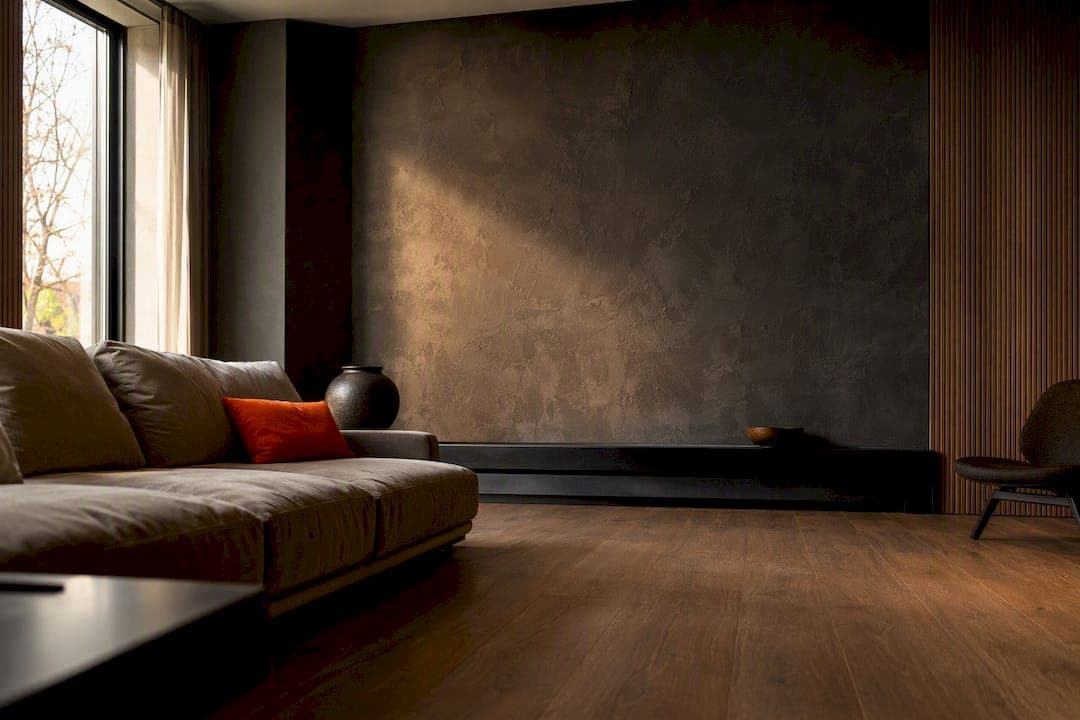
Put your accent wall on the sofa wall or the fireplace wall, since that's where the eye lands first when someone walks into the room, and skip the wall with the biggest window because backlight washes out deep color. The strongest 2026 looks lean on architectural texture and moody, tonal color, rather than on one random bright wall: think wood slats, board-and-batten, limewash, wallpaper murals, stone veneer, or renter-friendly peel-and-stick. Below you'll find selection rules, color strategy, material comparisons, and prep advice to help you execute whichever style fits your space and budget.
TL;DR:
- Installing the accent wall on the sofa or fireplace wall maximizes visual impact, while avoiding large windows prevents backlighting from washing out deep colors.
- Dark, receding tones like navy and charcoal work best behind TVs, especially in north-facing rooms, where they avoid flattening or lightening the space.
- Wallpaper and murals cost more and require careful matching, but peel-and-stick options offer a quick, renter-friendly way to add pattern and texture.
- Material costs range from $1 to $3 per square foot for paint, with textured options like stone veneer or millwork increasing costs and installation complexity.
- Proper surface prep, including patching, sanding, and priming, is crucial for long-lasting, even color, making professional installation advantageous for complex finishes.
Table of Contents
- Living Room Accent Wall Ideas Grouped by Style
- How to Choose the Right Wall in Your Living Room
- Comparing Paint, Wallpaper, Wood, and Stone for Your Accent Wall
- Color Rules That Make an Accent Wall Look Intentional
- Renter-Friendly and Budget Accent Wall Solutions
- Prep, Costs, and When to Call a Painting Contractor
- Why Preparation Beats Paint Choice Every Time
- Ready to Bring Your Accent Wall to Life?
- Sources
- FAQ
Living Room Accent Wall Ideas Grouped by Style
Some of these ideas need a weekend and a paintbrush. Others need a contractor and a Saturday you'd rather spend elsewhere. Here's the full range, organized by what you're actually working with.
- Moody tonal paint. A single wall in deep navy, charcoal, or near-black gives a living room instant depth without touching the ceiling or trim. Works best behind a sofa or media console where the dark tone recedes rather than closes the room in.
- Warm terracotta or clay. Softer than navy but still saturated, terracotta reads warm under afternoon light and pairs naturally with wood furniture and brass fixtures.
- Tonal greige accents. A shade or two darker than your wall color creates a subtle focal point for homeowners who want depth without commitment. This is the safest entry point if you're nervous about color.
- Wood slat paneling. Vertical slats spaced 1 to 2 inches apart add texture and height, especially behind a TV or sofa. Pro Tip: Run slats floor to ceiling instead of stopping at a chair rail height. The extra vertical line makes low ceilings look taller.
- Fluted panels. A softer, more rounded cousin to slats, fluted MDF panels read as furniture grade rather than DIY, and they hide minor wall imperfections better than flat paint.
- Board-and-batten. Horizontal or grid-pattern battens painted a single tone give a room classic, architectural weight, particularly in foyer-adjacent living rooms where you want continuity from the entry.
- Stone or brick veneer. Heaviest visual weight on this list, and the best choice when a fireplace is the true focal point rather than the TV. Grazing light from a floor lamp or picture light makes the texture pop at night.
- Patterned wallpaper. Large-scale botanical or geometric prints work well on a single wall because the pattern doesn't overwhelm the whole room. Watch your pattern repeat; a large-scale print wastes more paper on trimming.
- Scenic mural panels. Pre-sized mural panels remove the guesswork of matching a repeat and install faster than roll wallpaper, which makes them a good option for a first-timer.
- Painted arch or geometric shape. A soft arch or curved block of color painted directly on the wall, rather than covering it edge to edge, works well in smaller living rooms where a full wall of dark paint might feel heavy.
- Picture-frame molding. Thin trim applied in a grid, then painted one tone, brings architectural detail to a builder-grade wall without full paneling costs.
- Color-drenched alcove or nook. If your living room has a window seat or built-in nook, painting just that recessed area in a saturated tone creates a focal point without committing an entire wall.
- Half-wall color block. Painting the bottom half of a wall in a bold tone and leaving the top in your base color adds a designer touch that's also one of the more forgiving DIY accent wall tips, since a straight painter's tape line is easy to correct.
- Gallery or large-format art wall. A cluster of framed art or one oversized canvas gives you the visual impact of an accent wall with zero paint or wallpaper commitment. Ideal for renters.
- Stretched fabric panel. Upholstered wall panels or a single large fabric-wrapped board add softness and a bit of sound dampening, a nice option for open-concept living rooms that double as a media space.
If your living room is built around the television, darker, receding tones like near-black or navy work better than lighter or high-contrast wallpaper, since a dark backdrop makes the screen visually disappear rather than compete for attention. If the fireplace is your real focal point, stone veneer, board-and-batten, or a color-drenched surround tends to integrate better than a flat paint accent, especially when designers use paint, paneling, and veneer to tie an accent wall into architectural features like mantels and built-ins instead of competing with them.
How to Choose the Right Wall in Your Living Room
Run through these five checks before you buy a single gallon of paint or a roll of wallpaper.
- Identify the eye-first wall. Stand in the main doorway and note which wall you see first. That's almost always the strongest candidate.
- Confirm it's an uninterrupted plane. A wall broken up by multiple doorways, thermostats, or outlets fights against the accent instead of showcasing it.
- Rule out the wall with the largest window. Backlight from a big window flattens color and undercuts the effect, a rule confirmed by Architectural Digest's accent wall guidance.
- Let architectural features override the eye-first rule. A fireplace or built-in bookshelf usually wins over a plain sofa wall, even if the sofa wall is technically the first thing you see.
- Avoid stacking two focal points. Don't put a bold accent wall directly across from a statement rug or an oversized piece of art. Pick one hero.
If your living room is small or open to a kitchen or dining area, consider drenching the whole room in one tone instead of isolating a single wall. A full color-drench often reads calmer and makes small rooms feel larger than one loud accent wall boxed in by three neutral ones.
Comparing Paint, Wallpaper, Wood, and Stone for Your Accent Wall
Paint remains the cheapest and most forgiving option, with material costs commonly running about $1 to $3 per square foot, whether you're going flat, limewashed, or color-blocked into an arch shape. Limewash adds subtle mottled texture for barely more effort than a standard roll-and-brush job.
Wallpaper and murals cost more but deliver pattern and depth paint can't match. Peel-and-stick versions install in an afternoon and pull off cleanly at move-out, while traditional wallpaper needs careful pattern matching and a 10 to 15% waste allowance for repeats, which adds to both material cost and labor time.
- Wood slats, board-and-batten, and fluted panels raise material and labor cost above paint but below full stone veneer. Spacing and a clean paint finish (usually a satin or matte white or black) make or break the look.
- Stone or brick veneer and 3D panels carry the highest material weight, visually and in cost, and benefit most from grazing light. This is the category where hiring a professional installer pays off.
- Removable systems like peel-and-stick slat panels sit at the budget end of the texture category, giving renters the look without the commitment.
Color Rules That Make an Accent Wall Look Intentional
Think of your room in terms of the 60-30-10 rule: 60% dominant wall and floor tone, 30% secondary color, and 10% accent.
- Keep accent wall LRV (Light Reflectance Value) generally between 8 and 22 for a wall that reads impactful without turning the room into a cave.
- Navy, charcoal, deep forest green, and warm terracotta are the leading 2026 choices; each one recedes rather than jumps out.
- North-facing rooms handle warmer tones like terracotta better, since the light is naturally cooler; south-facing rooms can carry navy or charcoal without feeling flat.
Pro Tip: Pull your accent wall color into a throw pillow, vase, or piece of art elsewhere in the room. Designers repeat the accent color in a small dose so the wall reads as planned rather than tacked on.
Renter-Friendly and Budget Accent Wall Solutions
You don't need to own the walls to get the look. Peel-and-stick slat panels and removable wood-look systems deliver texture without a single nail hole, and most peel-and-stick wallpaper removes cleanly at the end of a lease when applied to a properly primed wall.
- Oversized art or a tight gallery cluster creates a focal point instantly, and large-format canvas art is one of the fastest ways to fake a designer accent wall over a weekend.
- A stretched fabric panel adds texture and softness without touching drywall.
- For a temporary version of the slat look, lightweight foam or PVC slat panels install with adhesive strips and come down without patching.
Prep, Costs, and When to Call a Painting Contractor
A typical living room accent wall covers roughly 100 to 150 square feet, and a quality gallon of interior paint covering two coats usually runs $20 to $60. Before any color goes on, protect your floors and furniture, patch dents or cracks, sand rough spots, and prime, a process covered step-by-step in our wall prep checklist.
- Paint sits at the low end of the cost scale and is the most forgiving for a first attempt.
- Peel-and-stick wallpaper runs moderate, with cost climbing if your pattern needs careful repeat matching.
- Custom millwork and stone veneer sit at the top of the range once you factor material and skilled labor.
Complex textures, flawless color-drenched finishes, or anything involving veneer installation are where hiring a pro protects your investment, and our residential interior painting services cover exactly that kind of detail work with a workmanship warranty behind it.
Why Preparation Beats Paint Choice Every Time
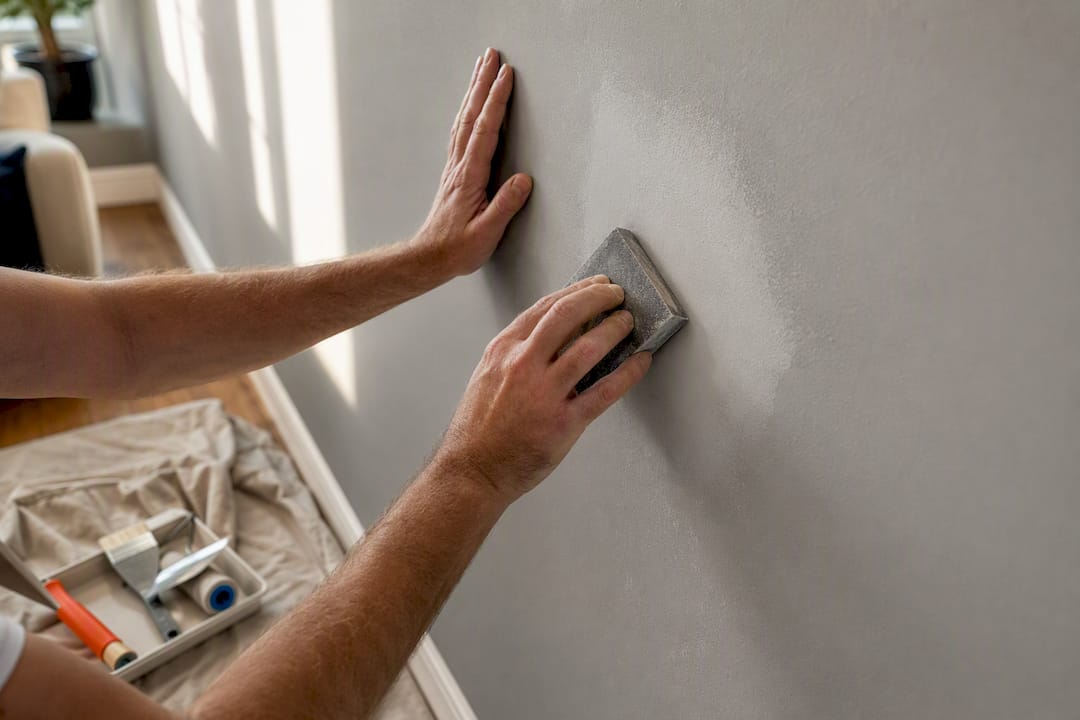
Most accent walls fail early not because of the color chosen but because of what happened before the color went on. A wall with unpatched dents, dust, or a skipped primer coat shows every flaw within a year, especially under raking light from a lamp or fireplace.
At Trupainting LLC, thorough surface preparation and premium products are the foundation of every job we take on, whether it's a single accent wall or a full interior repaint. has seen firsthand how a properly primed and sanded wall holds sheen and color evenness for years longer than a rushed job.
— Kyle
Ready to Bring Your Accent Wall to Life?
Picking the color and the wall is the easy part. Getting a flawless, lasting finish on textured paneling, a color-drenched fireplace surround, or a moody navy sofa wall is where Trupainting LLC comes in. We offer three tiers of service, from a Cosmetic Refresh to Maximum Prep & Protection, so you choose the level of prep and durability that fits your project and your budget rather than paying for more than you need.
If your accent wall idea involves detailed millwork, a stone veneer surround, or simply a finish you want done right the first time, our residential interior painting team in Lake County and Central Florida handles the prep, the priming, and the finish work with a clear scope from the start. Check out our full service packages and request a quote today to get your accent wall on the schedule.
Sources
- Accent wall ideas — Architectural Digest
- Accent Wall Ideas Living Room: 25 Looks to Copy
- Living Room Accent Wall Ideas: Paint, Wallpaper, and Material Options
- 37 Living Room Accent Wall Ideas to Transform Your Space — Better Homes & Gardens
FAQ
What is the rule for accent walls in a living room?
Place the accent wall on the sofa wall or fireplace wall since that's where the eye naturally lands, and avoid the wall with the biggest window because backlight flattens deep color.
What color should I paint my living room accent wall?
Navy, charcoal, deep forest green, and warm terracotta are leading choices for 2026, generally kept within an LRV range of 8 to 22 for a wall that feels rich without darkening the whole room. North-facing rooms tend to handle warmer tones better, while south-facing rooms can carry darker, cooler colors.
Is wallpaper or paint better for an accent wall?
Paint is the cheaper and more forgiving option at roughly $1 to $3 per square foot in materials, while wallpaper delivers more pattern and texture but costs more, especially traditional rolls that need a 10 to 15% waste allowance for pattern matching. Peel-and-stick wallpaper splits the difference for renters who want texture without a long-term commitment.
Can I create an accent wall without painting?
Yes. Peel-and-stick slat panels, large-format art, gallery walls, and stretched fabric panels all create a focal point without paint or a permanent installation, making them ideal for renters or anyone testing a look before committing.
When should I hire a professional instead of doing it myself?
Hire a professional for stone or brick veneer, custom millwork, or any finish where flawless, even color and long-term durability matter, since these installations are harder to correct once complete. Professional residential interior painting services include the prep work and warranty coverage that make a complex accent wall worth the investment.