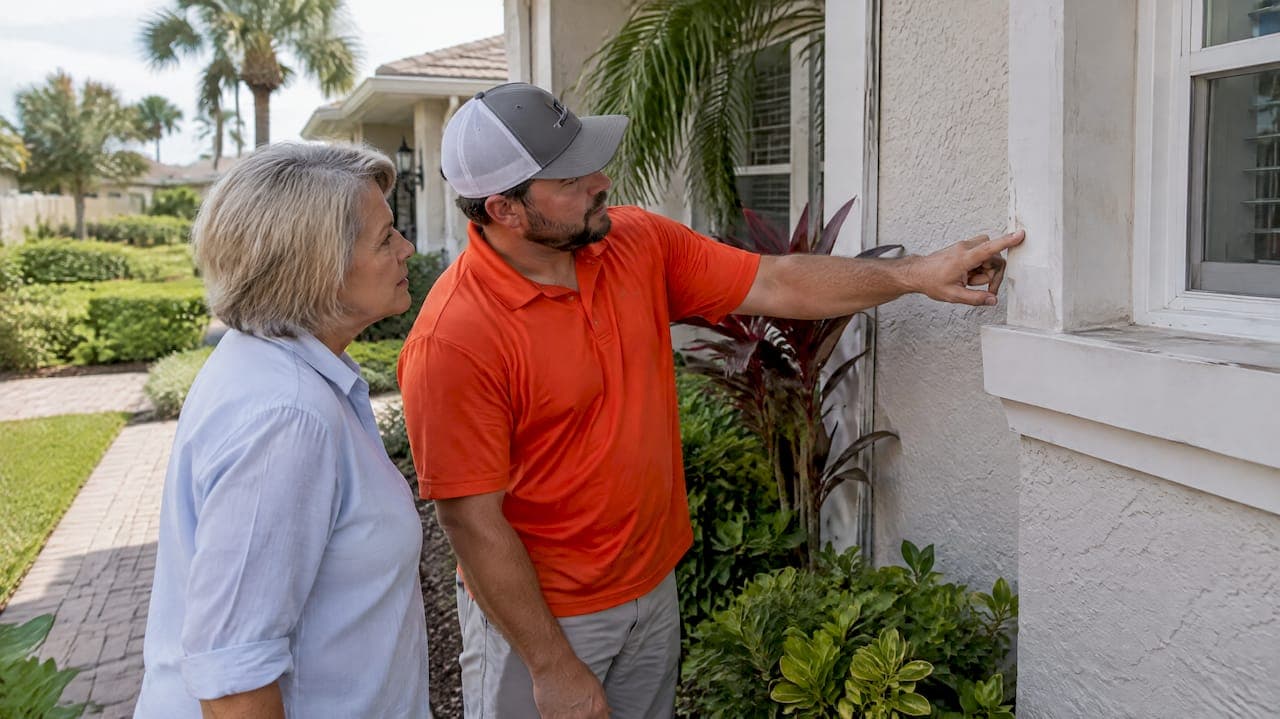
In Florida, a professionally prepared and painted exterior typically lasts about 5 to 10 years, with high-exposure surfaces often needing a repaint in just 3 to 6 years. The biggest culprits are UV radiation, humidity, salt air, and storms. Start by inspecting your south and west-facing walls, shaded eaves, and any coastal-facing surfaces first, since those areas fail fastest and tell you the most about your home's real timeline.
TL;DR:
- Exterior paint in Florida typically lasts 5 to 10 years, with south and west-facing walls fading faster due to intense sun and exposure.
- High-exposure areas near coastlines face additional challenges from salt spray, mildew, and storm debris, reducing paint lifespan.
- Proper prep work, including pressure washing, substrate repairs, and suitable priming, is crucial for maximizing paint durability.
- Mildew, chalking, peeling, and soft wood indicate the need for immediate repainting or repairs before coating fails prematurely.
- Choosing high-quality, UV- and mildew-resistant paints, along with appropriate coating thickness, can extend the lifespan closer to the upper end of the range.
Table of Contents
- How long does exterior paint last by surface type?
- Why does Florida's climate wear down paint so fast?
- Is it time to repaint? Signs to check first
- Maintenance tasks that stretch paint life further
- Choosing paint and prep that actually hold up here
- Why prep work decides how long your paint actually lasts
- What realistic planning looks like for Florida homeowners
- Protecting your home's exterior with the right service tier
- FAQ
- Sources
How long does exterior paint last by surface type?
Not every surface on your home ages the same way, and planning around a single number sets you up for surprises. Here's what we typically see across Central Florida homes.
- Vinyl siding holds color reasonably well but fades and chalks over time; once it starts chalking heavily, repainting is often less practical than considering replacement panels.
- Wood siding and trim are vulnerable to rot, checking, and moisture intrusion, so a quality primer matters more here than almost anywhere else on the house.
- Stucco and masonry benefit from elastomeric coatings that bridge small cracks, though acrylic latex often performs well when the substrate is sound and properly sealed.
- Metal surfaces near coastal zones face corrosion and adhesion problems as salt air works into seams and fasteners.
- Trim, fascia, and painted woodwork almost always need attention before the main field of siding does, simply because they catch more direct sun and rain runoff.
Orientation changes everything. A south or west-facing wall absorbs far more punishing afternoon sun than a shaded north wall, and a damp, shaded corner under a live oak can grow mildew long before the sunnier side of the house shows any wear. Two walls on the same house, painted on the same day, can age at completely different rates.
Why does Florida's climate wear down paint so fast?
Florida simply asks more of exterior paint than most other states do. A few forces are doing most of the damage.
- UV radiation breaks down paint binders and fades pigment, and Florida sees some of the highest UV index readings in the country for much of the year.
- Moisture cycling between wet and dry stresses the paint film repeatedly; the EPA recommends drying surfaces within 24 to 48 hours to prevent mold before any painting work begins.
- Mildew and mold take hold fastest in shaded, poorly ventilated areas, and the EPA is clear that painting over mold or a damp surface leads to early failure.
- Salt spray accelerates corrosion and weakens adhesion for homes near the coast, adding extra maintenance demands.
- Storm exposure brings wind-driven rain and debris abrasion that often forces touch-ups outside the normal repaint cycle.
Florida's wet season runs roughly May through October, while the dry season spans November through April, and that six-month stretch of near-daily moisture is a major reason mildew and paint failure show up here faster than in drier climates. Landscaping that keeps walls shaded and damp, like dense shrubs pressed against siding, quietly extends that risk year-round.
Is it time to repaint? Signs to check first
A few quick checks tell you whether you're looking at a simple cleaning or a full repaint.
- Run your hand across the surface. If a chalky residue comes off, the paint's protective layer is breaking down and a repaint is coming due.
- Look for peeling, flaking, or blistering. Any of these exposing bare substrate needs attention now, not next season.
- Check whether dark stains wash off. Mildew that disappears with cleaning is a maintenance issue; paint that bubbles or lifts underneath it is not.
- Probe wood trim with a screwdriver. Soft, spongy wood usually means replacement before repainting makes sense.
- Call a contractor when failure is widespread or mildew keeps returning despite regular cleaning, since that often points to a moisture problem behind the paint, not on top of it.
Pro Tip: Check your most sun-battered wall first. If it still looks solid after a hand-rub chalking test, the rest of the house usually has a few more years left.
Maintenance tasks that stretch paint life further
A predictable maintenance rhythm does more for paint longevity than almost any product choice. Most of it is straightforward.
- Inspect annually during the dry season (roughly November through April) when surfaces are easiest to evaluate without wet-weather distortion.
- Do a follow-up check after the wet season ends, looking specifically for new mildew growth or caulking that failed under storm stress.
- Pressure wash carefully, using a wide fan tip and moderate pressure; aggressive settings strip paint and force an earlier repaint than necessary.
- Clean mildew before it spreads, then let surfaces dry fully within the EPA's recommended 24 to 48 hour window before any touch-up painting.
- Replace failing caulk around windows, doors, and trim joints, since gaps there let water behind the paint film.
- Keep gutters clear and trim back landscaping that holds moisture against walls.
Pro Tip: A small touch-up on a single damaged section almost always costs less than waiting for failure to spread across the whole wall.
Choosing paint and prep that actually hold up here
The paint can matters less than most homeowners think. What happens before the first coat goes on, and how it's applied, decides most of the outcome.
- Primer choice should match the substrate: bare wood, stucco, and metal each need a different primer to bond and block tannins or rust properly.
- 100% acrylic latex performs well on most siding, while elastomeric coatings make more sense on stucco and masonry prone to hairline cracking.
- Mildew-resistant, UV-stabilized formulations in premium paint lines hold color and resist growth longer than builder-grade options.
- Film thickness and coat count matter more than brand name; thin, rushed coats fail years before properly applied ones.
- Temperature and humidity windows during application affect curing, so a contractor painting in the wrong conditions can shorten the paint's life before you even move in.
- Ask about warranty terms: a product warranty from the paint manufacturer is different from a workmanship warranty from your contractor, and the exclusions in each matter.
Before signing a bid, ask what prep steps are included, which paint line will be used, and what lifespan the contractor expects given your home's specific exposure. Our contractor guide to exterior paint for Florida and our guide to low maintenance exterior paint both walk through these decisions in more detail. Improper repair of underlying wall damage before painting is also a common cause of early peeling, so addressing substrate problems first is worth the extra step.
Why prep work decides how long your paint actually lasts
Preparation work is where most of a paint job's lifespan gets decided, long before the first coat goes on. We built our three-tier service packages around that reality, so homeowners can choose the level of preparation and protection that fits their home and budget.
- Pressure washing removes dirt, chalk, and mildew that would otherwise block proper adhesion.
- Substrate repairs, like fixing cracked stucco or rotted trim, stop moisture problems before they're sealed under new paint.
- Proper priming on bare or repaired areas prevents the peeling and blistering that shows up within a year or two on rushed jobs.
A thorough inspection and estimate should walk your home's exposure zones, flag problem areas, and explain which prep steps apply to your specific surfaces, not just quote a flat per-square-foot price.
What realistic planning looks like for Florida homeowners
Plan your repaint budget around the shorter end of the range, especially for anything facing south, west, or the coast. Color matters more than most homeowners expect: deep, saturated colors absorb more heat and tend to fade faster than lighter ones, and elastomeric coatings on stucco cost more upfront but often buy extra years on cracked or uneven surfaces. Scheduling an inspection after any major storm and again before hurricane season ramps up is advisable, since small damage caught early rarely turns into a full repaint.
— Kyle
Protecting your home's exterior with the right service tier
We built our service tiers around exactly the trade-offs this article covers: how much prep, protection, and budget fits your home right now. 
If your paint is holding up but looking tired, our Cosmetic Refresh tier handles cleaning and a fresh coat without extensive repair work. If you're seeing early chalking, minor cracking, or trim wear, Enhanced Prep & Durability adds the repairs and priming that stop small problems from becoming big ones. For homes with heavier coastal or storm exposure, Maximum Prep & Protection is built for the full substrate repair, priming, and premium coating system that stretches lifespan toward the longer end of that 5 to 10 year window.

A straightforward inspection walks your home's exposure zones, flags any trim or stucco issues, and gives you a clear estimate before any work begins. Visit our residential exterior painting page to see the tiers in detail or request your estimate today.
FAQ
Is 20-year-old paint still good?
Paint that's over 10 years old has almost certainly failed on most Florida exteriors, since even premium systems in this climate typically top out around 5 to 10 years. At that age, expect chalking, fading, and likely some peeling, especially on sun-exposed walls.
What is the longest-lasting exterior house paint for Florida homes?
For stucco and masonry prone to cracking, elastomeric coatings often extend the practical lifespan further.
How long does it take to paint the exterior of a 2,000 square foot house?
Timelines vary by prep needs, weather, and crew size, so there's no fixed number that applies everywhere. A contractor's estimate will typically reflect how much pressure washing, repair, and priming your specific home needs before the topcoat goes on.
How long will exterior paint last in Florida's climate specifically?
Most well-prepared exteriors last 5 to 7 years in Florida before needing a repaint, shorter than in drier, cooler states. Coastal or heavily shaded homes often fall toward the lower end of that range due to salt exposure and persistent moisture.
Sources
- Mold Course Chapter 4 | US EPA
- How Often Should You Paint The Exterior Of Your House In Florida? | Eaton Realty
- Florida climate and ENSO | National Weather Service