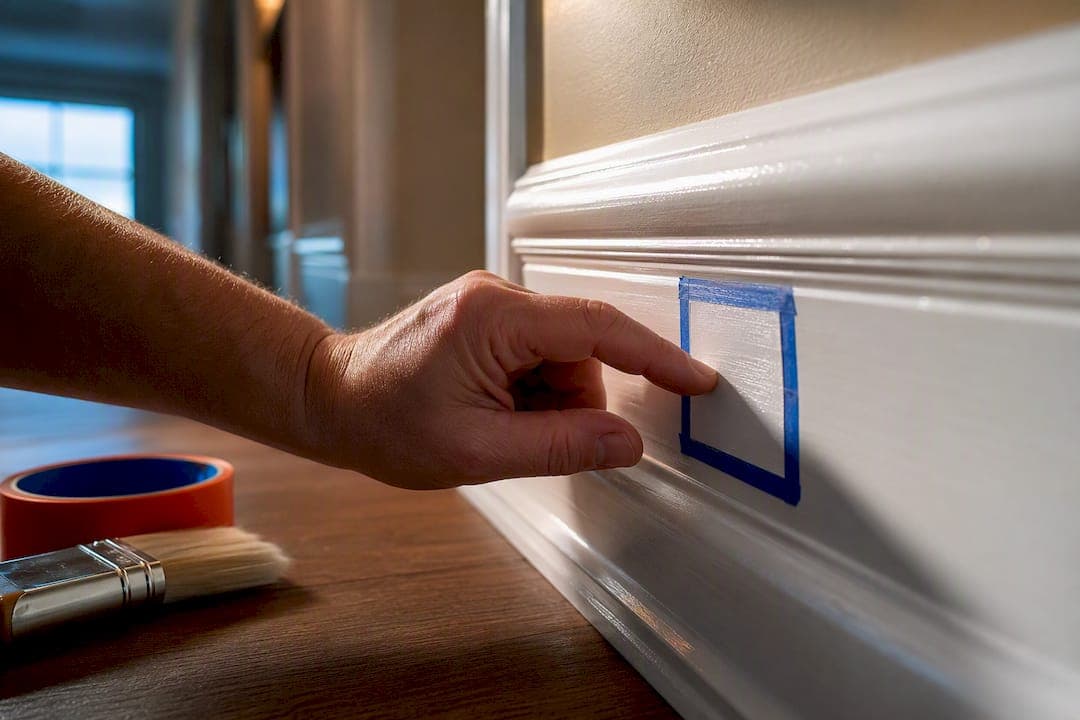
For most interior latex walls, aim for a recoat window of about 4 to 6 hours in ideal conditions, with oil-based trim needing about a day. Touch-dry is not the same as recoat-ready, and humidity, temperature, and how heavy you laid the paint on can stretch those numbers considerably. Always check the can label or technical data sheet for your specific product, then confirm with a quick fingernail or tack test before you load the roller again.
TL;DR:
- Paints in ideal conditions dry within 4 to 6 hours for walls and about a day for oil-based trims, but humidity and paint thickness can extend this period.
- Recoat readiness depends on moisture evaporation, requiring tests like fingernail pressure and tack checks, not just timing, to prevent issues like lifting or peeling.
- Cooler, more humid environments, and thicker application or glossier finishes, slow down drying and recoat times significantly.
- Always verify product-specific instructions and conduct physical tests on inconspicuous spots before applying additional coats.
- Same-day recoats are feasible only under dry, warm conditions with thin coats; otherwise, plan for at least 24 hours or more between coats.
Table of Contents
- Paint Recoat Time Chart by Type and Sheen
- What "Dry to the Touch," "Recoat Ready," and "Fully Cured" Actually Mean
- What Changes Your Paint Drying Time Between Coats
- How to Test if Paint Is Ready for a Second Coat
- Same-Day Recoat vs. Next-Day: Planning Your Painting Schedule
- Fixing and Preventing Recoat Failures
- How Tru Painting Checks Recoat Readiness on Real Jobs
- A Contractor's Take on Scheduling Your Weekend Repaint
- Sources
Paint Recoat Time Chart by Type and Sheen
Every paint chemistry dries on its own schedule, and sheen level changes it further. Trim enamels and cabinet finishes carry more resin and level out slower than a flat wall latex, which is why they sit on the longer end of every range below.
These figures assume roughly 70°F and 50% relative humidity. Cooler or more humid conditions push every number toward the high end or beyond it.
Ranges like these come from manufacturer guidance and industry testing, but your specific can label always overrides a general chart. Products vary by brand and formulation more than most homeowners expect.
What "Dry to the Touch," "Recoat Ready," and "Fully Cured" Actually Mean
These three terms describe three different jobs the paint film can do, and confusing them causes most recoat failures. Dry to the touch means you can brush a finger across the surface without leaving a mark, but the film underneath is still soft and full of solvent or water working its way out. Recoat ready means enough of that moisture has left the film that a new coat will bond properly instead of lifting the layer beneath it. Fully cured means the film has hardened all the way through and can handle scrubbing, furniture, and daily wear.
Painting before a coat is truly recoat ready causes problems you'll recognize immediately once you know what to look for:
- Streaking or dragging, where the roller pulls the wet layer underneath instead of gliding over it
- Lifting or peeling, where the new coat's solvents soften the old layer and both separate from the wall
- A permanently tacky finish, where trapped moisture never fully releases and the surface stays soft for weeks
Manufacturer technical data sheets exist precisely because touch-dry timing varies so much by product, and they remain the final word over any general guide.
What Changes Your Paint Drying Time Between Coats
Four variables control how long between paint coats you actually need, and three of them are things you can check or adjust on the spot.
Temperature and humidity move the needle more than anything else. That 70°F/50% RH baseline is a lab condition, not a Tuesday afternoon in July. Push relative humidity toward 70% or higher and you can expect drying to slow by half again or more, sometimes doubling the wait. The EPA's guidance on moisture control makes the same point from a building-science angle: trapped humidity keeps surfaces wet longer than people assume.
Sheen and resin system matter because glossier finishes and oil-based or waterborne alkyd formulas carry more binder, and binder takes longer to level and set than a flat wall latex.
Application thickness and method shift timing fast. A heavy brushed or rolled coat holds far more wet film than a thin sprayed pass, and that extra volume simply takes longer to release moisture.
Ventilation helps, but it has limits worth respecting:
- Gentle airflow from an open window or a fan pointed away from the wall speeds drying safely
- A dehumidifier in a closed room helps far more in Florida-level humidity than a fan alone
- Avoid pointing heaters or high-velocity fans directly at fresh paint, since forcing the surface dry too fast can trap solvents under a sealed skin and cause tackiness that shows up days later
Pro Tip: Keep a $10 hygrometer in your paint kit. A reading above 65 to 70% relative humidity is your cue to add several hours to whatever the can says, no matter how good the room looks.
How to Test if Paint Is Ready for a Second Coat
Clock time gets you close, but a physical check tells you for certain. Run through these before you pick the roller back up:
- Press or fingernail test. Press a fingertip lightly into an inconspicuous spot, like inside a closet or behind a door. If it feels soft, leaves an indent, or your nail can scratch through easily, it needs more time.
- Tack test. Touch the surface with a clean, dry finger. A faint stickiness that releases immediately is normal; a finish that pulls or leaves a print is not ready.
- Hygrometer check. Note the room's relative humidity. Above roughly 65%, add hours beyond the can's stated recoat window rather than trusting the clock alone.
- Small test patch. Paint a two-inch square in a hidden spot, wait 30 to 60 minutes, then check it against the tests above before committing to the whole wall.
Professional painters lean on these physical checks more than the stopwatch, because conditions on a real job site rarely match a lab. A can label gives you a starting estimate. Your fingernail gives you the actual answer for that room, that day.
Same-Day Recoat vs. Next-Day: Planning Your Painting Schedule
Same-day recoating is realistic when three things line up: thin latex wall coats, dry conditions under roughly 50% humidity, and a warm room in the 65 to 85°F range. Push any one of those out of range and you're better off planning for the next morning.
Reasons to schedule a next-day recoat instead: For advice on coordinating finishing times and exterior material timing, see how to coordinate windows, doors, and exterior style with Bruin Corporation here.
- Relative humidity is sitting above 65%, especially common in Florida homes without the AC running hard
- You're working with oil-based paint or a waterborne alkyd cabinet finish
- The surface is trim, doors, or cabinetry that gets touched and bumped constantly
- Exterior siding is still carrying morning dew or recent rain moisture
A one-day interior wall job usually runs primer in the morning, first coat by early afternoon, and a second coat before dinner if humidity cooperates. A trim or cabinet job is realistically a two-day project: primer and first coat on day one, final coat on day two once the enamel has fully set up. For multi-room projects, paint the least-humid rooms first and cycle back to bathrooms and kitchens last, since interior sequencing affects how smoothly the whole job flows.
Fixing and Preventing Recoat Failures
Recoating too soon leaves a signature set of problems, and each one points to a specific cause. Lifting happens when a new coat's solvents soften a layer that hadn't finished drying. Wrinkling shows up when the surface skins over while the film underneath is still wet, so the top layer buckles as the bottom keeps moving. Alligatoring (a cracked, reptile-skin texture) usually comes from applying a rigid top coat over a softer, still-curing layer. Persistent tackiness signals trapped moisture that never fully escaped.
Fixes depend on severity:
- Mild tackiness or minor wrinkling often resolves if you simply wait longer and reassess with a tack test
- Moderate lifting usually needs a light sanding once the film has hardened, followed by a proper recoat
- Alligatoring or heavy lifting across a large area typically means stripping back to bare substrate
Prevent all of it with a short habit: check the TDS before you start, test a small patch first, apply thinner coats, and control room humidity before you pick up the brush.
Pro Tip: If you're unsure about a tricky surface, like previously glossy trim or bare wood, paint a small masked test area and let it fully recoat and cure before committing to the whole piece.
How Tru Painting Checks Recoat Readiness on Real Jobs
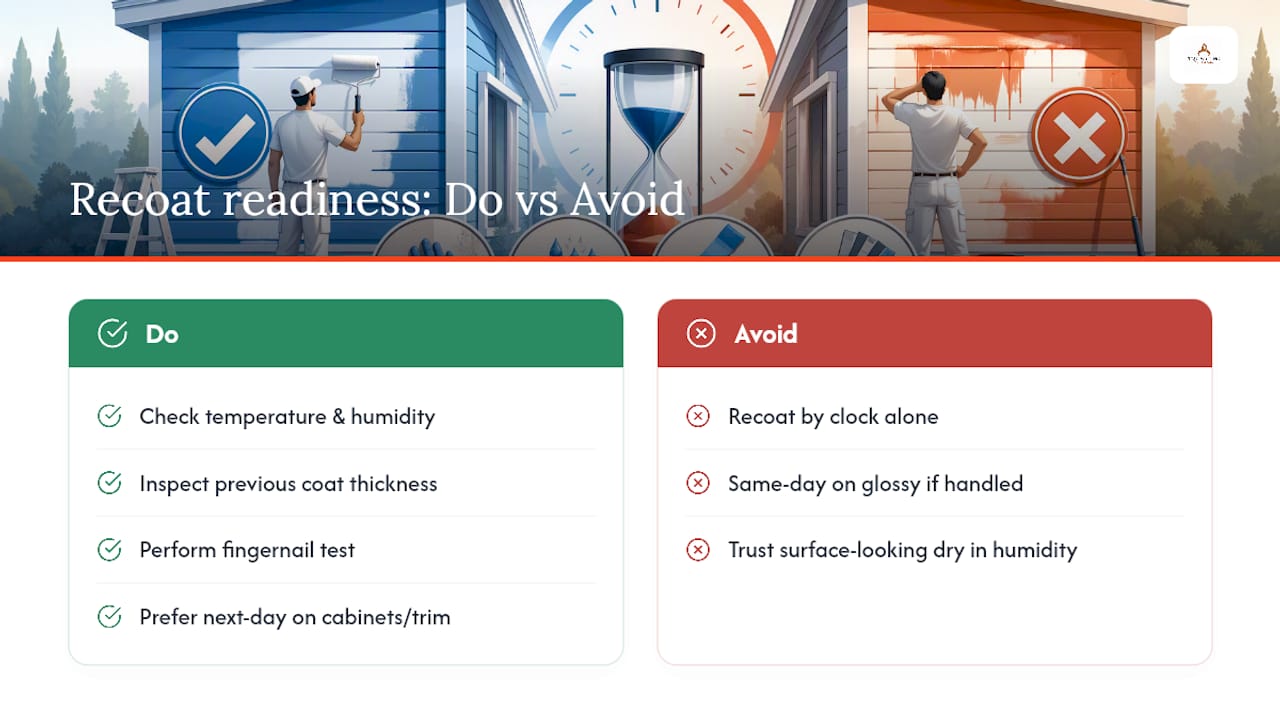
On every job, our crews run the same quick checklist before recoating: ambient temperature and relative humidity, how thick the previous coat went on, and a fingernail test on an inconspicuous spot. We often choose a next-day recoat on cabinets, trim, and glossy substrates even when the label says same-day is possible, because those surfaces get handled constantly and the margin for error is thinner.
We've seen same-day recoats fail on humid Central Florida afternoons where a homeowner's DIY trim job looked dry but stayed soft under a fingernail for hours. On the flip side, straightforward wall jobs in air-conditioned rooms with low humidity recoat cleanly same-day almost every time. The difference usually comes down to reading the room, not just the clock.
A Contractor's Take on Scheduling Your Weekend Repaint
If you're painting a weekend project, budget generously rather than optimistically. Prime Saturday morning, first coat by midday, second coat late afternoon if your fingernail test passes and humidity stays reasonable. Save trim, cabinets, or anything glossy for a two-day plan instead of squeezing it into one. Always check your can's TDS before locking in a schedule. Rushing the second coat is the single most common way a good paint job goes bad.
— Kyle
Sources
For deeper detail on the numbers used throughout this guide, see Glidden's technical guidance on dry and cure times, PaintPricing's breakdown of recoat windows by paint type, and Tribble Painting's field notes on professional recoat practices.
If you're planning an exterior project, our guide on how weather affects exterior painting covers scheduling around Florida's humidity in more depth. For cabinets specifically, Tru Painting's cabinet refinishing service handles the multi-day recoat and cure process so you don't have to guess.
- How Long Should Paint Dry Between Coats? 2-24 Hours
- Paint drying time guide 2026: recoat by brand & humidity
- How Long Does Paint Take to Dry & Cure | Glidden Paints
- How Long to Wait Between Coats of Paint? (Tribble Painting)