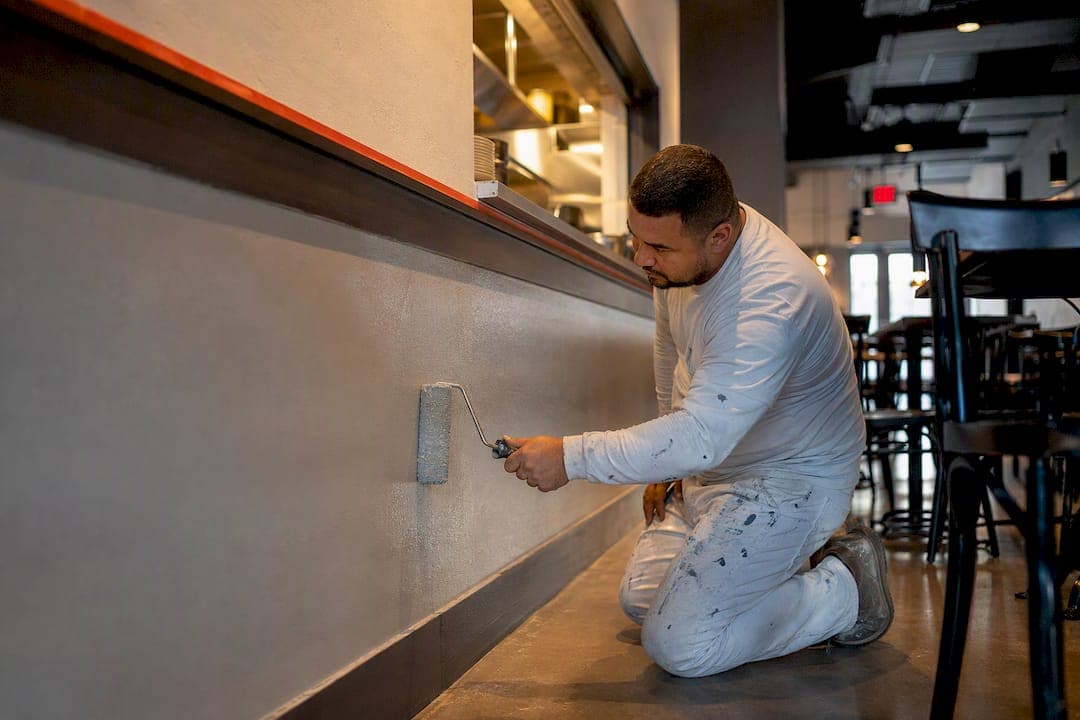
For kitchens, choose grease-resistant semi-gloss enamel, urethane, or commercial scuff-resistant latex. For dining rooms, scrubbable eggshell or satin works best. Restrooms need moisture-resistant semi-gloss. Beyond the paint can, proper surface prep and fast-cure, low-odor commercial products matter just as much as brand, and kitchen or fast-cure work is worth handing to experienced commercial painters.
TL;DR:
- Use grease-resistant semi-gloss enamel, urethane, or commercial scuff-resistant latex in kitchens to ensure easy cleaning and durability against grease and steam.
- Schedule fast-curing, low-VOC products with proper ventilation and precise surface prep to minimize downtime and prevent failure from grease residue or poor adhesion.
- Select scrubbable eggshell or satin finishes for dining areas to hide minor marks while maintaining washability with genuine, test-proven formulas.
- Prioritize surface cleaning, patching, priming, and timing of coats to prevent early paint failure, especially in grease-prone areas near cooklines.
- Hire experienced commercial painters and request documentation like SDS and TDS to ensure coating performance aligns with restaurant zone needs and foot traffic.
Table of Contents
- Recommended Finishes by Restaurant Zone
- What Makes Commercial Paint Actually Durable?
- Surface Prep, Application, and Scheduling Around Service Hours
- Cleaning and Maintenance to Preserve Durability
- When a Restaurant Needs a Commercial Painting Contractor
- A Contractor's Honest Take on What Actually Works
- Get a Commercial Interior Painting Quote
- Manufacturer Specs and Industry Resources Worth Checking
- Sources
Recommended Finishes by Restaurant Zone
Every zone in a restaurant fights a different battle. Your kitchen deals with grease splatter and steam. Your dining room absorbs chair scrapes and hand oils. Your restrooms fight constant moisture. One finish cannot solve all three problems, which is why matching coating to zone is the real starting point for restaurant paint durability.
Trade guidance for restaurant owners commonly points to urethane semi-gloss in kitchens and scrubbable satin or eggshell in dining areas, and that split holds up for a reason: kitchens need surfaces you can scrub hard without damage, while dining rooms need finishes that hide fingerprints and minor scuffs without looking clinical.
Here is how the finishes break down by area:
- Kitchens and prep areas: grease-resistant semi-gloss enamel, urethane, or commercial scuff-resistant latex, chosen for washability over appearance.
- Dining rooms and waiting areas: scrubbable eggshell or satin, which hides minor wall marks while still standing up to a damp cloth.
- Restrooms: moisture-resistant semi-gloss, since humidity and splashing water break down flatter finishes fast.
- Ceilings: flat or matte in low-touch zones, upgraded to washable finishes directly above cooking lines where grease vapor settles.
- High-performance zones (dish pits, walk-in entries, loading areas): pre-catalyzed waterborne epoxy or urethane alkyd, both recommended in commercial coating specification guides for chemical and wash resistance.
Gloss level is a tradeoff, not a free upgrade. Higher gloss cleans easier but shows every smudge under dining room lighting. Eggshell hides those marks but needs a genuinely scrubbable formula, not a residential-grade eggshell that will streak the first time someone wipes it down.
What Makes Commercial Paint Actually Durable?
Marketing copy calls almost everything "durable." What you actually need are specific, testable claims a manufacturer will put in writing.
Start with scuff resistance and washability. Ask for scrub-cycle data or a technical data sheet (TDS) claim, not just a "resists scuffs" tagline. Products like Scuff-X from Benjamin Moore publish specific recoat windows and washability claims you can hold a contractor to.
Grease and stain resistance matters most near cooklines and dish stations. Kitchen environments need smooth, nonabsorbent coatings that don't let grease penetrate the film, and enamel or urethane chemistries generally outperform flat latex here because they cure to a tighter, less porous surface.
Fast-cure, low-odor formulations decide how fast you reopen.
A single-component scuff-resistant latex can dry to touch in about an hour and be recoated in 2 to 3 hours, which lets a crew finish a wall during one closed shift instead of stretching the job across several nights.
That single detail changes how you schedule an entire repaint.
On VOCs and antimicrobial claims: ventilation still matters even with low-VOC products, and antimicrobial additives slow surface bacterial growth on the paint film. They do not replace your actual cleaning and sanitation routine, so treat them as a bonus, not a substitute.
Surface Prep, Application, and Scheduling Around Service Hours
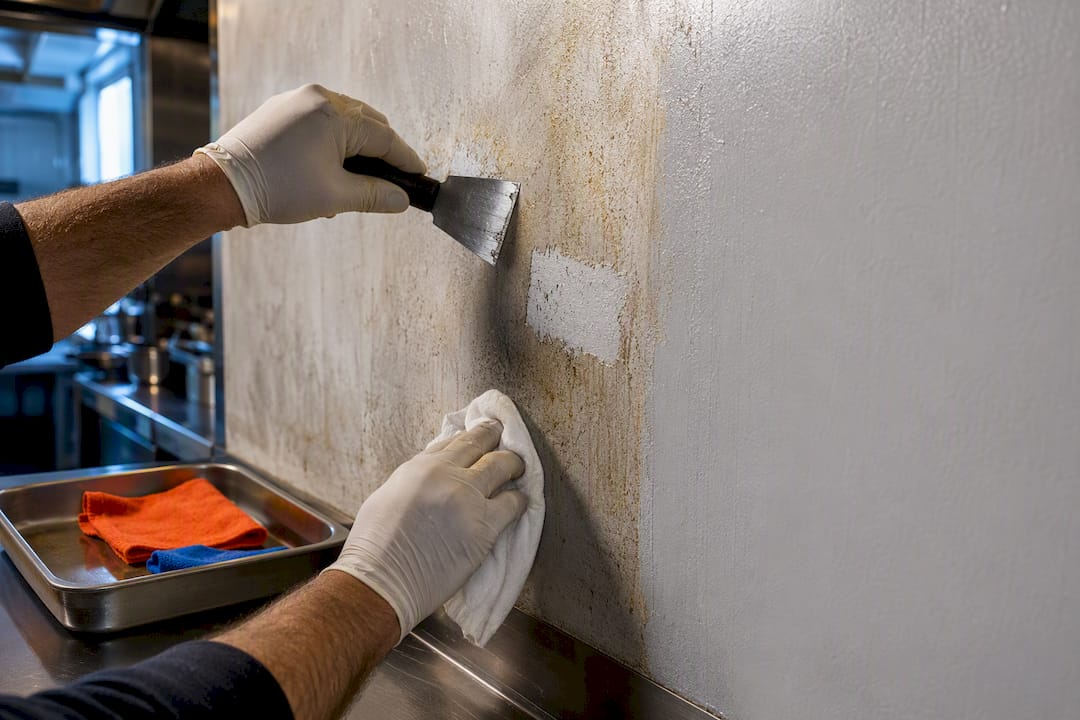
Paint failure in restaurants almost never starts with the paint. It starts with skipped prep. Grease film left on a wall will telegraph through even premium coatings within weeks.
- Clean and degrease first. Kitchen surfaces need full cleaning and sanitizing before any primer goes on, since grease residue blocks proper adhesion.
- Patch and sand. Fill gouges from cart traffic and equipment moves, then sand feathered edges so repairs don't show through the topcoat.
- Prime with the right product. Grease-prone areas often need a stain-blocking or bonding primer rated for kitchen environments, not a general-purpose interior primer.
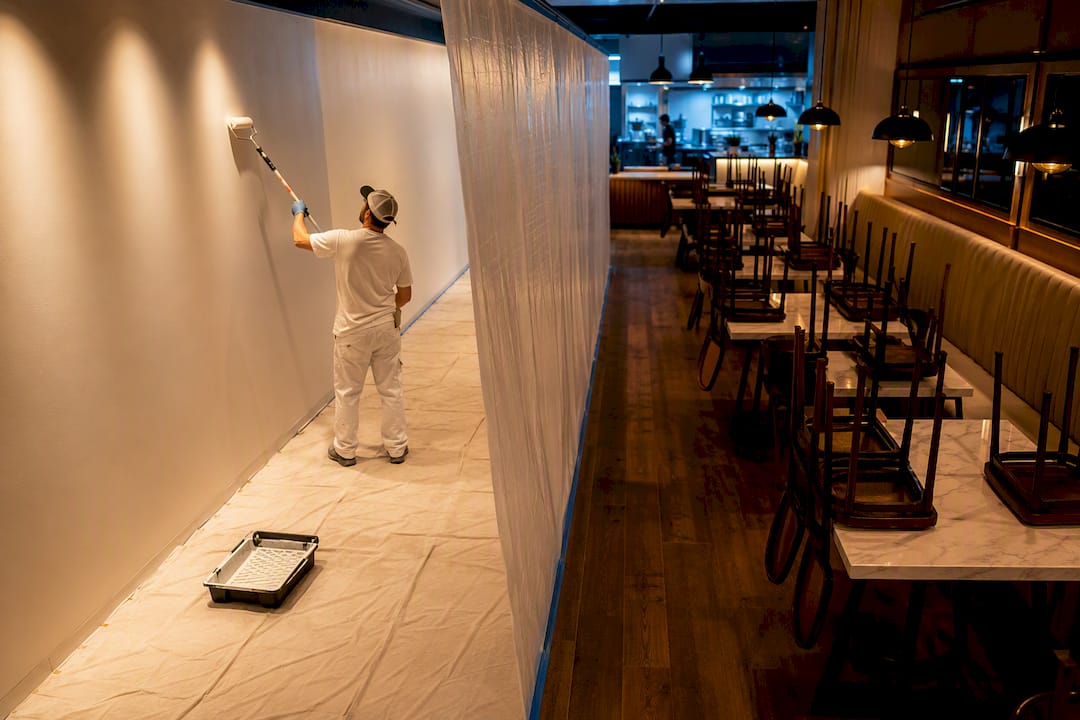
- Schedule around cure times. A fast-cure product recoated in 2 to 3 hours can often go from bare wall to finished in a single overnight closure.
- Ventilate and phase the work. Run exhaust fans, isolate the area being painted, and consider why paint odor lingers if you're painting near open dining areas during business hours.
- Confirm documentation. Ask your contractor for the SDS, TDS, and written warranty before the first coat goes on, not after.
Pro Tip: Ask for touch-dry and full-recoat times in writing, not just a "quick dry" label. Marketing language and lab-tested cure times are not the same thing, and the gap between them is exactly what turns a one-night job into a three-night job.
Downtime, not paint cost, is usually the bigger expense in a commercial repaint. Crews that phase work section by section can keep part of the dining room open while finishing the rest overnight.
Cleaning and Maintenance to Preserve Durability
Even the best coating fails early under the wrong cleaning routine. Harsh degreasers and abrasive pads strip sheen faster than daily wear does.
- Use a mild detergent diluted per the manufacturer's label, and always wipe rather than scrub aggressively on eggshell or satin finishes.
- Spot-clean grease splatter same-day; letting it sit lets it penetrate even a resistant film.
- Reserve full repaints for when fading, chalking, or widespread scuffing spreads across a wall; use touch-ups for isolated marks and keep leftover paint labeled by batch for color matching.
- Budget for a full kitchen repaint every 2 to 3 years under heavy use, and every 4 to 6 years in lower-traffic dining areas, depending on how the surface holds up to daily cleaning.
- Watch for peeling near steam sources and staining near cookline vents. Both usually mean ventilation or primer choice needs revisiting, not just a new coat of paint.
For deeper guidance on stretching a finish's life span, see this breakdown of protecting painted surfaces long term.
When a Restaurant Needs a Commercial Painting Contractor
Some jobs are not DIY territory. Kitchen ceilings above cooklines, floor coving where wall meets floor, high dining room ceilings, and anything requiring overnight or phased work around service hours all call for a crew that has done this before.
When vetting a contractor, check for commercial restaurant experience specifically, verified references, active insurance, and willingness to provide TDS and SDS documentation before the bid is signed. Ask directly whether they can work off-hours without disrupting service the next morning.
Tru Painting LLC's three-tier packages map cleanly onto this: a basic tier for standard repaints, a mid tier adding premium scuff-resistant products, and a top tier bundling extended warranty coverage for high-traffic kitchen and dining zones. Review commercial interior painting services to see how the tiers scope against your space.
A Contractor's Honest Take on What Actually Works
The biggest mistake I see is owners shopping for a paint brand before they've fixed the surface underneath it. Grease film, uncured patches, and skipped primer coats will undercut even the best scuff-resistant product on the market. Prep is the unglamorous 80% of the job that determines whether the paint lasts two years or six.
The second biggest missed opportunity is scheduling. Fast-cure products and phased, section-by-section work aren't just conveniences. They're the highest-return decision most operators make on a repaint, because every hour of downtime costs more than any upgrade in paint quality ever will.
If your kitchen is due for a repaint, request an on-site assessment before you pick a finish. A contractor who has actually painted commercial kitchens will catch ventilation and drainage issues a paint chart never will.
— Kyle
Get a Commercial Interior Painting Quote
Tru Painting LLC is the contractor route for restaurant owners who want their next repaint scheduled around service hours, not around a painter's convenience. Our crews use scuff-resistant and fast-cure commercial products, document every SDS and TDS before work starts, and phase jobs so your dining room or kitchen line stays open while another section gets finished.

Our three-tier commercial packages let you choose the level of coating performance and warranty coverage that fits your kitchen's traffic and your budget, without guessing which finish holds up where. We also handle painted cabinetry and prep-area millwork if your kitchen refresh extends beyond walls, and we cover exterior surfaces like drive-thru lanes and menu boards through our commercial exterior services when a full-property update is on the table. Ready to scope your project? Request a quote through our commercial interior painting services page and get a plan built around your operating hours.
Manufacturer Specs and Industry Resources Worth Checking
Before you sign off on any product, pull the manufacturer's own technical data sheet and safety data sheet. Start with Benjamin Moore's Scuff-X product page, the BEHR PRO commercial specification guide, and, for contractor workflow context, DJ Custom Contracting's painting services overview. Real cure times and scrub-cycle claims live in these documents, not in marketing copy.
Sources
- Scuff‑X® Interior latex paint — Benjamin Moore
- Coatings specifications guide — BEHR PRO
- Restaurant and fast food painting: FDA compliance, grease resistance, and rapid service — Moorhouse blog
- Painting tips for bar & restaurant owners — FSR Magazine