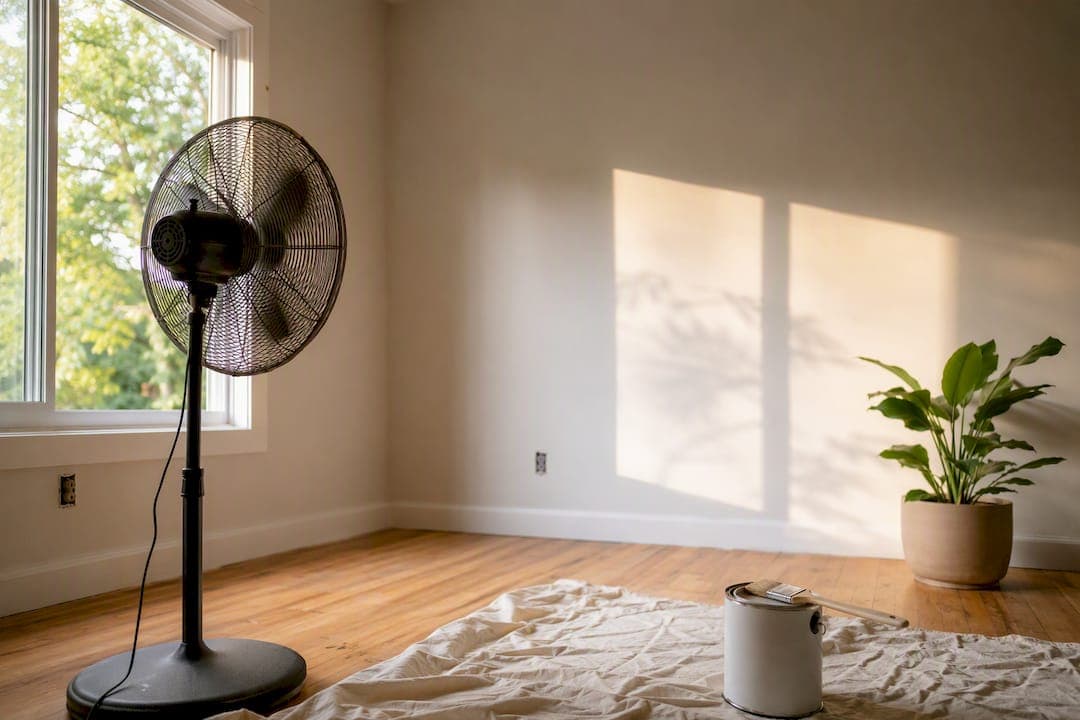
That paint smell filling your home comes from volatile organic compounds (VOCs) off-gassing as the paint cures, and for most water-based paints, it fades noticeably within 24 to 72 hours. Oil-based products and humid conditions can stretch that timeline to weeks. The single most important action right now: get true cross-ventilation going, with air actually exhausting outdoors, not just circulating.
If you or someone in your home is pregnant, has asthma, or is especially sensitive to chemical smells, stay out of freshly painted rooms until the odor has clearly faded, not just gone from "strong" to "noticeable."
- Open windows on opposite sides of the room for real airflow
- Point a fan out a window to exhaust fumes, not just stir them
- Close doors to the rest of the house while the room airs out
- Skip sleeping in the room until the smell is mild at most
Key Takeaways
Paint odor comes from VOCs off-gassing during cure, and cross-ventilation with real outdoor exhaust clears it faster than any filter, absorber, or air freshener alone.
| Point | Details |
|---|---|
| Odor source | VOCs off-gas during drying and curing, even in low- and zero-VOC paints with added tint. |
| Typical timeline | Expect 24 to 48 hours for peak smell, up to a week for most latex, and weeks for oil-based products. |
| Ventilation first | Cross-ventilation with an exhaust fan clears fumes faster than a single fan in a closed room. |
| Filter choice matters | Activated carbon targets VOCs; standard HEPA filters mainly catch dust and particles. |
| Escalate past two weeks | Persistent odor, tackiness, or smell that returns with heat and humidity means it's time to call a pro. |
This article is general information, not a substitute for advice from a qualified doctor. Consult a qualified healthcare professional about your own circumstances before acting on anything here.
Table of Contents
- What Causes Paint Odor After Painting, and How Long It Lasts
- When Paint Smell Signals a Health Concern
- Steps to Eliminate Paint Odor Fast
- When to Call a Painting Contractor for Persistent Odor
- Choosing Low-VOC Paint to Prevent Odor Next Time
- Getting Professional Help When Odor Won't Quit
- Editorial Perspective: What Actually Fixes Paint Odor
- Sources
What Causes Paint Odor After Painting, and How Long It Lasts
That sharp chemical smell is VOCs escaping into the air as the paint transitions from wet to dry to fully cured. Drying and curing are not the same thing. Paint can feel dry to the touch in hours while still releasing compounds for days or weeks underneath the surface. Even paints labeled "zero-VOC," typically defined as under 5 grams per liter, can still off-gas during this process, and tinting colorants added at the store often introduce VOCs that the base paint didn't have.
A few factors decide where you land on the timeline:
- Paint type: Water-based latex clears fastest. Oil-based and shellac-based primers hold odor much longer because their solvents evaporate more slowly.
- Humidity and temperature: High humidity traps moisture and fumes near the surface, slowing the whole process down.
- Ventilation: A sealed room with no airflow can hold odor for weeks that would clear in days with proper cross-ventilation.
- Porous materials nearby: Carpet, drapes, and upholstery absorb airborne VOCs and re-emit them slowly over time, which is why a room can smell "fresh painted" again weeks later even though the walls are long cured.
Realistic expectations: 24 to 48 hours for the strongest smell, 2 to 7 days for most latex paint to feel neutral, and 2 to 4 weeks for oil or solvent-based products. In extreme cases, especially with absorbent materials nearby, faint odor can linger for months.
When Paint Smell Signals a Health Concern
Mild, temporary irritation, eye stinging, a mild headache, a bit of dizziness, is common in the first day or two and usually resolves once the room airs out. What's not normal: symptoms that worsen, persist past a few days, or come with breathing difficulty. That warrants leaving the space and getting fresh air immediately.
Some occupants need extra caution and longer wait times before returning to a freshly painted room:
- Infants and young children, whose smaller lungs process irritants differently
- Pregnant people, out of general precaution around chemical exposure
- Older adults and anyone with asthma, allergies, or chemical sensitivity (MCS)
Guidance commonly points to waiting at least 24 hours before sleeping in a freshly painted room, longer if odor is still noticeable. For sensitive occupants, that often stretches to several days. Ventilate overnight with the door closed to the rest of the house, and arrange an alternate room to sleep in if the smell hasn't dropped to faint by bedtime.
Steps to Eliminate Paint Odor Fast
Work through these in order. Skipping ahead to odor absorbers before you've nailed ventilation is the most common mistake homeowners make.
- Set up real cross-ventilation. Open windows on opposite ends of the room and place a box fan facing outward in one of them so it exhausts air rather than just stirring it. Cross-ventilation with exhaust clears fumes far faster than a single fan running in a closed room. Shut interior doors to keep fumes from drifting through the house, and close or cover HVAC returns in the painted room so the system doesn't pull VOCs into ductwork.
- Choose the right air purifier. Standard HEPA filters catch dust and particles but do little for VOC gases; you need a unit with a substantial activated carbon stage. Carbon filters saturate quickly under a heavy VOC load, sometimes within hours to days after a paint job, so plan on replacing them sooner than the manufacturer's normal schedule.
- Deal with porous materials. Wash curtains, throw rugs, and cushion covers that were in the room during painting. Sprinkle baking soda on carpet, let it sit several hours, then vacuum. If odor is heavy, a professional steam clean pulls out absorbed VOCs that a home vacuum can't reach.
- Use odor absorbers as a supplement, not a fix. Bowls of white vinegar, activated charcoal, or used coffee grounds placed around the room can pull down mild lingering smell over a day or two. They work on top of ventilation, never instead of it. Discard vinegar and coffee grounds outside once they've done their job; don't let them sit and become their own odor source.
- Control humidity. A dehumidifier helps the paint cure faster in humid conditions, and cooler, drier air holds less odor overall. Hold off on adding a second coat, sealant, or new caulk until the first layer has fully cured.
Pro Tip: Skip the trick of stirring essential oil into the paint can to mask the smell. It doesn't remove VOCs, it just adds another scent on top of them, and it can affect how the paint cures.
What doesn't help: ceiling fans (they recirculate air rather than exhaust it) and sealing the room "to contain the smell" (this traps fumes at higher concentration and slows curing).
When to Call a Painting Contractor for Persistent Odor
Most paint smell resolves with ventilation and time. Call in a professional when the odor won't quit on its own.
- Smell is still strong after two weeks despite consistent ventilation
- The painted surface still feels tacky or soft to the touch
- Odor fades, then returns when the weather turns hot or humid
A contractor's diagnostic process goes further than sniffing the room. It means checking for trapped moisture behind the surface, reviewing what products were originally used, and inspecting whether porous materials or HVAC pathways are recirculating the smell through the house.
A persistent-odor job often calls for isolating the room, running continuous exhaust to the exterior, bringing in temporary industrial carbon filtration, checking HVAC filters for saturation, and only as a last resort, stripping and replacing the topcoat or affected soft goods.
At Tru Painting LLC, we build this kind of diagnostic thinking into every job through our three-tier service packages, which let homeowners choose the level of prep, premium low-odor product, and dehumidification support their project needs. In Central Florida's humidity, that last piece matters more than most homeowners expect. A dehumidifier running during and after the job often does more to cut lingering odor than any amount of fan power alone.
Choosing Low-VOC Paint to Prevent Odor Next Time
The paint can label only tells part of the story. Ask your painter for the VOC content of the entire finish system, primer, paint, and tint together, not just the base can, since colorant added at the counter can push a "low-VOC" product well past its listed number.
- Look for Greenguard Gold certification or AAFA-verified low-emission lines when odor sensitivity is a concern
- Ask specifically about low-odor technology, not just low-VOC, since the two aren't always identical
- Request thin, even coats instead of one heavy application, since thick coats trap solvent longer
- Schedule paint jobs for dry weather when possible; humidity is one of the biggest drivers of lingering smell
- Keep paint lids closed when not in active use and isolate HVAC returns during the job
For cabinetry specifically, tinted finishes on wood surfaces behave a bit differently than wall paint, and choosing the right low-VOC cabinet finish upfront avoids a kitchen that smells "new" for weeks after refinishing.
Getting Professional Help When Odor Won't Quit
If you've ventilated properly, run the right filtration, and the smell is still hanging around past two weeks, it's worth having a professional take a look rather than continuing to guess. Tru Painting LLC serves homeowners and businesses across Lake County and Central Florida with interior painting built around premium, low-odor products and dehumidification practices suited to our climate. Our residential interior painting services include the prep work and product selection that prevent odor problems before they start, and for kitchens with tinted cabinet finishes, our cabinet refinishing service uses low-VOC systems designed to cure clean. If your current odor problem stems from a previous job gone wrong, we can diagnose it and get it fixed right the first time.
Editorial Perspective: What Actually Fixes Paint Odor
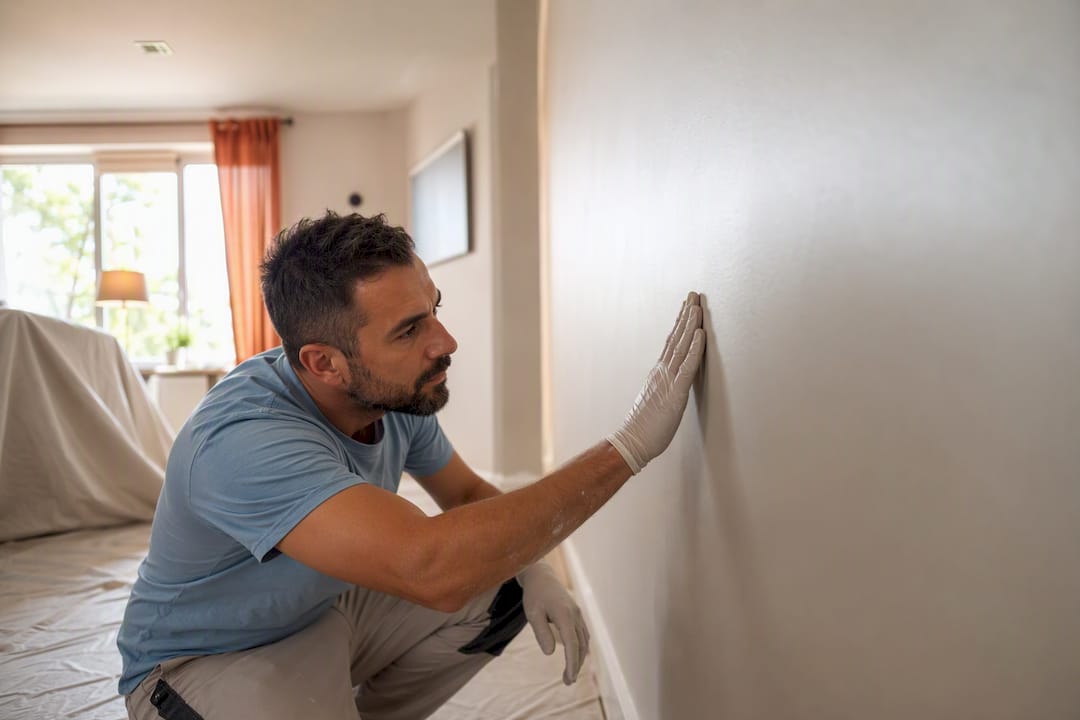
The advice most homeowners get is backward. They reach for candles, sprays, or a fan pointed at the middle of the room, treating the smell as something to mask rather than a gas that needs an exit route. Ventilation isn't one tip among many. It's the mechanism that makes every other step work. Activated carbon filters and baking soda are supplements to airflow, not substitutes for it.
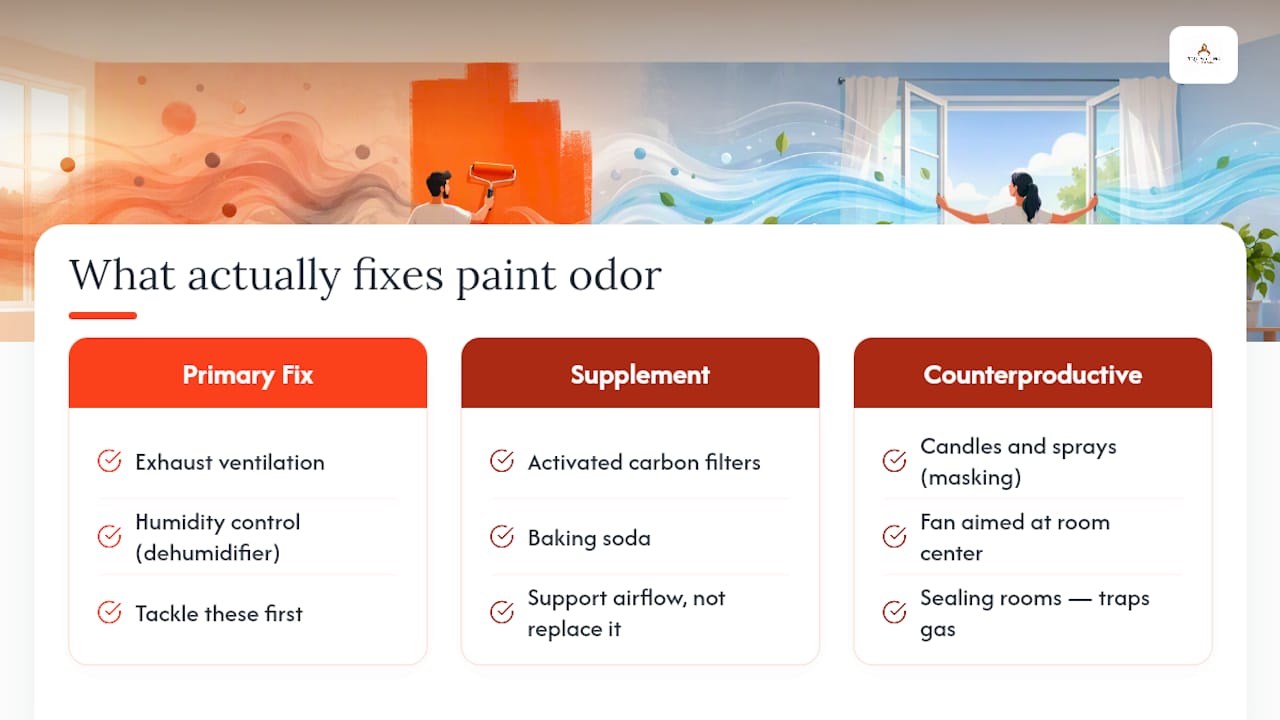
Where conventional advice really falls short is humidity. Most guides treat every climate the same, but in a place like Central Florida, running a fan without a dehumidifier is fighting a losing battle against moisture that's actively slowing the cure. That single addition often does more than an extra air purifier.
My honest read: prioritize exhaust ventilation and humidity control first, treat odor absorbers as a minor assist, and if strong smell persists past two weeks, stop troubleshooting and get a professional to check what's actually happening behind the paint.
— Kyle
Sources
- Paint Fumes Indoors Explained: Ventilation and Carbon - Home Air Quality Lab
- How to Get Rid of Paint Smell | The Spruce