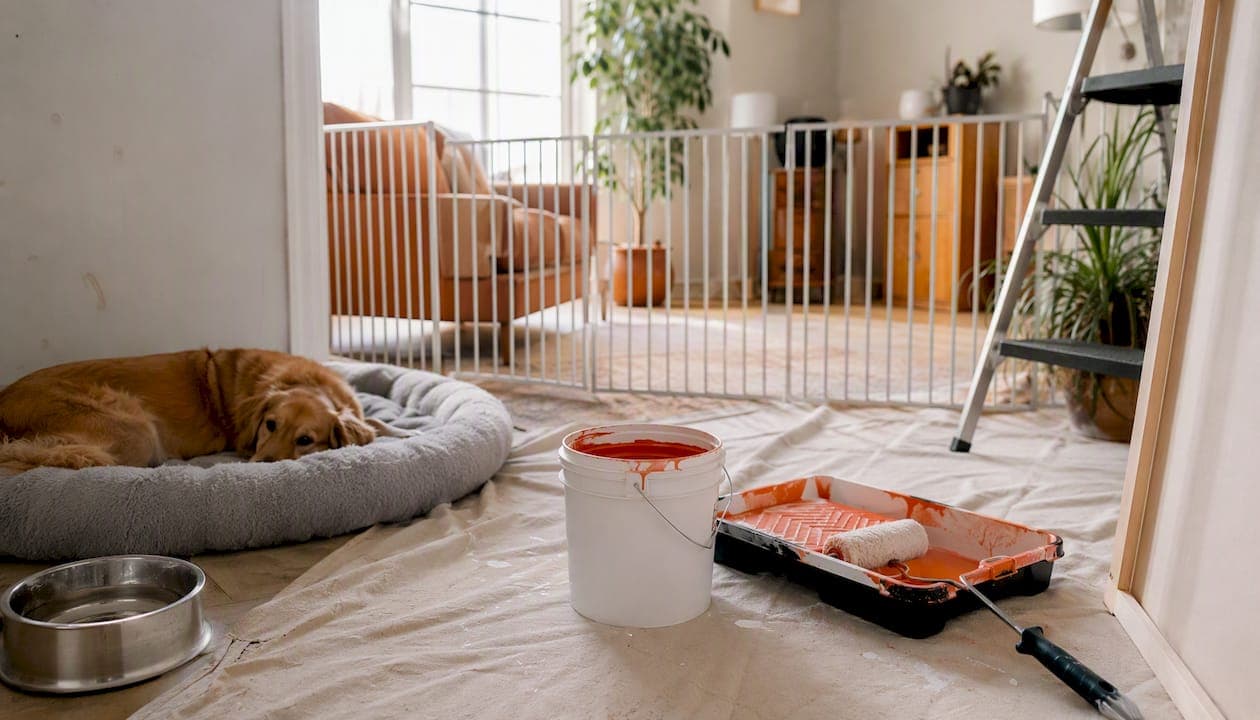
If you're hiring a painter and you have pets, the single most important step is this: remove or contain your pets before work starts, and get a written pet-safety plan from your contractor before you sign anything. Everything else, from ventilation to cleanup, builds on that one decision.
Do these things today if a paint crew is coming this week:
- Book a pet sitter, a boarding stay, or a quiet room far from the work zone.
- Ask your painter which paint products they plan to use and whether they're low-VOC.
- Set up a "safe room" with food, water, bedding, and toys before the crew arrives.
Pro Tip: Text your painter a quick note with where pet food, leashes, and exit doors are located. A five-minute heads-up prevents a frantic search if your dog needs to go out mid-job.
Painters often prefer not to be responsible for watching your pets. Angi recommends lining up a neighbor, friend, or sitter so animals stay out of the way once brushes come out.
Key Takeaways
Keeping pets safe during a painting job comes down to relocating or containing them, choosing low-VOC products, and confirming ventilation and re-entry timing with your contractor in writing.
| Point | Details |
|---|---|
| Relocate or contain pets | Arrange a sitter, boarding, or a sealed-off safe room before the crew arrives. |
| Get it in writing | Ask for a pet-safety addendum covering SDS access, schedule, and containment plan. |
| Ventilate deliberately | Run fans and open windows throughout the job, not just after it ends. |
| Wait for full re-entry | The re-entry timing varies depending on the paint product and the ventilation. |
| Choose a pet-aware contractor | Trupainting LLC builds pet-safety planning and tiered protection into every estimate. |
Table of Contents
- What To Ask Before You Book A Painter
- What Happens On Paint Day, Step By Step
- Containing The Work Area So Nothing Gets Tracked
- Picking Products And Managing Air Quality
- Cleaning Up Before Your Pets Come Back
- Your One-Page Pet Safety Checklist
- Ready For A Pet-Safe Painting Project?
- Sources
What To Ask Before You Book A Painter
Get answers to these questions before you sign a contract, not after the crew shows up:
- Which paint products will be used, and can you provide the Safety Data Sheets (SDS) for each one?
- What's your policy on pets in work areas, and who's responsible for containment?
- Do you carry current licensing and liability insurance, and can you show proof?
- Can you point me to before/after photos or a project gallery from homes with pets?
- Will the crew paint one room at a time, or open up multiple areas at once?
Most professional painters draw a clear line here. Home Works Painting notes that crews generally won't take on pet supervision themselves, both for the animal's safety and to keep pet hair and dander out of wet finishes. That's a reasonable boundary, and it's why the plan needs to be in writing before day one.
Ask for a simple pet-safety addendum added to your estimate: a room-by-room schedule, confirmation that SDS sheets will be on-site, and a note on how the crew handles doors and gates. Reviewing a painting contractor selection checklist before you compare bids helps you spot which companies actually have this figured out.
A written pet-safety plan isn't extra paperwork. It's the difference between a contractor guessing what you want and one who already knows.
What Happens On Paint Day, Step By Step
A well-run paint day follows a rhythm both you and the crew can count on.
- Morning arrival: the crew reviews the day's rooms and confirms your pet is already relocated or secured.
- Containment setup: doors get sealed with plastic sheeting, floors get drop cloths, and pet routes are rerouted away from the work zone.
- Ventilation starts: windows open, fans go on, before the first can gets popped.
- Active painting: crew works room by room rather than opening every door in the house at once.
- Midday check: cans stay lidded during breaks, tools get stored, and nobody props open a gate "just for a minute."
- End-of-day lockup: rags and open materials are sealed away, and the work area is closed off overnight.
- Final walk-through: you and the lead painter confirm which rooms are cleared for pet re-entry.
RPR Contractors' pet-friendly playbook backs this staged approach, especially the practice of working one room at a time so the rest of the house stays livable. If your pet startles easily, the Ontario SPCA suggests keeping a familiar routine, feeding times included, even while the crew is on-site.
Pro Tip: Keep an emergency contact card, your vet's number and the nearest animal poison control line, taped inside a kitchen cabinet on paint day. You won't need it most days, but you'll be glad it's there the one day you do.
Containing The Work Area So Nothing Gets Tracked
Wet paint and curious pets are a bad combination. A dog that brushes against a freshly cut edge or a cat that walks through a tray leaves paw prints on your floors and paint on itself, and Home Works Painting points out that pet hair drifting into open paint can ruin a finish just as easily.
Solid containment usually includes:
- Plastic sheeting or zippered dust barriers across doorways leading into the work zone.
- Canvas drop cloths (better than plastic underfoot, since plastic gets slick and can slide).
- A blocked route from your pet's usual path to the painted rooms, using baby gates or furniture.
- Litter boxes, food bowls, and toys moved out of the work zone entirely, not just pushed to a corner.
- Aquariums covered or relocated, since fish are sensitive to airborne fumes.
If cabinets are part of the job, expect the kitchen to be off-limits longer than other rooms; cabinet refinishing work often means taping off an entire area for a day or two. Reviewing what a professional painter inspects before starting shows how pros scout pet doors and escape routes as part of their standard walk-through.
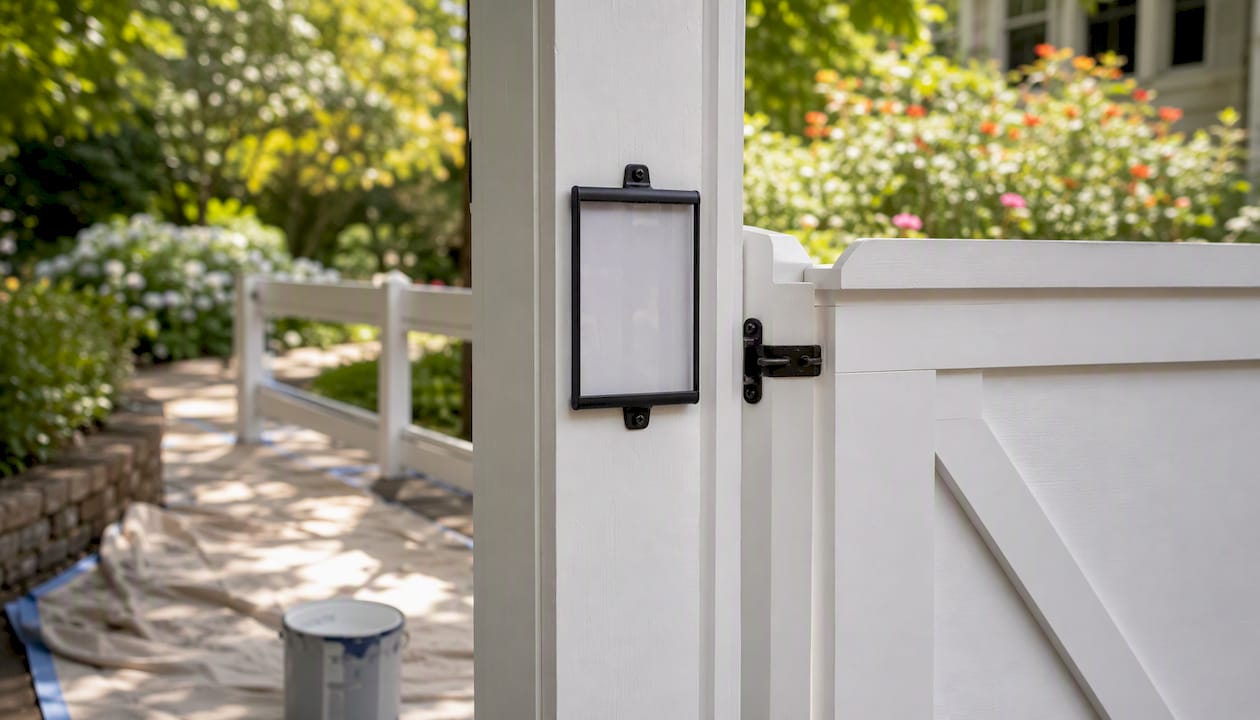
Pro Tip: Put a "Pet Inside, Please Close Gate" sign on any door leading outside during exterior work. Crews come and go constantly, and an open gate is the most common way pets slip out during a job.
Picking Products And Managing Air Quality
Low-VOC and zero-VOC water-based paints are the standard recommendation for homes with pets, since they release fewer airborne chemicals as they cure. Randall's points out that even these lower-odor products still need proper ventilation and a waiting period, they're gentler, not odor-free.
Ventilation matters as much as the product choice:
- Open windows and run exhaust fans throughout the job, not just after it's finished.
- Switch HVAC filters before the crew starts, and run the system to keep air moving.
- Use a HEPA air purifier in adjoining rooms if your pet has respiratory sensitivity.
- Give birds and small mammals extra distance; Orix Contractors notes their respiratory systems react to fumes faster than a dog's or cat's.
Re-entry timing depends on the product and how well the room is ventilated:
Good ventilation during the job also pays off afterward; proper airflow while painting is one reason interior painting can actually improve air quality once the work is done, rather than leaving lingering odor behind.
Cleaning Up Before Your Pets Come Back
Curing doesn't stop when paint feels dry to the touch. It continues underneath the surface for days, so hazards can linger longer than they look like they should.
Before any pet re-enters a painted room, check for these:
- Rags and drop cloths removed, especially anything solvent-soaked.
- Paint cans sealed shut or hauled away, never left open overnight.
- Tools stored, not left on a counter where a curious nose can reach them.
- Floors and baseboards wiped down to catch any drips a paw could pick up.
- A HEPA vacuum pass in rooms where sanding or scraping happened.
RPR Contractors' guidance treats these steps, lids on cans, tools put away, daily cleanup, as some of the simplest and most effective ways to prevent accidental exposure. A thorough post-job cleanup is part of what separates a careful contractor from one who packs up and leaves.
If a pet licks wet paint, gets it in their eyes, or seems disoriented after a painting job, call your veterinarian or an animal poison control line right away rather than waiting to see if symptoms pass.
Your One-Page Pet Safety Checklist
Print this and hand a copy to your contractor and your pet sitter.
- Before booking: SDS confirmed, insurance verified, pet-safety plan in writing.
- Morning of: pets relocated or secured, food and water set up, windows identified for opening.
- During work: ventilation running, cans lidded between coats, doors sealed.
- End of day: rags and cans secured, tools stored, work area closed off.
- Before re-entry: floors wiped, room aired out per the timing table above, final walk-through done.
| Time | Task |
|---|---|
| Morning | Crew arrives, pets confirmed secured, ventilation starts |
| Midday | Painting continues room by room, cans lidded on breaks |
| Evening | Work area sealed, rags and cans removed, house locked up |
| a waiting period | Re-entry check based on product type and ventilation |
If a sitter or neighbor is covering pet duty, leave them a spare key, the day's schedule, and your vet's number written down where they can't miss it.
How Tru Painting Handles Pets On The Job
At Trupainting LLC, every estimate includes a pet-safety conversation up front, not as an afterthought. We confirm SDS availability, walk the schedule through with you, and build containment into the scope depending on which of our three service tiers you choose. We're licensed, insured, and happy to point you toward our project gallery so you can see how we treat homes that have four-legged family members in them.
Ready For A Pet-Safe Painting Project?
Trupainting LLC's three-tier service packages let you choose how much protection and prep goes into your project, so a home with a nervous rescue dog or a business with a lobby full of foot traffic gets a plan that actually fits. Every tier includes SDS access on request, licensed and insured crews, and a written scope you can review before anything gets taped off.

We've handled residential jobs where a pet-safe room, staged room-by-room painting, and a documented cleanup schedule made the difference between a stressful week and a smooth one for both the homeowners and their cats. If your project is a home, our residential interior painting page is the fastest way to see what's included and request a pet-safe scope. Business owners managing a storefront or office with animals on-site can check our commercial interior services for similar protections. Reach out for a quote, mention your pets, and we'll build the plan around them from the first estimate.
Sources
- What You Should Know About Pets and Your Painting Project - Home Works Painting
- FAQs About Painting Homes With Children, Pets, or Allergies – Randall's
- Pet-Friendly Painting: Low-Odor Paint Options + Smart Prep for Your 4-Legged Family - RPR Contractors
- Paws and power tools: Tips to help minimize stress during renovations - Ontario SPCA
- Pet-Proof Your Home for Safe & Stress-Free Professional Painting - Orix Contractors
- 6 things to consider when hiring an interior painter | Angi
Always ask your contractor for the SDS on every paint product used in your home, and check with your veterinarian if you're ever unsure about exposure risk.