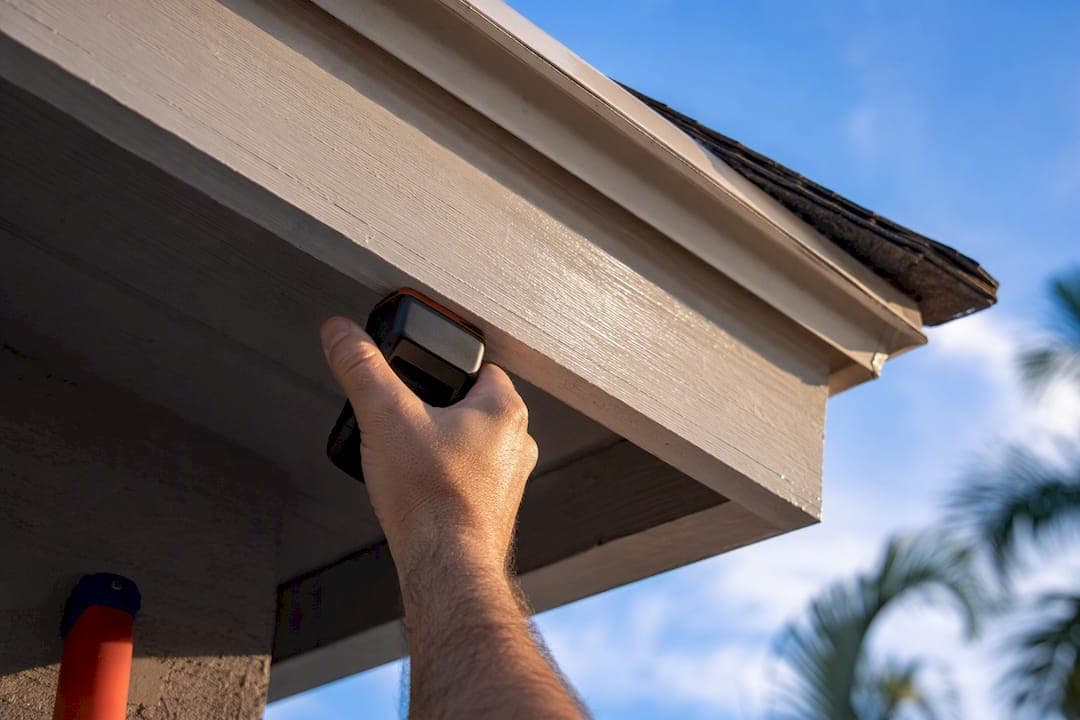
Paint fixes fascia board painting problems only when the wood underneath is dry and sound. If you're seeing soft wood, dark staining, or gutters pulling away from the fascia, painting is a temporary cover-up, not a solution. Grab a screwdriver and probe the wood near your downspouts and check for water stains first. Stop repainting until any rot is repaired and the boards test dry.
TL;DR:
- Repainting fascia boards is only effective if the wood is dry and free of rot, especially near gutters and downspouts where water damage is most common.
- Peeling, blistering, and sagging paint often indicate underlying moisture problems or structural damage that require repair before repainting.
- Proper preparation, including thorough cleaning, drying, scraping, and sealing, can extend paint life to seven to ten years, especially when professional-grade materials are used.
- Painting in optimal weather conditions—between 50 and 85°F with low humidity and dry wood—is crucial to ensure proper adhesion and durability.
- Regular maintenance of gutters, vents, and small repairs can prevent water intrusion, reducing the risk of early paint failure and structural rot.
Table of Contents
- Fascia Board Painting Problems: Common Symptoms and What They Mean
- Why Paint Fails on Fascia: the Root Causes
- How to Diagnose Fascia Board Repair Issues Before You Paint
- Fixes and Prep Before Repainting Fascia
- Materials, Weather, and Timing That Affect Adhesion
- Cost Guide: When Paint Is Enough, and When to Call a Pro
- Preventive Maintenance to Extend Fascia Paint Life
- Author Perspective: What Pros Fix Twice on the Same House
- How Tru Painting Handles Fascia Repair and Repaint Projects
- Sources
Fascia Board Painting Problems: Common Symptoms and What They Mean
Peeling paint on fascia boards rarely shows up alone. Here's what each symptom typically points to, and how to tell a cosmetic fix from a structural one:
- Peeling or curling paint: Usually means moisture is trapped behind the coating, either from poor prep or water intrusion.
- Blistering (bubbles under the surface): Almost always signals trapped moisture pushing out from behind the board, not a surface flaw.
- Chalking (a powdery residue on your hand): Normal UV wear on older paint. Cosmetic, and a sign it's time to repaint.
- Streaking or dark stains: Often mineral or tannin bleed, but persistent streaks near seams can mean water is tracking down from above.
- Sagging gutters pulling fascia downward: A structural warning sign. The wood underneath may already be compromised.
Chalking and light streaking are cosmetic. Peeling, blistering, and sagging deserve a closer look before you touch a brush.
Why Paint Fails on Fascia: the Root Causes
Most fascia painting mistakes trace back to water, not the paint itself. Clogged gutters, overflowing downspouts, roof leaks, and missing kick-out flashing all push moisture directly onto fascia boards, and no coating holds up under repeated soaking.
Trapped moisture is the other half of the equation. When soffit vents get blocked or attic ventilation is poor, humid air has nowhere to escape and condenses against the back of the fascia. Blistering frequently traces back to this kind of trapped attic or soffit moisture, and no amount of repainting solves it until the venting is fixed.
Then there's what happens during application. Painting over damp or dirty wood, skipping primer, or working in direct sun all shorten a paint job's life dramatically. Add material quirks like tannin bleed from cedar fascia or the adhesion challenges of painting bare vinyl and aluminum trim, and you've got a recipe for early failure.
Quick stat: Professional-grade prep and product selection can stretch trim paint life to 7 to 10 years, versus 3 to 5 years for rushed DIY jobs in Florida's humidity and sun.
How to Diagnose Fascia Board Repair Issues Before You Paint
Work through this checklist before buying a single gallon of paint:
- Walk the perimeter first, focusing on areas near gutters and downspouts, where water concentrates.
- Look for visible staining, gutter sag, or gaps between the fascia and the gutter hangers.
- Probe with a screwdriver on any suspicious spot. Wood that resists the tip is sound; wood that gives way, crumbles, or feels spongy is not.
- Check within four feet of every downspout, a hotspot for hidden rot even when the surface paint looks fine.
- Call in a professional if you find soggy or crumbly wood, spreading stains, or damage you can't reach safely without removing gutter sections.
Pro Tip: Soft wood that "gives" under light pressure from a screwdriver means the fascia has already lost structural integrity there. Painting over it just delays the repair and hides how bad it's gotten.
Fixes and Prep Before Repainting Fascia
Skipping prep is the single biggest reason paint fails early on exterior trim, and it's the step homeowners rush most.
Start by washing the fascia gently. Avoid a pressure washer angle that forces water up behind the boards, since that just adds the moisture problem you're trying to solve. After washing, let the wood dry completely. Wood needs to test below a certain low moisture content before you prime, which in Florida's humidity can mean waiting two to three dry days, not two to three hours.
Once dry, scrape all loose and peeling paint down to sound wood, then sand the edges smooth. Small dents and nail holes take exterior filler; anything soft or crumbling needs board replacement, not filler. Thorough scraping, filling, and sealing before priming prevents the majority of premature repaint failures.
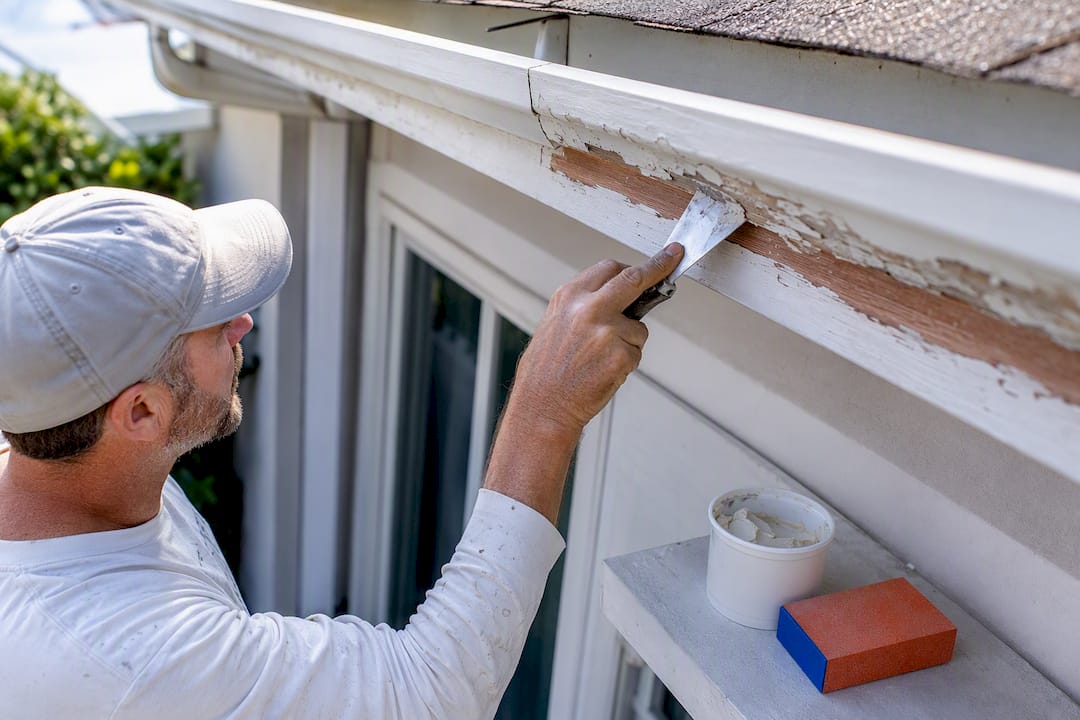
Seal every joint and exposed fastener with paintable exterior caulk before you prime. Choose a stain-blocking primer if you're dealing with cedar tannin bleed, or a high-adhesion primer built for slick surfaces if you're painting vinyl or aluminum fascia. Two thin coats of finish beat one thick one every time.
Pro Tip: Brush the edges and undersides of fascia by hand even if you're spraying the rest of the trim. Sprayed coatings tend to skip the tight, shaded gaps where failure starts first.
Materials, Weather, and Timing That Affect Adhesion
Paint won't bond properly outside a narrow set of conditions, and fascia boards sit right where sun, heat, and humidity all collide.
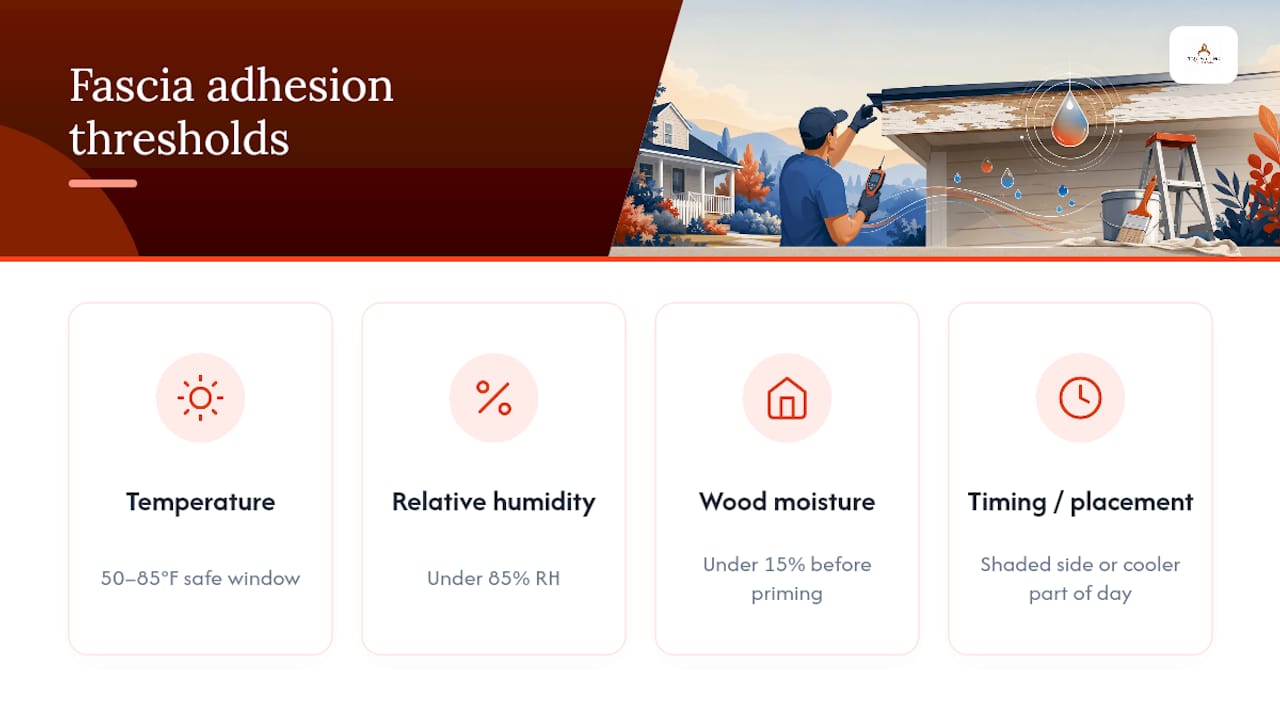
The safe window is 50 to 85°F with relative humidity under 85%. Outside that range, paint either cures too slowly to skin over properly or dries so fast it can't level out. Wood moisture matters just as much: priming over anything above 15% moisture traps water under the film, which is exactly what causes blistering months later.
Direct sun during application causes the surface to dry too quickly before the paint has a chance to level, leaving brush marks and raising blister risk. Schedule fascia work for the shaded side of the house or the cooler part of the day.
Cost Guide: When Paint Is Enough, and When to Call a Pro
Cost ranges vary by scope, region, and how much of your roofline is involved, but general brackets hold true across most jobs:
- Minor repair and repaint: Lowest cost, typically limited to cleaning, spot repair, and a fresh coat on sound wood.
- Partial board replacement: Mid-range cost, adds labor for cutting out rotted sections and gutter removal.
- Widespread replacement: Highest cost, especially where hidden rot extends further than expected once boards come down.
Hire a pro when the work involves height, a complex roofline, gutter removal, or any sign of hidden rot. A solid estimate should spell out scope, materials, and warranty terms in writing, not a verbal ballpark.
Preventive Maintenance to Extend Fascia Paint Life
A few habits go a long way toward avoiding a repeat of the same fascia board repair issues:
- Inspect gutters, caulk lines, seams, and fasteners every year, ideally each spring.
- Keep soffit vents clear, and never let insulation block attic intake airflow.
- Handle small paint failures as spot repairs right away instead of waiting for a full repaint.
- Time repainting for a stretch of dry, mild weather rather than the height of summer humidity.
Author Perspective: What Pros Fix Twice on the Same House
The same three mistakes show up on repeat visits: painting over wet wood, ignoring blocked soffit vents, and treating a stain as a paint problem instead of a water problem. Trace the water source, repair it, prep properly, then paint. That order rarely fails you. Tru Painting's crews see this pattern often enough across Lake County roofs that it's become the first question we ask on every estimate.
— Kyle
How Tru Painting Handles Fascia Repair and Repaint Projects
If your fascia boards need more than a fresh coat, A professional painting contractor can give homeowners a straightforward path forward instead of a guessing game. We combine exterior painting, fascia and soffit repair, and pressure washing into one visit, so you're not juggling separate contractors for prep, repair, and paint.

Inspections typically include a hands-on check of fascia boards, gutters, and soffit ventilation, plus a written quote that spells out scope, materials, and what's covered. A clear assessment should state if a board needs replacing instead of pushing a paint job that won't hold. Ready to find out where your fascia actually stands? Request an estimate and we'll walk your roofline with you.
Sources
- How to prep fascia boards for repaint — TruCoat Painting Plus
- Peeling paint under the eaves points up, not out — On Pattison