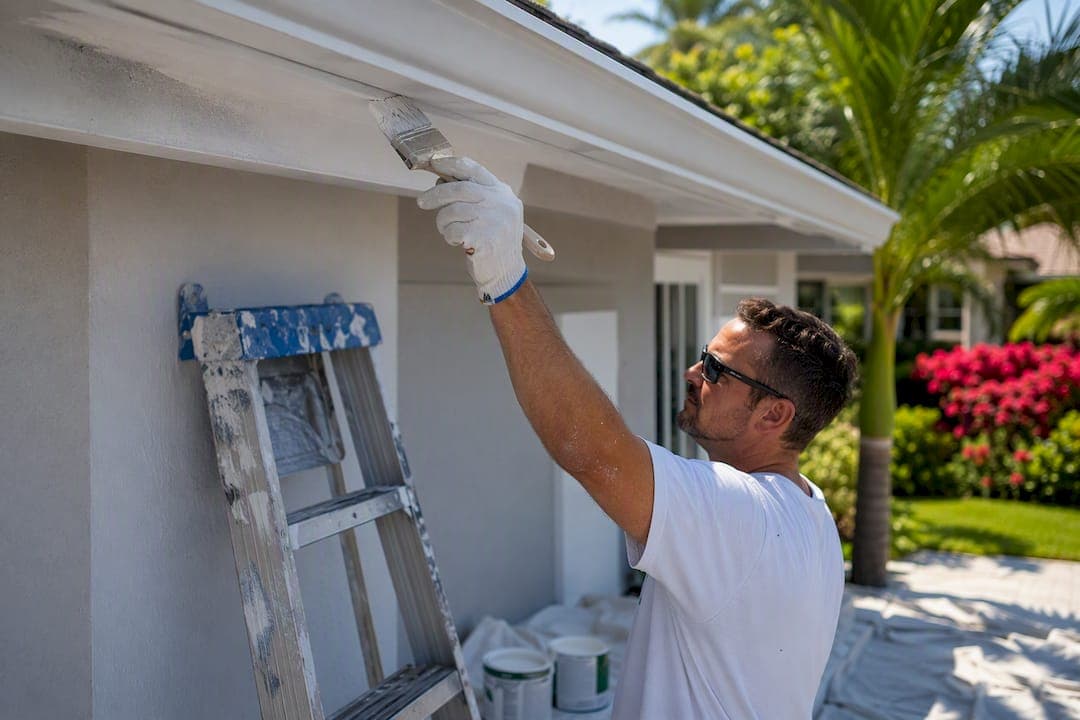
Yes, you can paint soffit and fascia on most homes, and doing it right comes down to one sequence: repair damaged boards, clean and prime the surface, then paint the soffit first and the fascia second with a satin acrylic topcoat. The exceptions are boards with severe rot or structural softness, and some vinyl soffit panels that can warp if you use a color darker than the manufacturer allows.
- DIY cost: approximately low per linear foot in materials
- Pro cost: usually moderate per linear foot installed
- Safety note: most of this job happens on a ladder over your head, so stable footing and a helper matter more than the paint you choose
If your boards pass inspection, the rest is a prep-and-paint project well within reach for a patient homeowner.
TL;DR:
- Repairs for rot, soft spots, or structural issues must be completed before painting to prevent future damage from visible concealment.
- Washing, drying, scraping, priming, and painting soffit before fascia ensures proper adhesion and reduces drip and runoff issues.
- Use high-quality, mildew-resistant acrylic latex paint on wood and fiber cement, and select flexible vinyl or metal-safe paints according to material type.
- Budget $1 to $3 per linear foot for DIY projects and $3 to $7 per foot for professional work, with higher costs tied to repairs and multi-story access.
- Professional painting is advisable for homes with second stories, extensive rot, or gutter removal needs, due to safety and skill considerations.
Table of Contents
- Tools and Materials You Need for Soffit and Fascia Painting
- What Is the Right Order for Painting Soffit and Fascia?
- Best Paint for Fascia Boards and Soffits by Material
- Should You Spray or Brush Soffit and Fascia?
- How Much Does Soffit and Fascia Painting Cost?
- Exterior Soffit Colors That Actually Work
- When Painting Won't Fix the Problem
- Why Preparation Standards Separate a Good Paint Job From a Short One
- Eco-Friendly Paint Options and Proper Disposal
- Key Takeaways
- Ready to Skip the Ladder Work Entirely?
- Sources
Tools and Materials You Need for Soffit and Fascia Painting
Before you climb a ladder, gather everything so you're not running back to the garage mid coat. A stable extension ladder with a stand off attachment, safety glasses, and a dust mask for sanding are non negotiable. For material handling, you'll want:
- Angled sash brush, 2 to 2.5 inches, for cutting in along fascia edges
- Mini roller or paint sprayer for covering flat soffit panels quickly
- Bucket with a roller screen instead of a tray, which travels better on a ladder
- Wood filler and exterior caulk for gaps and nail holes
- Mildew cleaner or a diluted bleach solution for algae streaks
- Stain blocking primer for bare wood, plus a bonding primer for metal or vinyl surfaces
- Painter's tape and rosin paper for masking gutters, windows, and siding
Pro Tip: Keep a wire brush and a five-in-one tool in your bucket. Half of eave prep is scraping loose paint and clearing debris out of soffit vents before anything else happens.
Call a professional if you find rot spreading across multiple sections, if the job requires working above a second story roofline, or if gutters need to come down for full access. That's a different risk category than a single-story ranch with an 8-foot ladder.
What Is the Right Order for Painting Soffit and Fascia?
Start with an inspection, not a paintbrush. Walk the perimeter of your house and check every soffit panel and fascia board for soft spots, water stains, and gaps where gutters meet the roofline. Press a screwdriver into suspicious areas. If it sinks in easily, that board needs repair or replacement before paint ever touches it, since covering rot only hides the problem temporarily rather than solving it.
Once repairs are done, follow this sequence:
- Wash the surface. Use a mildew cleaner or diluted bleach solution on any dark streaking, then rinse. If you pressure wash, keep the nozzle angled away from soffit vents, since a direct blast can force water up into the attic space.
- Let everything dry fully. Give it at least 24 hours in warm, low-humidity weather before moving forward. Painting over damp wood traps moisture and causes peeling within a season.
- Scrape and sand. Remove loose or flaking paint, then feather the edges so the new coat doesn't telegraph a ridge.
- Fill and caulk. Fill nail holes and gouges with exterior wood filler; caulk the joint where fascia meets soffit, but skip caulking any soffit vent perforations, since sealing those defeats their purpose.
- Prime bare wood and repaired spots. A stain-blocking primer seals the wood, blocks tannin bleed, and gives the topcoat something consistent to grip.
- Paint the soffit first, then the fascia. Working overhead means drips are inevitable, so soffits go first with thin, even coats so any runoff lands on unpainted fascia below, not on a finished surface. Back-brush any sprayed sections to work paint into the texture and avoid a plasticky sheen.
- Finish with two coats. One coat rarely delivers full coverage or the durability you want; plan on a full second coat once the first is dry to the touch, usually within 2 to 4 hours in good weather.
Rushing step 5 is the most common mistake homeowners make. Skipping primer on bare or repaired wood cuts the paint job's lifespan roughly in half.
Best Paint for Fascia Boards and Soffits by Material
The material behind your paint determines what actually sticks. A 100% acrylic exterior latex with built-in mildew resistance is the standard recommendation for wood, fiber cement, and most painted surfaces, since it flexes with temperature swings and resists the mildew that thrives in shaded eave spaces.
- Bare wood or fiber cement: apply a stain-blocking primer, then two thin coats of acrylic latex for full coverage and UV protection.
- Aluminum soffit and fascia: degloss the surface first, then use a bonding primer built for metal adhesion, or choose a direct-to-metal acrylic system that skips the separate primer step.
- Vinyl soffit: stick with vinyl-safe paint formulated to flex without cracking, and avoid colors significantly darker than the original unless the product label specifically allows it, since dark vinyl absorbs heat and can warp.
For sheen, satin is the practical default for fascia and trim. It hides minor brush marks better than semi-gloss while still cleaning up easily when pollen or dust settles on it. Semi-gloss earns its keep specifically near gutters, where dirt and water runoff accumulate and a harder, wipeable surface holds up longer. If you want a deeper breakdown of sheen options, our guide to exterior paint finishes covers the trade-offs in more detail.
Should You Spray or Brush Soffit and Fascia?
Spraying soffits gets paint into every groove and vent perforation fast, but it demands extensive masking of siding, windows, and gutters to avoid overspray drifting where you don't want it. Brushing fascia, on the other hand, gives you more control over edges and skips most of that masking since you're working a narrow, visible board rather than a wide flat panel.
- Spray the soffit, brush the fascia. Many painters combine both methods to balance speed and finish quality.
- On vented soffits, use thin coats and back-brush immediately so you don't bridge the perforations with paint film.
- Removing gutters before painting gives cleaner fascia coverage but adds labor, and reinstalling them incorrectly can cause drainage problems, so weigh that trade-off carefully.
- Work in manageable sections rather than trying to cover one whole side of the house in a single pass; it keeps wet edges workable and reduces lap marks.
Pro Tip: Move your ladder every 4 to 6 feet instead of overreaching. Overreaching on a ladder is one of the most common causes of falls during exterior trim work, and it also produces sloppier cut lines.
How Much Does Soffit and Fascia Painting Cost?
Budget roughly $1 to $3 per linear foot in materials if you're doing the work yourself, factoring in primer, paint, brushes, and masking supplies. Hiring a contractor typically runs $3 to $7 per linear foot installed, and that gap reflects labor, insurance, and the equipment needed for safe overhead access, not just markup.
- Repairs push costs up. Rotten boards, multiple stories, or removing and rehanging gutters all add time and materials.
- Masking adds hours. A sprayed job on a house with lots of windows and trim can take longer to mask than to paint.
- Two coats take two days minimum. Between drying time and recoat windows, most jobs stretch across at least two working sessions even on a modest single-story home.
A typical single-story home fascia paint project may cost a few hundred to a couple thousand dollars for materials-only DIY, and somewhat more if contracted professionally, depending on repair needs and access difficulty. For a broader look at how painting projects scale in price, see our exterior painting cost guide. Complex, multi-elevation jobs often make professional pricing the more cost-effective route once you account for equipment rental and the time value of a DIY weekend that turns into three.
Exterior Soffit Colors That Actually Work
Most homes do well matching the soffit to the trim or ceiling white, since a lighter, uniform underside reflects light and makes the eave feel finished rather than an afterthought. Fascia is where you can introduce contrast, either echoing the siding color for a cohesive look or picking a deeper accent tone that frames the roofline.
- Light siding homes: keep soffit and fascia both close to trim white for a clean, classic look.
- Dark siding homes: a matching dark fascia can look sharp, but expect more visible dust and pollen buildup that needs occasional wiping.
- Brick homes: a cream or warm white soffit with a fascia that echoes the mortar or trim color usually reads as intentional rather than mismatched.
- Coastal or high-humidity climates: lighter colors show salt residue less and stay cooler, reducing heat stress on the material underneath.
Fascia along street-facing elevations collects more visible grime than backyard-facing boards, so a slightly deeper tone there can buy you extra time between cleanings.
When Painting Won't Fix the Problem
Paint is cosmetic, not structural. Soft, spongy wood, visible sagging, or boards that crumble under light pressure need replacement, not a fresh coat. Persistent mildew or chalking that returns within months of painting almost always points to a moisture source, a gutter leak, poor attic ventilation, or a roof edge letting water in behind the fascia, and painting over that cycle wastes both time and material.
- Runs and sags: let the paint cure fully, then sand the ridge flat and recoat thinly.
- Bridged vent perforations: cut the film open with a utility knife or small drill bit to restore airflow before it traps moisture in the attic.
- Recurring mildew: treat the surface, but also check gutters and roof flashing, since the paint isn't the actual cause.
Why Preparation Standards Separate a Good Paint Job From a Short One
The difference between a soffit and fascia paint job that lasts eight years and one that peels in two almost always comes down to preparation, not the paint can. Trupainting LLC builds every exterior project, including residential exterior trim and eave work, around thorough washing, scraping, priming, and repair before a single topcoat goes on.
- Three tiers of service let homeowners choose the level of prep and product investment that fits their budget without cutting corners on adhesion.
- A written estimate should specify primer type, number of finish coats, and whether rotten boards are repaired or excluded from the quote.
- Ask any contractor for photos of similar completed eave work, since fascia and soffit finishes show flaws in direct sunlight that interior work never reveals.
A soffit and fascia system that's properly primed and finished in a quality acrylic topcoat can go a full decade before it needs attention again, while a job that skips priming on bare wood often shows peeling within two or three seasons.
Hire a professional when the job spans multiple stories, when rot shows up in more than one location, or when gutters need to come down for access. Those conditions raise both the risk and the skill required.
Eco-Friendly Paint Options and Proper Disposal
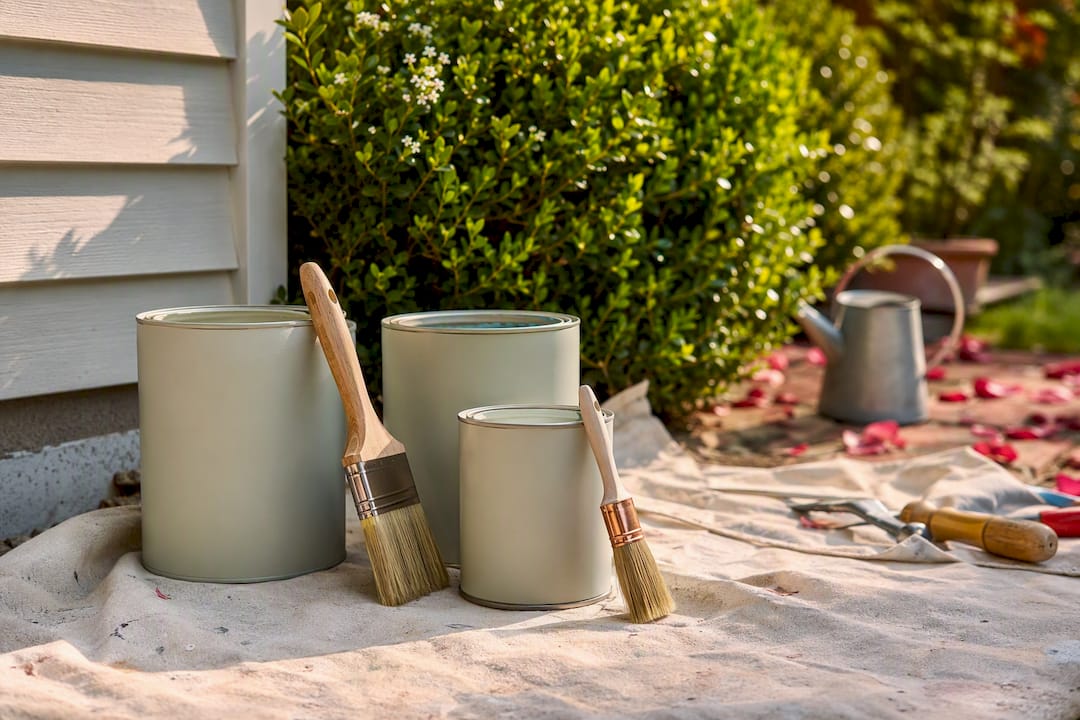
Low-VOC and zero-VOC acrylic latex paints have closed most of the performance gap with standard exterior formulas, so choosing one for your soffit and fascia doesn't mean sacrificing durability. These formulas cut down on the sharp fumes and off-gassing that linger for days after a standard latex job, which matters more than you'd think when you're painting eaves right outside bedroom windows.
Look for paints labeled Green Seal certified or listed under the EPA's Safer Choice program if indoor air quality near your home's perimeter is a concern. Many major paint manufacturers now offer low-VOC lines at the same price point as their standard exterior acrylics, so there's rarely a cost penalty for choosing the cleaner option.
Disposal is the part homeowners overlook most. Latex paint is not hazardous waste once fully dried, but most municipalities still ask that you not pour it down a drain or leave a liquid-filled can at the curb. Let leftover paint dry out completely, either by leaving the lid off in a well-ventilated space or mixing in cat litter or a commercial paint hardener to speed it up, then dispose of the solid can with regular trash where local rules allow. Many hardware stores and county waste facilities also run paint recycling programs that accept both dried latex and unused cans for reuse or reprocessing. Check your county's solid waste website before your project starts, since drop-off hours and accepted materials vary widely by location, and having a disposal plan ready keeps a weekend project from turning into a garage full of half-used cans.
A Painter's Honest Take on DIY vs. Hiring Out
My rule of thumb: if you can safely reach every board from a single extension ladder and the wood is sound, DIY is worth the weekend. Once you're dealing with a second story, hidden rot, or gutters that need to come down, the math shifts. A pro isn't just faster, they're insured for the fall you're not planning on.
— Kyle
Key Takeaways
Painting soffit and fascia successfully depends on repairing damaged wood first, priming bare surfaces, and painting soffit before fascia with a satin acrylic topcoat.
| Point | Details |
|---|---|
| Repair before you paint | Replace soft or rotten boards; paint only hides moisture damage temporarily. |
| Follow the correct sequence | Wash, dry fully, scrape, prime bare wood, then paint soffit first and fascia second. |
| Choose satin acrylic latex | Use 100% acrylic with mildew resistance; reserve semi-gloss for areas near gutters. |
| Budget realistically | Expect $1 to $3 per linear foot DIY versus $3 to $7 per linear foot professionally installed. |
| Know when to hire | Trupainting LLC's three-tier packages and prep-first standards suit multi-story or repair-heavy eave jobs. |
Ready to Skip the Ladder Work Entirely?
If you've read through the prep steps, drying windows, and overhead safety warnings above and decided a weekend on a ladder isn't for you, that's a completely reasonable call. Trupainting LLC handles the entire process, from rot inspection and repair through priming and two-coat finishing, so you get contractor-grade results without renting equipment or losing a weekend to it.

Our three-tier packages mean you choose the level of prep and product quality that fits your home and budget, whether that's a single-story ranch or a multi-elevation property with gutters that need to come down for full access. Every job starts with the same repair-first standard covered in this guide, applied by a crew that already knows how to avoid drips on overhead work. If your soffit and fascia need attention this season, request an estimate through our residential exterior painting page and get a written scope before any paint goes on.
Sources
Technical guidance in this article draws on step-by-step painting technique from PaintPricing.com, brush and roller sizing from Behr's exterior trim guide, product selection from EFC Contractors, and prep standards from TruCoat Painting Plus.