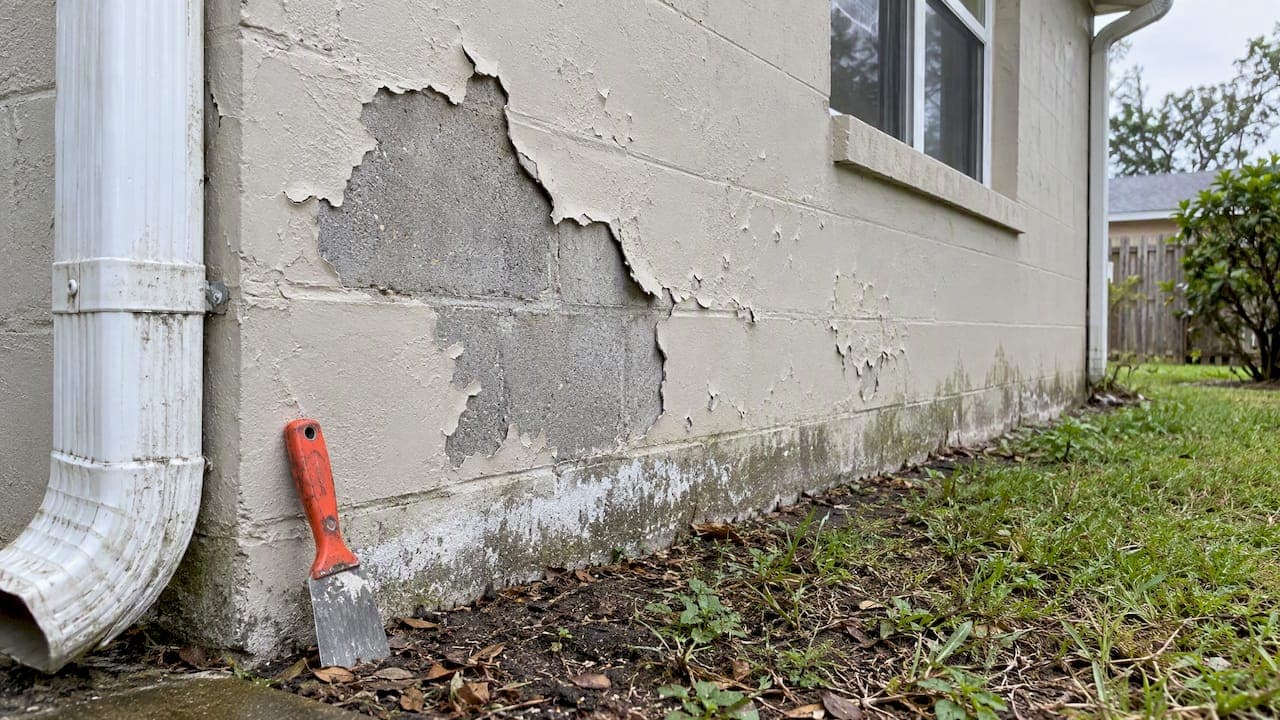
Peeling paint on concrete or cinder block usually points to active moisture or poor surface preparation, and recoating before you fix that root cause just wastes paint. The right first move is a quick inspection: look for damp spots or salty residue, then scrape away anything loose. Once you know what caused the failure, you can choose a repair method that actually holds.
TL;DR:
- Moisture movement through porous blocks or high pH conditions from previous paint failure are the primary causes of peeling on concrete and cinder block surfaces.
- Proper surface cleaning, timely repair of cracks, and thorough drying are essential before applying primers and coatings to ensure long-lasting adhesion.
- Using a bonding masonry primer followed by the appropriate exterior paint or elastomeric coating significantly improves durability and flexibility of the finish.
- Fixing issues like drainage, regrading soil, and redirecting gutters is crucial, as water retention is the main factor causing paint to peel over time.
- Professional testing for moisture and pH levels helps confirm surface readiness and prevents repeat failures from inadequate prep or hidden moisture problems.
Table of Contents
- How do you diagnose why paint is peeling on block?
- Removing loose or peeling paint from block
- Cleaning, repairing, and repainting block the right way
- Preventing paint from peeling again
- When should you call a painting contractor?
- Our honest take on long-lasting results
- Let us handle your block wall repaint
- FAQ
- Sources
How do you diagnose why paint is peeling on block?
Moisture problems and adhesion problems look different once you know what to check. Blisters, bubbles, and white chalky deposits called efflorescence usually mean water is moving through the block from behind, often from grade sloped toward the foundation or a leaking gutter. Tide lines or darker bands near the base of a wall are another sign that water is wicking up from the soil.
Adhesion failure looks different: a fine, powdery residue on your hand after you rub the wall, or paint that flakes off in thin sheets without any dampness underneath. This often comes from chalking paint that was never cleaned before recoating, or from high pH in new or unsealed masonry reacting with the paint film.
A few simple checks help narrow things down:
- Tap test: press a strip of tape on the wall and pull it off. Paint that lifts cleanly points to adhesion failure, not moisture.
- Grade and gutter check: walk the perimeter after rain and look for pooling water or downspouts that dump near the foundation.
- Mildew check: dark speckled patches often mean trapped moisture feeding mold growth under the paint film.
- Rag test: wipe a damp cloth across the surface. Heavy white residue signals chalking paint that needs cleaning before anything else.
For stubborn or recurring cases, a contractor can run a moisture meter or pH strip test, which is far more precise than guesswork.
Removing loose or peeling paint from block
Once you know the cause, remove only what needs to go. Stripping an entire wall down to bare block is rarely necessary and can actually damage the masonry face.
- Start with a scraper and wire brush. Hand tools remove loose material without harming the substrate and let you see how much paint is actually failing.
- Move to pressure washing if needed. A pressure washer in the 2,500 to 3,000 PSI range with a 15-degree nozzle, held at a steady distance and kept moving, lifts peeling paint without gouging the block.
- Use a chemical stripper for stubborn spots. Solvent-based strippers work fast but carry stronger fumes, caustic strippers handle heavy layers but require careful rinsing, and biochemical strippers are gentler but slower.
- Call in blasting or professional stripping for extensive failure across large wall sections or multiple paint layers.
Whichever method you use, the goal is a sound, tightly adhering base rather than a bare wall. Aggressive total removal on older or historic block can chew into the surface and create more repair work than it solves.
Work gloves, eye protection, and a respirator rated for paint dust or chemical fumes are non-negotiable, and any chemical runoff should be contained rather than washed into storm drains.
Pro Tip: Test your removal method on a small, hidden section first. What works on one wall can behave differently on block with multiple old paint layers.

Cleaning, repairing, and repainting block the right way
After removal, the surface needs real preparation before a new coat goes on. Skipping this step is the single biggest reason paint fails twice on the same wall.
- Remove efflorescence with a stiff brush and a mild acidic cleaner made for masonry, then rinse thoroughly.
- Treat mildew with a bleach-based or dedicated mildewcide cleaner before rinsing.
- Let the wall dry fully. Masonry can take 48 hours or more to dry after washing or rain, and painting over damp block is a near-guaranteed repeat failure.
- Patch cracks and open mortar joints with a masonry patching compound before priming, since coating over gaps just telegraphs the damage through the new paint.
Surface testing matters here too. Guidance from ACI 515.3R-20 treats a documented condition assessment, checking moisture, pH, and contamination, as a standard part of preparing concrete and masonry for coating, and most paint manufacturers require a dry, clean substrate for warranty coverage.
Inadequate surface preparation is among the most common causes of coating failure on concrete and masonry, which is exactly why that assessment step comes before primer, not after.
For the primer, block's porous surface needs a bonding masonry primer to grip properly. From there, acrylic-latex exterior paint works well for most walls, while elastomeric coatings make sense where hairline cracking or heavy weather exposure is a concern, since they bridge small cracks and flex with the substrate. Our exterior wall prep checklist walks through this sequence in more detail, and our guide to elastomeric coatings on stucco explains when that flexible option earns its higher cost.
Preventing paint from peeling again
A fresh coat of paint only lasts if the conditions that caused the last failure get fixed first. Water is almost always the long-term enemy of painted block, so site drainage deserves attention before cosmetic concerns.
- Regrade soil that slopes toward the foundation so water drains away from the wall instead of into it.
- Clean and redirect gutters and downspouts so runoff lands well away from the block surface.
- Repoint mortar joints where water is visibly entering through gaps or cracked joints.
- Choose the right sealer for masonry, since general-purpose sealers are not all rated for block and the wrong product can trap moisture rather than block it. This step-by-step guide to surface sealing covers how to match a sealer to the surface.
- Schedule periodic cleaning to clear dirt, pollen, and mildew before they break down the paint film early.
A little routine attention to drainage and joints does more for paint longevity than any premium product applied over a wet or dirty wall.
When should you call a painting contractor?
Some situations are worth handing to a professional rather than tackling solo. Active moisture you cannot trace to an obvious source, paint that fails again within a year or two of repainting, or crumbling and soft mortar joints are all signs the problem runs deeper than surface prep.
A qualified contractor brings tools and steps that are hard to replicate at home:
- Moisture and pH testing to confirm the wall is actually ready for coating, not just dry to the touch.
- Small test patches or mockups before committing to the full wall.
- A written scope that separates prep work, repairs, and coating, with warranty terms on each.
When you're gathering estimates, ask what prep steps are included, what primer and paint system they plan to use, and whether workmanship is covered if peeling returns. We offer three-tier packages built around exactly this kind of scoped, documented approach.
Our honest take on long-lasting results

Most peeling paint complaints we see trace back to one thing: someone painted over a problem instead of solving it. A beautiful finish on a damp or poorly prepped wall buys you a year or two at best.
The unglamorous steps, fixing drainage, testing moisture, choosing the right primer, are what actually make a paint job last.
— Kyle
Let us handle your block wall repaint
If your block walls keep failing no matter what you try, we can take the guesswork out of it. We handle exterior painting, pressure washing, and full block and stucco prep and repair, including service packages built for walls with a history of problems.

Request an inspection and we'll test your surface conditions, diagnose the real cause, and put together a written estimate so you know exactly what you're paying for. Reach out through Tru Painting to get started.
FAQ
Why is my paint peeling off my cinder block?
Peeling on cinder block is usually caused by moisture moving through the porous block from behind, or by paint applied over a chalky, dirty, or high-pH surface. Checking for dampness and testing adhesion with a tape pull are the fastest ways to tell which one you're dealing with.
Can brick be restored after being painted?
Painted brick and block can often be restored by removing loose and failing paint down to a sound layer, repairing any damaged mortar or masonry, and repainting with a bonding primer suited to porous surfaces. Full paint removal back to bare brick is sometimes possible but can damage the face, so many contractors remove only what is loose and treat the rest.
Why is my masonry paint peeling?
Masonry paint peels most often from moisture intrusion, inadequate surface prep, or applying coatings over a damp or high-pH wall before it was fully cured or dried. ACI guidance treats surface condition assessment as a standard step precisely because skipping it is such a common cause of failure.
Can I seal up flaking paint without it coming off?
Sealing over flaking paint is not a reliable fix since the loose paint underneath will keep failing and take the sealer with it. The loose material needs to come off first, down to a sound surface, before any sealer or new coating goes on.
Sources
- 515.3R-20: Guide for Assessment and Surface Preparation for Application of Protection Systems for Concrete
- How to paint concrete blocks — Lowe's
- How to remove peeling concrete paint — Washington Post