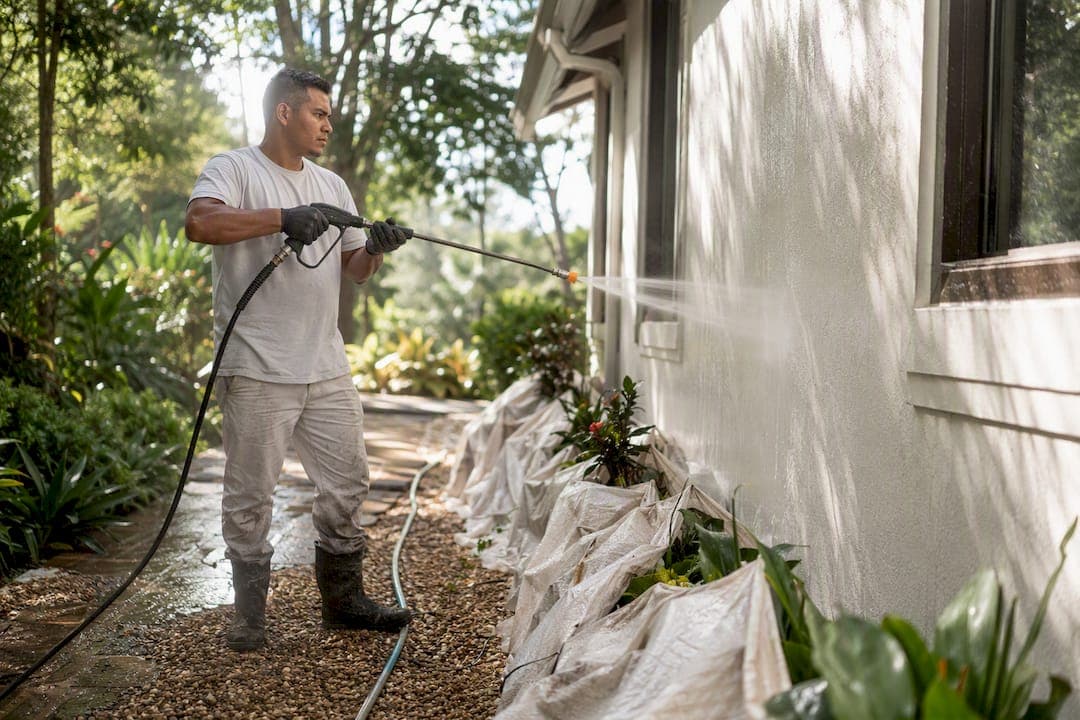
The safe way to pressure wash around landscaping is simple: use a soft-wash setup under 300 PSI, choose a biodegradable or EPA Safer Choice cleaner, and control where the runoff goes. Skip any one of those three, and you risk scorched foliage, discolored blooms, or chemical runoff pooling in your flower beds.
Here's the quick verdict checklist before you pick up a wand:
- Method: Soft-wash (low pressure, chemistry-driven cleaning) instead of blasting with high-pressure force.
- Product type: Biodegradable, biocide-free, or EPA Safer Choice-labeled cleaner.
- Prep, in order: Pre-wet nearby plants, cover the most delicate ones, and block or divert storm drains before you start.
- Trusted examples: Simple Green Oxy Solve, Sunnyside Green Envy House Wash, Safewash, Pro Clean 16, and Vertec Bio / Wash Safe™ formulas all meet the plant-safety and label-transparency bar homeowners should look for.
Key Takeaways
Plant-safe pressure washing works when low-pressure soft-wash technique, biodegradable or EPA Safer Choice cleaners, and runoff containment are used together, not separately.
| Point | Details |
|---|---|
| Choose soft-wash over high pressure | Keep delivered pressure under roughly 300 PSI and let the cleaning chemistry do the work. |
| Pick certified, transparent products | Favor EPA Safer Choice labels, available SDS sheets, and clear dilution instructions. |
| Prep before you spray | Pre-wet plants, cover delicate specimens, and block storm drains before starting. |
| Never let cleaner dry | Rinse promptly, working bottom to top on application and top to bottom on rinse. |
| Hire a pro for high-risk jobs | Roofs, multi-story work, and sites near waterways call for professional soft-wash protocols. |
| Trupainting LLC builds this in | Every exterior job includes plant protection, containment, and post-rinse as standard steps. |
Table of Contents
- What Makes Pressure Washing Plant-Safe
- Plant-Safe Cleaners Worth Considering
- How to Pressure Wash Safely Near Plants, Step by Step
- Protecting Different Plants and Landscaping Features
- Mistakes That Damage Plants and Waterways
- DIY or Call a Professional?
- A Practical Onsite Checklist for Plant-Safe Cleaning
- Balancing Clean Surfaces and Healthy Landscaping
- If You'd Rather Not Risk It, Call In a Soft-Wash Pro
- Frequently Asked Questions
- Sources
What Makes Pressure Washing Plant-Safe
Plant-safe pressure washing comes down to two things working together: low mechanical force on leaf and stem tissue, and non-toxic, biodegradable chemistry that breaks down before it reaches root zones. Neither one alone gets you there. A gentle nozzle with a harsh degreaser still poisons your azaleas. A soft-wash technique with the wrong runoff plan still sends detergent into your vegetable bed.
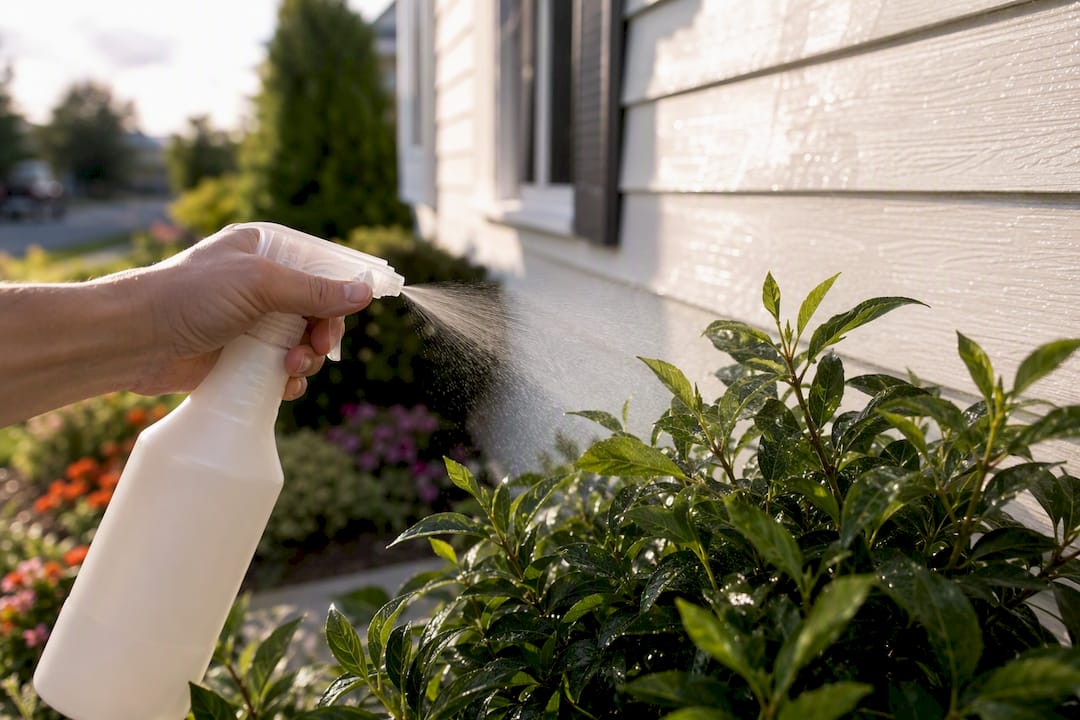
Soft-washing, delivered at under roughly 300 PSI, relies on the cleaning solution to lift algae, mold, and mildew rather than blasting it off with raw force. That distinction matters for your landscaping because soft washing protects surrounding vegetation in a way that high-pressure streams simply cannot, since the water pressure itself does far less of the work.
Before you buy anything, check the label for a few trust signals: EPA Safer Choice certification, an available Safety Data Sheet (SDS), clear dilution instructions, and a biodegradability claim you can verify.
A product that lists its dilution rate, contact time, and rinse instructions on the front label is telling you it was formulated with landscaping in mind. One that only lists warnings is telling you something else.
Plant-Safe Cleaners Worth Considering
Look for peroxide-based or oxygen-bleach formulas, plant-based surfactants, and phosphate-free ingredients. Biocide-free is a bonus feature, not a requirement, but it lowers your margin for error if a plant gets a light overspray.
A few products consistently show up on landscaping-conscious homeowners' shortlists:
- Simple Green Oxy Solve is an oxygen-based outdoor cleaner carrying EPA Safer Choice certification, which signals rigorous review of human and environmental safety.
- Sunnyside Green Envy House Wash is marketed as non-toxic and bleach-free, with the manufacturer recommending you water plants before and after application as an added precaution.
- Safewash bills itself as biodegradable and biocide-free, though its own testing notes delicate flower petals can discolor under direct spray.
- Pro Clean 16 is a plant-based cleaner suited to siding and hardscapes where homeowners want to avoid harsher solvent chemistry.
- Vertec Bio and Wash Safe™ formulas are built around bio-based chemistry designed to preserve surrounding grass and garden beds.
Before buying any of these, confirm the dilution rate matches your surface and that the label carries a "do not let dry" warning. That warning is common across this category for good reason.
Pro Tip: Test any new cleaner on a small, hidden patch of siding or concrete first. Some plant-safe formulas still interact differently with older paint or sealants than they do with bare surfaces.
How to Pressure Wash Safely Near Plants, Step by Step
Getting this right is mostly about sequence. Skipping ahead to the spraying step is where most landscaping damage happens.
- Plan first. Read the cleaner's label and SDS, confirm your dilution ratio, and walk the site to flag sensitive beds.
- Pre-wet everything nearby. Soak the soil and foliage around your work area. Wet plants absorb far less of any stray chemical than dry ones.
- Cover what you can't move. Tarp or plastic-sheet delicate flowers, small shrubs, and container plants directly beside your target surface.
- Set up soft-wash equipment. Keep pressure under 300 PSI at the surface and use a wide 25° to 40° tip. A foam cannon adds dwell time so you need less mechanical force overall, and wider spray angles paired with efficient nozzles cut down on both water use and chemical volume.
- Contain the runoff. Block storm drains, lay catch mats on hardscape edges, or build a quick soil berm to redirect wash water away from beds.
- Apply bottom to top. On vertical surfaces, work upward when applying and rinse top to bottom to avoid streaking and uneven dwell time.
- Never let it dry. Rinse before the solution sets, especially on hot days.
- Rinse the landscaping too. Flush any surrounding plants and soil with clean water to dilute residual chemical exposure.
Done this way, pressure washing can also be a water-saver: proper technique often uses less water than a garden hose because the higher force cleans faster per square foot.
Pro Tip: Keep a garden hose running nearby the entire time you're working. A quick spot-rinse the moment you notice overspray is far more effective than cleanup ten minutes later.
Protecting Different Plants and Landscaping Features
Not every plant handles overspray the same way, so match your caution level to what's actually growing nearby.
- Delicate flowers and perennials: Cover blooms entirely; even biocide-free cleaners can discolor thin petals on direct contact.
- Shrubs and hedges: Angle the nozzle away from foliage and let runoff drain past the root zone, not through it.
- Lawns and turf: Pre-wet heavily and rinse thoroughly after; grass recovers fast from most eco-friendly formulas if flushed promptly.
- Container plants: Move them entirely if possible. It's the simplest form of protection you have.
- Newly planted specimens: Deep-water the roots beforehand and keep pressure well away. New transplants have almost no reserve for chemical or mechanical stress.
- Trees: Avoid direct nozzle contact on bark and surface roots, especially near the base.
Work on cooler, low-wind, overcast days when possible. Midday heat and direct sun stress plants further and cause cleaning solutions to evaporate and concentrate faster than the label anticipates.
Mistakes That Damage Plants and Waterways
Most landscaping damage traces back to a short list of avoidable habits:
- Running high pressure close to garden beds instead of switching to soft-wash mode.
- Letting concentrated cleaner pool or drain directly into root zones.
- Reaching for bleach, caustic drain cleaners, or phosphate-heavy degreasers near any living plant.
- Allowing cleaner to sit and dry on siding or concrete before rinsing.
- Skipping the post-job rinse of nearby foliage and soil.
Blocking storm drains before you start isn't optional in most municipalities, and containment paired with biodegradable detergents meaningfully cuts the pollution load reaching local waterways.
If a product's label has no SDS, no dilution guidance, and a vague VOC warning, that's not a plant-safe cleaner. It's a liability with a spray nozzle attached.
DIY or Call a Professional?
Some jobs are genuinely fine to tackle yourself. Others aren't worth the risk to your landscaping or your roofline.
Weigh these factors before deciding:
- How close are plants, beds, and mature trees to your target surface?
- Is the surface concrete and siding, or does it involve roofing and multiple stories?
- How large is the job, and how much runoff will it generate?
- Does the site slope toward a storm drain, pond, or waterway?
- Are you comfortable dialing in PSI, nozzle angle, and dilution ratios correctly?
Before hiring anyone, ask three questions:
- What plant protection steps do you follow on-site?
- Can you show me the SDS for the cleaners you use?
- What's your containment and post-rinse protocol?
Always bring in a professional for roof cleaning, multi-story exteriors, or any property where runoff drains toward sensitive waterways, since these jobs call for calibrated soft-wash chemistry beyond typical consumer equipment.
A Practical Onsite Checklist for Plant-Safe Cleaning
Every job should follow the same sequence: walk the site first, pre-wet all nearby plants, cover or cordon off anything delicate, block drains, mix cleaner to the exact label dilution, and finish with a full rinse of both surfaces and surrounding soil.

Trupainting LLC applies this checklist on every exterior job in Lake County and Central Florida, treating pressure washing as prep work for lasting paint, not a standalone service, with the same emphasis on premium products and thorough site preparation that defines our three-tier exterior packages.
Balancing Clean Surfaces and Healthy Landscaping
Getting a house wash right means treating plant health as a constraint, not an afterthought. Some stubborn stains, like heavy mildew on north-facing siding, genuinely need stronger chemistry or a calibrated soft-wash pass, and that's fine as long as containment and rinse-back come first. The guiding principle stays the same regardless of the job's difficulty: minimize mechanical force, minimize runoff, and never guess on dilution. If you're unsure whether your landscaping can handle a cleaning job, a quick professional assessment beats an expensive guess.
If You'd Rather Not Risk It, Call In a Soft-Wash Pro
Trupainting LLC treats plant-safe soft-washing as the standard, not an upgrade, on every exterior project across Lake County and Central Florida. Where a DIY job risks guesswork on dilution rates or containment, our crews build that protection into the process from the first site walk.

Every exterior job includes:
- A pre-job site inspection to flag sensitive beds, trees, and turf.
- Physical plant protection and coverage before any cleaner touches a surface.
- EPA Safer Choice or biodegradable cleaning products matched to your siding, deck, or hardscape.
- Runoff containment and a full post-rinse of surfaces and landscaping.
- A follow-up walkthrough to confirm you're satisfied with the result.
If your siding needs a soft-wash before painting, or you just want it done without worrying about your garden beds, request an estimate through our residential exterior services page and we'll scope the job with your landscaping in mind from the start.
Frequently Asked Questions
Is pressure washing safe for plants and gardens? It can be, provided you use soft-wash pressure, a biodegradable or EPA Safer Choice cleaner, and proper containment. High pressure and harsh chemicals together are what cause most plant damage.
What PSI is safe for soft washing near landscaping? Most soft-wash applications stay under 300 PSI at the surface, relying on cleaning chemistry and dwell time rather than mechanical force.
Do I need to cover plants before pressure washing my house? Yes, for anything delicate close to your work area. Pre-wetting the soil and foliage, then covering sensitive blooms and container plants, meaningfully cuts chemical exposure.
Can I use regular bleach for eco-friendly house washing? No. Bleach and caustic degreasers are exactly what plant-safe, biodegradable cleaners like Simple Green Oxy Solve or Safewash are designed to replace.
When should I hire a professional instead of doing it myself? Bring in a pro for roof cleaning, multi-story exteriors, large properties, or any site where runoff could reach a storm drain or waterway.
Sources
- Simple Green | US | Household | Oxy Solve House Siding Cleaner
- Eco-Friendly Pressure Washing: Tools and Tips for Sustainable Cleaning – MTM Hydro Parts
- Sunnyside Green Envy House Wash product page