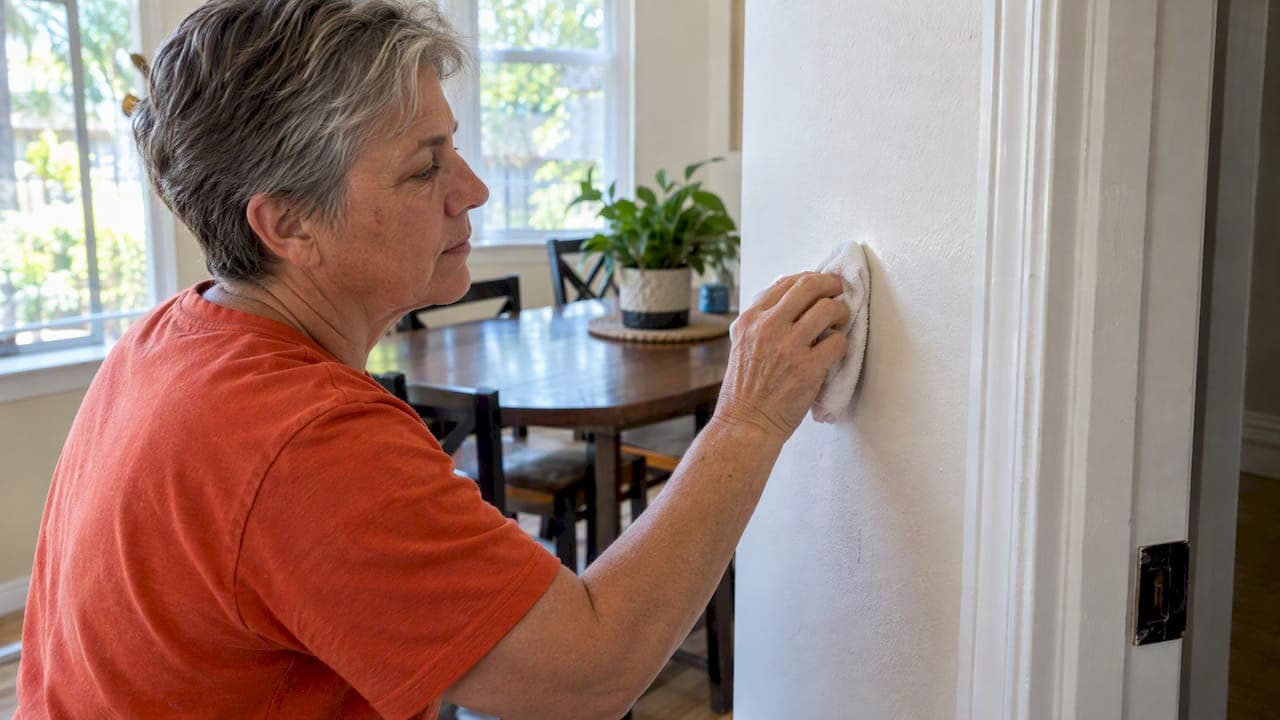
For most latex-painted walls, mix warm water with a mild, dye-free dish soap at about 1 teaspoon per quart, and spot clean rather than scrubbing whole rooms. Test the mix on a hidden patch first, wring your sponge until it barely drips, and skip abrasive pads. Gentle pressure and a light touch protect the sheen you paid for.
TL;DR:
- Satin and glossier finishes tolerate firmer cleaning, while flat, matte, and eggshell paint can burnish easily; vinegar may dull matte and satin.
- Before washing, dust the wall, test the solution in a hidden area, then clean small sections with a barely damp sponge, rinsing and drying each.
- Wait at least two weeks before wet cleaning fresh paint; until then, dust it or use a barely damp cloth, and follow the paint label.
- In homes built before 1978, use damp disposable cloths and a HEPA vacuum, never scrape or dry sand, and hire certified professionals for peeling paint.
- For scuffs, use baking soda paste only after testing and rinse thoroughly; avoid it on dark paint because it can leave a visible white residue.
Table of Contents
- What supplies and cleaning solutions should you have ready?
- How do you wash a painted wall step by step?
- Which spot treatments remove scuffs, grease, ink and other marks?
- When can you clean freshly painted walls?
- How do you clean painted walls safely in an older home?
- How often should you clean your walls?
- A painter's take: shortcuts are what force repainting
- When cleaning won't restore the finish, we can help
- FAQ
- Sources
What supplies and cleaning solutions should you have ready?
The right cleaner depends on your paint sheen, so check that before you grab a bottle. The baseline recipe from Sherwin-Williams is 1 teaspoon of liquid dish soap per quart of warm water, used with a two-bucket method: one bucket for washing, one for rinsing.
Here is what we keep on hand:
- A soft, non-abrasive sponge and a stack of microfiber cloths
- Two buckets, one for soapy water and one for clear rinse water
- A soft-bristled toothbrush for corners and textured spots
- Dry towels to blot each section
- A drop cloth to protect floors and baseboards
Sheen matters more than most people expect. Satin, semi-gloss and gloss form tougher films and tolerate firmer cleaning, while flat, matte and eggshell are porous and burnish easily, so they need very light pressure. Diluted vinegar and baking soda get recommended often, but vinegar can dull matte and satin finishes and baking soda can leave white residue on dark paint. For stubborn marks on durable sheens, choose a suitable cleaner and test it on an inconspicuous spot first.
How do you wash a painted wall step by step?
A repeatable routine keeps you from over-wetting the wall or leaving streaks. This Old House recommends dusting first, working in small sections, and rinsing and drying as you go.
- Dust the wall with a dry microfiber cloth or a vacuum brush attachment so dirt doesn't turn to mud when wet.
- Move furniture away, lay a drop cloth along the baseboard, and remove outlet covers where it is safe to do so.
- Test your soap mix on a hidden spot, such as behind a door or inside a closet. Let it dry and watch for sheen change, softening or lifting paint.
- Dip a sponge in the soapy bucket and wring it until it barely drips.
- Wipe a small section in light, even strokes. Work top to bottom if drips run, or bottom to top if you want to avoid streaks running down a dirty wall.
- Wipe the same section with a second sponge dipped in clear rinse water to lift soap residue.
- Blot dry with a clean towel right away.
- Move to the next section, overlapping slightly so you don't leave lines.
Pro Tip: Change your rinse water as soon as it turns cloudy. Dirty rinse water just repaints the wall with grime.
If a mark doesn't budge after a gentle pass or two, stop. More pressure won't fix it and can polish a shiny patch into a flat wall. Switch to a spot treatment instead.
Which spot treatments remove scuffs, grease, ink and other marks?
Spot cleaning is often safer than washing a whole room, because it limits how much water and rubbing the paint takes. Always test first, and rinse each spot with a damp cloth when you finish.
- Scuffs and smudges: Make a paste of baking soda and water, rub it on very gently with a damp cloth, then rinse well so no residue stays behind. Skip this on dark paint, where the white film shows.
- Grease: Use a grease-cutting dish soap in warm water and a microfiber cloth, and repeat as needed. Good Housekeeping's cleaning pros also advise against ammonia or vinegar on finished wood, so keep those away from painted cabinets and trim too. Dry thoroughly afterward.
- Ink and dye: Test any spot treatment on an inconspicuous area first, then blot gently with a damp cloth.
- Crayon and wine: Start with the soap solution and a soft cloth. Blot wine stains gently rather than rubbing.
- Magic eraser: Test it first and use it lightly. On flat or matte finishes, use caution and test it on an inconspicuous spot first.
When can you clean freshly painted walls?
Dry paint and cured paint are not the same thing. Paint can feel dry in hours but takes much longer to harden fully, and wet-cleaning too soon can lift or mar the film. This Old House suggests waiting at least two weeks before wet-cleaning new walls when possible.

Until then, stick to dusting and very gentle spot wiping with a barely damp cloth. If you aren't sure what paint is on the wall or when it went up, favor the gentlest method and test first. The paint can's label or the manufacturer's instructions always win over a general rule of thumb.
How do you clean painted walls safely in an older home?
Homes built before 1978 may have lead-based paint, so cleaning habits matter. The EPA says to assume older paint may contain lead and to avoid abrasive methods that create dust.
- Never dry sand or scrape painted surfaces in an older home.
- Use damp disposable cloths instead of dry dusters.
- Use a HEPA vacuum for dust, since a standard vacuum can spread fine particles.
- When work disturbs paint, follow the cleaning verification steps in the EPA's lead-safe guidance.
- If paint is peeling or deteriorating, get it tested and hire certified professionals rather than handling it yourself.
The EPA advises wet-cleaning methods, HEPA vacuuming and cleaning verification whenever paint is disturbed, because minimizing dust is the best way to prevent lead exposure.
Painters use similar containment habits on the job, which we explain in how painters clean up after a job.
How often should you clean your walls?
A simple rhythm keeps paint looking good without wearing it down.
- Spot clean marks as they appear, before they set.
- Give most rooms a gentle full wash about once a year.
- In kitchens and baths, clean as needed, depending on grease and steam.
- Dust walls regularly, since less dust means less scrubbing later.
Prompt stain treatment and regular dusting cut down on wear, and that stretches the time between repaints. Doors and trim collect fingerprints too, and this guide to cleaning interior doors from One Day Doors & Closets is a helpful companion.
A painter's take: shortcuts are what force repainting
In our experience, the walls that need repainting early are rarely the ones that got dirty. They're the ones that got scrubbed too hard, too wet or with the wrong product. Gentle, consistent care keeps a finish intact, and a finish that is intact is one you can still touch up cleanly. When cleaning changes the sheen or the paint is failing, repair or refinishing is the better long-term investment than another round of scrubbing. Keep notes or photos of trouble spots, and if stains keep returning, have someone inspect the wall, because the cause may be moisture or a failing surface rather than dirt.

When cleaning won't restore the finish, we can help
If stains, burnished patches or peeling paint stay put after careful cleaning, it's time to fix the surface instead of fighting it. We handle the prep that makes a new finish last, so you can avoid repainting sooner than necessary.

- Our residential interior painting covers walls that need repair and a fresh coat
- Our cabinet refinishing restores greasy, worn cabinet finishes
- Drywall repair and specialty coatings are part of our service packages
When you're ready, schedule an on-site estimate with us and we'll tell you straight whether cleaning, touch-ups or a full repaint makes sense.
FAQ
What's the best thing to use to clean walls before painting?
A mild solution of warm water and dish soap works for most walls. Wipe, rinse with clean water and let the wall dry fully before you paint. Our wall prep checklist covers the rest of the prep.
What is a good wall cleaning liquid?
Warm water with a small amount of mild, dye-free dish soap is a safe choice for most latex paints. A diluted all-purpose cleaner such as Simple Green also works if you test it first and wipe away the residue.
How do you clean walls with a vacuum cleaner?
Use the soft brush attachment and move lightly over the wall to lift loose dust. In an older home, use a HEPA-filter vacuum for dust.
Can you use vinegar on painted walls?
Vinegar is acidic and can dull matte and satin finishes, so dilute it heavily and test a hidden spot first, as Sherwin-Williams cautions. Dish soap and water is the safer default.
Sources
- How to Clean Painted Walls | Sherwin-Williams
- How to Make Your Home Lead-Safe | US EPA
- How to Clean Painted Walls
- How to Clean Greasy Kitchen Cabinets, According to Cleaning Pros