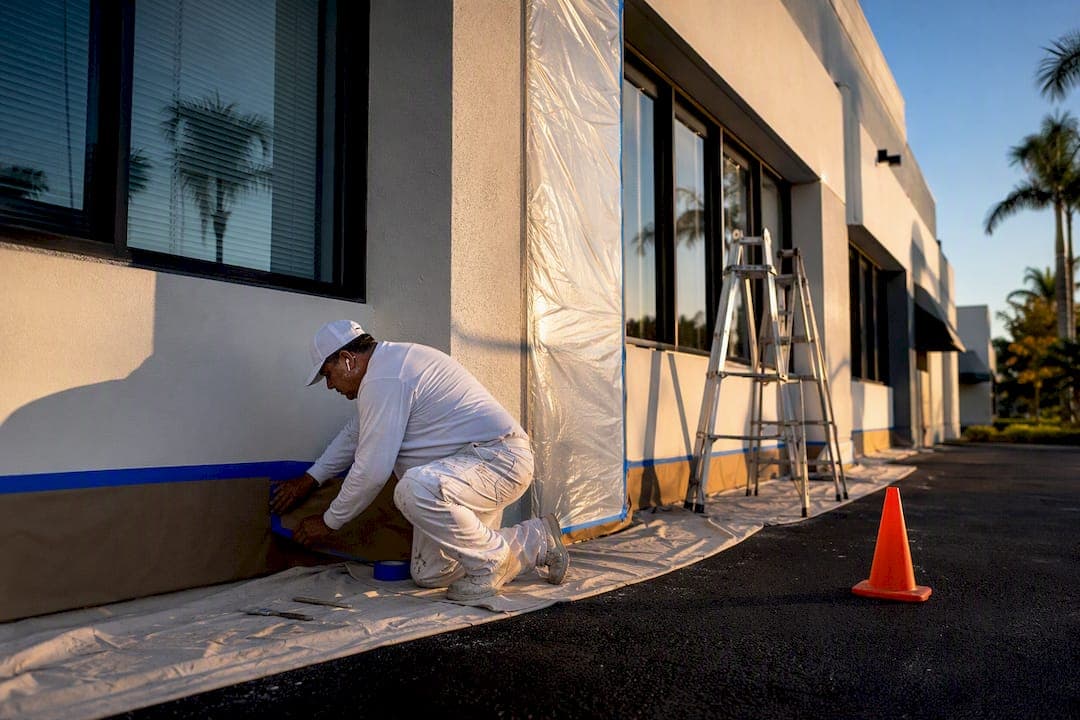
Most commercial exteriors need a fresh coat every 5 to 10 years, and most interiors fall between 2 and 7 years depending on traffic. That range moves based on four things: sun and weather exposure, the substrate under the paint, how much foot traffic a space sees, and how well the last job was prepped. The sections below break those ranges down by space type and show you how to build a schedule instead of guessing.
TL;DR:
- Repaint intervals vary by space type and exposure, with exteriors needing every 5 to 10 years and high-traffic interiors every 2 to 4 years.
- Climate, sun exposure, substrate material, and last job prep significantly influence whether a building needs earlier or later repainting.
- Regular inspections every six months help catch signs like chalking, fading, cracking, or biological growth before costly repairs become urgent.
- Phasing the repaint into zones and scheduling outside peak weather seasons minimizes business disruption and extends coating life.
- Condition-based scheduling can save money over time by avoiding premature or delayed repainting, and inspections should guide timely refreshes.
Table of Contents
- What Is the Typical Commercial Repaint Frequency?
- Which Factors Push a Repaint Schedule Earlier or Later?
- How Often Should Different Spaces Be Repainted?
- What Signs Mean It's Time to Repaint?
- How Do You Phase a Commercial Repaint Without Shutting Down?
- How Do Contractors Decide When a Building Needs Repainting?
- How Do Environmental Rules Affect Repaint Schedules?
- Why Condition-Based Scheduling Beats the Calendar
- Plan Your Next Commercial Repaint With Tru Painting
- Sources
- FAQ
What Is the Typical Commercial Repaint Frequency?
Exterior walls generally hold up for 5 to 10 years before they need a full recoat, though contractor guidance puts the outer edge of that range at 7 to 12 years for buildings with moderate exposure and quality coatings. South and west facing walls in Florida, or anywhere with intense year round UV, tend to require repainting more frequently. Sheltered brick under an overhang can stretch past 12 years before it needs attention.
Interiors follow a different clock, one set by hands and shopping carts rather than weather. High-traffic commercial interiors typically need repainting every 2 to 4 years, while standard office space holds for 4 to 7 years. Low-use storage rooms and back offices can often go 7 to 10 years without complaint.
Material matters as much as location. Wood siding and trim absorb moisture and swell, so they usually need attention sooner than brick, stucco, or coated metal. Metal doors and railings near entrances take a beating from hands, carts, and weather at ground level, which is why they often need touch-ups years before the rest of the building does. Stucco, common on commercial builds across Central Florida, handles heat well but shows hairline cracking that needs monitoring between full jobs.
Which Factors Push a Repaint Schedule Earlier or Later?
A generic timeline is a starting point, not a plan. Your actual schedule depends on how your specific building scores on a handful of variables.
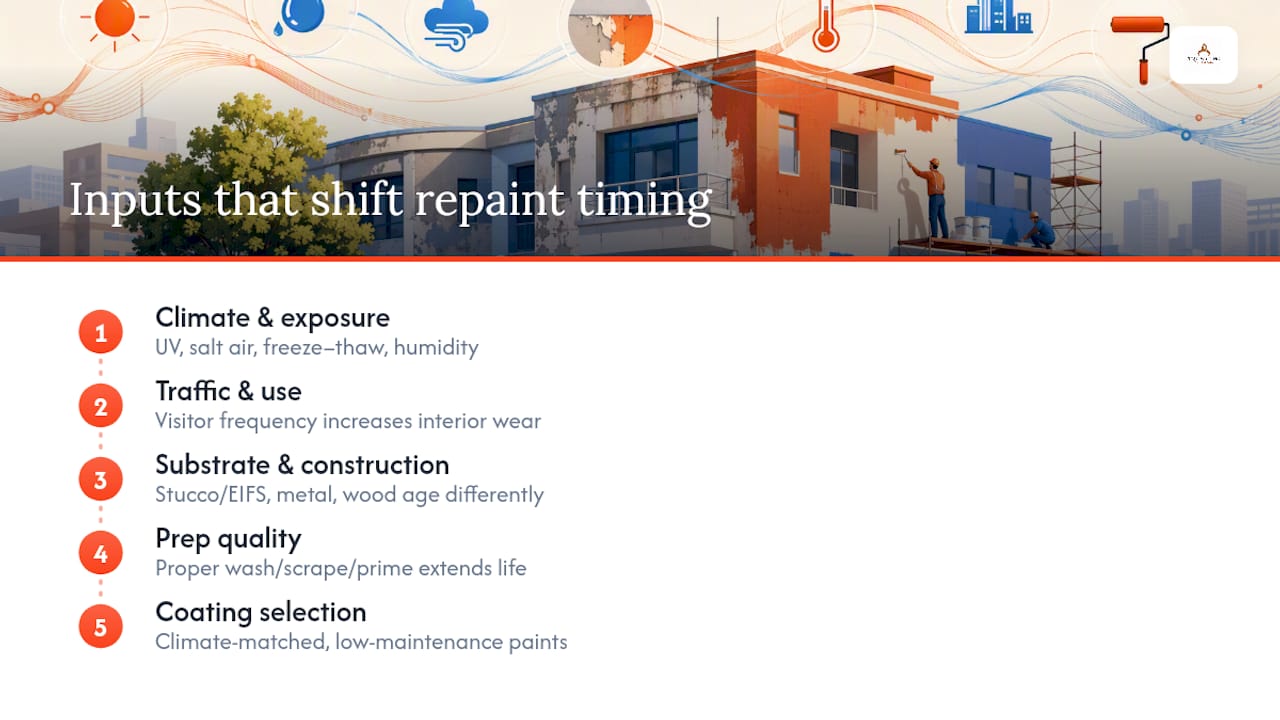
Climate and exposure drive the biggest swings. UV breaks down resin binders and causes fading and chalking. Coastal salt air accelerates corrosion on metal and eats into masonry joints. Freeze-thaw cycles in cooler climates crack film that Florida buildings never have to deal with, while humidity here creates its own problem: mildew and biological growth on north-facing or shaded walls.
Traffic and use determine interior wear far more than square footage does. A lobby with 500 daily visitors needs attention long before a records room with two.
Substrate and construction change how paint ages even under identical conditions. Stucco and EIFS need flexible coatings that move with hairline cracking. Metal needs rust-inhibiting primers or corrosion sets in fast. Wood needs breathable systems that won't trap moisture underneath.
Prep quality on the last job might matter most of all. A rushed job over dirty, chalky substrate fails in half the time of one where the crew pressure washed, scraped, and primed properly. A tool like low maintenance exterior paint selected for your climate also stretches the interval considerably.
How Often Should Different Spaces Be Repainted?
Not every part of your property ages at the same rate, and treating it that way wastes budget on areas that don't need it while neglecting the ones that do. Here's a working baseline by space type:
- Retail frontage and restaurant exteriors: every 2 to 5 years, since visibility and heavy cleaning wear down finishes fast in spaces where curb appeal drives foot traffic.
- Lobbies and main entrances: every 3 to 5 years, given constant hand contact and daily cleaning chemicals.
- Corridors and stairwells: every 4 to 6 years in offices; closer to 2 to 4 years in healthcare or education settings with heavier cleaning protocols.
- Healthcare facilities: every 2 to 4 years for patient-facing areas, where sanitization standards demand a cleanable, unblemished surface.
- Industrial and warehouse interiors: every 5 to 8 years, unless chemical exposure or forklift traffic shortens that window.
- Exposed exterior elevations (south/west facing): every 5 to 7 years.
- Sheltered exterior walls: 8 to 12 years, sometimes longer under deep overhangs.
Decide whole-building versus zone-by-zone based on how uneven the wear actually is. If your south wall is chalking badly while the north wall looks fine, there's no reason to repaint both on the same calendar. Prioritize by visibility to customers, impact on tenants, and any safety issue like exposed substrate or failing caulk around windows.
What Signs Mean It's Time to Repaint?
Twice-yearly exterior walks, ideally in spring and fall, catch problems while they're still cheap to fix. Routine seasonal inspections let owners plan proactively instead of reacting to a tenant complaint or a failed lease inspection. Interior high-traffic zones deserve at least an annual look.
Watch for these signals:
- Chalking — a powdery residue on your hand after touching the wall means the binder is breaking down.
- Fading or color shift — especially uneven fading between sun-exposed and shaded sections.
- Peeling or blistering — usually a moisture or adhesion failure, not just age.
- Cracking — hairline cracks in stucco or caulk joints let water behind the coating.
- Biological growth — mildew or algae streaking, common on shaded Florida walls.
- Rust bleed or exposed substrate — on metal railings, doors, or flashing.
Interior spot damage like scuffs and small stains often only need touch-ups. A full recoat becomes the right call once film build-up affects cleanability, especially in healthcare or food service areas where surfaces must pass sanitation standards.
Pro Tip: Keep a phone photo log of your worst-performing wall every six months. Side-by-side comparisons make chalking and fading obvious long before they're visible to the naked eye in the moment.
How Do You Phase a Commercial Repaint Without Shutting Down?
Divide the property into zones based on exposure, tenant schedules, and how visible each area is to customers. Phasing a project into manageable zones controls time, budget, and tenant disruption far better than trying to tackle an entire building in one push. Phase size should match what a crew can prep, paint, and cure without leaving a section half-finished over a weekend.
Scheduling around business hours matters as much as the zoning plan itself. After-hours work, weekends, and rolling daytime windows all minimize the disruption tenants and customers actually notice. Retail centers often do best with early morning starts before doors open; medical offices usually need weekend windows.
Before any crew touches a wall, prep needs to happen: pressure washing to strip dirt and chalk, caulk and drywall repairs, and containment around active tenant spaces. A full exterior repaint scope should spell all of this out before you sign off on a bid. Build in a quality check between each phase rather than one final walkthrough at the end. That catches thin coats or missed spots while the crew is still on-site, not months later when a callback costs everyone more.
Timing also matters seasonally. Coastal properties should plan exterior work around a hurricane season painting schedule to avoid starting a job that weather interrupts halfway through.
How Do Contractors Decide When a Building Needs Repainting?
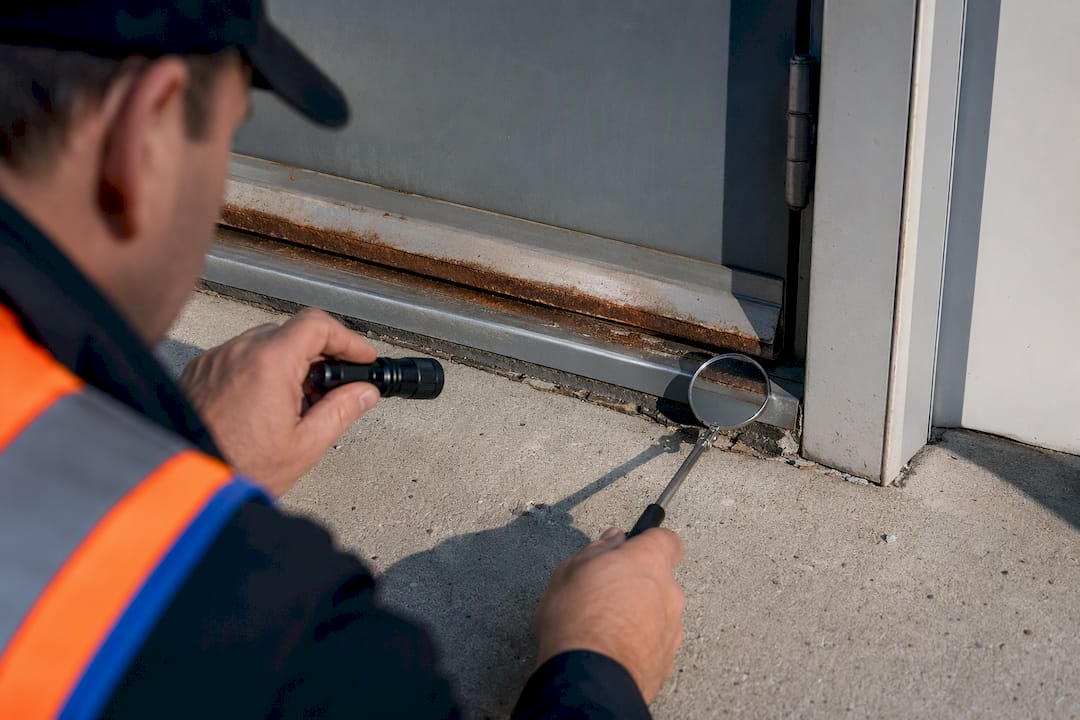
A contractor's inspection walk isn't guesswork. It's a check against known failure points: chalking on south walls, caulk gaps around trim, rust at metal thresholds. That inspection produces a recommended interval, not a calendar guess.
The recommendation can be structured into three tiers: Cosmetic Refresh for buildings that mainly need surface renewal, Enhanced Prep & Durability for properties facing real UV or moisture stress, and Maximum Prep & Protection for the most exposed elevations or highest-traffic interiors. Each tier changes the prep depth and coating system used, which directly changes how long the job lasts before it needs revisiting.
How Do Environmental Rules Affect Repaint Schedules?
Paint regulation in the United States mostly centers on volatile organic compound (VOC) limits, which vary by state and by product category. Low-VOC and zero-VOC coatings have become standard on most commercial jobs, partly by regulation and partly because tenants and employees increasingly expect them in occupied buildings.
Older commercial properties, particularly anything painted before 1978, carry a separate consideration: lead-based paint. Disturbing old paint during scraping or sanding triggers federal Renovation, Repair, and Painting rule requirements, and a qualified contractor should always test before starting surface prep on a pre-1978 building.
Weather windows matter too, and not just for scheduling convenience. Most exterior coatings need a minimum temperature and humidity range to cure properly, which is why Florida contractors avoid painting during the peak of rainy season regardless of how badly a wall needs attention. Runoff from pressure washing also falls under local stormwater rules in many municipalities, since wash water carrying old paint chips and cleaning chemicals can't simply drain into a storm sewer untreated. A commercial pressure washing service familiar with local containment requirements handles this correctly as a matter of course.
None of this should scare you off a repaint. It just means the contractor you hire needs to know the rules for your building's age and your municipality, not just how to run a sprayer.
Why Condition-Based Scheduling Beats the Calendar
Calendar-based repainting wastes money twice: once when you repaint a wall that had years of life left, and again when you wait too long on the one that didn't. The rule-of-thumb ranges in this article are a planning tool, not a deadline. Walk your property twice a year, trust what the south wall tells you over what the spreadsheet says, and phase the work so one bad elevation doesn't force a full building shutdown. Partner with a contractor who inspects before they quote, and you'll spend less over ten years than the owner who waits for peeling paint to force the decision.
— Kyle
Plan Your Next Commercial Repaint With Tru Painting
Property owners can get an inspection-first schedule built around their building's actual condition, not a generic industry average.
Whether you need a full commercial exterior repaint after a decade of Florida sun or a phased commercial interior refresh that keeps tenants working through the job, our three-tier packages, Cosmetic Refresh, Enhanced Prep & Durability, and Maximum Prep & Protection, let you match your investment to what your building actually needs. Every job starts with thorough prep and premium products, backed by clear communication about timelines and workmanship. Ready to get a schedule built around your property instead of a guess? Request your estimate today and find out where your building really stands.
Sources
- When to Repaint a Commercial Building: Signs Your Property Needs Repainting | Moorhouse Blog
- Commercial Repainting Maintenance Guide - JXF Painting Service
- How to Phase a Commercial Painting Project: A Step-by-Step Plan for Building Owners - J&B Painting
- How Commercial Painting Is Scheduled to Minimize Disruption | CertaPro
FAQ
How Often Are You Supposed to Repaint a Commercial Building?
Exteriors typically need repainting every 5 to 10 years and interiors every 2 to 7 years, with the exact interval set by sun exposure, substrate, and traffic rather than a fixed calendar date.
How Much Should You Charge to Paint 1,000 Square Feet?
Commercial painting costs vary widely by prep needs, coating system, and access, so an accurate number comes from an on-site quote rather than a flat rate. Estimates should be based on the actual condition and scope of each property.
Is Commercial Painting Profitable for Property Owners to Maintain Regularly?
Yes. Regular, condition-based repainting protects the substrate underneath, which avoids far more expensive structural repairs down the line and preserves the property's resale and lease value.
How Do You Estimate a Commercial Paint Job?
Estimating starts with an inspection covering substrate condition, square footage, prep requirements like pressure washing or drywall repair, and access constraints, then applies a coating system suited to the exposure level of each elevation or interior zone.
How Often Should Exterior Repaints Happen in Hot, Sunny Climates?
Buildings with heavy year-round UV exposure, like much of Central Florida, tend to fall at the shorter end of the 5 to 10 year exterior range, especially on south and west facing walls.