
Assume you need HOA or ARC approval before you touch your exterior color, unless your CC&Rs specifically exempt repainting the exact existing shade. The fastest path through the process is simple: pick a color from a preapproved palette, write down the exact manufacturer, code, and sheen, then submit a complete packet and wait for dated, written approval before you buy a single gallon.
TL;DR:
- Most communities require approval for exterior paint color changes unless repainting with the exact same approved color and finish.
- A complete submission should include detailed brand, color code, sheen, placement diagrams, photos, and physical or digital paint samples.
- Review cycles typically take 14 to 60 days, and approvals often expire within six months to a year, requiring timely scheduling.
- Denials usually stem from outside palette colors, missing documentation, or unclear application details, which can be mitigated with professional mockups and precise information.
- Using HOA-referenced approved color palettes from Sherwin-Williams, Behr, or Benjamin Moore streamlines approval and reduces revision needs.
Table of Contents
- What Is HOA Paint Color Approval and Who Needs It?
- Quick Checklist: What to Prepare Before You Submit
- How Do You Submit an ARC Color Change Request?
- How Long Does HOA Paint Approval Take?
- Why Do HOA Paint Requests Get Denied?
- Which Approved Paint Colors for HOA Communities Work Best?
- What If the ARC Denies Your Paint Color Request?
- How a Painter Preps a Submission the ARC Won't Kick Back
- How Tru Painting Can Help With Your Approval Packet
- Sources
- FAQ
What Is HOA Paint Color Approval and Who Needs It?
HOA paint color approval is the formal review process a homeowners association or architectural review committee (ARC) uses to sign off on exterior color changes before a homeowner paints. If your community has CC&Rs (covenants, conditions, and restrictions) governing exterior appearance, you're almost certainly covered, even if you're just refreshing a color that looks similar to what's already there.
Most guidelines only exempt like-for-like repainting when you're using the identical, previously approved color, code, and sheen. Anything else, including a slightly different white or a new front door accent, typically triggers a fresh HOA approval requirement. Skip that step and you risk a violation notice, a forced repaint, or worse, a legal order to comply.
Quick Checklist: What to Prepare Before You Submit
A little prep work now saves weeks of back and forth later. Before you fill out a single form, gather these items:
- Your community's CC&Rs and the official ARC submission form (check the HOA portal or ask your property manager).
- Exact body, trim, and accent selections, each with brand, product line, color code, and sheen.
- A placement diagram showing which color goes where, plus current photos of your house and the homes on either side.
- Physical paint chips, labeled by surface, and at least one digital mockup or rendering.
- Contractor information, product data sheets, and any deposit the association requires with your application.
Pro Tip: Photograph your house at midday in natural light. Paint chips under indoor lighting almost never match how a color reads on stucco or siding, and ARC reviewers notice the difference.
How Do You Submit an ARC Color Change Request?
Getting your application approved the first time comes down to sequence. Follow these steps in order:
- Locate your governing documents. Your CC&Rs, architectural guidelines, and submission forms usually live on the HOA's resident portal, with the property management company, or on file at the county recorder's office if the community is older or self-managed.
- Classify the project. Determine whether you're repainting the identical approved color (often exempt) or introducing a new scheme (requires full review). When in doubt, submit for review. It's cheaper than a repaint order.
- Complete every requested field. Manufacturer, exact color code, product line, sheen, and which surface each color covers (body, trim, garage door, shutters). Some associations also ask for your contractor's license number.
- Deliver samples the way the ARC prefers. Some committees want physical chips mailed or dropped off; others accept digital submissions through a portal. Either way, keep dated copies of everything you send and everything they send back.
Skipping a field is the single most common reason applications bounce back for revisions, according to a step-by-step breakdown of the HOA color approval process.
How Long Does HOA Paint Approval Take?
Review timelines vary by community, but most ARC committees meet on a cycle of 14 to 30 days, with a written decision typically landing within 30 to 60 days of submission. Some governing documents include an automatic approval clause if the board doesn't respond within a specified timeframe, though you should confirm approval in writing. Don't count on that silently working in your favor. Call the property manager and confirm in writing that your project was actually approved, not just overlooked.
Each revision round can reset the review timeline, potentially adding several weeks depending on the requested changes. Many approvals also carry an expiration date, often six months to a year, so don't sit on a green light too long before booking your painter.
Why Do HOA Paint Requests Get Denied?
Most denials trace back to a handful of avoidable mistakes. Colors that fall outside the approved palette or exceed the light reflectance value (LRV) limits are the top offender, followed closely by incomplete paperwork missing a code, sheen, or diagram.
- Choosing a color that's technically close to an approved shade but outside its LRV range.
- Submitting a color name without the manufacturer, product line, or sheen attached.
- Duplicating a color already used on a neighboring or adjacent home, which many CC&Rs prohibit.
- Leaving out a placement diagram, so reviewers can't tell where each color goes.
The fix is straightforward: use a visualizer or rendering tool to generate a realistic mockup, list the exact brand, code, and sheen for every surface, and walk your street before submitting so you know how your choice sits next to your neighbors. Applications that include a professional-quality rendering see fewer revision requests than those with a paint chip alone.
Pro Tip: Sheen changes how a color reads in sunlight. A flat and a satin version of the "same" code can look like two different colors on stucco, so always specify sheen on the form, not just in conversation.
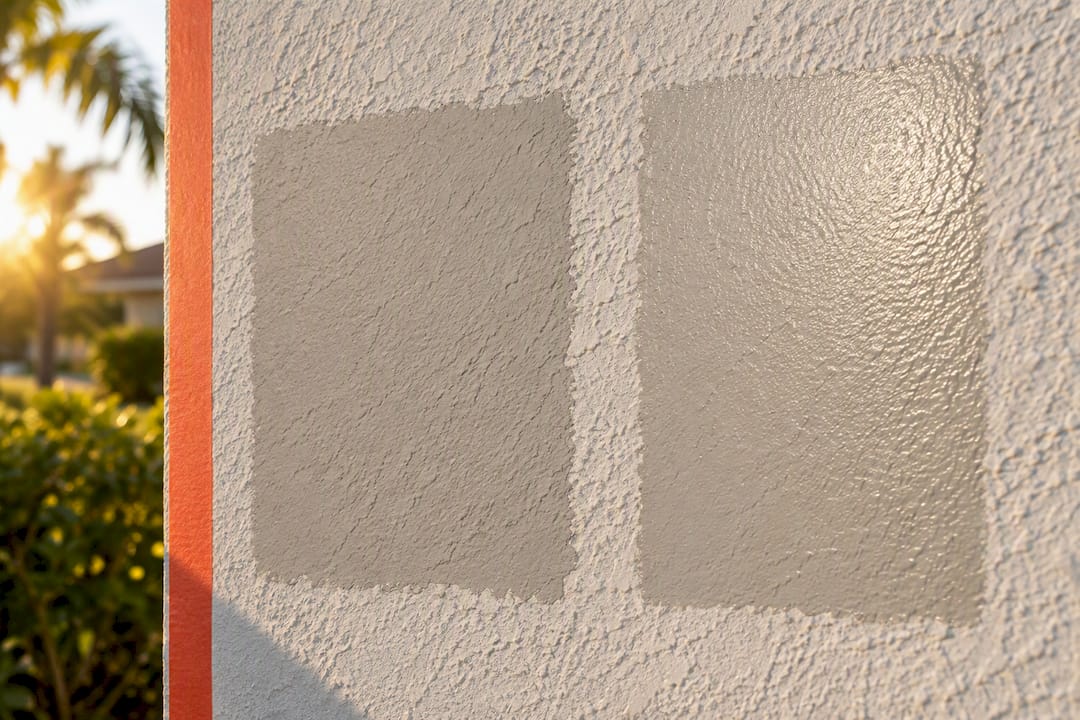
Which Approved Paint Colors for HOA Communities Work Best?
Many HOAs maintain, or reference, an existing preapproved palette, and using one is usually your quickest route to a signed-off application. Sherwin-Williams keeps a dedicated HOA Color Archive that a large number of associations link directly in their guidelines, and Behr offers a comparable searchable HOA Color Service homeowners can browse by community. Benjamin Moore colors show up frequently, too, especially in older or custom-built communities where the original builder specified that brand.
- LRV, or light reflectance value, measures how much light a color bounces back; many ARC guidelines cap acceptable base colors within a specific LRV band pulled straight from a manufacturer's fan deck.
- Trim, garage doors, and shutters often follow separate rules from body color, so an approved body shade doesn't guarantee automatic approval for every other surface.
- Always list the manufacturer, exact code, product line, and sheen together. Color names repeat across brands, and sheen alone can shift how a color looks in person.
- Accent colors, especially front doors, often get more flexibility than body colors. Check our front door paint color picks for ideas that tend to clear review, and our partner's guide to interior door color pairing if you're coordinating indoor and outdoor palettes at once.
What If the ARC Denies Your Paint Color Request?
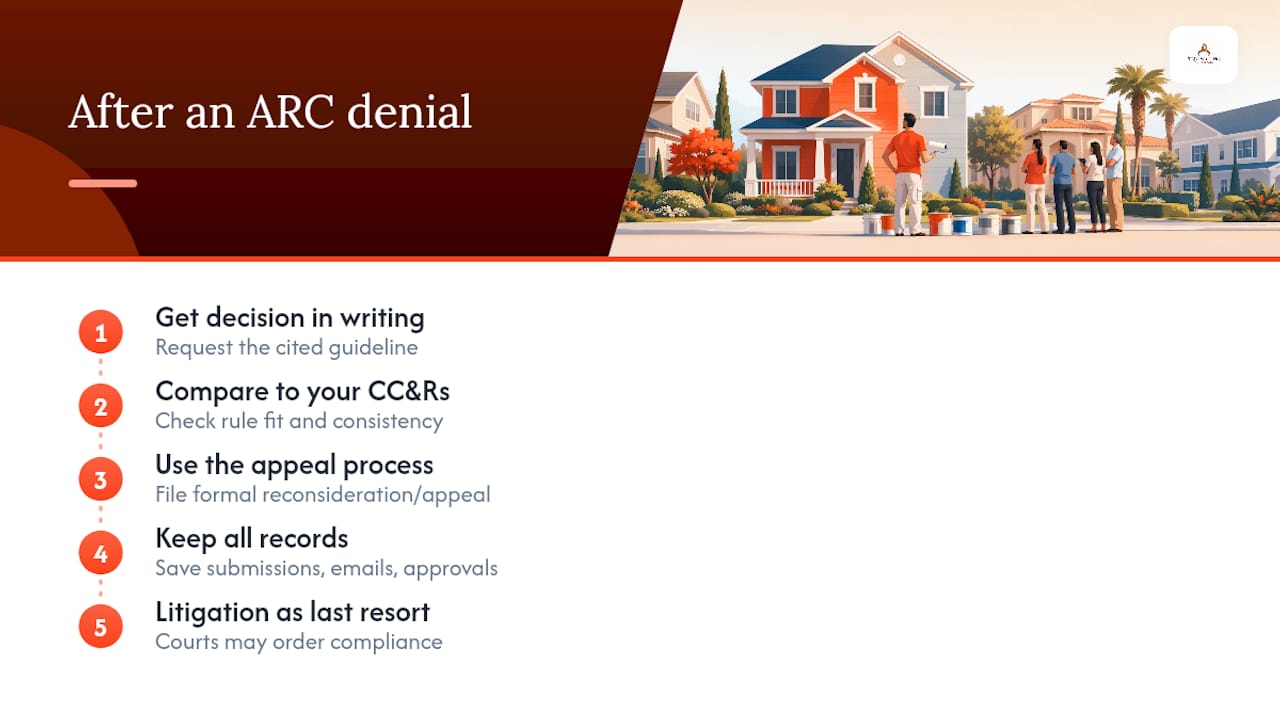
A denial isn't the end of the road. Start by requesting the decision in writing, along with the specific guideline the board cited. Compare that language against your CC&Rs; sometimes the cited rule doesn't actually match your situation, or the board applied it inconsistently compared to a neighbor's approved project.
From there, follow your association's formal reconsideration or appeal process before considering anything more adversarial. Courts have upheld an association's right to enforce approval requirements and have ordered homeowners to repaint or comply when they skipped the process entirely, so working the appeal channel first is almost always the smarter move, as one appellate ruling illustrates. Keep every submission, email, and dated approval letter. That paperwork protects you during future disputes and matters again at resale.
How a Painter Preps a Submission the ARC Won't Kick Back
A contractor who's done this before builds your packet the way boards actually want to see it: labeled chips by surface, manufacturer spec sheets, a sheen recommendation suited to Florida sun and humidity, a placement diagram, and a realistic mockup instead of a lone swatch. That level of detail is exactly what reduces revision requests at the committee level.
Written approval tied to your street address, kept on file, matters more than most homeowners realize. It's your proof of record if the HOA later updates its palette or a dispute comes up at resale.
— Kyle
How Tru Painting Can Help With Your Approval Packet
Some professional painting contractors offer to prepare ARC submission packets for you, including labeled samples, mockups, and product data sheets that align with common board expectations.

Once you have written approval in hand, our three-tier packages, from a Cosmetic Refresh up through Maximum Prep & Protection, let you choose the level of prep and durability that fits your home and your budget. If you'd rather start with the exterior painting itself, our residential exterior painting page walks through what's included. Reach out through Trupaintingllcfl for a free consultation, and we'll help you review your packet before it ever reaches the committee.
Sources
Review Florida's statutory limits on association architectural authority, the Sherwin-Williams HOA Color Archive, Behr's HOA Color Service, and your own community's CC&Rs before finalizing any color choice.
- What types of exterior changes typically require HOA approval? | HOAstart
- HOA color change approval process: step-by-step guide | FacadeColorizer
- Court of Appeals decision on failure to obtain ARC approval (2022) | Justia
FAQ
Can an HOA Tell You What Color to Paint Your House?
Yes. Most HOAs have the legal authority to approve or deny exterior color changes through their CC&Rs and architectural guidelines, and that authority is generally limited to what's stated or reasonably inferred in the declaration. Associations still have to apply their standards reasonably and consistently across homeowners.
What Are the HOA Paint Color Rules?
Rules vary by community, but nearly all require a completed application listing the manufacturer, exact color code, product line, and sheen for every exterior surface. Many boards also require a placement diagram and reference a preapproved palette to speed up review.
What Sherwin-Williams Colors Are HOA-Approved for Exterior Paint?
There's no single universal list. Sherwin-Williams maintains an HOA Color Archive that many associations link to directly, but the specific approved shades depend on your community's own guidelines. Check your HOA's documents first, then cross-reference against the archive.
Do I Need Permission From My HOA to Paint My House?
In most communities, yes, even if you're just changing an accent color or the front door. The main exception is repainting the exact same color already on file, which some governing documents exempt from review. When your CC&Rs don't clearly say so, submit for approval anyway rather than risk a violation.