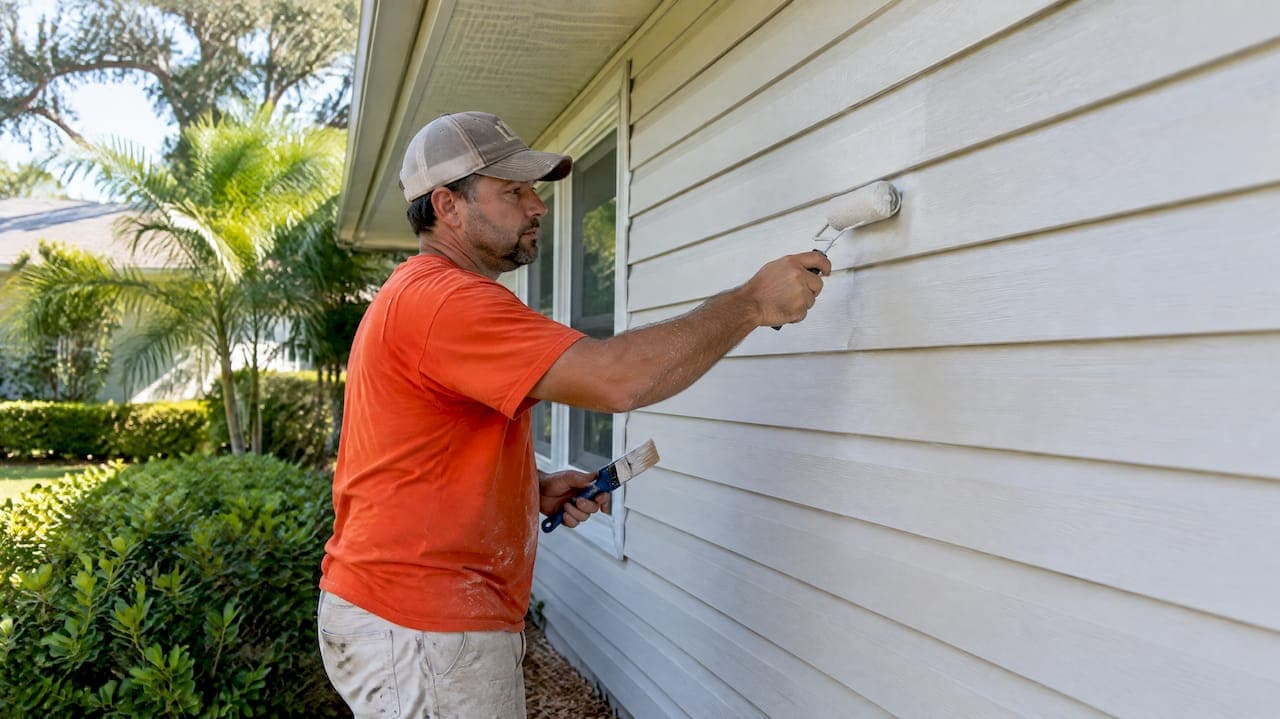
Yes, you can paint most vinyl siding in Florida, but only under a few firm conditions. You need vinyl-safe paint, careful surface prep, and a color choice that will not add extra heat load to the panels. Skip any of these, and you risk peeling, warping, or a finish that fades within a couple of seasons. If your siding is already warped, badly cracked, or your manufacturer's warranty prohibits painting, get a professional assessment before you buy a single gallon.
TL;DR:
- Darker colors increase heat absorption, risking vinyl warping, especially on south and west-facing walls, unless rated for dark-application on vinyl.
- Use vinyl-safe, UV-resistant acrylic or urethane-acrylic paint, and verify products are labeled for vinyl siding to avoid peeling or fading.
- Proper cleaning with mild detergent and low-pressure washing is essential to ensure paint bonds well and to prevent mildew or chalk buildup.
- Primer is generally unnecessary on clean, sound siding, but is recommended for chalky surfaces, repaired areas, or significant color changes.
- Hiring professionals is advisable for extensive repairs, complex access, or if the siding shows severe damage or warping, ensuring a durable, warrantied finish.
Table of Contents
- Which paint types actually work on vinyl siding
- Why color choice carries real heat risk in Florida
- Prep and cleaning: the checklist every Florida paint job needs
- Do you need a primer before painting vinyl siding?
- Getting the application right in Florida heat and humidity
- How long will the paint last, and what maintenance keeps it looking good
- What painting vinyl siding actually costs
- How Tru Painting approaches vinyl siding projects
- Repaint or replace: our honest take
- Ready for a professional estimate on your vinyl siding
- FAQ
- Sources
Which paint types actually work on vinyl siding
"Vinyl-safe" is not a marketing phrase. Rigid paint films crack under that movement. UV-resistant pigments matter just as much here, since central Florida sun exposure is intense for most of the year and ordinary pigments chalk and fade fast.

Manufacturer guidance from Benjamin Moore points homeowners toward vinyl-friendly paint lines and specific color families built for this exact problem, and it also flags something many people skip: checking your siding manufacturer's warranty before painting, since some warranties are voided by certain coatings or colors.
Before you commit to a product, pull the technical data sheet and confirm it is labeled for vinyl application.
- Look for "100% acrylic" or "urethane-acrylic" on the label, not just "exterior paint."
- Confirm the product lists UV resistance and flexibility, not just coverage and dry time.
- Check whether the brand offers a paint-and-primer-in-one option or recommends a separate primer step for your siding's condition.
Pro Tip: Call the paint manufacturer's technical support line with your siding brand name in hand. A five-minute call can save you a full repaint.
Why color choice carries real heat risk in Florida
Darker colors absorb more heat, and vinyl softens at high temperatures. That is not a design preference, it is a material limit. NIST technical testing on vinyl siding weathering, including exposure at a Florida outdoor test site, shows that heat and UV cycling degrade vinyl's mechanical properties over time, and that reflected sunlight combined with high surface temperatures has caused warping in real installations.
The safe rule: do not paint vinyl siding a color darker than its original shade unless the product is explicitly rated for dark-color use on vinyl.
- Test your chosen color on a small, unseen panel section first.
- Watch that test patch through a full hot afternoon, checking for softening, bubbling, or visible distortion.
- If you want a darker look, ask your paint retailer for a vinyl-safe dark-color system rated for that purpose.
- Consider shade from awnings or trees on south and west-facing walls to reduce direct heat load.
Vinyl softens under enough heat and direct sun exposure that reflected sunlight has caused documented warping in some installations, according to NIST's weathering research, which is the core reason color choice matters more on vinyl than on wood or fiber cement.
Prep and cleaning: the checklist every Florida paint job needs
Florida's humidity and pollen load turn vinyl siding chalky and mildew-prone faster than drier climates, so cleaning is not optional, it is the step that determines whether paint actually bonds.
- Mix a cleaning solution of mild detergent and oxygen bleach to break down mildew and chalk residue.
- Use low-pressure washing, not a tight, high-pressure stream, to avoid forcing water behind panels or damaging the surface. Our partner guide on siding cleaning methods breaks down which pressure settings suit which siding types.
- Scrub stubborn mildew by hand in shaded, humid corners where it tends to concentrate.
- Rinse thoroughly and let the siding dry fully, typically 24 to 48 hours in good weather, before any paint touches the surface.
- Inspect every panel for cracks, warping, or loose sections once it is dry and clean.
- Replace any damaged panels and re-caulk gaps around trim, windows, and corners before painting.
- Tighten loose trim pieces so paint does not seal over hardware that still needs to move or be accessed later.
If you find widespread cracking, chronic warping, or siding that flexes more than it should when pressed, that is advanced weathering, and it is worth having a professional evaluate whether painting is even the right move. Our guide to prepping exterior walls covers more detail on spotting these issues early.
Pro Tip: Skipping the dry time is the single most common reason a vinyl siding paint job fails within the first year.
Do you need a primer before painting vinyl siding?
Not always. Many vinyl-safe paint systems are formulated to bond directly to sound, clean siding without a separate primer coat, which saves both time and money. Primer earns its place when the siding is chalky even after washing, when you are covering patched or repaired sections, or when you are making a significant color change.
- Choose a bonding primer formulated specifically for PVC or vinyl surfaces, not a generic exterior primer.
- Confirm compatibility by checking the technical data sheet or calling the manufacturer or retailer directly.
- Run a small adhesion test patch with primer and topcoat together before committing to the whole house.
- Skip primer only when the siding is clean, sound, and the color change is modest.
Getting the application right in Florida heat and humidity
Tool choice shapes both speed and finish quality. An airless sprayer covers large areas fast and works well on textured vinyl, but it uses more material and needs careful masking. A mini-roller gives more control on flat panel sections, and a brush handles cut-in work around trim and corners. Most professional jobs combine all three, spraying the broad field and back-brushing immediately to work the paint into the surface texture.
- Check the product label for minimum and maximum application temperatures and humidity limits before you start.
- Avoid painting in direct, hot afternoon sun, since the surface temperature of vinyl can run well above the air temperature.
- Watch the forecast and avoid starting a coat if rain is likely within the dry-time window.
- Apply the number of coats the manufacturer recommends, typically two for full coverage and UV protection.
- Allow full dry time between coats, which often runs longer in Florida's humidity than the label's best-case estimate.
- Mask windows, trim, and landscaping before you begin, and work top to bottom so drips land on unfinished sections.
Pro Tip: Early morning is usually the best painting window in Florida: the surface has cooled overnight and humidity has not yet peaked.
How long will the paint last, and what maintenance keeps it looking good
A quality vinyl-safe paint job holds up well for several years, though UV exposure, color choice, and mildew growth all shorten that window faster in Florida than in milder climates. Darker colors and unshaded, west-facing walls tend to fade and chalk first.
- Wash the siding at least once a year, more often in shaded or coastal areas prone to mildew.
- Inspect annually for chalking, fading, or peeling, especially on south and west exposures.
- Touch up high-wear areas like trim edges and corners before small issues spread.
- Pay extra attention near coastal zones, where salt air accelerates both mildew growth and finish breakdown.
What painting vinyl siding actually costs
Several factors drive the price of a vinyl siding paint job beyond simple square footage: the number of stories, how much repair work the siding needs, paint quality, access difficulty, and local labor rates all play a role. Our Florida house painting cost guide breaks these factors down in more detail for homeowners budgeting a project.
- Square footage and number of stories determine base labor and material quantities.
- Repair needs, like replacing panels or re-caulking, add time and cost before painting even starts.
- Paint quality affects both price per gallon and how many years the finish lasts.
- Access issues, such as second-story sections or tight side yards, can require scaffolding or lift rental.
DIY makes sense for a small, single-story home in good condition with simple access. Hiring a professional makes more sense when repairs are extensive, access is complicated, or you want a workmanship warranty backing the job. A solid professional estimate should itemize prep work, materials, number of coats, and warranty terms, not just a flat total.
How Tru Painting approaches vinyl siding projects
We are a locally owned painting contractor, and our reputation rests on thorough preparation and premium products rather than the lowest bid. For vinyl siding specifically, that means matching the job to the right level of prep.

Repaint or replace: our honest take
Repainting makes sense when your siding is cosmetically aged or lightly damaged and you want a budget-friendly refresh. Replacement is the better call when panels are structurally warped, repeatedly cracking, or near the end of their service life. Check your warranty and get a professional condition assessment before deciding either way.
— Kyle
Ready for a professional estimate on your vinyl siding
If your vinyl siding needs more than a weekend of cleaning and touch-ups, our residential exterior painting service handles the full job, from surface assessment through final coat, using vinyl-safe products suited to Florida's heat and humidity.
- We inspect the siding and confirm which service tier fits its actual condition.
- We provide a written scope and itemized pricing, not a vague lump sum.
- We back our work with a workmanship warranty so you know what is covered.
| What you get | Details |
|---|---|
| Inspection | On-site assessment of siding condition and repair needs |
| Written scope | Itemized prep, materials, and coat count |
| Timeline | Clear start and completion window |
| Warranty | Workmanship warranty on completed work |
Request a free estimate on our residential exterior painting page and we will schedule an inspection to confirm which prep level and paint system fit your home.
FAQ
Is painting your vinyl siding a good idea?
It is not a good idea if the siding is already warped, cracked, or your manufacturer's warranty prohibits painting, in which case a professional assessment comes first.
How much does it cost to paint a 1,500 square foot house exterior in Florida?
Cost depends on stories, repair needs, paint quality, access, and local labor rates rather than square footage alone. Our Florida house painting cost guide walks through these factors so you can estimate a realistic range for your home.
Can you paint 20-year-old vinyl siding?
Often yes, provided the panels are still structurally sound and pass a close inspection for cracking or warping. Older siding usually needs more thorough cleaning and may benefit from a bonding primer, since it tends to be chalkier than newer panels.
What kind of paint will stick to vinyl siding?
Benjamin Moore's vinyl siding guidance and similar manufacturer resources list specific vinyl-safe product lines and color families to confirm compatibility before you buy.
Sources
- Effects of Weathering and Formulation on the Properties of Vinyl Siding (NIST)
- Painting Vinyl Siding - Benjamin Moore