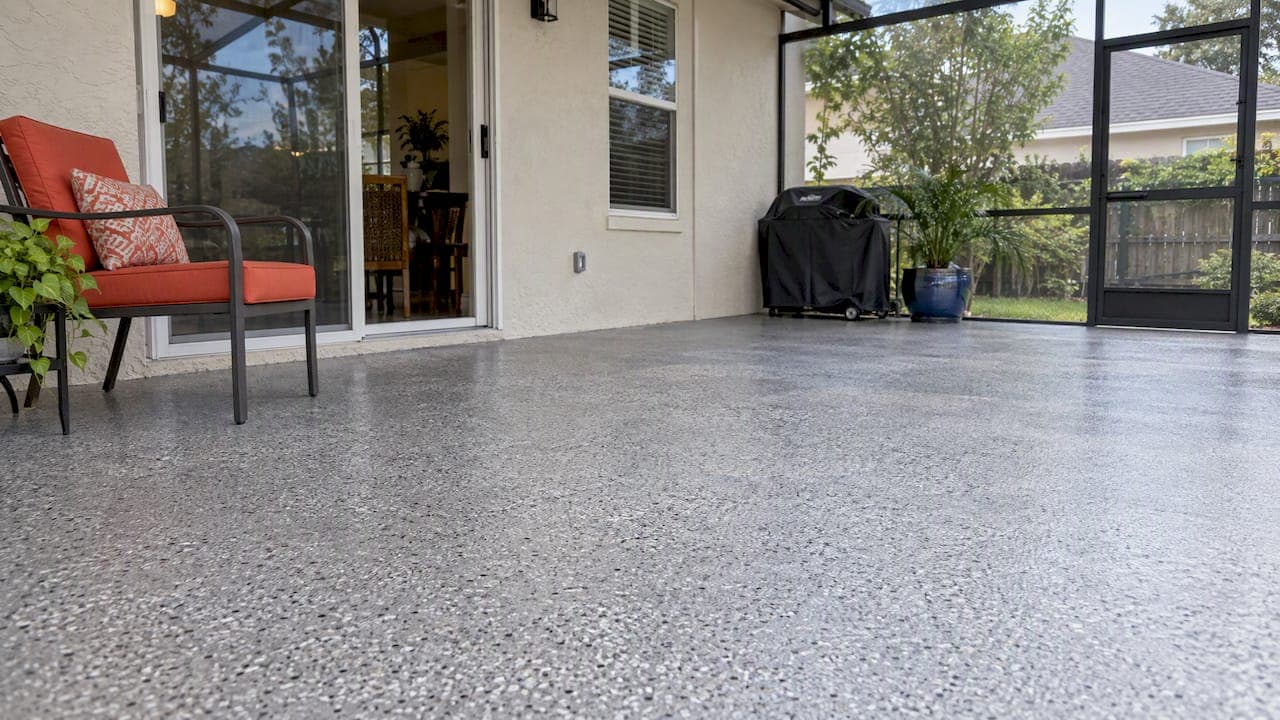
The best coating for a concrete patio depends on the condition of the slab and how much sun, water and foot traffic it sees. A penetrating sealer protects concrete you like as it is. A film-forming sealer adds a little sheen. A polyaspartic or epoxy-type system gives you a new color and texture. An overlay brings back a worn or scaled surface. Paint is the lightest option, with the shortest life.
We are Tru Painting, a locally owned painting contractor serving Lake County and Central Florida. Below is how we think about each option, what the manufacturers and industry bodies say about using them outdoors, and how to choose without paying twice.
TL;DR
- Match the coating to the problem: sealers protect good concrete, flake or polyaspartic systems change the look, overlays repair worn surfaces, and paint is the budget-friendly refresh.
- In Florida's full sun, a UV-stable system holds its color better than a coating that yellows or chalks.
- Prep decides how long any coating lasts: clean, dry, sound concrete and a moisture check come first.
- Add slip resistance during application, not afterward, especially around pools and areas that get wet.
- Every coating is a sacrificial layer. Plan on recoating or resealing, and ask for the maintenance schedule up front.
Table of Contents
- The main concrete patio coating options
- Which coating fits your patio?
- Prep: where most patio coatings fail
- Slip resistance
- Perspective: what we tell homeowners
- What does it cost?
- Maintenance and how long it lasts
- Work with Tru Painting
- FAQ
- Sources
The main concrete patio coating options
Patio coatings fall into a few families. They differ in what they do to the surface, how long they last and how forgiving they are of an imperfect slab.
| Option | What it does | Best for | Main limit |
|---|---|---|---|
| Penetrating sealer (silane or siloxane) | Soaks in and protects without a visible film | Concrete you like the look of, freeze-thaw or wet exposure | Does not change color or hide flaws |
| Film-forming acrylic sealer | Adds a thin protective layer, often with a mild sheen | Budget protection and a richer tone | Wears off and needs regular resealing |
| Concrete paint or one-part epoxy paint | Adds solid color | Quick, low-cost color change | Can be slippery when wet, shorter life |
| Polyaspartic or polyurea flake system | Builds a durable, textured, colored surface | Sunny patios, pool surrounds, entry areas | Needs careful prep and professional application |
| Cementitious overlay | Resurfaces worn or scaled concrete | Rough, flaking but structurally sound slabs | More involved, and costs more than a sealer |
Penetrating sealers
Silane and siloxane products go into the concrete rather than sitting on top. A concrete industry webinar on silanes notes that silane treatments bond chemically to the concrete and penetrate deeply, which helps them hold up against UV and abrasion. They are a good fit when you like your slab and only want to keep water and stains out.
The tradeoff is cosmetic. You will not get a new color, and a penetrating sealer will not hide stains, patches or hairline cracks.
Film-forming sealers
Acrylic sealers are the familiar, lower-cost choice. They deepen the color of the concrete and can leave a satin or glossy look. The American Society of Concrete Contractors' sealer guide describes sealers as sacrificial coats: they wear over time and eventually need to be applied again. That is not a flaw. It is simply how a sealer works, and it is why the upkeep schedule matters as much as the product.
Concrete paint and one-part epoxy
Yes, you can paint a concrete patio, if you pick a product made for it. Rust-Oleum's one-part epoxy floor paint with primer is a modified acrylic formula made for indoor and outdoor concrete, including patios, with a UV- and weather-resistant finish.
Read the label closely, because outdoor use has conditions. BEHR's product sheet for its one-part epoxy coating says it is approved for exterior porous concrete, including porches and pool decks. It also warns that painted surfaces can become slippery when wet and suggests an anti-slip additive. It calls for clean, sound, dry concrete, temperatures of 50 to 90°F, and no rain or heavy dew expected within 24 hours.
That last point matters in Central Florida, where summer afternoon storms and heavy morning dew can shrink a painting window quickly.

Polyaspartic and flake systems
For exposed patios, this is the category we reach for when a homeowner wants a lasting, good-looking result. Polyaspartic coatings are known for resisting UV yellowing, tolerating temperature swings and flexing with minor concrete movement. Epoxy is a different material. In our experience it can amber in direct sun, so we steer it toward garages and covered spaces rather than open patios.
A flake system broadcasts decorative chips into the coating to create color and a naturally textured surface. If you want to see what that process looks like, our guide to flake epoxy floors: cost, process and what to expect walks through it, and our comparison of epoxy and polyaspartic explains the chemistry in plain terms.
Cementitious overlays
When the surface is flaking, scaled or badly worn, a coating alone can fail because it has nothing sound to grip. A cementitious overlay resurfaces the slab first. It only works if the concrete underneath is structurally sound. If the slab is cracked through, heaving or sinking, no coating is the right answer until that is fixed.
Which coating fits your patio?
The American Concrete Institute's guide, ACI 515.2-24 on selecting protective treatments for concrete, says the choice of protection system should weigh information about the systems, experience with them, and the specific application and exposure. That is a formal way of saying what every good contractor says: there is no single best product, only the best product for your slab.
Here is how we sort it.
Full sun
Most Lake County patios get hours of direct sun. Choose a UV-stable system, such as a polyaspartic or an aliphatic polyurea, or a quality exterior-rated coating. Avoid anything that is not rated for sun exposure. It may look great the first month and tint or chalk by the next summer.
Frequent moisture
Patios near sprinklers, pool splash zones or low drainage spots stay damp. A breathable penetrating sealer lets vapor escape. A thick film coating on a slab that is pushing moisture up can bubble or peel. This is also why the moisture test below is not optional.
Foot traffic and furniture
Heavy chairs, grills and daily use wear down thin coatings. A polyaspartic flake system holds up better here than a thin acrylic sealer. Light-traffic, covered lanai slabs are usually fine with a simpler product.
Appearance
If you want the natural look, go with a penetrating or clear sealer. If you want a different color, flake or solid color is the route. If you want an upscale stone look, remember that stone is a separate material altogether. Some homeowners compare coating against pavers or natural stone around the pool, and a discussion of marble vs travertine pool decks is a helpful starting point for that decision.
Pool surrounds
Pool decks are their own case: constant water, bare feet and strong sun. We cover them in pool deck coatings for Lake County homeowners, and slip resistance is the first thing we plan for.
Prep: where most patio coatings fail
A coating is only as good as the surface under it. That is true of every paint job we do, and our notes on exterior paint preparation best practices apply to concrete as much as to walls.
The ASCC guide says to clean the concrete thoroughly, remove contaminants and let it dry before sealing, then follow the manufacturer's application directions. In practice that means:
- Pressure wash to remove dirt, mildew, algae and loose material. Florida patios collect a lot of all three.
- Remove oil, grease and old failing coatings. Contaminants block adhesion.
- Repair cracks and spalls with products made for concrete, and let them cure.
- Let the slab dry completely. Surface dry is not the same as dry through.
- Test for moisture (below).
- Check the weather against the product's temperature and rain limits.
A simple moisture test
Tape a 2 ft. by 2 ft. plastic sheet to the slab for 24 hours. Droplets under it, or darker concrete when you lift it, mean moisture is coming up through the slab, according to one 2026 industry guide. It is a rough check, not a lab test, but it catches a problem before you spend money on a coating that will bubble.

Temperature and timing
Water-based sealers have a workable window. Quikrete's resurfacing guidance says to apply them when air and concrete temperatures are 45°F and rising, but not above 90°F. Outside that range you can get bubbling, whitening or a chalky finish. In Central Florida the cold is rarely the problem. The heat is. A slab in July sun can be far hotter than the air, so we schedule coating work for cooler parts of the day.
Cure times are product-specific too. BEHR's sheet requires new concrete to cure 30 days before application. It allows light foot traffic after 24 hours, heavy foot traffic after 72 hours and vehicle tires after 7 days. Treat these as that one product's requirements, not universal rules. Always read the data sheet for the exact product being used.
Slip resistance
A smooth, glossy coating can be slick when wet, and patios get wet. The ASCC guide advises mixing a suitable anti-skid additive into the sealer before application, at the first coat and again when resealing. It also states plainly that grip additives reduce slipping but do not eliminate it.
That is the honest way to say it, and we say the same to customers. For pool decks, entries and areas near sprinklers, choose a textured finish, add the right grit, and keep the surface clean. Algae and soap film can make any surface slick.
Perspective: what we tell homeowners
We get asked for the "best" patio coating almost every week, and the honest answer starts with questions, not a product. Is the slab sound? Does it hold moisture? Does it sit in full sun? Do you want to keep the concrete look or change it?
Our approach follows how we run every project: thorough preparation, premium products, skilled craftsmanship and clear communication. We do not compete on being the cheapest, because a low bid on a patio usually means skipped cleaning or a thin coat, and the failure shows up within a season or two. We would rather explain the tradeoffs and let you choose the level of protection that suits your home and budget. That is the idea behind our three service packages.
Here is where we land in most cases:
- Concrete in good shape, you like the look: a quality sealer, applied correctly, with grip added where it gets wet.
- Tired but sound concrete, you want a refresh: a flake or polyaspartic system for color, texture and UV stability.
- Flaking or scaled surface: repair or resurface first, then decide on a coating.
- Tight budget, covered or low-traffic slab: a product made for exterior concrete paint, with realistic expectations about how often you will redo it.
We also tell people when not to coat. If the slab is cracking structurally or moisture keeps pushing up, a coating hides the symptom and then fails. Fix the cause first.
— Kyle
What does it cost?
Prices vary widely by product, slab condition, square footage and the prep needed, so we do not publish a flat per-square-foot number. Here is what drives the quote:
- The system you choose. A sealer is the lowest-cost route. Flake and polyaspartic systems cost more because they are multi-step and built to last longer. Overlays add a resurfacing step.
- Slab condition. Cracks, spalls, stains and old coatings all add labor before the first coat goes on.
- Size and layout. Small patios carry setup costs that do not shrink with the area, while large decks benefit from scale.
- Slip resistance and finish. Texture, grit and flake blends change materials and time.
- Access and weather windows. Florida's rain pattern affects scheduling.
The cheapest bid is rarely the cheapest result. A coating redone in two years costs more than one done properly once. We scope each job on site and give you a written bid, so you can compare apples to apples. Our look at garage floor coating cost in The Villages explains how that scoping works for a similar concrete project.
Maintenance and how long it lasts
According to the ASCC guide, sealed concrete should be cleaned periodically with mild detergent and rinsed thoroughly. High-traffic or UV-exposed areas generally need resealing every 2 to 3 years, while lighter-traffic or interior areas may last 4 to 5 years. A patio in Florida sun is squarely in the first group for sealers, so plan accordingly.
Some simple habits help any coating last:
- Sweep and rinse regularly so grit does not scuff the surface.
- Wash with mild detergent rather than harsh acids or strong solvents unless the coating maker says otherwise.
- Wipe up oil, grease and chemical spills quickly.
- Use felt or rubber pads under furniture.
- Rinse off pool chemicals and fertilizer.
- Look for dull, thin or worn spots each spring and fall, and recoat before bare concrete shows.
Recoating a sealer before it fully fails is easier and cheaper than stripping a failed one.
Work with Tru Painting
If you are in Lake County or Central Florida and want a patio, lanai, pool deck or entry slab coated properly, our residential exterior painting team can look at the slab, test for problems and recommend a coating that fits. Our three service packages, Cosmetic Refresh, Enhanced Prep & Durability and Maximum Prep & Protection, let you choose how much preparation and protection you want. We back our work with a warranty on workmanship.
Ready to talk through your patio? Schedule your appointment and we will walk the slab with you.
FAQ
Can I just paint my concrete patio?
Yes, with a paint made for exterior concrete and proper prep. The slab must be clean, sound and dry, and you need to follow the temperature and rain limits on the label. Add an anti-slip additive, since painted surfaces can get slippery when wet.
Can I epoxy my concrete patio?
Some one-part epoxy products are approved for exterior porous concrete, including porches and pool decks, but they come with limits on temperature, moisture, cure time and slip resistance. Traditional two-part epoxy can turn amber in direct sun, so for open, sunny patios we usually recommend a UV-stable polyaspartic system instead.
What is the best coating for a concrete patio in Florida?
For most sunny Central Florida patios, a UV-stable polyaspartic flake system gives the best mix of durability, color and texture. If you want to keep the natural concrete look, a penetrating sealer with a grip additive is a better fit. The right choice depends on your slab's condition and how much moisture it holds.
How often do I need to reseal a patio?
A sealer on a high-traffic or sun-exposed slab generally needs resealing every 2 to 3 years, and lighter-use areas may last 4 to 5. Dull spots, water no longer beading and visible wear are signs it is time. Durable multi-layer systems are built to go longer between recoats.
Sources
- Silane and Siloxane webinar, American Concrete Institute
- ACI 515.2-24: Selecting Protective Treatments for Concrete
- Sealer Selection and Application Guide, ASCC
- Rust-Oleum 1-part epoxy floor paint product application sheet
- BEHR one-part epoxy concrete coating product sheet
- Quikrete: Resurfacing Concrete
- Patio Coating guide, moisture test