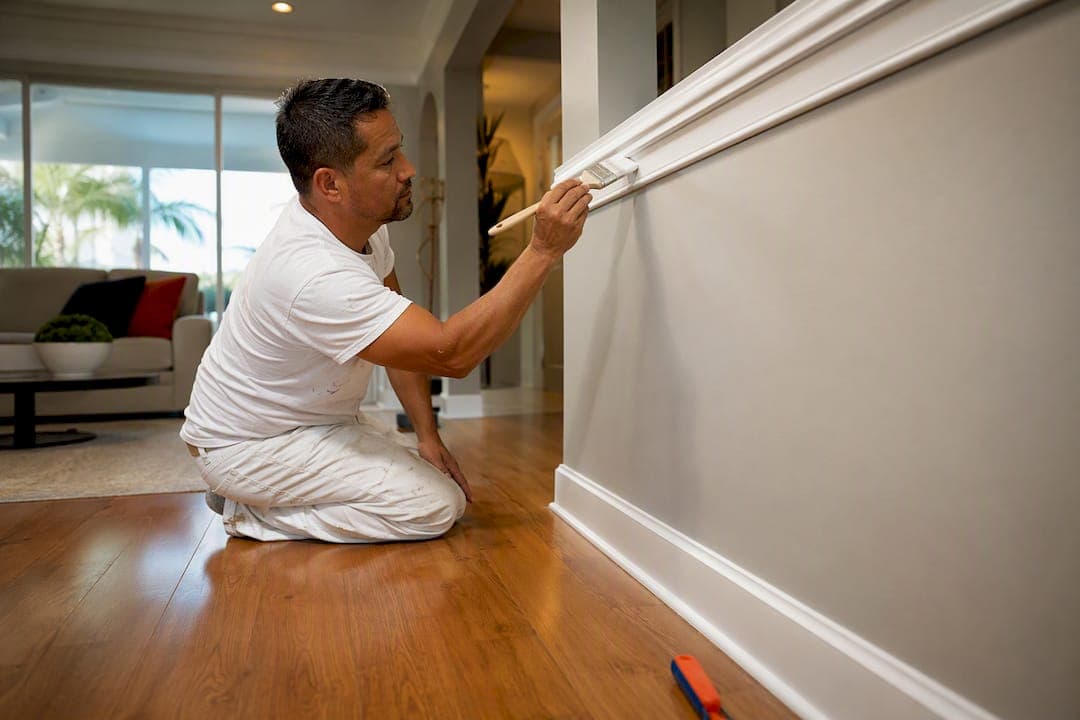
Yes, premium paint is worth the extra cost in most homes, especially on high-traffic surfaces, high-visibility rooms, and anything facing direct sun or weather. The upgrade pays off fastest on trim, doors, kitchens, bathrooms, and exteriors, where scuffs, moisture, and UV exposure wear down cheaper formulas quickly. That said, premium paint only delivers on its promise when the surface is prepped correctly and applied by someone who knows what they're doing.
TL;DR:
- Premium paint's higher solids and better binders provide increased coverage, fewer coats, and improved durability, especially on high-traffic and sun-exposed surfaces.
- Its superior scrubbability and fade resistance justify the higher upfront cost, with one or two coats often sufficient compared to three or more with lower-quality paint.
- Proper surface preparation and application are crucial; skipping priming or cleaning can void warranties and diminish the paint's long-term performance.
- Using premium paint selectively in high-wear areas like kitchens, bathrooms, trim, and exteriors maximizes value, while low-traffic rooms can be painted with mid-tier products.
- Comparing actual specifications such as coverage, coat recommendations, scrub resistance, VOC levels, and warranty is essential to making an informed purchase decision.
Table of Contents
- What Makes Paint "Premium," and Is Premium Paint Worth It in Practice?
- Upfront Cost vs. Long-Term Value: Doing the Real Math
- Room-by-Room Guide: Where to Splurge and Where to Save
- Why Paint Alone Won't Guarantee a Great Result
- What to Check Before You Buy: A Quick Spec Checklist
- Brands Homeowners Actually Ask About
- Our Take: How We Recommend Premium Paint on Real Jobs
- The Bottom Line on Upgrading Your Paint
- Sources
What Makes Paint "Premium," and Is Premium Paint Worth It in Practice?
The difference between a $25 gallon and a $70 gallon isn't marketing. It's chemistry. Premium paints pack in more solids, which is the actual pigment and resin left behind once the paint dries, and pair them with better binders that hold everything to the wall. Higher solids content and superior binders increase coverage and reduce the number of coats a job needs, which matters more than most homeowners realize when they're staring at two cans that look identical on the shelf.
Better pigments do more than deepen color. Benjamin Moore's Color Lock technology, for example, is built to resist fading and keep the tone consistent even after years of sun exposure and repeated washing. Cheaper paints tend to lose that richness within a couple of seasons, especially on south-facing walls.
Here's what actually changes when you move up a tier:
- Coverage per gallon increases, since higher solids mean more material is left on the wall once it cures.
- Hide improves, so fewer coats are needed to cover a color change or a patched wall.
- Scrubbability goes up significantly, letting you clean fingerprints and scuffs without burnishing or removing color.
- Finish uniformity improves, with fewer roller marks, lap lines, or flat spots.
Scrub resistance is where the gap shows up fastest. Premium formulations are engineered to be scrubbed repeatedly without significant color rub-off or loss of sheen, which is exactly what a busy kitchen wall or a hallway near the garage door needs. A budget flat paint in that same spot often shows burnish marks and dulling within a year.
Upfront Cost vs. Long-Term Value: Doing the Real Math
A gallon of premium interior paint typically runs $50 to $80, compared to $20 to $35 for a budget line. On paper, that's a big gap. In practice, it shrinks fast once you factor in coats, labor, and how often you'll be back on a ladder.
Here's a simple way to run the numbers before you commit:
- Count the coats, not just the gallons. Premium paints with higher hide often cover in one to two coats, while budget paint frequently needs three to fully hide a color change or a stain.
- Price the labor, not just the material. Paint itself is usually a small fraction of a professional job's total cost. An extra coat means extra hours, and that's where budget paint quietly gets expensive.
- Factor in repaint frequency. If a premium finish holds its color and sheen for 8 to 10 years instead of 4 to 5, you're cutting your repaint cycle roughly in half.
- Check the warranty. Premium lines often carry longer manufacturer warranties, which matters if fading or peeling shows up early.
Take a 2,000 square foot interior repaint as an example. Benjamin Moore's Aura line lists coverage around 400 to 450 square feet per gallon with one or two coats recommended in many cases. That can mean needing fewer gallons overall and one less coat across the whole job compared to a budget product that needs three passes to look right. On a job that size, the labor saved on that third coat often covers most of the price difference in the paint itself.
If you're mapping out a full project budget, our interior painting cost guide breaks down how labor and materials split on a typical Central Florida home, which makes this kind of comparison easier to run for your own space.
Room-by-Room Guide: Where to Splurge and Where to Save
Not every wall in your house needs the same paint. Pros treat this as a budget allocation problem, not an all-or-nothing decision. Painters commonly recommend using premium paint selectively in high-traffic or high-visibility areas while choosing mid-tier products for low-traffic spaces, which keeps the budget under control without sacrificing the places that actually show wear.
Worth the upgrade:
- Kitchens and bathrooms, where moisture, grease, and cleaning are constant.
- Hallways and entryways, which take the most foot traffic and hand contact in the house.
- Trim, doors, and cabinets, where scuffs and fingerprints show up first.
- Any exterior surface exposed to full sun, since UV is what breaks down cheap pigment fastest.
Fine to save on:
- Ceilings, since they rarely get touched or scuffed.
- Closets and storage rooms with minimal foot traffic or visibility.
- Guest rooms or seldom-used spaces that see light wear.
For trim and doors, lean toward a semi-gloss or satin finish, since those sheens clean up easier than flat or matte. Our guide on choosing the right finish for every room walks through sheen selection in more depth, and this piece on sheen choices for interior doors covers the durability trade-offs specifically for trim work.
Why Paint Alone Won't Guarantee a Great Result
Even the best paint on the market can't fix a poorly prepped wall. Premium formulas are built to perform on a properly prepared surface, and skipping that step is the single biggest reason homeowners feel let down by a paint they paid extra for.
A paint-and-primer-in-one product is convenient, but it's not a universal substitute for a dedicated primer. Painters caution that these combo products aren't reliable replacements for dedicated primers on raw drywall, stained wood, or major color changes. Skip a proper primer in those situations and you risk uneven hide, bleed-through stains, or adhesion problems that no amount of premium paint can cover up.
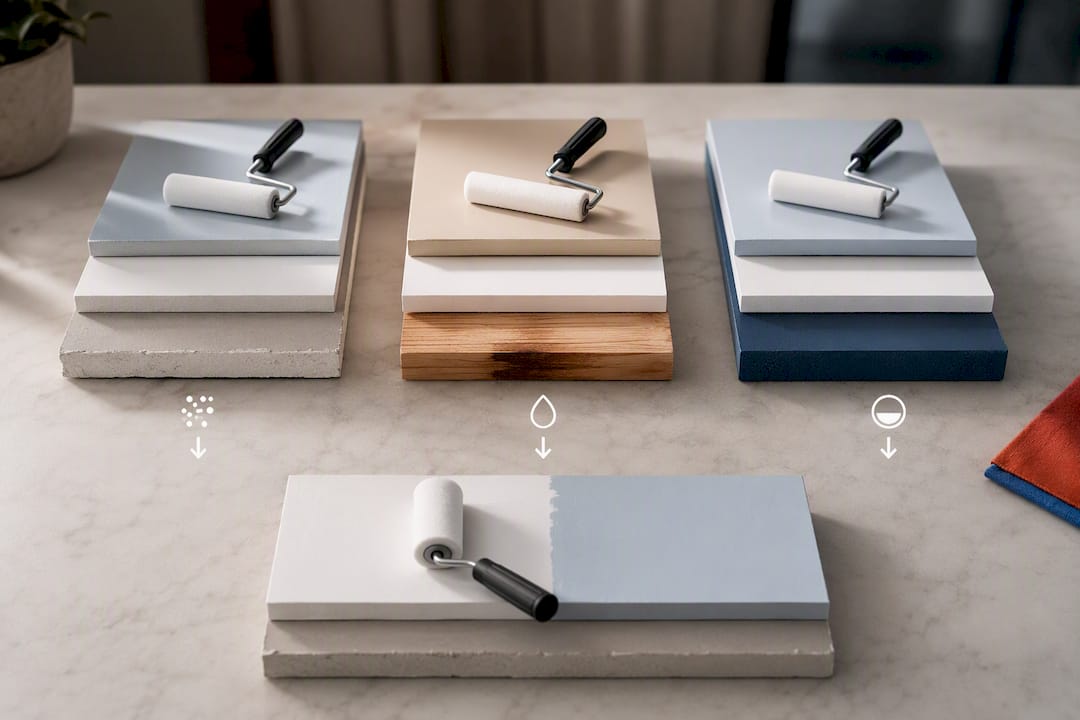
Manufacturer warranties and long-term performance both depend heavily on correct surface prep and following the recommended application steps. Apply premium paint over a dirty, glossy, or unsealed surface and you can void that warranty entirely.
Quick prep checklist before any premium paint goes on:
- Clean and degloss the surface so the new coat has something to grip.
- Patch and sand repairs smooth before priming.
- Use a stain-blocking or bonding primer on problem substrates.
- Confirm proper dry time between primer and topcoat.
Pro Tip: If you're repainting over a dark or bold color, ask your painter about a tinted primer. It cuts down the number of topcoats needed and helps the new premium color show true instead of fighting the old shade underneath.
For upkeep once the job is done, this guide on protecting painted surfaces long term is worth a look.
What to Check Before You Buy: A Quick Spec Checklist
Skip the marketing language on the can and look at the actual numbers. Here's what to compare:
- Coverage (sq ft/gal). Higher numbers mean fewer gallons for the same job.
- Recommended coats. One to two coats is typical for premium lines; three or more signals a weaker formula.
- Scrub resistance rating. Look for it explicitly listed on the product page, especially for kitchens and hallways.
- VOC level. Low or zero VOC options matter for indoor air quality, especially in bedrooms and nurseries.
- Warranty length. Longer warranties usually reflect more confidence in the formula's durability.
Sheen matters just as much as the formula. Satin and semi-gloss clean easier and hold up better in high-touch areas, while flat and matte hide wall imperfections better in low-traffic rooms like bedrooms or living rooms.
If you're talking to a contractor, ask directly: what prep steps are included, which product line they're recommending and why, how many coats they're budgeting for, and what the realistic timeline looks like. Vague answers to any of those are a red flag.
Brands Homeowners Actually Ask About
A few names come up constantly when homeowners start comparing options, and each one fills a different role.
- Benjamin Moore Aura delivers strong color depth and high hide, with coverage around 400 to 450 square feet per gallon and often just one to two coats needed. It's a strong pick for accent walls, kitchens, and anywhere color accuracy matters most.
- Sherwin-Williams Duration and Emerald are known for durability outdoors and cleanability indoors, making them a solid fit for exterior siding and high-traffic hallways alike.
- Glidden Premium and Diamond sit a notch below the top tier on scrub and stain resistance, but they offer smooth finishes and built-in primer features that make them a reasonable value pick for lower-traffic spaces.
None of these is the "right" answer across the board. The right pick depends on which room you're standing in and how much abuse that surface takes.
Our Take: How We Recommend Premium Paint on Real Jobs
We don't sell premium paint on every wall, and honestly, we'd rather you save money where it makes sense. Our three-tier packages exist so you can put premium product where it counts, kitchens, trim, exteriors, and use a solid mid-tier option in low-traffic spots. What we won't compromise on is prep. A premium gallon over a poorly prepped wall is money wasted, and it can void the manufacturer warranty you're paying for.
If you want a clear, no-pressure breakdown of what your home actually needs, request an on-site estimate for residential interior painting or ask us about exterior coatings built for Central Florida's sun and humidity. We'll walk your home with you and show you exactly where the upgrade pays off, and where it doesn't. Considering cabinets instead of a full repaint? Our cabinet refinishing service is worth a look too, since kitchen cabinets are one of the highest-value spots for a premium finish.
The Bottom Line on Upgrading Your Paint
Premium paint earns its price tag when it's applied where wear and visibility are highest, and when the surface underneath it is prepped right. Skip either of those conditions and you're just paying more for the same disappointing result.
Rooms that see hands, moisture, or sunlight all day deserve the best formula you can afford. Guest closets and rarely used spaces don't need to compete for that budget. Spend where the wear happens, save where it doesn't, and let proper prep do the rest of the work.
— Kyle