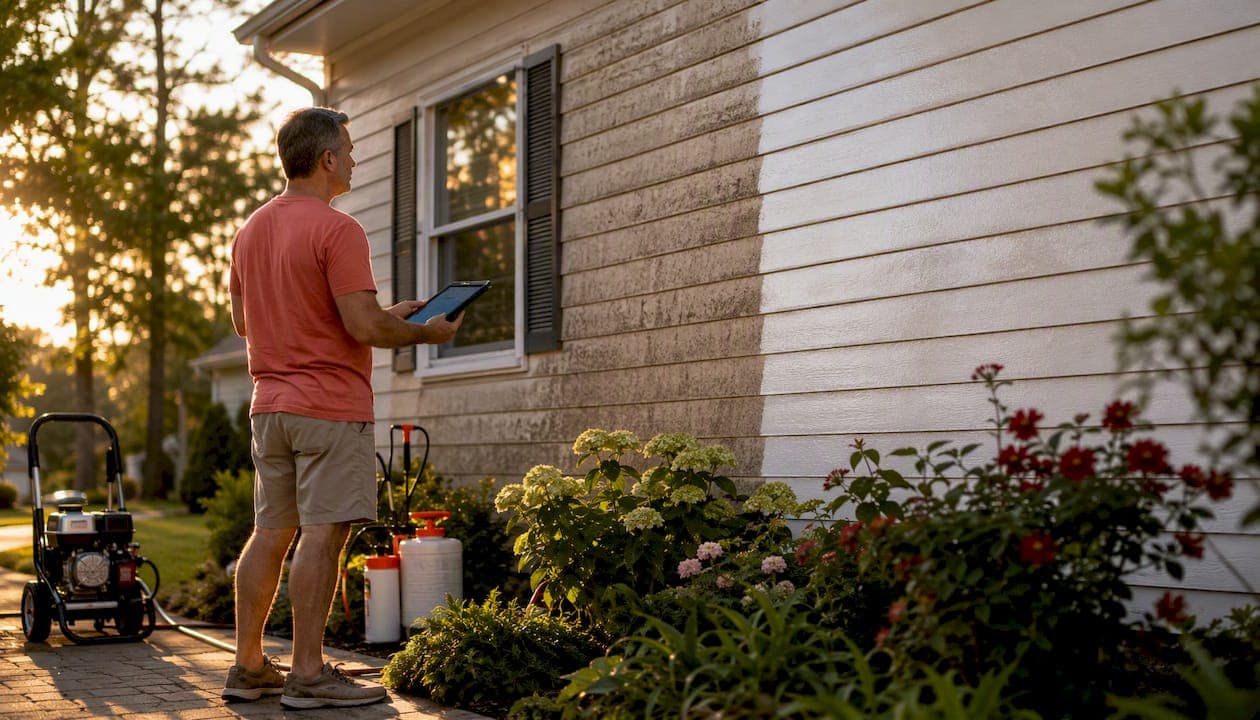
Use soft washing for roofs, siding, stucco, and painted wood. Use pressure or power washing for concrete driveways, brick pavers, and greasy hard surfaces. That single rule covers the majority of decisions you'll face on a typical home exterior.
- Roof, vinyl siding, stucco/EIFS, painted wood → soft wash (low pressure + biocides)
- Concrete, brick pavers, metal surfaces, garage floors → pressure or power wash (mechanical force, or heated water for grease)
- Mixed-surface properties → combine both methods, matching each surface to its appropriate approach
The core difference is simple: soft washing cleans with chemistry at low pressure, while pressure washing cleans with mechanical force at high pressure. When a property has both delicate and durable surfaces, a good contractor uses both.
Table of Contents
- What soft washing is and how it actually works
- How pressure washing and power washing differ from soft washing
- Soft wash vs pressure wash: a side-by-side comparison
- Which method works best for each surface on your home
- Safety, damage risks, and environmental considerations
- What soft washing and pressure washing typically cost
- DIY vs hiring a pro: how to decide and what to ask
- How Trupainting LLC approaches exterior cleaning
- Key Takeaways
- The case for slowing down before you clean
- Ready to get a clean, protected exterior in Central Florida?
- Useful sources and further reading
What soft washing is and how it actually works
Soft washing is a low-pressure cleaning method that relies on biodegradable biocides and surfactants to kill and remove organic growth at the root. Pressure alone can scrub away surface discoloration, but it leaves spores behind. Soft washing eliminates the organism itself, which is why results last longer.
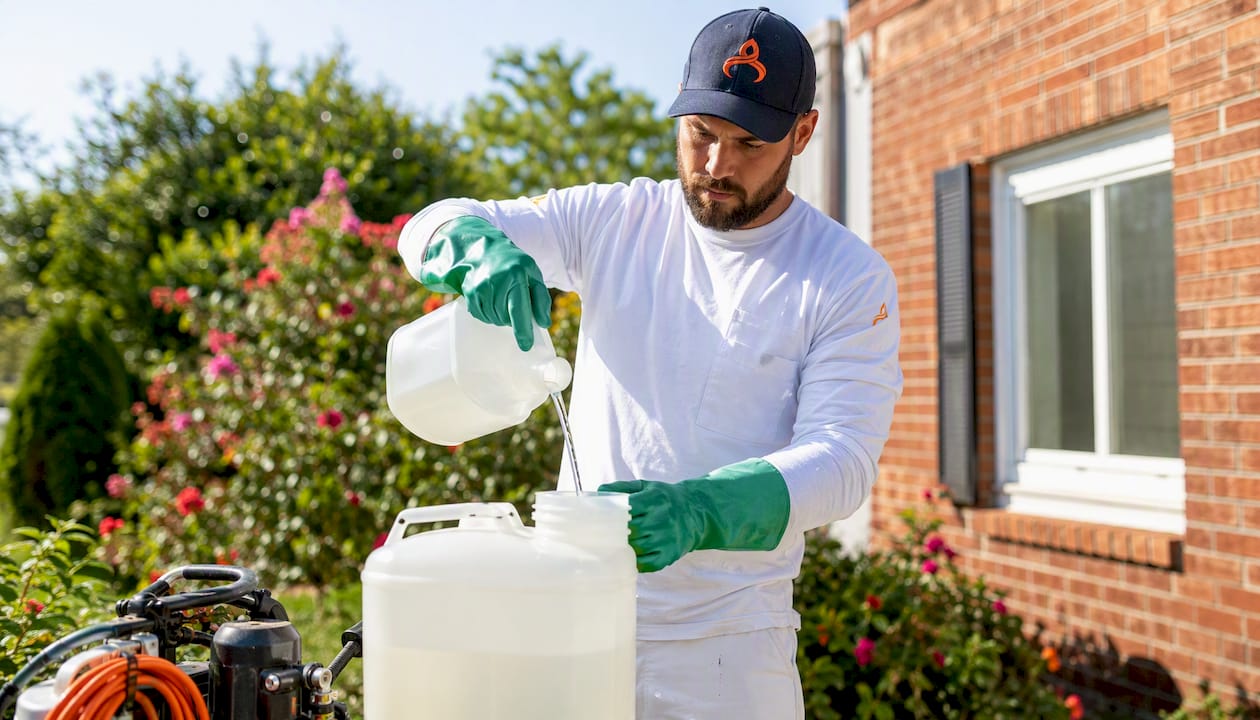
The pressure in a soft-wash system typically stays within low pressure ranges, often closer to garden-hose levels at the nozzle. That low pressure is intentional. The chemistry does the work, not the force.
Surfactants are the non-obvious key to the whole process. They cause the cleaning solution to foam and cling to vertical surfaces instead of running straight off. That extended contact time, called dwell time, lets the biocide penetrate textured pores and neutralize algae, mildew, and mold at the root rather than just bleaching the surface color. On stucco, for example, surfactants allow biocides to penetrate the textured pores and neutralize organisms that would otherwise regrow within months.
Longevity matters: Soft wash results on roofs can last 4–6 years, and on siding typically 18–30 months depending on environment and exposure.
Those durability numbers reflect a real advantage over mechanical cleaning alone. A pressure-washed roof may look clean for a season; a properly soft-washed roof stays clean for years because the biology driving the staining has been killed, not just removed.
How pressure washing and power washing differ from soft washing
Pressure washing uses mechanical force to blast dirt, grime, and loose material off hard surfaces. It typically operates at high pressure levels, with flow rates (GPM) that vary by machine and nozzle. That force is highly effective on concrete, pavers, and metal, where the surface can absorb the impact without damage.
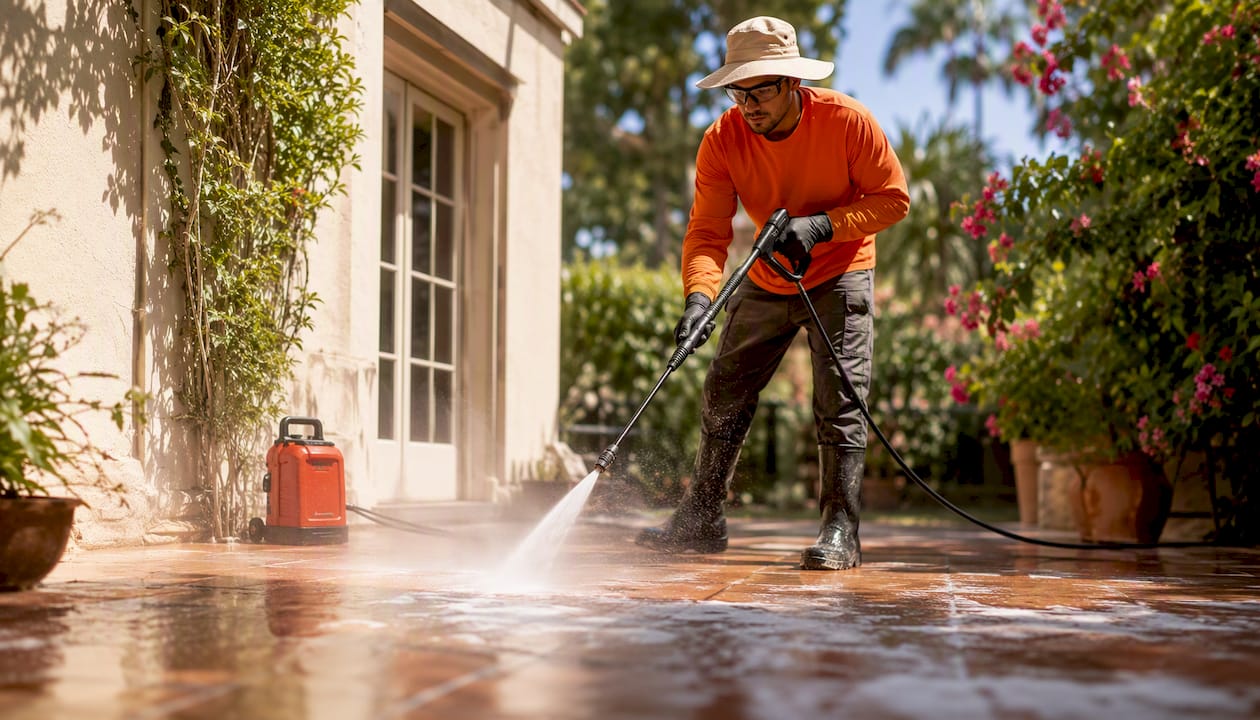
Power washing is pressure washing with heated water, commonly heated to temperatures that assist in breaking down greasy and oily stains. The heat breaks down greasy and oily stains that cold water struggles to dissolve, making power washing the right call for garage floors, commercial kitchen exteriors, and oil-stained driveways.
Where pressure washing creates problems:
- Soft or porous surfaces (stucco, EIFS, cedar siding, older brick) can be etched, gouged, or have water driven into joints and wall assemblies
- Painted surfaces can have paint stripped or lifted, especially at edges and seams
- Roofing shingles lose granules under high-pressure spray, shortening their lifespan
- Sealed or coated surfaces can have their protective layer stripped prematurely
The damage usually isn't visible immediately. Water driven behind siding or into stucco joints can cause rot, mold, and structural issues that show up months later. That delayed consequence is exactly why surface selection matters before you ever pull a trigger.
Soft wash vs pressure wash: a side-by-side comparison
The practical rule-of-thumb from this table: if a surface is porous, textured, painted, or older than 15 years, default to soft washing. Reserve high-pressure methods for dense, unpainted hard surfaces where mechanical force won't cause abrasion or water intrusion.
| Feature | Soft Washing | Pressure Washing | Power Washing |
|---|---|---|---|
| Typical PSI | — | 1,200–3,000 PSI | 1,200–3,000 PSI |
| Typical GPM | 1–2 GPM | 2–5 GPM | 2–5 GPM |
| How it works | Chemical (biocides + surfactants) | Mechanical force | Mechanical force + heat |
| Best for | Roofs, siding, stucco, painted wood, EIFS | Concrete, pavers, brick, metal | Greasy concrete, garage floors, industrial stains |
| Damage risk | Low on delicate surfaces; chemical drift risk | High on soft/porous/painted surfaces | High on soft surfaces; thermal risk on some coatings |
| Longevity of results | 4–6 years on roofs; 18–30 months on siding; varies on other surfaces | 12–18 months on concrete | 12–18 months on concrete |
| Cost shape | Per sqft (starting ~$0.35–$0.40/sqft for siding) | Per sqft or per job; varies by surface area | Slightly higher than cold pressure wash |
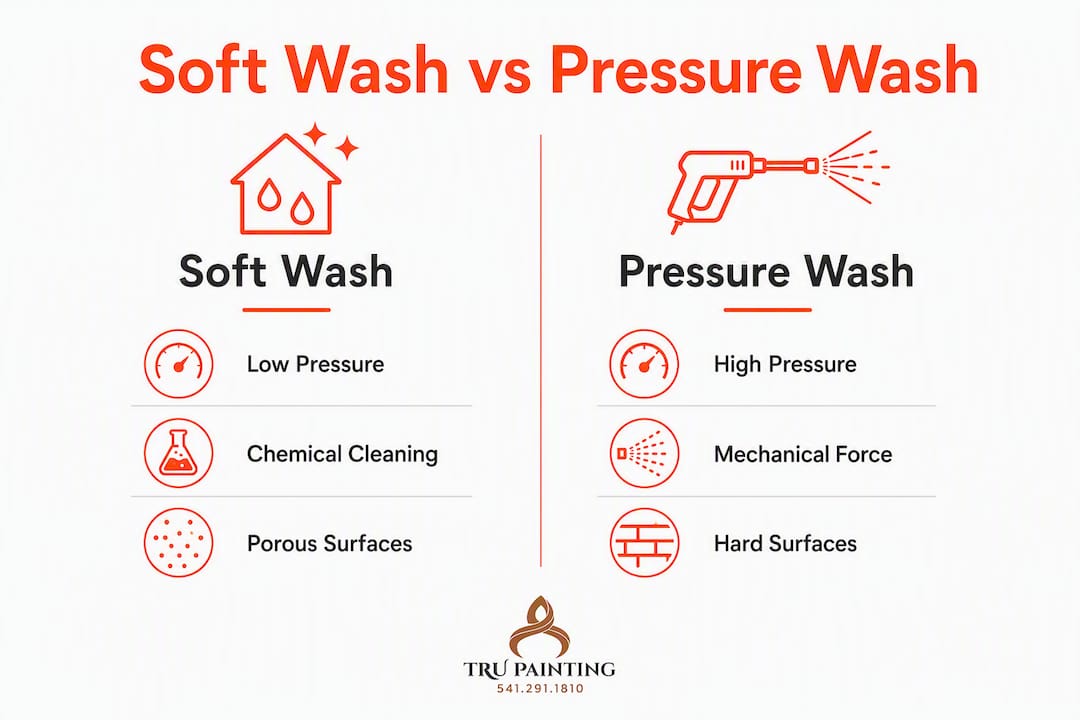
Professional guidance consistently recommends soft washing for organic contamination on porous surfaces and power washing for greasy or industrial stains on concrete or metal. The two methods aren't competing options so much as complementary tools.
Which method works best for each surface on your home
1. Asphalt shingle roofs
Soft wash only. High pressure strips granules from shingles, voiding manufacturer warranties and accelerating wear. A biocide-based soft wash kills the algae and lichen causing black streaking and keeps the roof clean for 4–6 years.
2. Vinyl and fiber cement siding
Soft wash is the right default. Vinyl can warp under sustained high-pressure spray, and fiber cement can absorb water if pressure drives it past the surface. Soft washing at low pressure with appropriate biocides handles mildew and algae without risk.
3. Stucco and EIFS
Soft wash only, with careful inspection first. EIFS manufacturers and stucco best-practice guides require low-pressure chemical cleaning as the approved method. Pressure above roughly 800 PSI can erode stucco aggregate, widen hairline cracks, and drive water into the wall assembly. Before any cleaning, a pro should map existing cracks and check joint integrity.
One important caveat: if efflorescence (white mineral deposits) or heavy mineral staining is present, soft washing alone won't fully resolve it. That requires a specialist treatment, often an acid-based cleaner applied carefully by hand, before or after the soft wash.
4. Brick and mortar
Moderate pressure (1,200–1,500 PSI) with a wide-angle nozzle works for sound, well-pointed brick. Older brick with soft mortar or missing joints needs soft washing or very low pressure to avoid eroding mortar. Never use a zero-degree nozzle on brick.
5. Painted wood and hardboard siding
Soft wash. High pressure strips paint at edges, seams, and knots, creating an immediate refinishing problem. Soft washing cleans without lifting the paint film, and it's the correct prep step before repainting.
6. Composite and wood decks
Moderate pressure (600–1,200 PSI) with a fan nozzle, moving with the grain. Soft washing works well for mildew-heavy decks. Avoid zero-degree nozzles entirely; they leave visible streaks and raise wood fibers.
7. Concrete driveways and walkways
Pressure or power washing at 2,000–3,000 PSI. For oil stains, power washing with heated water is more effective than cold pressure alone. Pressure-washed concrete typically stays clean for 12–18 months before re-soiling occurs.
8. Gutters
Soft wash on the exterior face (painted aluminum or vinyl). A low-pressure rinse clears debris from inside. High pressure on gutter seams can separate joints and pull fasteners.
Pro Tip: Before any cleaning, inspect for cracks wider than 1/16 inch, loose mortar, and failing caulk or seals. Applying water or chemicals to compromised surfaces can force moisture into wall assemblies and cause damage that far exceeds the cost of the cleaning job itself.
Safety, damage risks, and environmental considerations
Pressure washing and soft washing each carry distinct risks, and neither method is automatically safer than the other.
Pressure washing risks center on abrasion and water intrusion. High-pressure spray directed at seams, joints, or soft materials can drive water behind cladding, strip coatings, and etch surfaces. The damage is often invisible until moisture-related problems appear weeks or months later.
Soft washing risks are primarily chemical. Wind and runoff can spread biocides to plants, vehicles, and neighboring properties if controls aren't in place. Sodium hypochlorite, the most common biocide used in soft washing, can bleach or damage vegetation and stain certain surfaces if it pools or drifts.
Safety note: Consumer Reports has flagged pressure washers as a significant source of lacerations and injuries, particularly when operators use zero-degree nozzles or work on ladders. Water at 3,000 PSI can cut through skin.
A professional should follow these controls on every job:
- Check wind speed and direction before applying any chemical solution
- Pre-wet surrounding plants and cover sensitive landscaping
- Protect vehicles, painted surfaces, and outdoor furniture from overspray
- Flush all treated surfaces thoroughly after dwell time to neutralize chemistry
- Confirm drainage direction so runoff doesn't pool near foundations or flow into storm drains
- Wear appropriate PPE: eye protection, chemical-resistant gloves, and non-slip footwear
If a contractor skips the pre-wet and plant-cover step, that's a red flag worth addressing before work begins.
What soft washing and pressure washing typically cost
Pricing varies by market, surface condition, and access, but these ranges give you a realistic starting point for budgeting.
| Service | Typical Cost Range | Longevity of Results |
|---|---|---|
| Soft wash — residential siding | ~$0.35–$0.40/sqft (starting range) | 18–30 months |
| Soft wash — roof | Per-job pricing; varies by pitch and size | 4–6 years |
| Pressure wash — concrete/driveway | Per sqft or per job; varies by market | 12–18 months |
| Power wash — greasy surfaces | Slightly higher than cold pressure wash | 12–18 months |
Several factors shorten results: heavy tree canopy overhead, high humidity, proximity to standing water, and Florida's year-round growing season for algae and mildew. In Central Florida specifically, the combination of heat, humidity, and frequent rain means organic growth returns faster than it would in drier climates. Budgeting for cleaning every 18–30 months on siding, and every 4–6 years on a properly soft-washed roof, is a reasonable baseline.
Pairing exterior cleaning with low-maintenance exterior paint extends the interval between cleanings and reduces long-term maintenance costs.
DIY vs hiring a pro: how to decide and what to ask
When DIY makes sense
Small, durable surfaces at ground level are reasonable DIY candidates: a concrete patio, a short section of fence, or a single-story brick wall. Consumer-grade pressure washers (1,500–2,000 PSI) handle these tasks adequately when you use the right nozzle and keep the wand moving.
When to hire a pro
Hire a professional for:
- Roofs — working on a wet, sloped surface with a pressure wand is a fall risk, and wrong pressure destroys shingles
- Two-story or tall walls — ladder + pressure wand is one of the more common injury scenarios
- Stucco, EIFS, or any specialty coating — these require inspection and method selection that goes beyond consumer equipment
- Any surface where paint failure or water intrusion would be costly
Professional evaluations combine surface age, exposure, geometry, drainage, and surroundings rather than applying a single rule. That judgment is what you're paying for, not just the equipment.
What professional equipment looks like
A proper soft-wash rig uses a low-pressure pump (not a standard pressure washer turned down), dedicated chemical tanks, and downstream injection to control mix ratios. Biocides are typically sodium hypochlorite-based solutions, often combined with a surfactant product. PPE includes chemical-resistant gloves, eye protection, and protective clothing. A contractor who shows up with only a standard pressure washer and claims to "soft wash by turning it down" is not using the right equipment.
Questions to ask a contractor
- What PSI will you use on my roof and siding?
- What biocide and surfactant products do you use, and are they biodegradable?
- How do you protect my landscaping and neighboring surfaces?
- Do you inspect for cracks or failing seals before you start?
- What does your rinse and neutralization process look like?
Red flags to watch for:
- "We just turn down the pressure" (not the same as a true soft-wash system)
- Vague answers about chemical mix ratios or product names
- No mention of plant protection or runoff management
- Unwilling to walk the property before quoting
A pre-job inspection is standard practice for any reputable contractor. If they skip it, they're skipping the step that prevents damage claims.
How Trupainting LLC approaches exterior cleaning
At Trupainting LLC, we treat exterior cleaning as preparation, not just maintenance. Every job starts with a walk-around inspection: we assess surface condition, check for cracks or failing seals, evaluate drainage and wind exposure, and select the method that fits the material, not the one that's fastest.
Our process in practice: We check for pre-existing vulnerabilities before applying any water or chemistry. A crack wider than 1/16 inch in stucco or a failed caulk joint at a window frame changes the approach entirely. Cleaning over a compromised surface can force moisture into the wall assembly and create a much larger repair.
We offer three-tier service packages for exterior work, so you can choose the level of protection and investment that fits your home and budget. Whether you need a standalone soft wash before repainting, a full exterior cleaning package, or a combined cleaning-and-painting scope, we build the scope around what your surfaces actually need.
What to expect on-site: surface protection for landscaping and vehicles, clear communication before chemicals are applied, thorough rinsing after dwell time, and a final walk-through with you before we leave. Our exterior paint preparation process follows the same careful sequence whether we're cleaning for maintenance or prepping for a fresh coat.
Key Takeaways
Soft washing generally lasts longer than pressure washing on delicate surfaces because chemistry kills organic growth at the root, while mechanical force alone leaves spores behind to regrow within months.
| Point | Details |
|---|---|
| Match method to surface | Soft wash for roofs, siding, stucco, and painted wood; pressure/power wash for concrete and greasy hard surfaces. |
| Longevity gap is real | Soft wash results last 4–6 years on roofs and 18–30 months on siding; pressure-washed concrete typically needs retreating every 12–18 months. |
| Soft washing carries chemical risks | Wind, runoff, and improper neutralization can damage plants and neighboring surfaces; always confirm a pro's containment plan. |
| Inspect before you clean | Cracks, loose mortar, and failing seals must be addressed before water or chemicals are applied to avoid water intrusion damage. |
| Trupainting LLC | Offers soft wash, pressure washing, and exterior painting in Lake County and Central Florida with a three-tier service package and pre-job inspection on every project. |
The case for slowing down before you clean
Most exterior cleaning mistakes happen in the first five minutes, before any water touches the surface. A contractor who skips the inspection, skips the plant protection, or reaches for a pressure wand on a stucco wall without asking about the wall's age is making a decision that costs the homeowner money later.
The conventional wisdom in exterior cleaning is that pressure washing is the "heavy-duty" option and soft washing is the "gentle" one. That framing misses the real point. Soft washing isn't gentle because it uses low pressure. It's effective because the chemistry does something pressure never can: it kills the biology driving the staining. A roof that's been properly soft-washed doesn't just look clean. It stays clean because the algae and mildew are gone, not just bleached.
What homeowners often underestimate is how much the longevity gap matters financially. Cleaning a roof every two years with a pressure washer costs more over a decade than one proper soft wash that holds for five years, and it puts more wear on the shingles each time. The same logic applies to stucco: one careful soft wash with proper surfactant dwell time beats three aggressive cleanings that slowly erode the finish.
The right question to ask any contractor isn't "how much?" It's "what will you do to my surface, and why?" If they can't answer the second question clearly, the first one doesn't matter.
Ready to get a clean, protected exterior in Central Florida?
Trupainting LLC brings the same preparation-first approach to exterior cleaning that we apply to every painting project in Lake County and Central Florida. Rather than defaulting to one method for every surface, we assess your home's specific materials, condition, and exposure before recommending a scope.

Our residential exterior services include soft washing, pressure washing, and full exterior painting, available as standalone services or combined in our three-tier packages. Whether your home needs a pre-paint soft wash, a driveway power wash, or a complete exterior refresh, we'll walk the property with you, explain the method, and give you a clear quote with no surprises.
Request your estimate today and let's talk through what your home's exterior actually needs.
Useful sources and further reading
These are the primary sources used throughout this article. Each covers a specific aspect of exterior cleaning methods, and the brief notes below tell you which to open first based on your question.
- Soft wash vs pressure wash — When to use each method and why most operators get it wrong — Powerline Industries. Covers PSI ranges, biocide chemistry, and longevity data for roofs and siding. Start here for the technical foundation.
- Soft washing vs pressure washing vs power washing — Westlink Services (Australia). Covers power washing temperatures and grease-removal applications. Note: Australian market, but the technical content applies broadly.
- Pressure washer safety alert — Consumer Reports. Documents injury risks associated with pressure washing, particularly zero-degree nozzles and ladder use.